#SwissLeaks: Lebanon Is #11 and #12 In Countries With The Most Money In Swiss Banks

We often hear that the Lebanese diaspora has a lot of money and is quite well off. That is the impression that we leave abroad. When I was in France, the stereotype that many seem to attribute with Lebanese is being rich. As my grandma would say: a reputation of richness is better than that of poverty.

But how rich are the Lebanese abroad? How much money do they have in foreign banks? Well, how about we discover the situation in the banking capital of the world: Switzerland. After all, aren’t we the Switzerland of the Middle East?

A fascinating report has surfaced online yesterday  detailing information that was “stolen” by Hervé Falciani, a former employee at HSBC Switzerland’s HQ in Geneva. The information dates back from 2007. It encompasses a timeframe of a few months’ worth of transactions across HSBC in Geneva: between November 9th, 2006 and March 31st, 2007.

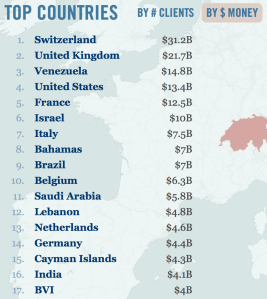
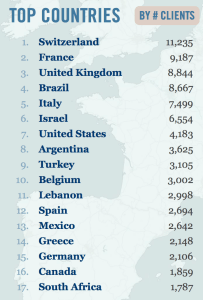
The information was recently uncovered by French newspaper “Le Monde.” Going over the hundreds of thousands of info has allowed investigative journalists to compile a list of top countries when it comes to clients at HSBC in Switzerland as well as top countries by deposited amounts.

This small country of 10452 squared kilometers and of about than 4 million people has the #11 highest number of clients in the world, ahead of places like Germany, Spain and Canada. Moreover, when it comes to the amount of money that those Lebanese have deposited, Lebanon ranks at #12 with a staggering amount of $4.8 billion of transactions in those 4 months alone. That amount puts Lebanon ahead of countries such as Germany, the Netherlands and Cayman Islands.
To assess how big the $4.8 billion amount is, I made a quick search to see the situation of deposits in Lebanese banks. According to this report by the Audi Group Lebanese banks saw a total of $5.8 billion in growth in transactions during 2014.

Sure, the comparison is not entirely sensical, but it still serves to assess exactly how gargantuan an amount Lebanese citizens had at a foreign bank.

Why would Lebanese want that much money in Swiss banks? Well, for starters Swiss banks are known for their secrecy, although that’s ironic at a time like this. The situation in Switzerland, with its stability and neutrality from international conflicts, also permits ease of mind when it comes to such massive amounts as opposed to the volatility of the Lebanese side. Moreover, having such deposits at Swiss banks enables easier access to the European market for possible investments. The date of the information being 2006-2007, however, could have skewed numbers post the July 2006 war although I’d assume the recent situation isn’t exactly much better for investors.

Who are some of the names with money at HSBC in Switzerland? The leaked information has some of those too according to L’Orient Le Jour.

Elias el Murr, son of Metn powerhouse Michel el Murr and former minister of defense, had a staggering amount of $42 million, in accounts which he says date back to before his birth. Mohammad Safadi, the Tripoli MP and former minister has $75 million deposited at HSBC in Switzerland. Meanwhile, former Keserwan MP Georges Frem has about $3.3 million in deposits.

Good for them! Hopefully many of us have that kind of money one day.

Meanwhile, for some food for thought, it’s worth looking at the situation in Lebanon that is scaring away both foreign and Lebanese investors alike. Between detrimental security, poor governance, terrible infrastructure, a non-manageable refugee crisis, wars all around us that always manage to seep in and dead on arrival civil movements, the extent of such news becomes even more important.

What’s sad is that apart from L’Orient Le Jour, no Lebanese newspaper or media outlet has discussed this information or what it could mean. Obviously, because there are no porn stars, no banana songs and no traitorous selfie with no possibility for a “بالصور ” or ” بالفيديو ” headline, this becomes irrelevant.


How Lebanon Absolutely Failed When ISIS Killed Our Soldiers

August 2nd, 2014. It has been such a long time. That was at a time when the Lebanese army was fighting ISIS at our north-eastern border with Syria. Nowadays, we call it “The Battle of Arsal.” And on that day, ISIS took hostage several of our army members.

Subsequently, our government became a little irritated. Here was another “mess” they had to deal with. It was nothing major. They weren’t obviously going to try their best as long as the status quo remained the same; that status quo being the soldiers remain alive and the fragile “truce” with ISIS remains in place.

On August 28th, Ali Al-Sayyed was beheaded, becoming the first public Lebanese victim of ISIS. His video did not cause the outrage – even in Lebanon – that the death of James Foley caused. Nowadays, if you drop the name Ali Al-Sayyed in a casual conversation, few would remember him. But he existed, and he left behind a pregnant wife, who gave birth to his son a few days ago, and a daughter called Rahaf.

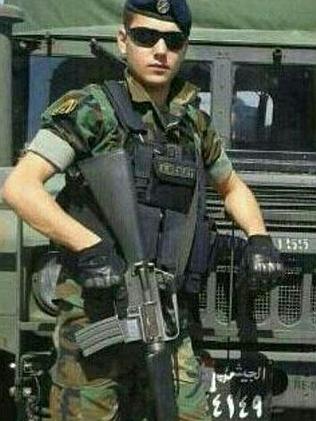
This is Ali:

Ali al-Sayyed

Ali was one of the brave men who fought against the Islamists in Nahr el Bared in 2007.  When he was killed, our government responded with statements and empty promises. They were considering their options. This beheading was a clear attempt to “cause civil strife.”

Meanwhile, the parents of those soldiers were closing off highways to the dismay of many. Traffic! Ugh. Then when they moved their protests from the Tripoli highway in North Lebanon to Beirut for more relevance, they found themselves being hosed down to clear roads as they chanted for our government to do something – anything – for their sons.

Their protests increased. It was no longer just a matter of a fragile status quo that allowed our government to continue its summer vacation. However, as things usually go in Lebanon, a couple of days after the murder of Ali Al-Sayyed, the news cycle diverted to other issues.

On September 5th, as the hostage’s families caused more “unrest” in the country, as they became angrier and promised escalations, our minister of social affairs Rachid Derbas made the following statement:

“Protesters in Qalamounaccused the government of being too strict and demanded negotiations while others asked for a military solution and accused the Cabinet of cowardice. This was a scary scene…. What’s with the families of the captured soldiers threatening [to incite] a civil war while their sons are still safe?”

Naturally, even the people in our government had forgotten that it had only been 7 days at the time that a public beheading of one of those sons had taken place. What made it even more ironic is the fact that the following day, on September 6th, ISIS released the beheading video of another Lebanese soldier: Abbas Medlej. He was 20.

Abbas Medlej

How did our government respond?

Well, for starters, our PM Tammam Salam gave a speech, straight out a Paulo Coelho book:

“We are not in a weak position. We have several options. There are various elements of strength in our hands…. Lebanon will not be defeated. Those terrorists will definitely be defeated.”

And then, because as we all know Lebanon is a country of utmost respect for civilities and the law, our minister of Interior Affairs Nouad el Machnouk promised to “speed up” the trials of Islamists in Roumieh. He also went to Qatar to see what can be done.

Then, almost 2 weeks later, on September 19th, ISIS executed another soldier named Mohammad Hamieh.

Mohammad Hamieh

Then we forgot about all of this for more than 2 months.

On December 5th, 2014, ISIS released a video in which they showed the execution of a fourth Lebanese soldier named Ali Al-Bazzal. They shot him in the head. A few days later, Ali’s grief-stricken father also passed away.

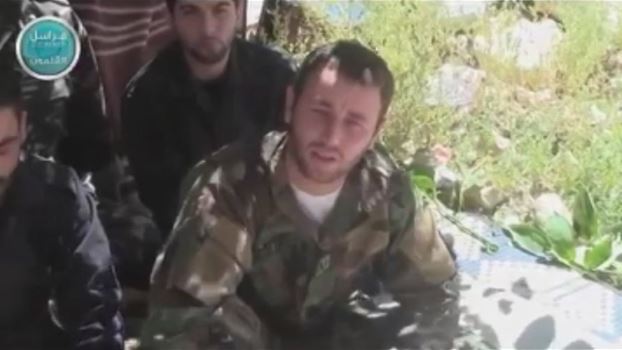
This is Ali:

Ali Al-Bazzal

And then nothing.

Now let’s contrast this with what happened in Jordan yesterday.

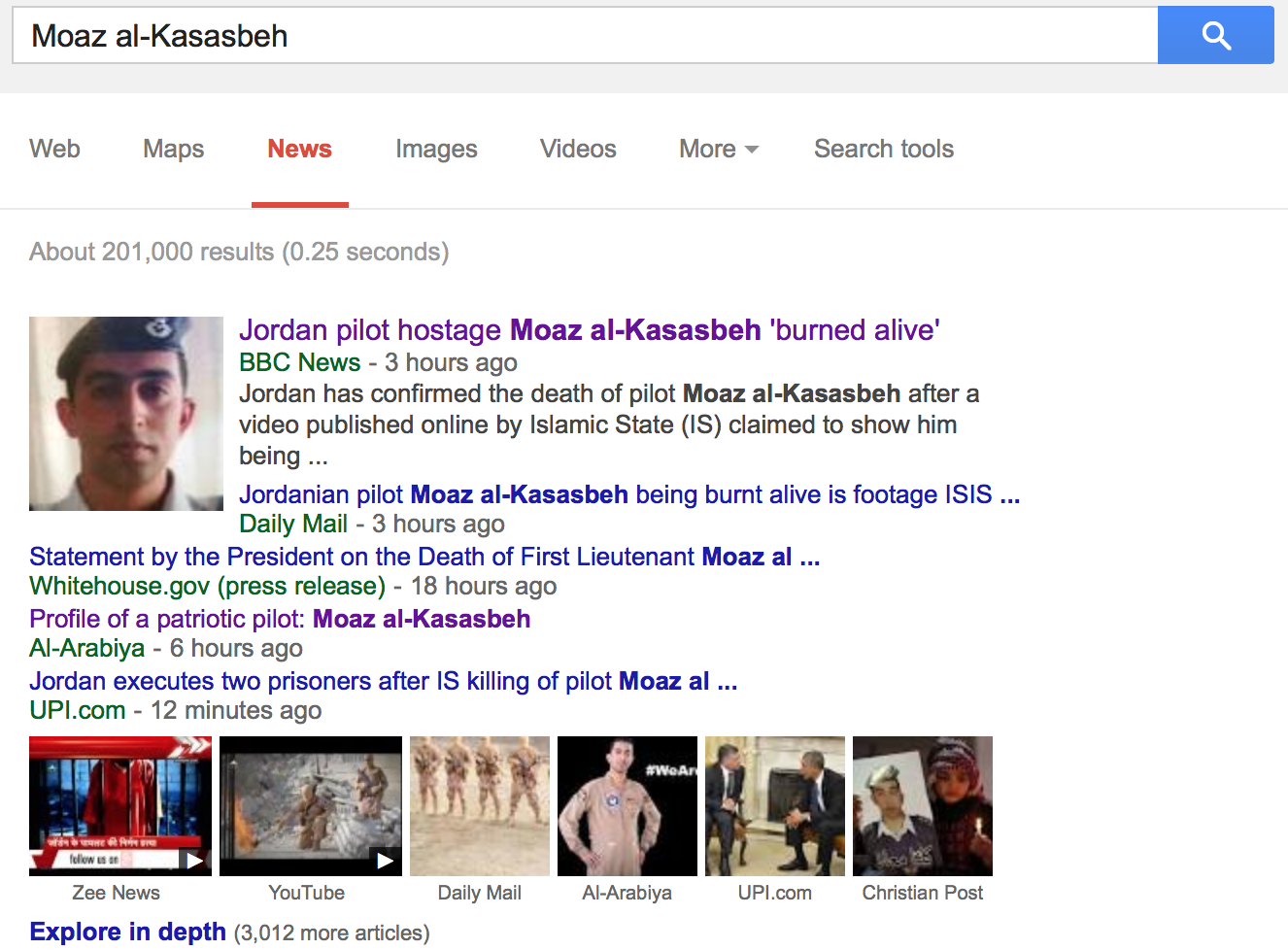
Moaz al-Kasasbeh was a pilot who was captured by the terrorists on December 24th after his F-16 jet crashed near the ISIS stronghold city Raqqa in Northern Syria. Yesterday, a video surfaced showing ISIS’ new style of assassinations: they burned Moaz alive.

It was reported that he had been killed as early as January 3rd, but the terrorist organization still negotiated with the Jordanian government to secure the release of a woman named Sajida al-Rishawi, who had taken part in a 2005 suicide bomb attack in Amman.

Following the news of his death, Jordan’s king Abdullah cut his visit to the United States short and vowed “punishment and revenge” for Moaz’s death. A few hours later, the country had executed Sajida Al-Rishawi as well as another Islamist called Ziad al-Karbouli, before announcing that they would increase their role in the coalition against ISIS.

And it doesn’t stop there.

Jordan managed to highlight the gravity of the murder of their son Moaz Al-Kasasbeh so well that every single international outlet has been addressing the murder at length. The whole rhetoric of “oh, his death isn’t as important because he’s not Western” was rendered invalid.

Moaz al-KASasbeh

Jordan’s TV stations put black ribbons on their screens along with Moaz’s picture. The death of just one of their soldiers sent their country into a frenzy to make sure they hold their own, that it doesn’t happen again and that they would be sure to respond aggressively to put ISIS in place.

By being the only Arab country to respond to ISIS, Jordan has proven that they won’t be yet another pussy-nation in the region to be trampled on by those terrorists.

I can’t say the same for the place we call our country.

6 months and 4 soldiers killed later, how did we make international news? Because of a selfie and a pornstar.

6 months and 4 soldiers killed later, instead of giving the parents of those soldiers a second thought, instead of telling them that we would “increase our role against ISIS,” we hosed them down with water, told them they are wrong to demand justice for their children.

6 months and 4 soldiers killed later, the country never mourned the soldiers who died, whose death was turned into entertainment for the sadists; our media never really bothered and we never cared.

Ali Al-Sayyed, Abbas Medlej, Ali Al-Bazzal and Mohammad Hamieh are four men who were not just killed because of their government’s failure, but who had to die over and over again by that same government failing to stand up against those that murdered them, by failing to make sure that their death translates to anything relevant, by making sure their beheading ends up as a non-event, another filler report in our evening news.

This is a disgrace.

May Ali, Abbas, Ali, Mohammad and Moaz rest in peace.

Simon, The Boy We All Helped Fight Leukemia, Has Passed Away

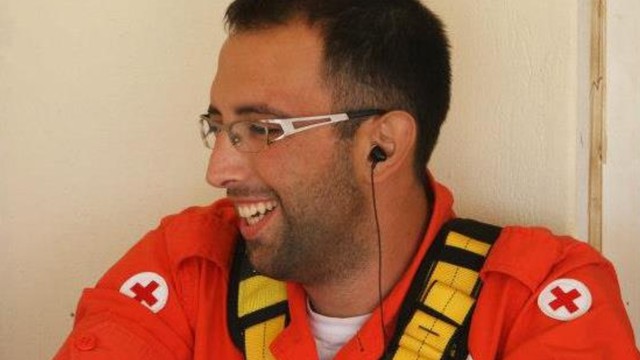
It seems like it was just yesterday that Simon’s story became a Lebanese headline story that got people from all over the world to help him reach the $60,000 goal needed for his bone marrow transplant in less than 3 days.

It was a glorious moment. I remember how proud I felt that I had helped. I remember how happy his brother was when I spoke to him afterwards to see how Simon was doing. His brother was given hope. We had given his family hope. Simon, the brave Red Cross volunteer who, in spite of his illness, always worked to save lives, had a fighting chance.

There’s nothing that’s 100% in medicine, we are taught. You can never tell a patient they will be cured. You give them percentages based on studies done by people much bigger than you to inform them of their chances. A surgery is never 100% risk free. A cancer is never 100% curable. Some people fall through the cracks of the numbers, of the drugs, of the scalpels and of what we know about the human body.

On Friday, January 30th, after several weeks of being at the hospital, Simon Badaoui passed away.

I often hear that reasons are multiple and the end result is always the same: death is omnipresent. Today, Simon is being celebrated by his family and friends for the brave fighter that he was, for the courageous man that he is.

Simon will never die as long as there are people who remember him. He leaves behind the memory of a young man who rallied an entire country to help him. He is remembered as the young man who didn’t spend his nights partying but who worked tirelessly to save lives that would have otherwise perished. He is remembered as that man who was given 8 months of hope that he would have otherwise not had. He is remembered as a friend, as a son, as a brother.

All of those are memories worth leaving behind.

May he rest in peace. My condolences to his parents, siblings and all the people that held him dear.


No Hezbollah, We Are Not Ready For War


When Hezbollah retaliated by attacking the Israeli army convoy on Wednesday, my knee-jerk reaction was to call my friend who was the most touched by the 2006 war. She’s a medical student in my class, lived all her life in a village right at the border, spent several sleepless nights back in July 2006 huddled in an underground shelter her family had and still cowers away from sudden loud sounds to this day. She had a test that day, and she was devastated.

As she tried reading Internal Medicine off her iPad while checking news on her phone, she frantically called her parents who told her that schools had closed in the region. People had rushed to the bakeries to buy all the bread they can get. Grains had run out of the market in minutes. Flashback to 9 years prior to presentation, in 2015. Welcome to Lebanon, where the fragile stability in which you try to thrive can be taken away in a second.

For several tense hours, we all wondered what awaited us next. Would we have to go through yet another July war, but in January? Can we handle another war? Do we really want another exacerbation of the situation we’re perpetually in?

As I caught up with news online, I remembered back in July 2014, at the ER of the hospital I’m rotating in when a colleague from the South told me about the house his family had built.

It was a big mansion near Tyr, he said. A massive structure with dozens of rooms and beautiful views, he boasted. They were building it before 2006 but it got destroyed in the war by an Israeli shelling. His moment of pride came when he shared with me how in the 8 years since, his family had rebuilt the entire house, this time bigger, fancier, bolder, and that when the mansion gets destroyed again, as he was sure it would, they would be only too willing to rebuild it once more, bigger, fancier and bolder. “I miss war,” he said. “I can feel my body itching to fight.”

I shrugged him off back then, despite me knowing that he echoed a lot of people in his sentiment. It was madness to me that this cycle would become close to normality. In Lebanon, it is normality.

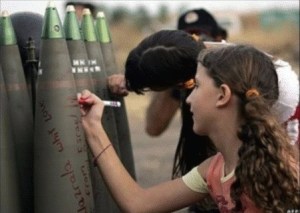
As such, following the attack on Wednesday, many figured bringing up the data-side of 2006 would sober up some people. 1300 dead, billions in damages, ruined infrastructure, bridges destroyed beyond recognition, economy in tatters, millions of cluster bombs, political repercussions from which we haven’t begun to recuperate 9 years later, just to name a few.

In a way, if all of the previously mentioned data existed in another country, it would guide people away from what caused them, towards more stability, more security, and less volatility. In Lebanon, however, these statistics are as irrelevant as this blogpost you are wasting your time reading.

We are a country ruled by law of emotion. This is not exclusive to Hezbollah and its supporters. It transcends them to all sects and regions. Those up in a fit about Nasrallah’s speech today would only gladly shoot up in the air hundreds of bullets when their politician graces other screens and would also pump their fist in their air in synchrony with the see of “labbaykas” they are in.

People convince themselves that their politics today are what they are because of current times. Those views, however, always stem – almost with no exception – from those same political parties benefitting their supporters in one way or another: protection during the Civil War, financial support in times of need, cover-ups for high profile murders (Yves Nawfal anyone?), wastas for med school admissions….

As such, what Hezbollah did on Wednesday, what Hezbollah is doing in Syria, what Nasrallah said today and what might or might not happen in the coming days are all broad headlines and actions that, for Hezbollah’s supporters, only serve to reinforce the notion their party of Allah is unattainable, beyond reproach, beyond questioning, beyond criticism, and, for lack of better word, allah-like, especially for those whose “faith” was waning. They should have known better. Repercussions obviously be damned.

In a country of emotional rule of law, repercussions rarely matter when the statements and actions preceding them are feisty, ambitious, grand and resistive. The lives of this country’s people are also only a matter of plus or minus numbers when their death and sacrifices are for a greater cause that, in the greater sense, only moves at a snail’s pace except in the eyes of those who view those deaths as advancing that grand cause.

However, those repercussions that don’t really matter are lived and felt by all. Yes, we all live them, contrary to those who have been pointing fingers lately to say that even the 2006 war wasn’t felt by everyone. I was there in 2006 when my part of the Lebanese Bible Belt had more Ali’s than Elie’s. I was there when those Ali’s in my hometown wept at the sight of their demolished homes. I was there when my neighbor was wailing as his son narrowly escaped death at the Madfoun bridge when it was bombed. I was there when every single Lebanese without exception looked at the skies in horror as smoke from across the country filled the horizons.

Between 2006 and 2015, we have done very little, if nothing at all, to lessen the repercussions of a possible new confrontation with our enemy down under. For instance, have we at least made sure that civilian casualties this time around wouldn’t be in the four digits and that we wouldn’t lose children whose only fault was being of a certain region, living at a certain time in Lebanese history, by building shelters for them? No. We can’t even tell our people جهزوا ملاجئكم  because they don’t have any. In a culture of the glorification of death, such souls don’t matter.

Today, Hezbollah says it’s ready for war, as it would obviously say. Hezbollah’s entire existence is well-rooted in its preparedness for conflict. I would be surprised if they weren’t. Hezbollah’s supporters would pretend they are ready for war as well. Eventually, in the case of war, the country would also follow suit in supporting our countrymen against Israeli aggression, despite us just waiting until the dust settles to point the finger and shout that we did not ask for this, while people tell us that the whole “another” war rhetoric is futile since the mere presence of Israel invokes lack of safety. But I digress.

The problem with Hezbollah being ready for war is that, once more, it reinforces the notion that they believe they exist in void, which is something they are repeatedly failing to understand. Nasrallah’s party may be ready to roll, but that party operates within the confines of a country that I’m sure he’s sad to be stuck in called Lebanon, a country that extends beyond the borders of the Litani, in which millions other than Hezbollah’s militants exist, in which there are now 1 million plus refugees that are freezing to death, in which there is no president, in which the government is so handicapped it couldn’t convene following Hezbollah’s attack on Wednesday, in which we are facing one of the toughest economical situations in years, in which the entire status quo is hanging on a fragile line that few want broken. And that country, in all its irrelevance, is not ready for the war that Hezbollah doesn’t even want but is “ready” for.

Back in 2006, Hassan Nasrallah said in an interview (YouTube link) that if he had known kidnapping the two soldiers at the border would lead to the July war, he wouldn’t have done it. I highly doubt the country is in a better state this time around. Either way, this isn’t something we get a say in.

How Hiba Tawaji Completely Owned France’s The Voice

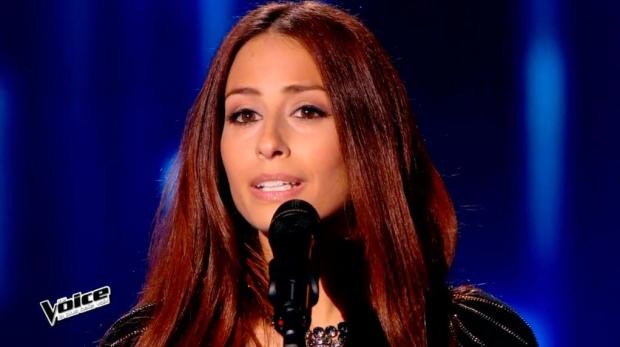
Hiba Tawaji The Voice

Hiba Tawaji just blew everyone away at France’s The Voice, as was expected. She started off singing Michel Legrand’s “Les Moulins De Mon Coeur” before going into her own Lebanese version of the song “La Bidayi Wala Nihayi” prompting all four judges to turn for her.

Hiba then continued singing effortlessly before ending her performance with a high note that got all 4 judges to give her a standing ovation, as well as have the audience attending the taping rise to their feet to applause her.

This is Hiba’s performance:

https://www.youtube.com/watch?v=fxXLHjMc02Y

She ended up choosing Mika as her coach for the rest of the show.

Hiba Tawaji - The Voice France

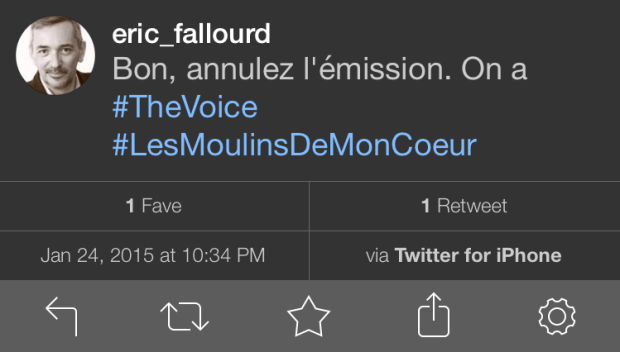
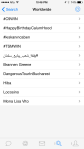
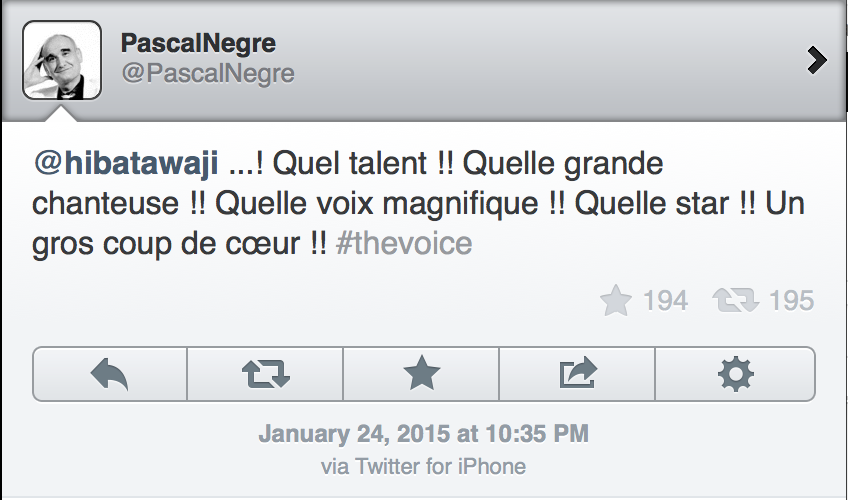
French audiences were also extremely receptive of her. “Libanaise” and “Hiba” both trended on Twitter worldwide. The following is a sample of the tweets that I screenshot as people gushed about her performance:

Even the head of Universal Music France was blown away by her:

Hiba Tawaji The Voice France

I saw a lot of Lebanese people wonder how it makes sense for someone as accomplished as Hiba Tawaji to end up on a French talent show.

I think someone as talented and as vocally adept as Tawaji is limited by the scope of what she can do in a country like Lebanon. Her talent can easily find a place in an international scene, with France being the easiest stepping stone as The Voice has proven to be receptive for Lebanese talents as Hiba Tawaji is the fourth Lebanese in four seasons to participate.

Sure, participating in a talent show doesn’t necessarily translate to instant success, nor does it mean she is sure to win the show. But if there’s any Lebanese that can have a shot at reaching the finals (the best outcome so far was Anthony Touma reaching the semi-finals in season 2), it’s her – and her audition only serves to prove that point: out of all 4 Lebanese, she was the best by far.

Moreover, Hiba Tawaji has been around for several years now, and her state of success, albeit impressive, is easily dwarfed by much less talented but more busted female singers in the country, which means that she is quite under-appreciated here for the level of art she is presenting.

Naturally, there will also be those who tell us that there are more important things to worry about. Of course there are more important things that Lebanese should be preoccupied with. At times like these when our army soldiers are bravely dying to let us watch such TV shows safely in the confines of our homes, and when there’s little to be optimistic about at the state of the country actually, such a moment can serve to unwind. And that’s not really a bad thing.

The French are referring to Hiba as “la Libanaise.” She represents us and is doing so extremely well. As such, Hiba Tawaji has made us all proud today and best of luck to her progression on the show.