Why Lebanon’s Psychologists & Psychiatrists Are Now Talking on Homosexuality

You’ve probably heard a lot recently about how the Lebanese Psychology and Psychiatry associations have “come out” in the scientific favor of homosexual behavior in Lebanon.

For those of you who don’t know, the main reference for psychologists and psychiatrists, the DSM, has declassified homosexuality as an illness 40 years ago. So why is it now that Lebanon’s psychologists and psychiatrists are saying it isn’t so to the Lebanese public?

Well, I’m lucky enough to be passing through a psychiatry rotation at the country’s leading psychiatric facilities, under the auspices of one of the psychiatrists who was cited in the many press events that have taken place around the issue at hand. So I asked the question that has been going through my head for a long time now: why now, 40 years later, since the DSM update on the matter happened in 1973?

It seems the main reason behind the associations in question is because “the time is right.” What time is that?
Apparently, following the closure of Ghost in Dekwaneh, some TV stations hosted “psychologists” who proclaimed homosexuality as a disease precipitated by some forms of child abuse. This statement has absolutely no basis in reality so the Lebanese Psychology Association and the Lebanese Psychiatric Society decided that such erroneous information were not to be allowed to be propagated and that they were going to counter them.

The psychiatrist whom I asked for information on the matter was adamant to note that, contrary to the increasingly popular belief that such statements aim to get the law changed, it is not in fact their aim because “legislation doesn’t concern [Lebanon’s psychiatrists].” They are simply trying to raise awareness on the issue due to the way Lebanese media has been portraying it.

Do they hope the law gets changed one day? The psychiatrist in question said he’s personally in favor of changing the law. But it is not their job, nor is it part of their agenda. It is worth noting though, that even though Lebanon is technically “40 years late,” it’s still the “first country in the region to have such stances made public.”

Either way, based on my observations in psychiatry for the past few weeks, Lebanon has a long, long way to go regarding much of that domain.

America, Syria And All Those Arab Hypocrites

It’s funny how many people are suddenly against foreign interference in Syria. I’ve been wondering for the past week, as news of a possible American strike against Damascus surfaced, where all those people who cared about the sovereignty of Syria were for the past two years?

Arabs are interesting people. You only need to say America once in order to get them rallying behind their one common secondary enemy. The United States is the world’s biggest terrorist organization, some of them would say. You can sit back and laugh. The problem is that they firmly believe that the problem is actually the United States.

Media and people have rallied against any possible American strike, against the “imperialistic” regime that has targeted the countries of the Middle East for a long, long time. They started recalling Afghanistan and Iraq. They reminded people of the thousands who are dead because of this American greed for oil and power, although they failed to mention that Syria isn’t on the oil map. How dare they think they can use our airspace to fight our neighbors? How dare they think they can do whatever they please and not find repercussions? What right does the United States have to attack Syria?

Or so say the people whose brand of interference is not satisfied by America. Say no to foreign interference in Syria. Except foreign is only that when it’s non-Arab, no? Because somehow Arabs get to interfere in each other’s business as much as they want but it’s more than acceptable because they’re all one big happy family, raised on accepting each other’s boundaries and liberties.

For the past two years, every single Middle Eastern country has made it its bread and butter to interfere in Syrian affairs daily. But no one had a problem with that, right? Everyone is against foreign interference in Syria – except when said interference is at the hands of Hezbollah and Iran? Why? Because they’re helping the region keep one of the last remaining regimes against Israel’s zionist plans?

How exactly is the Assad regime resisting Israel? When was the last time that regime attempted to liberate the Golan Heights? How many bullets has Assad fired at the Israeli army in the past twenty years? What did Assad do when his country was bombed by Israel a few months ago?

How does anything that Assad did regarding Israel actually qualify as being a “resistance” regime? Does threatening Israel through Hezbollah in case the United States does anything to his country actually count?

The way I see it, the only country getting screwed in that non-sensical logic is Lebanon, as always. How long are we supposed to be the playground for that Syrian regime whenever it feels like it? How long are we supposed to be an extension of the war in Syria just because some parties in our country can’t mind their own business? How many more explosions that are caused, whether directly or indirectly by said parties, are we supposed to withstand just because they decided to go rescue their best friend next door? How many more independent war and peace decisions are we supposed to swallow just because they can do whatever they please? How is anything those parties are doing remotely acceptable to the entire well-being of this supposed nation that we want to call home?

Or is it because the Syrian regime is in bed with Iran and is therefore, by association, fighting Israel? And is “Israel” the only factor that is relevant enough to help us shape whatever policy or opinion we want to have? Is this “resistance” axis, whose only activity is that restricted to empty words, enough reason for us as Lebanese to let our country be screwed every single day?

Or are Arabs really afraid that those Western countries they despise actually have a form of accountability to their politicians that might see them removed from office that their countries would never, ever have? Because they’ll never see their parliaments vote against strikes? Because they’ll never see their presidents defer such decisions to legislative bodies? Because they’ll never see their leaders lose elections due to their political choices such as the ones that come to matters of war?

I also keep wondering how many people have actually forgotten what the Syrian regime is actually capable of when it comes to atrocities. Somehow, the discussion has become to let the regime stay because those rebels are worse. We’re fighting with the regime because we don’t want those “takfir” people to reach power. How abused has that word become lately? And how scared have people become of it without knowing that those who are supposedly fighting those “takfiryyin” are no different? This isn’t a matter of choosing the lesser evil. This isn’t a matter of bad versus worse. This is a matter of worst versus worst.

Do you not remember the years of human rights abuse that the Syrian regime has committed against Lebanese? Are you not familiar with the different types of experimentations that the regime has done on Lebanese people just because they defied it somehow? Do you not remember the children in Houla who were murdered ruthlessly last year by regime forces? How is this better than those “animals” who eat hearts and behead Christians? Are Christian lives more valuable just because they’re minorities? Can we stop using such useless arguments just because they allow you to have some form of cover for you coming out in support of a regime that is as horrible as the rebels you despise just because they don’t fit in your political mold of choice?

And then there are those who suddenly woke up from their two year coma and noticed there are human rights violation in Syria. Chemical weapons are a no-no – that is the red line that must not be crossed. Never mind the countless red lines that have already been crossed in Syria over the past two years as the entire world stood by watching. Human lives are not really worthy when their nationality is not of the decent kind. Those people have, therefore, decided that it makes sense for the United States to finally interfere in a “limited” strike whose effects might be anything but “limited.” Because human rights are somehow best perserved by increasing violence in a country that is already torn apart by violence? Because there’s no other solution to Syria except the easiest solution that involves sending missiles gifted from Washington, London and Paris to Damascus with love?

I don’t know who used sarin gas in Syria. Arguments can go both ways. Proof, be it fabricated or not, can also go both ways. Rebels or regime. Terrorists or the terrorist fighting those terrorists. But does it even matter who used sarin? The ship of common sense questions regarding Syria has sailed a long, long time ago. And by the looks of it, that ship won’t be coming back anytime soon because if there’s anything that life in the Middle East has taught us, it’s that the people of the region tend to think with their emotions when it comes to the matters of the head. But when it comes to politics, emotions have no role.

Lebanon Censors a Play About Censorship

Some officials in this country don’t seem to live in the same place as people who are worried about going by everyday, about explosions and impeding wars.

Instead, they are more worried about how their reputation plays out through a play that doesn’t even target them in a documentary way. A play about censorship was censored by Lebanon’s bureau of censorship. Why?

1) Because the bureau couldn’t grasp the fact that this is satire.
2) Because the man in question doesn’t require his subordinates to stomp their foot in salutation and was offended the play suggested he does.
3) Because our censorship bureau got offended that a play is making fun of them.
4) Because the play in question was, according to the bureau, “not a work of art but a work of shame.”
5) Because even though there’s no law to dictate we can’t criticize the censorship bureau, they can – according to this article – “forbid whatever [they] want and [they] will forbid it.”

A play is not something that our censorship bureau can cut into little pieces for the audience to watch. They either take it whole or not take it at all. Our bureau has decided not to take any parts of it.
A play is also not something that we can get access to through modern technological means. It’s not the art that has gone digital to become accessible. Instead, our censorship bureau has decided that its sense of moral well-being is best served by stopping every single Lebanese from getting access.

In this act of censorship, this bureau in question has made a bigger fool out of themselves than this play would ever do. They showed us that what we get exposed to is dictated by something that can’t even take a joke.

I’m not one to usually follow the rhetoric of “there are worse things happening to care about this,” but when the country is on the brink of war, this is what is decided to be censored: a play meant to make people smile in these troubling times, instead of all the crap of sectarianism and violence instigation that we are bombarded with everyday by our media. I guess that’s what our bureau likes. Such a shame.

This is the play’s trailer:

Screw Lebanese Media

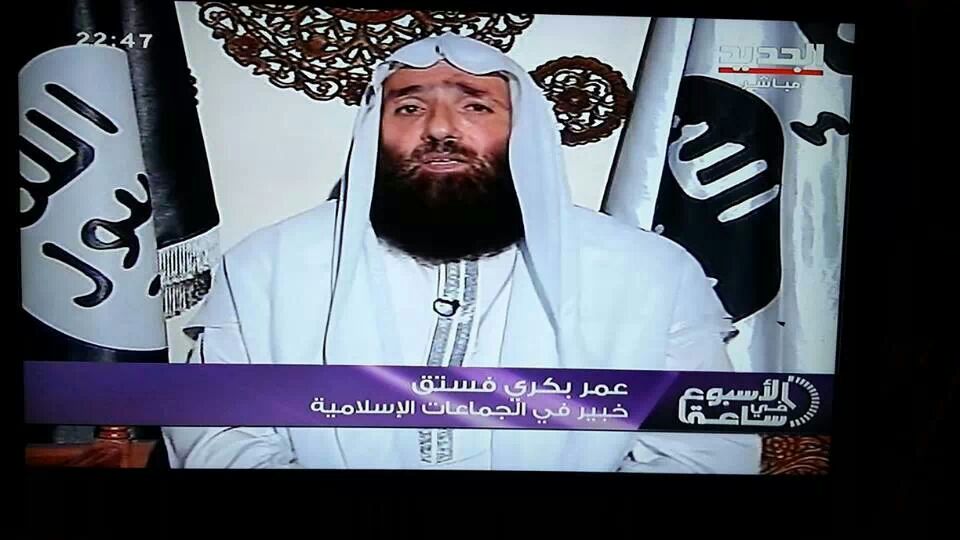
Tripoli Sheikh


The above sheikh was hosted on NewTV earlier tonight to talk on behalf of the people of Tripoli. I guess that city ran out of spokespeople over the past few days so the TV station in question figured digging this creature up from the depth of whatever abyss he was in was a good idea. Ratings are proportional to beards.

Note that this sheikh is said not to even be from Tripoli and has not been residing there all his life to get to talk on the city’s behalf.

This man spoke about the need for self-security for himself and his fellow Sunnis of Tripoli. Did the TV station in question even bother to target this rhetoric? Of course they didn’t. This is the rhetoric they want being spewed around their airwaves lately. This is what gets people talking. This is what gets people to tune in. Of course, this is precisely the rhetoric that also gets people killed and further explosions taking place and extremism rising. But who cares about that, right?

In the process of his TV moment of fame, this creature also asked for the help and support of Al Qaeda in protecting the people of Tripoli. I’ll leave that notion hanging.

There’s a responsibility for Lebanese media to kill off such eccentrics in times when such extremism is not only unhealthy but detrimental to the well-being of everything around us. Does hate exist? Sure it does. Do people who mean harm for others just because they think differently exist? Sure they do. But it doesn’t mean we should give them air time to poison minds. You only needed to tune into FutureTV on Saturday with Paula Yaacoubian or MTV hosting Khaled el Daher as well, for the nth time, yesterday for your prime examples.

Our TV stations are still searching for the next big scoop instead of being mature and responsible in handling what seems to be an impeding civil war.

PS: If you think my blog titles have a lot of “screw” lately, it’s because we’re in a general state of screwing.

A Phone Call with Lebanon’s Police

I keep hearing about security plans for this country, especially for the places where security has been non-existent. My idea of a security plan, despite me not being an expert whatsoever, involves – at the very least – a sense of involvement from the police seeing as we are asked nowadays to report any suspicious behavior because you never know if that behavior might lead to us getting blown up.

For instance, one of the two bombers in Tripoli apparently parked double parked the car in broad daylight and simply walked away. People called after him and I’m sure someone might have tried to call 112. What would 112 have done in that setting?

I present to you a transcript of a phone call of a man from Tripoli, the city that was victim of two explosions on Friday, with the police in his city. I’m not sure if this is funny or harrowing.

Police: Alo, police.

Man: Alo, I want to report a person who set up a checkpoint while carrying a weapon.

Police: Where?

Man: Next to the Ayyoubi store for paint products.

Police: Where? Bab el Ramel?

Man: At Muharram, yeah. He’s standing there, asking people where they’re coming and going.

Police: There are 5000 armed men in Tripoli, okay, habibi.

Man: But he’s setting up a checkpoint!

Police: There are 5000 armed men in Tripoli doing like him.

Man: Do I shoot him then?

Police: I don’t know. You can do whatever you want.

Man: Seriously? Are you the state or not?

Police: It’s fine, may God give you strength.

(hangs up).

I especially liked the fact that the policeman told the civilian to do whatever he wants when the latter suggested to shoot the gunmen. Is this what they’re expecting of people nowadays? Self-security because our police are too nonchalant and passive?

What’s next if every region or sect sects up its own brand of self-security? What’s the point then of having a state from which we need protection?

Check out the video here.