Lebanon’s 2013 Elections Campaigns: Khlosna Ba2a

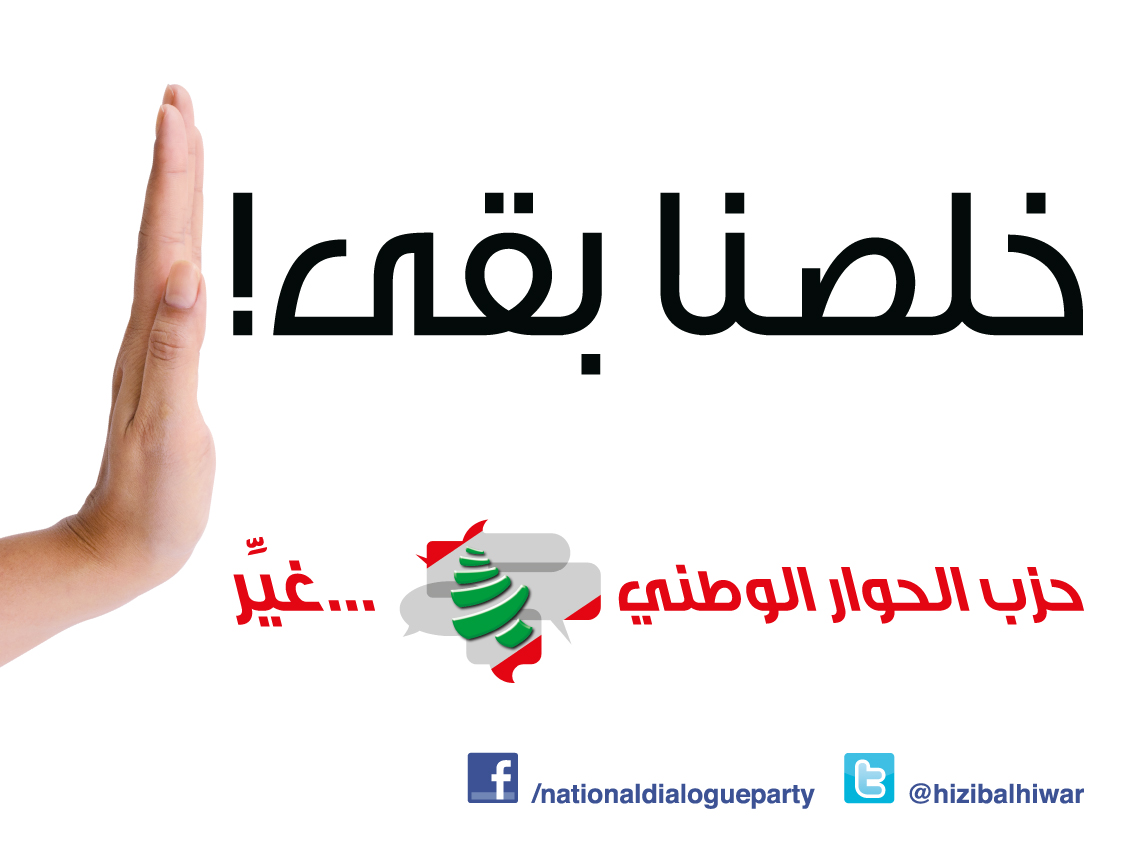
While politicians from Lebanon’s two main political camps bicker over an electoral law they can’t wait to disagree upon, the campaigns to kick off the 2013 election season have begun with “Khlosna Ba2a” – Enough is enough.

The main party behind the campaign is the National Dialogue Party (NDP), spear-headed by engineer and businessman Fouad Makhzoumi who’s a known philanthropist.

The campaign aims to show what I think the majority of Lebanese believe and it’s our utter disgust at the current situation of the country: corruption, immigration, violence, dismal economical prospects, lack of proper dialogue, entrenched sectarianism. And the list goes on.

While I believe that such campaigns, similarly to Take Back Parliament, should have been started a long time ago and not only a few months before the elections in order to rally people and have a functional grass-root movement to get their votes, it’s still nice to see that there’s at least potential for alternative candidates spread around the country who would run based on qualifications not based on how big their family is or how faithful to a corresponding party they are.

Either way, I believe that the coming few weeks will start seeing more electoral campaigns kicking off as the electoral law should – theoretically – be known by then. And I believe the least we can expect is interesting slogans. The least we can hope for is less “Sois Belle et Vote” this time around and more intelligent messages such as “Khlosna Ba2a.”

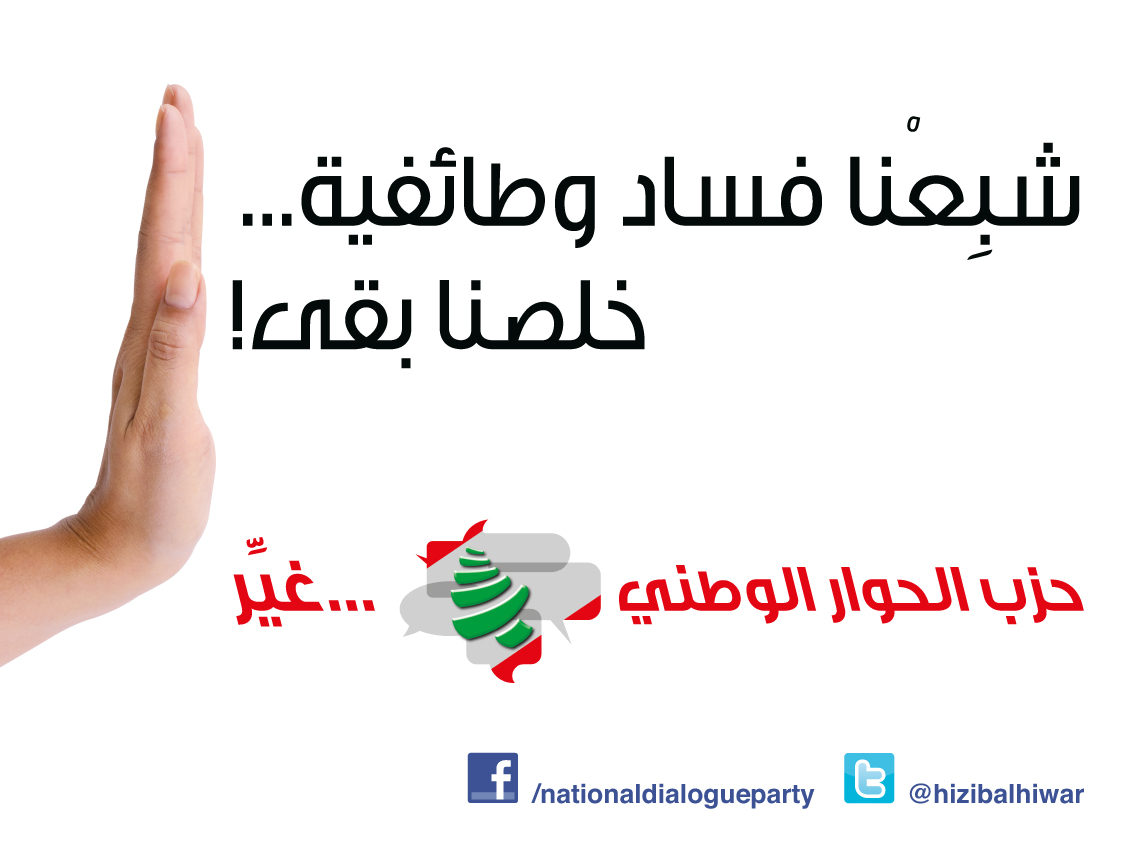
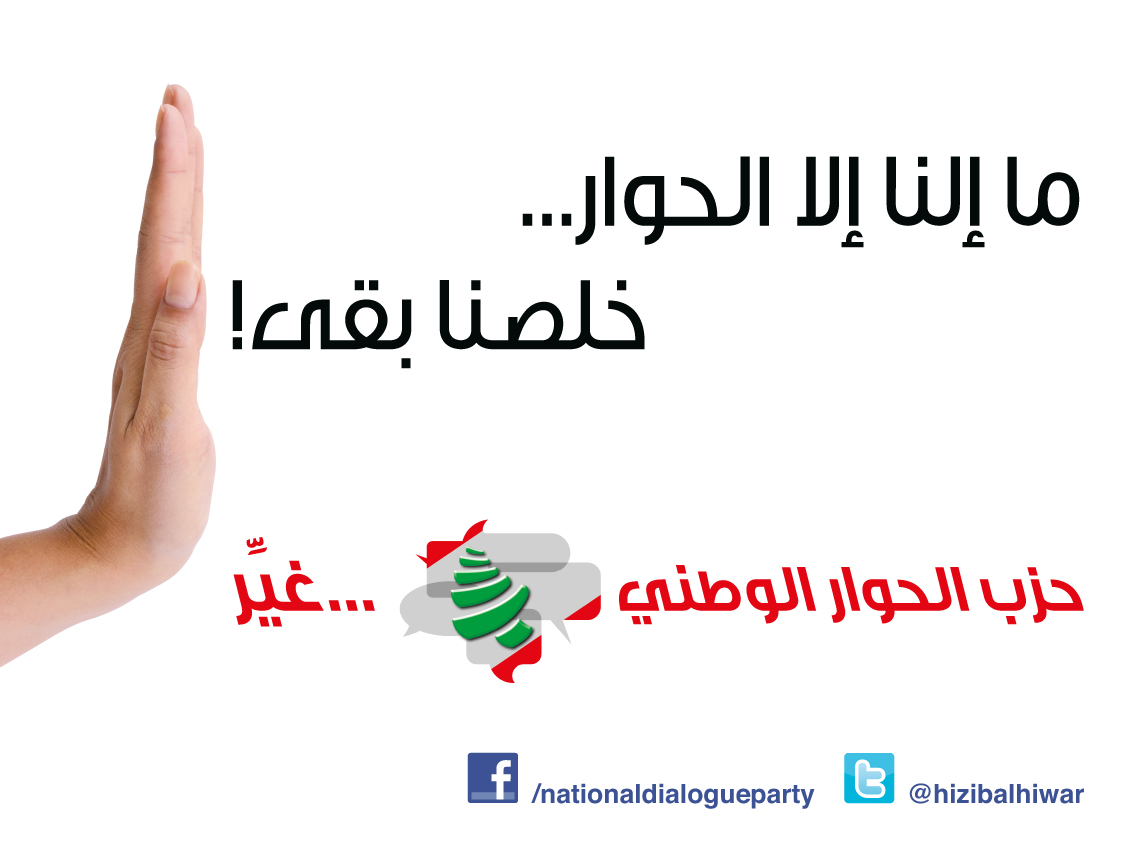
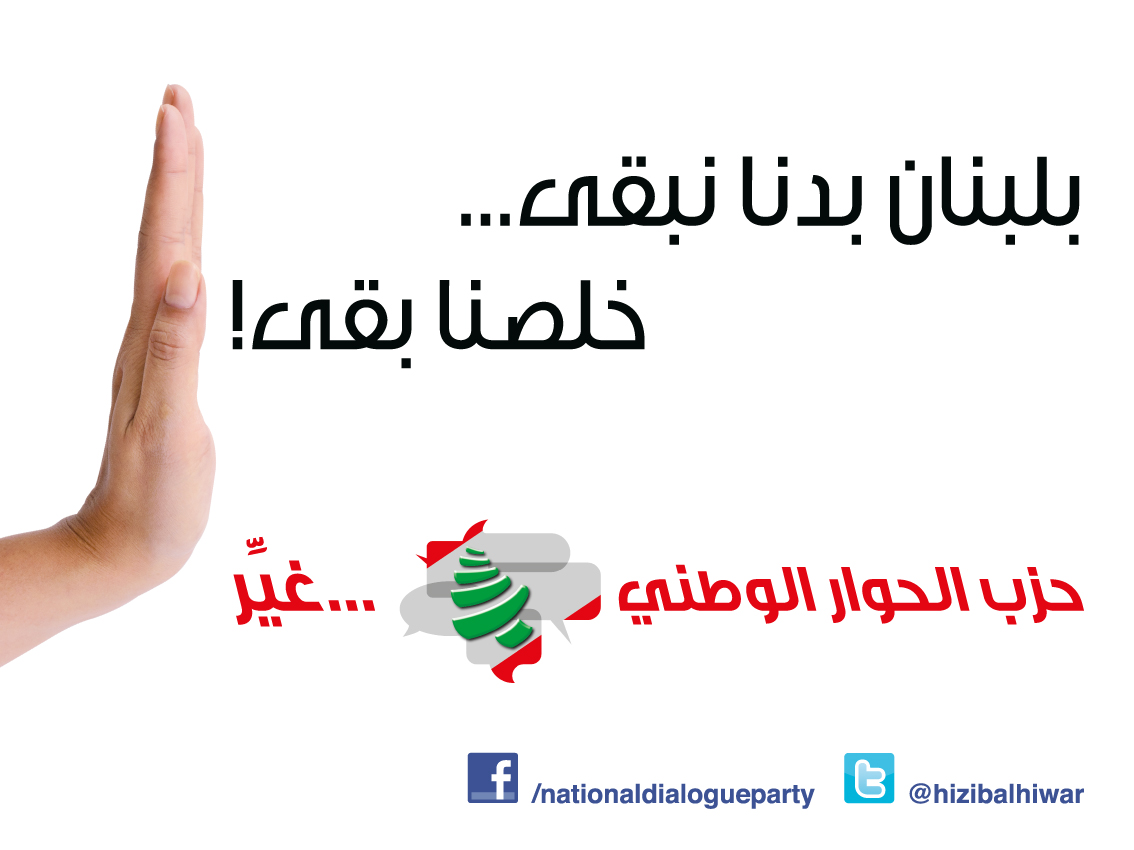
Here are the other ads in the campaign so far:

We’re sick of corruption and sectarianism. Enough is enough.

Our only option is dialogue. Enough is enough.

We want to stay in Lebanon. Enough is enough.

What’s The Legal Limit of Cyber Lebanese-Israeli Contact?

In the age of the internet, we, as a Lebanese, are bound to stumble on Israelis who are just like us – browsing around – and many of them actually reading the blogs we write, the pages we share, possibly even following us on twitter and others befriending us on Facebook.

For example, in the past few months, I’ve gotten over 3000 users from Israel to read this blog. And I cannot not allow it. And frankly, I don’t mind them reading.

I don’t have Israeli Facebook friends – I felt like this had to be put out there to prevent any sensitive folk from starting to hurl treason charges from the get-go.

My question is simple: when does our internet interaction with Israelis become illegal? Is replying to a comment by an Israeli on this blog considered illegal? What if I didn’t know he was Israeli? Am I supposed to track every user’s IP to know their country of origin? Can I not reply to emails by readers who happen to be Israeli and who are telling me that they enjoy what they have to say?

I’m not advocating normalization. In the case of war, I – Elie Fares – would be the first to support whoever wants to defend my country because they are, at the end of the day, my people. But don’t you think that worrying about an email or blog reply to another person who might as well be just like us is taking it too far?

This reminds me of a day when I was searching for an article to read about Lebanon’s oil reserves. One of those articles was on Haaretz, which required you to register in order to be able to read the article. And I couldn’t register because I didn’t know if that would be considered illegal as well. Is that normal? Is that how things are supposed to be?

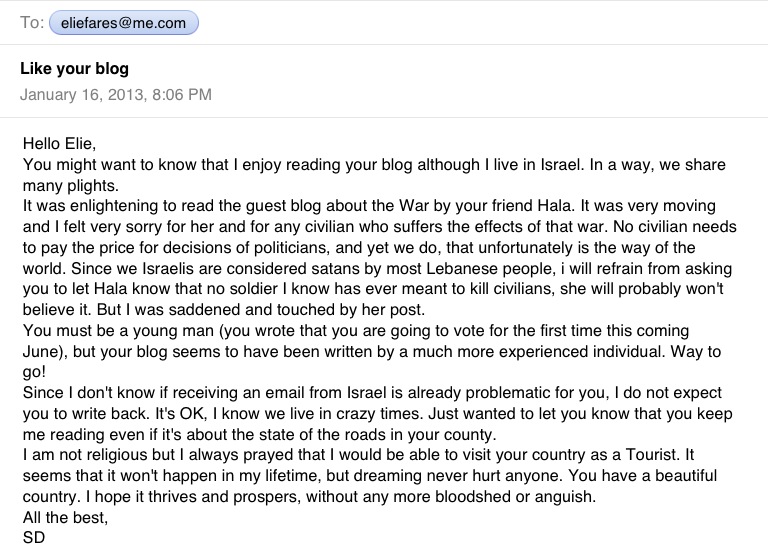
I recently received an email from an Israeli whose name I won’t mention – and the email was touching. People advised me not to reply. So I didn’t. But I really, really wanted to. Not because I “approve” of the state of Israel. Not because I want to leak out information which I don’t have. Not because I want to feel a rebel in doing so. But because the following email really does warrant a reply as decent as the email itself:

LebanoN israel emailSo here it goes.

Dear SD,

Thank you for your email. I’m sorry I couldn’t reply earlier and I believe this isn’t quite the reply you were expecting. But it’ll have to do for now. I was told not to reply via email. Others told me of a workaround that couldn’t be tracked but that would have been way too fishy. So I figured I’d do it here, out in the open, because I really have nothing to hide. This is, after all, a simple reply to an email.

I sent this Hala’s way. She didn’t have too many kind things to say which is understandable if you ask me because she’s the one who was hurt due to repeated wars not me. So I will never fully understand what she has gone through. But she has said this with which I agree: “We know that human beings do not enjoy killing each others unless they’re sick people, your soldiers follow orders, they fear orders, they are taught to be obedient for their “cause.”

I am not as young as you think I am – voting age in Lebanon is 21 and I’m already beyond that point. And thank you for always reading – even if it’s about the road state in my country.

I’m afraid your wish will never happen in our lifetimes. It’s the way things are. But I know many Lebanese would love to visit our enemy to the South.

Best,

Elie

So what is our legal limit as Lebanese when it comes to internet contact which is becoming frequent lately with Israelis? Where is that line that we don’t really want to cross?


Putting Lebanon’s First Civil Marriage in Perspective

We sure are all thrilled that a Lebanese couple defied all odds in having Lebanon’s first ever civil marriage happen on our soil (click here). They are courageous and should be commended, as we’ve all done and they have shown that, if you absolutely want to, getting a civil marriage in Lebanon is entirely possible although extremely tedious.

Some people categorized is as a triumph for a secular state to be, some were thrilled that they don’t have to go to Cyprus now to get married. Others were over the moon that this is this couple’s way of sticking it to religious figures who want to keep us down. You know how the drill goes.

But things are not that peachy. Quite simply put, if you think about it Lebanon’s first civil marriage is a triumph for our secular system first and foremost.

As I was discussing with a friend the possibility of maybe removing our sects like this couple did, I had this nagging idea in my head all the time: how much would that limit my prospects in this country?

And the answer is: a lot.

How is a couple being forced to remove their sect from all governmental papers in order to get married a triumph over the sectarian system? If anything, it’s a grave injustice for them. Not because our sectarian system is healthy but because by opting out of it through removing their sect from all their legal documents as per Article 60 LR., this couple has not only limited things for themselves but for their children and their children’s children as well.

It’s not even about governmental jobs which are allocated according to sectarian quotas. It’s about universities which admit students in a Lebanese-affirmative action sort of way whereby half of its admissions are Christians and the other half is Muslim. It’s about jobs that would hire you outside of qualifications if you’re from a certain sect. It’s about this mentality among a lot of people – arguably the majority – to help out others just because they are “men wleid l tayfe.” (from our sect).

It’s not the way things should be, sure. But it’s the way things are. Should the consequences of a civil marriage be limited opportunities for everyone involved? I hardly think so.

Whether we want to admit it or not, the current state of affairs in Lebanon is entirely run on that category in your documents labeled “sect.” Once that box is empty, where do you fit in the bureaucratical aspect of things? Nowhere. How will they register their children when the time comes? How difficult will it be for them to get things done in this country starting from getting that meaningless “ikhraj l eid?”

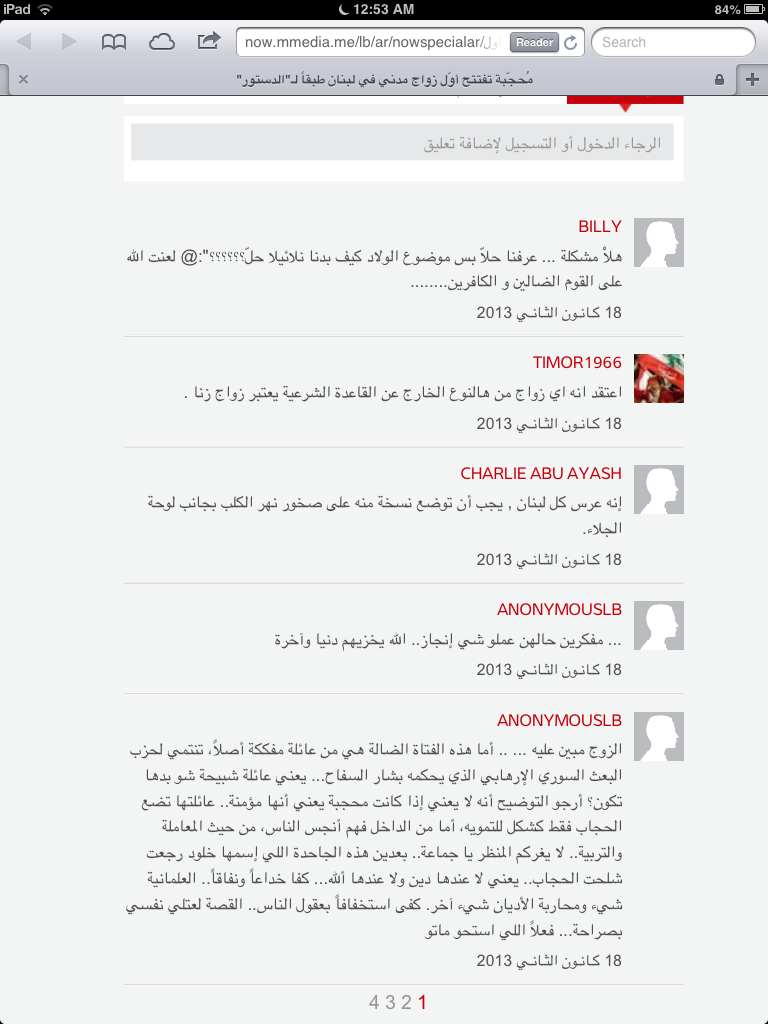
On top of all that, here’s a sample of some of the comments on NowLebanon’s article about the issue:

Civil Marriage Lebanon


Enough said, I guess.

Quite simply put: a “proper” Lebanese civil marriage should be one that takes place while all your governmental papers still have your sect written there in that box.

Either way, if you want to get a civil marriage Lebanon is not the way for you. Nicosia should still be your main destination because at least you know that if you get married there you won’t have a whole lot of repercussions to go through and you know that your children won’t have to go through hell and back in order to get a job.

Lebanon’s First Ever Civil Marriage

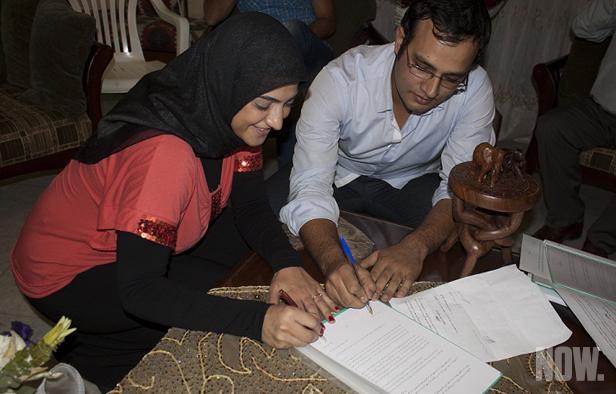
Civil Marriage lebanon - 2

Amid ongoing discussion about the Orthodox Law, Christian rights and naseauting political ads, there’s a piece of news which makes you hopeful about this country we live in.

No, they didn’t go to Cyprus. They didn’t travel to the end of the world to have their marriage signed. Yes, they are religious – she is veiled. But a Lebanese couple who wanted to get married decided that they wanted their union to be an embodiment of civil, not religious, rights. And so they became the first couple to – legally – have a civil marriage in Lebanon. For the full story, click here.

What Khouloud and Nidal did was to remove their sect from their personal records according to Decree No. 60 L.R. from the Lebanese constitution, which meant there was no religious court for them to get married in. The couple signed their civil marriage document on November 10th.

Their marriage is now subject to consultations at Lebanon’s ministry of interior affairs. Because this is so big.

According to the article I linked to earlier, the decree the couple used is simply not making an administrative disclosure of your corresponding sect, which makes you liable in front of civil, not religious, court.

After removing their sect from legal documents as per decree 60 L.R., the couple went through the following process:

  • Get a paper from the “Mokhtar” allowing the marriage.
  • Publish the marriage decision 15 days in advance either in the Official Gazette or in two newspapers or on your parents’ door.
  • Get legal documents from notary public that contain all the items in the marriage contract.

This sounds like a whole lot of paperwork. And it is. But at least now we know that a civil marriage in Lebanon is possible.

The news of this marriage comes at a time when many of the country’s politicians are discussing the possibility of adding a 19th officially recognized sect to the country – the sect of those who don’t have a sect or don’t want their sect to dictate every aspect of their legal life (atheists, people like this couple who don’t wish to be identified by their sect, etc…).

Here’s hoping the ministry of interior affairs doesn’t throw hurdles in front of this couple’s union because their marriage is apparently perfectly legal. And here’s hoping our religious folk don’t start advocating to close this loophole in our constitution.

This marriage, though, needs to be put in Lebanese perspective because it’s not really a fairytale. (Click here).

Let’s Talk About The Rights of Lebanese Christians

Lebanese Christians are worried nowadays about their constitutional also known as God-given rights of having a firm grasp on political power again. They want to vote for their half of parliament, they want to restore the powers of the president, they want to be the tipping balance between the ongoing Shia-Sunni feud.

They want their right to their “former” glory.

This “need” to feel more relevant politically stems from a conviction that’s rising among Christians lately that their presence in Lebanon is threatened.
I have no idea where they get these ideas from to be quite honest. Even if Islamists end up ruling Syria, even if the devil himself ends up ruling Syria, their presence in the country is not threatened one bit by those bad Muslims, especially not the Muslims of Lebanon who, whether we want to admit it or not, share our same woes.

While admittedly the past 23 years have been quite harsh on this section of the Lebanese population and some things need to be fixed when it comes to their status in Lebanon especially when it comes to political representation, is political isolation really the solution for the Lebanese Christian predicament? Is our politicians counting the number of Christian voters across the country really in our interest?

Are our rights as Christians really only summed up in us wanting to vote for 50% of an arguably stillborn parliament with members who don’t care about said rights to begin with outside of electoral-sectarian-fuel purposes? What is better for us as Christians, to vote for 64 useless parliament members without any qualifications just because of their “services,” their “name,” or their “political affiliation” just because it’s our “right” or to vote for less than 64 but actually qualified parliament members?

I find it ironic that Lebanese Christians want everyone to accept that the country’s president is one of them to rule over everyone else. But they can’t fathom how everyone else (Muslims) can get to choose a few of their MPs.

But I digress.

Is it my “right” as a Maronite from the North to choose the Maronite MP of Jezzine, an area I’ve never ever visited? Is it the right of a Maronite from Jezzine to choose my MP in the North just because he’s Maronite?
What does an MP’s sect have to do with guaranteeing rights? Why does an MP’s sect automatically means that person represents me? Does that restore our rights? Or does it violate them even more? Is an MP’s sect an automatic indication of their will to work, of their qualifications?

Is this how we get proper representation? Is this how we get “our rights?” Are “our rights” only summed up by having an MP from our corresponding religion represent us?

But yes, we, as Christians, do have rights that need to be accepted and acknowledged. We have the right to:

Better roads: this (click here) is the current state of the main road in Batroun. It is my right as a Lebanese citizen first and foremost and as inhabitant of the region to have a decent road for my car. My Christian Maronite representatives are not providing me with this.

Healthcare: how many decent hospitals do we have across the country? I can name three or four. And they are all in Beirut. Fact of the matter is most “Christian” areas have shortages in the healthcare system while it is our “right” to have a decent system to take care of us. I’ll take this even further: how many Christians in Lebanon cannot afford hospitalization due to rising costs? Isn’t it our “right” for a universal healthcare system to take care of us? I don’t see any “Christian” MP advocating this.

Electricity: here comes the broken record again. Isn’t it our right in the 21st century to have more than 12 hours of electricity per day? Isn’t it our right not to have to pay two electricity bills per month just because our “Christian” ministries can’t even do a good job?

Water: Beirut and Lebanon’s roads were flooded last week with water from the biggest storm to hit the country in years. A few days later, we were out of water. Is that acceptable? Isn’t it my “right” not to have water shortages in a country that’s arguably beyond rich in the substance?

Internet: Don’t we, as Christians, have the right for decent Internet access in the 21st century? Shouldn’t we have access to speeds that don’t die whenever it rains, whenever it heats, whenever anything odd happens? Shouldn’t we have the right for a better infrastructure that’s installed and provided to us without corruption, without political propaganda and surely without us having to overpay for it?

Security & Military Wings: Who among our “Christian” MPs is really working to boost security in this country? Who among our already-voted representatives can truly ensure our right for safety, our right not to become collateral damage due to some explosion somewhere? Who among our politicians is ensuring that some families don’t have military wings to threaten other people with?

Wasta: isn’t it also my right to have the same chances for employment, for university admissions, for a proper life as the sons and daughters of our “Christian” MPs and ministers? Isn’t my right not to have to worry about being excluded from something I’m more than qualified to get into just because some other candidate knows someone who pulled some strings for him or her?

Women: shouldn’t our Christian women be given the right to pass on the nationality to their children? Don’t they have the right to a state that protects them from abuse? Don’t they have the right for civil regulations that protect their rights?

State of Law: isn’t it my right as a Christian to expect the non-smoking ban to be applied everywhere, not to have our tourism police in a deal with restaurants to violate the ban? Isn’t it my right as a Christian not to worry about people violating every single form of driving laws, of every single law known to man in this country? Don’t I have the right to live in a lawful state?

You know what’s the interesting thing about our “Christian” rights? They’re also the rights of those “Muslims” that we love to hate. They have the same rights in this country as we do. And they need their rights as much as we need ours.

We blame Lebanon’s Muslims of being blinded and of voting in sectarian ways to the same parties without any convincing reason. But it seems we have forgotten that we aren’t voting for reforms and qualifications as well, but to people who give us the same sense of belonging, the same sense of safety – to the same people who offer us a service a couple of days before elections and then forget about us for four years before they give us the allusion of fighting for “our rights” when the going gets tough.

Is it our Christian “right” to have a bigger say in our representatives? Perhaps so. After all, this is how Lebanon is made up. But it is our duty to have our say in these representatives count – in making sure that these representatives advocate for our rights as much as the rights of others who are not “of us.”

It is our right not to live in fear all the time. It is our duty not to blindly allow our politicians to make us afraid of everything else all the time.

The biggest threat to Lebanese Christians today isn’t the growing extremism around them, it’s the absolute neglect that they get from those representatives that we already voted for which leads us to leave the country and lose hope in it.

The biggest threat to Lebanese Christians are national policies which lead to the impoverishment of most of Lebanon while the focus is on making only select places more cosmopolitan. The latter areas become more liberal. The former areas fall into extremism and poverty and we panic about those “big bad Muslims” of Akkar and Bab el Tebbane being after us.

The biggest threat to Lebanese Christians today isn’t that we don’t vote for a full list of 64 Christian MPs. It is our mentality towards our own country: we have changed from people who founded the Greater State of Lebanon to people who just want their share of this country and the hell with everyone else.
And that, my fellow Christians, isn’t how we get our rights back.