Would You Wait for a Miracle?

20131024-202846.jpg

I have a two month old patient, whose bed is way too big for and who hasn’t cried in my presence once. She has blue eyes, which I could barely see through her constantly dilated pupils. Her skin is whiter than snow and colder than ice. She’s not responsive. She has more peripherals connected to her body than a body of that size should handle.

My two month old patient, precious and young as she is, is brain dead.

For a while, my friends and I lamented her young life. She is a person who will never live. She will never utter the words mom, she will never walk, she will never ride a bike. She will never even have solid food. Why was she being kept alive? Why  was she being put in such pain?

The medical aspect in us couldn’t understand the point of keeping life tethered to that girl. It didn’t make any sense. There’s no way she will wake up again. There’s no way she will recover. For all matters and purposes, that girl who has lived for two months exists no more.

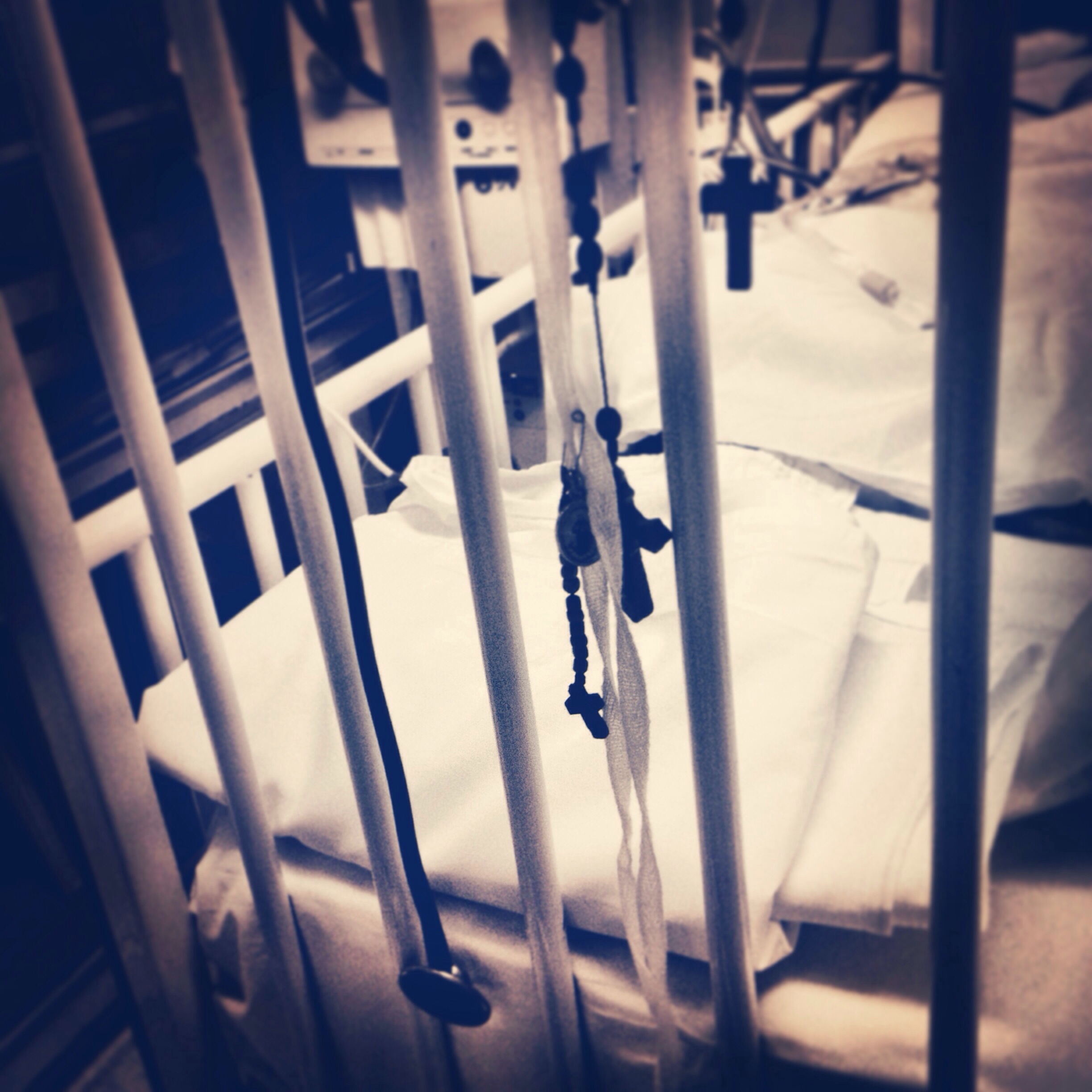
But still, her parents kept her alive adorning her bed with rosaries and religious icons as they prayed by her bedside.

“I know it’s over,” I overheard her mom say while crying. “But I’m hoping He’d look down at her and see how such a precious creature she is and help her.”

And the mother would ask us: what will happen if things worked out with her? What will you see? Isn’t she snoring? What is that sound?

We’d answer in a way to stay true to the medicine without squashing her hopes. Hope, in this case, is a double-edged sword.

They were waiting for a miracle. My friends would even chuckle at the thought. But even though I also thought it was absurd, I just felt terribly, terribly sorry for what that mother had to go through, seeing her daughter’s shell in front of her: alive but not.

I’ve been thinking about miracles ever since I was allocated that little girl. While they round on other patients and they reach her case, I often find myself thinking about the miracle she is waiting for. I don’t get miracles. I don’t know if I believe in them. I think I don’t. But if there’s anything about miracles that I’m sure of, it’s that they are unjust.

Then I thought about what I’d do if I had been the father whose daughter was in my patient’s bed, with tubes going out of her in order to keep her alive. My answer would have surely been a resounding: turn it off. Purely medical. Pure electrolytes. Pure CT scans. Pure EEGs. Pure data. Or so I thought.

Today, as I saw that woman crying over her daughter, I didn’t pity her. I was utterly shocked that what she was doing didn’t feel odd. It didn’t feel weak. It didn’t feel like something I would remotely try to ridicule, like many people I’ve encountered would. Because the shocking revelation was that I’m not so sure I can turn it off, in spite of al the data.

Would you?


Fekko El 3e2de

Fekko el 3e2de

When it comes to mental health, Lebanon has a long way to go. My rotation in psychiatry at one of the country’s hospitals has opened my eyes, as I wrote about here, to a domain of medicine that many don’t want to believe exists, preferring to even have cancer than a psychiatric disorder.

Families, in 2013, would rather revert to exorcisms in order to tackle issues with their sons and daughters, rather than take them to doctors. Explanations of demons instead of some chemical imbalances are preferred. The stigma of the word “insane” haunts any other demon-less explanation.

The victim in all of this, apart from the patient, is our ability to truly advance as communities, especially as we tend to believe that not calling a disease by its name makes it all okay.

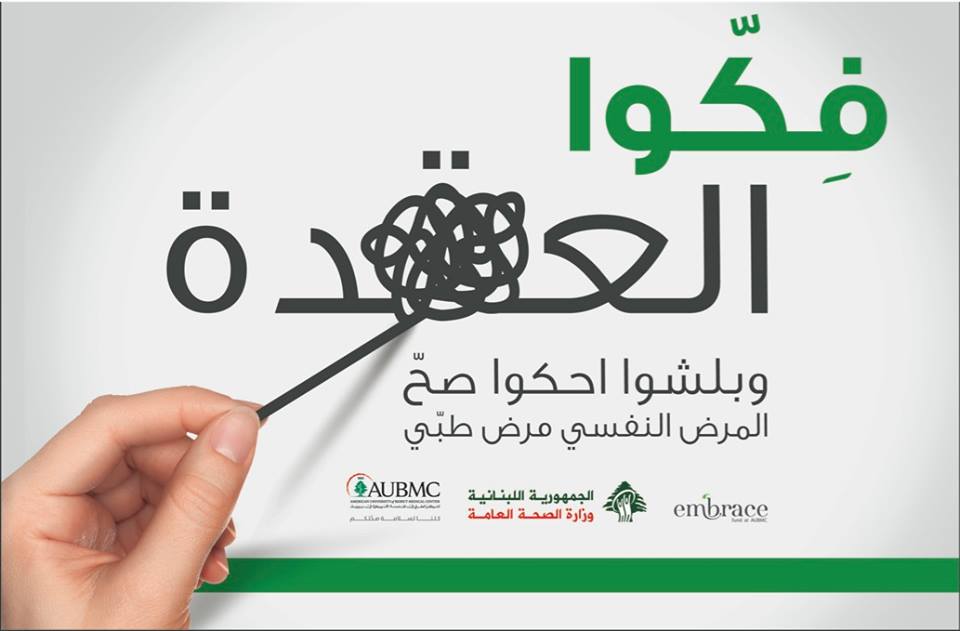
Technically independent from AUBMC, the Embrace fund is trying to change how Lebanese view mental health and they’re resorting to a great campaign, in my opinion, that they’re titling: “Fekko l 3e2de,” which translates literally to untie the knot, referring to the “knot” that mental health perception imposes on Lebanese societies.

They’ll be having a gala dinner in a few days to support their campaign, with a performance by Ziad el Rahbani. Find the details here.

How Lebanese Women Can Save Their Lives

Almost a year ago, my October turned pink as my mother got news that she had breast cancer. After the initial shock of the matter subsides, you’re left with one of two options: you either think rationally and fight or succumb to your emotions and crumble. It was a tough year, that’s for sure. My mom wasted away because of the chemo. She lost her hair, vomited anything she’d eat. But she’s getting better now.

My mom, however, is not your typical breast cancer patient: she doesn’t have a family history that would cause anyone to be more vigilant. The other risk factors associated with breast cancer do not apply in her case. And yet, there she was getting a needle stuck in her central IV line. My mother fell through the statistical cracks of medicine, like so many other people out there.

October may be breast cancer awareness month but I figured I’d shed some light on other cancers that aren’t discussed often and which might be prevented with some careful attention.

Breast Cancer:

I’m especially happy at the response I got after writing about my mother’s diagnosis, with many readers coming up to me to tell me that they got their mother to go get tested as well and they’re relieved she has nothing or, in the case of some unlucky few, had a very early stage of the disease. A lot of research and money has gone into breast cancer. We’re at a stage, medically, where early detection is almost synonymous with cure.

Early detection happens by personal observation first and foremost. If you feel any difference in the shape of your breast or any odd sensation that wasn’t there before, make sure you consult a gynecologist who will do a breast exam. Don’t worry, though, the exam is not painful. It consists of very careful inspection of the breast for any masses as well as how any potential mass might be affecting shape, texture, etc.

Seeing as October is free mammography month, there’s absolutely no reason for every woman aged 40 and above not to get one. If you have a family history of breast cancer, mammographies should have started by age 30-35. The sad part is that despite mammographies being either free or at a greatly reduced price during October, Lebanon’s medical community has had trouble in getting the message to some sectors of Lebanese women.

Make sure the women you know get tested this month. Make sure you haven’t had any changes. They might sound like small steps but they can go a long way in saving the lives of the women you love.

Cervical cancer:

The thing about cervical cancer is that there’s a quick screening method for it called a pap smear. It’s recommended to do the pap smear annually until you’re 30, with the test starting preferably by the age of 21. It’s a screening exam so it cannot give you a diagnosis.

The other thing about cervical cancer is that there’s a vaccine which could cut your risk of getting it by about 90%. Why so? Because the main causative agent of the cancer is a virus that’s called HPV, which is acquired by sexual intercourse. It’s preferable  to get the vaccine prior to your first sexual relation. However, even if you have had a sexual relation without taking the vaccine, you can still take it and have your risk reduced dramatically.

A lot of Lebanese women don’t take the vaccine or do a pap smear for the following reasons:

  • They believe it’s a taboo to take a vaccine for something that’s related to sex,
  • The vaccine itself is quite expensive, especially since doctors charge quite a hefty sum to administer it,
  • Many women don’t trust vaccines to begin with,
  • Having a gynecologist is, to many, only a matter that should happen after marriage.

The HPV vaccine, however, has proven itself to be very efficient. With its introduction into the medical field, cervical cancer deaths have drastically decreased. So in case you haven’t taken the vaccine or done a pap smear yet, consider this a sign that you should do so.

Ovarian Cancer:

Ovarian cancer is sometimes called the silent killer of women. It’s currently the leading cause of gynecological cancer deaths among women. It’s so inconspicuous that its diagnosis usually happens at a very advanced stage, when the disease has already metastasized. Less than 20% of women survive an advanced stage of some types of ovarian cancer. This cancer metastasizes to the lungs, liver, bowels, among other organs. The operation required to resect and manage the spread is considered a marathon and often only buys a little time for treatment, which is usually very harsh.

Ovarian cancer doesn’t have screening methods or vaccines. It requires you to be vigilant. A yearly visit to your gynecologist who does a pelvic examination should suffice. If there’s any suspicion, your physician will order an ultrasound to guide any possible diagnosis.

Your Life Matters:

My mother, like many other women, took her health way too lightly. She paid the price for it. Don’t let that happen to you or the ones you love because your health and life matter. There are other types of gynecological cancers than the aforementioned that affect women. The common denominator is not to treat any sign that your body might be telling you lightly, not to have a sense of immortality or denial imprinted on you despite all forms of common sense and, most importantly, not to so shy as to no seek out a gynecologist for any possible reason. On the contrary, make sure you find a gynecologist who proves to be the best fit for you, with whom you can be comfortable and with whom you feel free to discuss whatever’s making you worry.

Lack of Money Can Cost One Year Old Elie Sadaqa His Life

One year old Elie Sadaqa is suffering from a form of vasculitis – inflammation that affects blood vessels – and his parents, like so many others in Lebanon, cannot afford the medical measures required to save their son’s life.

I don’t have more information on the child’s diagnosis to explain it. LBC had listed it as temporal arteritis – a condition that affects one of the arteries reaching the head – but I notified them that such a diagnosis is unlikely given its age of onset is usually above 50. But exceptions in medicine do exist. They have since changed their wording on their news link.

According to the child’s father, the lack of a medical code for the procedures required to help Elie – a pure bureaucratic measure – means the ministry of public health in the country won’t cover it. I guess they need any excuse not to pay the approximated $150,000 for treatment. Or it could be that Elie Sadaqa simply doesn’t have the required wasta to save his life. Welcome to Lebanon, where your life is contingent upon your connections.

Elie Sadaqa is not a lone case in the country. Lebanon has next to no primary care. Our hospitals are in competition amongst each other and many of them are, as such, so specialized they are borderline unaffordable to people who don’t have insurance, aren’t super rich, or – like Elie’s case – do not belong to the inner circles of the minister of health.

What will happen to Elie Sadaqa? I can tell you that it’ll take some doctor with very, very good intentions to help. It’ll take a hospital who puts aside the business aspect of medicine for a moment. It’ll take a lot of people who are willing to pitch in with whatever means they can afford. The question, though, is what happens to the other Elie Sadaqas whose stories don’t make it to national TV amidst the situation of medicine in Lebanon today?

LBC hasn’t listed a way to help the family so if anyone knows how, let me know. And for those who are interested, I intend to write an article soon detailing why medicine in Lebanon is the way it is. Until then, hopefully Elie Sadaqa finds the ways to grow up, go to school and give joy to his family and friends.

What Happens to Lebanese “Bastard” Children?

Here’s an interesting fact for you: if a medical case qualifies as untransferable, a hospital cannot refuse to admit it. A woman in labor is one of those cases.

It so happened to be my luck that I had night duty on a day that a woman came in labor. Of course, this is not out of the ordinary for any healthcare establishment and the hospital I was at was more than equipped. This woman, however, had already delivered the baby whose color was slowly turning blue, asphyxiating as the placenta remained inside his mother’s womb.

The Red Cross personnel rushed her in. They had already been refused entry at a previous hospital despite their pleading. They carried her over to our floor. She had no known physician. She said she was married but neither her husband nor any family member for that matter were anywhere to be found. She didn’t know her due date. She didn’t know she was pregnant until very recently. She had no idea what the baby’s gender was going to be. She had no idea what her blood type was. Asking questions was deemed futile.

We cut off the baby’s umbilical cord, effectively severing his connection to his mother. A midwife took care of bringing the baby’s vitals up to par while the obstetrical team handled the mother. They delivered the placenta, stitched whatever needed stitching and made sure her risk of any postpartum bleeding was minimal, while double checking everything they needed to check to avert complications.

Bureaucracy started next. We managed to get a phone number to call. It was her father. Let’s say he wasn’t very pleased to be told he had become a grandfather. We asked about her husband again, now that there was nothing wrong with her and her baby was safe and sound. She dodged the question. It was getting late so the medical team figured they’d call it a day while the logistics section of the hospital staff panicked over what to do with this patient. It wasn’t every day that you’d get such cases.

It was discovered the following day that this woman was not married. So here’s another interesting fact for you: most Lebanese hospitals have a rule not to allow unmarried and pregnant women to deliver. The exception is when they cannot refuse them, as in this case.

The story then got better. This was a woman who was molested by her father when she was fourteen. She worked as a prostitute. She also didn’t want the baby.

As I learned of this while looking over her baby in the nursery, I felt sad for the little premature-born boy in front of me. His mother didn’t want him. He had no family that would take him in. His only hope was the convent to which he would be given.

I asked around to see what would happen to that kid. No one knew. They also didn’t care. I guess it comes with the territory of maybe seeing such things often when you’ve been doing your job for as long as they have.  Someone told me he would actually be registered as a “bastard” child in the country’s registry books. But with his mother not wanting him, who would register him? With no proof that the father is Lebanese, since we don’t know who he is, how will this baby be nationalized? How will he build a life for himself?

Pregnancy out of wedlock in Lebanon is not as rare as many want to believe. I’ve seen many women come, wanting to keep everything hush-hush, in order to see what they can do with the fetus growing inside them. As a country, we’re still not willing to discuss this. For many, those women are whores and those children don’t deserve to live. But those women are not. And those children deserve life if their mothers want to carry on with the pregnancy. Not everyone lives in the narrow moral code that many people have set forth for themselves and expect everyone to abide by. Lebanese regulations, however, don’t think like me.

What happens to the bastard children of Lebanon? I saw how bleak that little boy’s future would be as the elevator doors closed on his mother’s non-caring face.