
I recently finished reading Walter Isaacson’s biography of Steve Jobs titled, well, Steve Jobs. It was a fascinating read with more than a few insights into the life of this man that enchanted millions with his creations and who, like it or not, changed the world.
So I’ve decided to list thirteen interesting facts that I learned about Steve Jobs from the book. Hope you find them as interesting as I did.
1) Romance: he was a hopeless romantic – at least when he wasn’t busy bossing everyone around. Steve Jobs fell in love with two women his whole life one of which was his wife, Lauren Powell, with whom he shared more than twenty years of married life. As a testament of his love and gratitude to Lauren, here’s what he wrote her on their 20th anniversary:
We didn’t know much about each other twenty years ago. We were guided by our intuition; you swept me off my feet. It was snowing when we got married at the Ahwahnee. Years passed, kids came, good times, hard times, but never bad times. Our love and respect has endured and grown. We’ve been through so much together and here we are right back where we started 20 years ago – older, wiser – with wrinkles on our faces and hearts. We now know many of life’s joys, sufferings, secrets and wonders and we’re still here together. My feet have never returned to the ground.
2) Middle East: He didn’t care about the affairs of the Middle East. In fact, he never bothered in pursuing a meeting with his father, even though he met him without either one knowing who the other was as Jobs was a frequent customer of his biological father’s restaurant. Regarding the Middle East, Steve Jobs had this to say: “I don’t think anybody really knows what we should be doing over there. You’re fucked if you do [interfere in Middle Eastern affairs] and you’re fucked if you don’t.”
3) Simplicity: His mantra in life, which he translated to Apple was: “simplicity is the ultimate sophistication.” In fact, all of his designs for Apple products had this theme as their basis: can we take off this part and keep full functionality? If he thought it was doable (and more often than not, his engineers disagreed), he pushed them to do it. And they always pulled through.
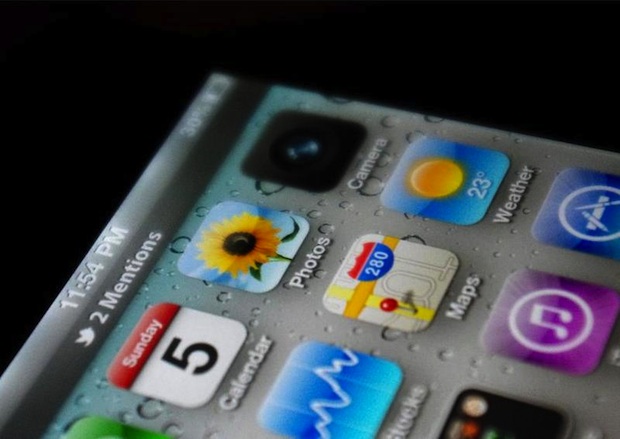
4) iPhone & iPad: The iPad was being developed prior to the iPhone. The multi-touch technology which Apple invented was kept hidden from Jobs for fear he would find the technology ridiculous. When presented with it, he was fascinated by it and immediately recognized the potential. In fact, the only reason Steve Jobs wanted to develop a tablet computer was to “stick it” to a Microsoft engineer who kept bombarding him with his stylus-using tablet, which Jobs found to be dead on arrival.
“This guy badgered me about how Microsoft was going to completely change the world with this tablet PC software and eliminate all notebook computers, and Apple ought to license his Microsoft software. But he was doing the device all wrong. It had a stylus. As soon as you have a stylus, you’re dead. This dinner was like the tenth time he talked to me about it, and I was so sick of it that I came home and said, “Fuck this, let’s show him what a tablet can really be.”
5) iCloud: The idea of iCloud was conceived by Mr. Jobs back in 2008 but he never found the proper framework to introduce the service in a fluid way. Apple had an attempt with “MobileMe” which Jobs completely hated. Soon after its introduction, he gathered the team responsible for it, reprimanded them and sacked their lead engineer. As he went back home to his family and looked at his son, he thought about the families of those he sacked and how their fathers would be coming with the bad news to their families. But he didn’t let himself feel bad because he knew that hard decisions needed to be taken and if no else did, he was the one who would.
6) Antennagate: His handling of the iPhone 4’s antennagate issue (where touching the iPhone 4 in a certain way on the lower left side would reduce cellular signal) was hailed by many professors as groundbreaking. Going on stage and proclaiming that the issue was blown out of proportion, that phones were not perfect and if anyone’s not happy with their device they can bring it back to Apple, Steve Jobs not only changed the context of the conversation from an opportunity of ridicule against the iPhone 4 but to one where he showed the shortcomings of smartphones across manufacturers. According to Scott Adams, created of comedy strip Dilber:
“If Jobs had not changed the context from the iPhone 4 to all smartphones in general, I could make you a hilarious comic strip about a product so poorly made that it won’t work if it comes in contact with a human hand. But as soon as the context is changed to ‘all smartphones have problems,’ the humor opportunity is gone. Nothing kills humor like a general and boring truth.”
11) Closed Systems: Steve Jobs’ “need” for control is seen by many as contrary to the hacker mentality that he had as Apple was launched – the rebel against the big brother establishment. And this is one of the main discrepancies between him and Bill Gates where the latter believes in openness while Jobs believed in closed systems for the simple matter that coordinating hardware and software delivers the best possible product to the user. When you start giving users room to do as they please with the product, the quality of the product dramatically decreases. Steve Jobs wanted to provide the users who opt for his devices the best possible experience and for that, he figured a closed system would be the best way possible.
12) Pixar: Steve Jobs is responsible for many of the animated movies that we consider as cartoon-gold in the last ten years. As CEO of Pixar, he gave us Toy Story, Toy Story 2′ A Bug’s Life, Finding Nemo…. As head of Pixar, he got into many disputes with the CEO of Disney who saw them as dispensable animators while Jobs saw Disney as a mere distributor. Disney hadn’t given the world a decent cartoon movie in a long time and their major revenue was beginning to shift towards amusement parks. Their animation department was reporting losses… In a way, Steve Jobs also saved the animation industry from being overtaken by creatively blind CEOs at Disney whose sight was set only on the profit margin they made.
13) Genius: Steve Jobs was not super smart. He was a genius. The difference between the two is subtle and yet existent. He did not have raw processing power, which is intelligence, but he was genius in the sense that he was able to see what others couldn’t. He was able to think outside the box set by the corporates of our time to deliver great products that would help bring humanity forward, which was Steve Jobs’ goal all along. His invention of the iPod was not groundbreaking in the sense that music players existed before. But it was groundbreaking in the sense that he saw the shortcomings of all those music players and was able to use resources that he did not have to change the music industry forever. Sony, for example, has a music recording branch as well as a technology branch but they never got the idea to make the iPod. He also saved the music industry by launching the iTunes Store, which lessened the blow of the mass hemorrhages due to piracy. With the iPod and the Macintosh before it, Steve Jobs managed to create a need for a digital hub that many thought they didn’t need. His business strategy was not one based on market research but on insight. He didn’t care what customers needed now. He cared about what they would need tomorrow. That’s how he made the iPhone and subsequently the iPad. That’s why Apple is the world’s leading company today – all because of this man who saw out of the box, by standing on the “shoulders of those that preceded [him].
And one more thing…
Steve Jobs was the biggest business executive tycoon of our time. There is no doubt about that. Anyone who is trying to discredit him based on some non sequitur argument is delusional. If our legacy as people is to bash the accomplishments of those that preceded us, helping us move forward, then I have no idea where we are heading.
If you are in Lebanon and want to buy the book, it is available at Libraire Antoine from whom you can buy the book online. If you’re outside Lebanon, you can buy the book off amazon.







 A Separate State of Mind | A Blog by Elie Fares