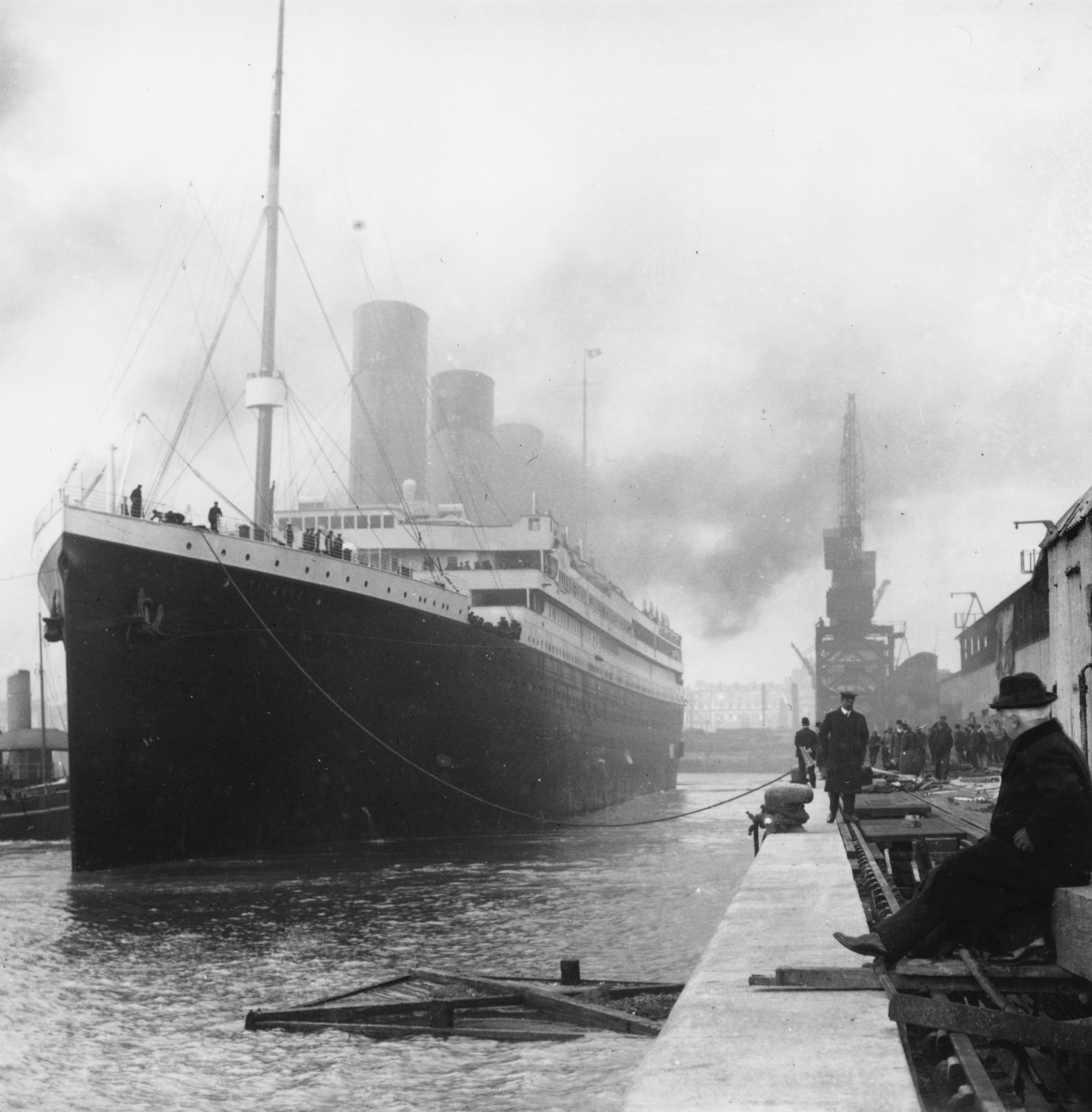
The RMS Titanic and Lebanon

As many of us were going to sleep yesterday, the idea that 100 years ago, 2000 people were going through an ordeal stranded in the middle of an ocean escapes us. 100 years is surely a long time – but for many, the whole tragedy of the Titanic has become a laughable matter.

How so? It was turned by Hollywood into a movie, which later on became a common area of jokes. For many, the word Titanic nowadays is followed by the word “meh.” We fail to remember that for many, especially Lebanese, we’ve had great-grandfathers, great-uncles, aunts & family on that ship, many of whom died, either by drowning or by getting shot.

I grew up listening to the story of Daher Chedid, a man who was trying to escape the Ottomans in Lebanon only to find death at the hands of the Atlantic ice. I couldn’t escape the haunting stories of the people from Hardin, how they prayed and danced Dabke until their very last moments. The people of Kfarmishki lost 13 people on the Titanic – how could we call that funny?

A man from Zahle saved his wife and swam away, losing hope with every second of being saved. He wasn’t. Two men from Zgharta got shot for wanting to survive – they left families behind.

How could we ignore all of those stories and act as if the Titanic is one big popular event that happened, got turned into a cliche and shouldn’t be talked about?

Lebanon lost many people on the night of April 14th-15th, 1912. The least we can do is to honor their memories by telling their stories, at least on the centennial anniversary of their passing.

For many, their interest will only be transient, as is our interest in many things. And when it comes to the Titanic, although worse tragedies have happened over the years, we – as Lebanese – should feel involved because we have lost many people there. Some say as much as 93 – in a country as small as ours, at a time where the population was very little, 93 is a tragedy.

They say people truly die when they’re no longer in anyone’s memory. This is my attempt, at least briefly, to get the Lebanese of the Titanic back into people’s memory so they’d be alive on the 100th anniversary of the ship sinking.

There are many more Lebanese whose stories I couldn’t tell. Perhaps I’ll tell them later on. But for those stories that I told, I hope they made an impact – even if it’s in a small number of people.

Many asked me if those stories were correct or made up. Many asked for my sources. Many accused me of stealing them from Al Arabiya. To those I say: these stories are not exclusive to any news service. They are not written by anyone as a novel, they were not first reported by Al Arabiya and they won’t stop with a report from MTV. These stories were written with the lives of the Lebanese passengers that went on that ship, seeking a better life for themselves and their families, away from the oppression in the country.

My sources were from books I had bought back in 1998 about the tragedy, newspaper articles that I had saved over the years, as well as stories that I was personally told when I was young.

Today, most countries are holding events to remember their deaths aboard that ship. Lebanon, who lost more people than most of those countries, is not.

May the victims of the Titanic generally and the Lebanese especially rest in peace.

Stories of Lebanese on the Titanic – Part 2: The People of Hardin

For Part 1, click here.

Hardin is a town in the mountainous region of the Batroun caza, famous for St. Neaamtallah who is famous for his hometown and who made his hometown famous. During 1912, Hardin had 19 people on board of the Titanic. Only 7 of those made it, including a man, two children, an infant and three women.

One of those who survived, named Sileneh Dagher, was a newly wed who was traveling to the United States with her husband, Antoun Yazbeck. Their cabin was close to the water line of the ship so the collision was especially frightening for them. They went out into the hallway to see what was happening. Once they realized the gravity of the situation, they started moving towards the main deck. But many of the passageways, especially those that went through first class areas, were sealed off by passengers for fear of theft. Once they reached the deck, Sileneh and her husband both got into a rescue boat. But an officer held a gun to Antoun’s head and forced him to relinquish his seat, convincing Sileneh that her husband would follow her on another boat. That was the last time she saw him. She later on remarried and changed her name to Celine. She gave birth to 9 children and raised them before dying at the age of 69 on March 10th, 1966.

Sileneh Dagher remarried

Sileneh with her family

The only man from Hardin who survived did so because a foreign woman pitied him and got him to hide under her dress. The man in question, Moubarak Assi, was the deacon of Patriarch Elias Howayek, who’s currently laid to rest in the convent he built in my hometown. Assi went on to start a family and a business in Michigan. He died on February 3rd, 1952.

Mr. Moubarak Assi

Sileneh Dagher wrote to her brother, the former mekhtar of Hardin, about what she went through aboard the Titanic. She spoke about how cruel the officers were to the men who tried to get on the rescue boats. She spoke about how the men of Hardin who knew they wouldn’t be rescued knelt in their last moments and prayed to the Saint of Hardin.

Another story that came from Hardin is the story of Hanna Touma, a man who was in love with a girl from his hometown called Zahiyya Khalil. Both decided to travel to the United States to start a better life but Zahiyya’s parents refused for them to leave without getting married so they tied the knot hours before leaving Lebanon. Aboard the Titanic, a wedding party was thrown for the newlywed the night Titanic hit the iceberg. Once the news of the collision reached them, they continued their wedding party as if nothing happened. Later on, when death was looming, Zahiyya refused to leave her husband’s side despite the officers begging her to. And so they held to each other tight and bid farewell to their lives.

The people of Hardin clinged to their Lebanese heritage until the last moment. According to Moubarak Assi, as his rescue boat was being lowered off the ship, he saw the men of his hometown huddle around each other. Then one of them shouted: “Dabke ya chabeb!” And they faced death with a Lebanese dance, knowing they won’t be saved.

The zajal for the occasion that went on to commemorate the loss went as follows:

ابكي ونوحي يا حردين…..عالشباب الغرقانين
غرق منك حدعشر شاب….. بسن الخمسة وعشرين
منهم سبعة عزابي…..والبقية مزوجين
ما فيهم واحد شايب….. كلن بالخمس وعشرين

Cry and weep, Hardin for your men who drowned.

You lost 11 young men, aged 25.

7 of them are single, the rest are married.

None of them have gray hair, all were 25.