The Case of Lebanon’s History Book

As a Lebanese who has gone through our educational system, I’ve learned about Lebanon’s history in two separate grades: grade 9 and grade 12, as a preparation for the official exams that I, similarly to many other students, undertook come the month of June of that corresponding year. The difference in the material between grade 9 and grade 12 was literally nonexistent. We used the same book, same notes and discussed the same era all over again. It was as if our history stopped around 1946, when the French army left our country, marking their departure with a carved stone at the Nahr El Kalb valley.

The thing about writing history is that no matter who writes it, it will never be objective. Even the most objective of historians cannot have the history they write be absolutely devoid of a personal touch here or there, which, albeit subtle, can convey a different meeting altogether.

Recently, however, the talks about writing a history book for Lebanon that goes beyond the 1946 obstacle and into the 21st century was in the works. And for that matter, a governmental committee was appointed to discuss what was relevant and what was not.

The members of the committee are: minister Mohammad Fneish, minister Nicolas Fattouch, minister of education Hassan Diab, minister of culture Gaby Layoun, minister Ali Kanso, minister of health Ali Hassan Khalil, minister of justice Shakib Kartbawi, minister of information Walid Daaouk, minister of tourism Walid Abboud and minister of sports Faysal Karami.

In the case of this committee’s attempt at writing a history book for Lebanon, which will be later submitted to the Parliamentary Education committee for approval, their definition of objectivity is: write whatever you want, omit anything you don’t like and voila.

In the draft for this book, every single mention regarding Hezbollah addresses the party as the “Resistance” and glorifies all its struggles and conflicts with Israel, from the 1980s up till now.  On the other hand, minister Mohammad Fneish refused any mention of the March 14 “Cedar Revolution” and anything about the Syrian occupation of Lebanon. The book was also going to omit anything about the protest of the opposition in Beirut’s downtown for two whole years, including the May 7 incidences in Beirut.

In short, anything related to the mistakes Hezbollah did and anything that showed the Syrians in bad light in Lebanon was to be omitted, which is perfectly understandable coming from people like Ali Kanso and Mohammad Fneish, with them belonging to their correspondant political parties.

But what’s worse is a statement for FPM minister Gaby Layoun who said: “the March 14th “Cedar Revolution” is only but an illusion set by that camp.”

And that’s what’s truly horrifying. Set aside the fact that this committee is as one-sided as one-sided goes and ignore the absolute necessity of having at least a counter opinion regarding something as vital to Lebanon as its history book. If the FPM ministers are now ignoring something they were a vital part of and calling it an “illusion” then what can one expect from those who were vehemently against such the movement that got their Syrian BFFs out of the country?

If Hezbollah ministers did not want any reference to the struggles many Lebanese had to go through with regards to the Syrians, which has always been part of their hypocritical propaganda of Israel being our only enemy, when did the Syrian epoch become nonexistent for the FPMers too?

In simple pictures,

according to Mohammad Fneish, Ali Kanso and Gaby Layoun, who happen to be a ministers in:
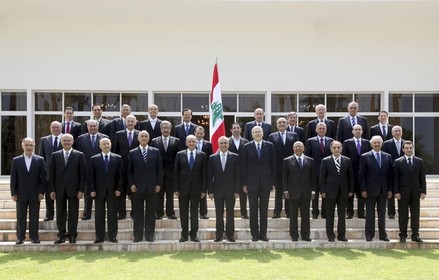
Lebanon's current government

the following:
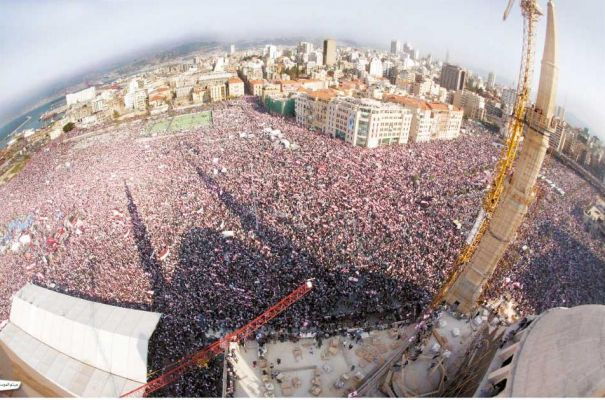
the Cedar Revolution

is as real as:
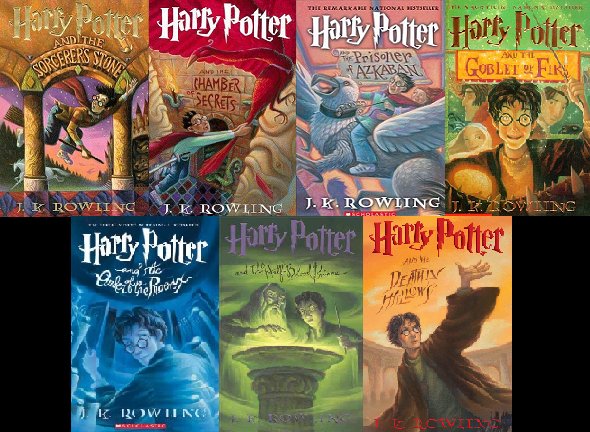
Harry Potter

I’m fairly certain such a draft for our history book will not pass. But you know what, even if it did, the thing about history is that it comes from more than one source. I don’t remember much of the history I was spoon-fed in grades 9 and 12. But I do remember what I lived through and I am writing about it. This blog, for instance, along with all its political content, will be here long after I’ve stopped blogging and long after I’ve even stopped existing. Well, try to censor that I guess.

What’s truly troubling, though, is how such a draft came to exist in the first place. What’s terrifying is that some minds can fully rationalize writing that draft. What’s absolutely frightening is that those minds are in absolute power.

An Open Letter from the Syrian Revolutionaries to the Lebanese People

An open letter, written in Arabic, from the Syrian National Council to the Lebanese People has just surfaced online. You can check it here.

The highlights:

1) The open letter acknowledges the troubling Syrian-Lebanese relations and blames the Syrian transgressions in Lebanon on the tyrant Syrian regime.

2) The open letter declares that a free Syria will acknowledge Lebanon as a free and sovereign state, therefore the relations between both countries would become on equal footing, between equals.

3) A new Syrian regime will honor the Taef agreement and will look into all the Syrian-Lebanese accords, set the international borders between both countries (including Shebaa Farms) and regulate them, cancel the Higher Lebanese-Syrian Council, end the age of Syrian intelligence in Lebanon and look into the situation of the Lebanese detainees in Syrian prisons.

The open letter is more extended than this and it’s definitely worth a read. I don’t know to which extent I should believe all of this, but one can hope. Either way, down with the Assad regime and down with all the tyrants of the region.

Just a Bachir Gemayel Speech from 1979

This is Bachir Gemayel

I recently started reading a book by Rani Geha, which has the speeches late Lebanese president Bashir Gemayel between 1979 and 1982, titled: “Words from Bashir.”

With the little time I have with Med School and all, my advancement with the book has been rather slow. But it’s still an eye-opening experience to see such speeches on paper and how true they reflect on Lebanese society and politics today.

In February 1979 and in a speech in front of a crowd in Jal El Dib, the main points Bachir Gemayel made are as follows:

1) There is a need for a radical change to move the Lebanese state from one that is subservient to Syria and Palestine to one that only answers to its own people.

2) We need a Lebanon where the foreign ministry is the foreign ministry of Lebanon, not a spokesperson for Syria or Palestine or any other nation.

3) The institutions in Lebanon need to be the property of the Lebanese citizen.

4) Lebanon is too small to be divided: one part for the Syrians, one part for the Palestinians and one tiny part for the Lebanese.

5) Those who want to grant the Palestinians a country, let them grant that country from their own share not from Lebanon’s share.

6) Let the West appease the Arabs as long as the Arabs produce oil. The West is losing its values and, as such, we cannot rely on it for support anymore.

7) Syrian entities in Lebanese uniforms, using Lebanese weapons, are not to be accepted as part of the country we want to live in.

8) In 1958, the Arabs had Abdel Nasser. Today (1979) they have Hafez Al Assad. The school of thought shared by these two men can bring nothing but a catastrophe.

9) From 1943 to 1975, we were ruled by a school of thought that never believed Lebanon to have a cause or anything to fight for. We were governed by a school of thought that supposed we should unconditionally align ourselves with whichever Arab nation proved to be the strongest, in a way to keep our heads, while internally we were ruled by apparatuses and typewriters. We were ruled my moral submission.

10) Many Lebanese do not have the faith and self-confidence that they have can change things on the ground, creating a de-facto situation that many nations around the globe take use of.

The fact that these 10 points are still as true today as they were in 1979 is not a reflection on our society but it’s a reflection on our region. The school of thought shared by Abdel Nassar and Assad is still alive and kicking today, actively patroned by their descendants. We even have a statue for one of them on Beirut’s sea promenade. There is constant talk about nationalizing the Palestinians in Lebanon, giving them a piece of a country they are not entitled to. There is constant talk about taking out Syrian intelligence and arms from inside Lebanon.

And it all stays as such… talks. Why? Because at the end of the day, there’s simply so much that a Lebanese can do in going against the current of what the big nations want. But you know what, for what it’s worth, and looking at the circumstances we’re living in, we’re not doing very bad for ourselves. 

Until then, long live the memory of a president whose words resonate true 33 years later.

The Lebanese Hypocrisy Towards Syria: Three Fishermen Kidnapped by Syrian Navy in North Lebanon

I had blogged a while back about how the Syrian occupation of Lebanon can be considered at least as bad as the Israeli occupation of the South. I still stand by what I said. You can check that post here.

The latest regarding the Lebanese-Syrian relationship is the Syrian navy kidnapping three Lebanese fishermen (Arabic article) from the North after having their boat enter four nautical miles into Lebanon’s marine territory. Perhaps a mile can be considered as a sailing error. But four? Let’s not beat around the bush here. This was an obvious breach of Lebanese sovereignty. One of the fishermen, aged 16, has died. What is our government doing about this? Absolutely nothing.

This is but one part of a series of transgressions that the Syrian army and regime do on a daily basis in Lebanon. And yet we fail to act. Our voices are never heard when we speak against the Syrian breaches. They can kidnap our people, they can enter our land, our sea, terrorize villagers on the borders…. We do nothing. We sit around and watch TV and hope for the best.

Not let’s contrast/compare this with the Israeli scenario.

An Israeli boat enters four miles into Lebanon’s nautical territory, you’d be constantly bombarded about it in the news. An hour later, Lebanon would have had an official complaint filed in the UN. If that same boat had kidnapped three Lebanese fishermen, rockets would have been fired from the South on Israel. A war might have been started (it’s not like the 2006 war had a bigger apparent reason).

The only difference between Israel and Syria? Israel is an enemy state whilst Syria is not. The difference between what Israel and Syria do regarding Lebanon? Absolutely nothing.

“Activists,” as they like to call themselves, shout and protest against anything Israel-related in Lebanon. They have the right to, obviously, freedom of speech and all. I don’t think, however, they have the right to shove their views down everyone’s throats (especially when it comes to irrelevant matters that won’t change anything). I want to see what those “activists” will do regarding this latest Syrian breach. The answer is actually already known. It’s exactly what they have done regarding the previous transgressions: absolutely nothing.

A couple of months ago, in my anatomy lab at med school, one of the doctors told us a story. He told us about when he was in Med School at USJ and one of his professors was the late Dr. Fadi Serhal. They used to discuss politics with him. Amin Gemayel, the president back then, was going to sign the May 17 treaty. So they asked Mr. Serhal, who was an MP back then, about the situation. His reply was as follows:

“Lebanon is bound in the South by Israel. It’s bound everywhere else by Syria. If there was anything happening for the benefit of Lebanon, you should be more than certain that it will be disturbed by one of those two countries: either Israel or Syria or Israel and Syria working together.”

This was about thirty years ago. It still applies today. It’s also high time we see it as such.

The Story of a Syrian Boy

This may be fake. His story may not check out. But you know something like this has definitely happened to people at the hands of the tyrant Syrian regime.

Bashar Assad and his father have done similar things to families in Lebanon. Bashar Assad is known to be a tyrant. He’s known to kill defenseless children, such as Hamza el Khatib and many others. So for all matters and purposes, regardless of whether this particular person may be fabricating this story, this is happening to many people like him around Syria, today.