On The Maronite Patriarch, Samir Geagea & Michel Aoun

Left: Michel Aoun, center: Patriarch Raï, right: Samir Geagea

When it comes to the Maronite Patriarch, Bechara Al Raï, I feel I have to be extra careful. The line between criticizing the individual and his stances is very thin and it is one I do not want to cross because he is, first and foremost, the head of a Church I feel proud to be part of for various reasons.

The leading Maronite politicians in Lebanon have found themselves at opposite sides of the aforementioned line. Being very kind-hearted, I’ll assume the line is very blurry for proper discrimination. But don’t be fooled, there’s a very important distinction between the stances Samir Geagea took regarding the current Patriarch and those adopted by Michel Aoun towards the former one.

The year is 2005.

Michel Aoun is preparing a parliamentary bid with an almost exclusively Christian coalition of political forces. At the end of May 2005, Aoun has gotten a sizable portion of the Christian votes – 70% in some areas. The patriarch at the time, Nasrallah Sfeir, had openly endorsed Aoun for trying to bring Christians together under a political idea that was, at the time, opposite to the alliance that included Hezbollah.

The year is 2006.

Michel Aoun signed an agreement with Hezbollah as the latter slowly drifted away from the electoral alliance it had forged a few months earlier. The agreement served to create a “Christian cover” for Hezbollah’s arms. It backfired. Aoun’s popularity began to slip, whether his followers like to admit it or not. The patriarch, following the political doctrine Bkerke has always been known for, began to criticize Aoun’s drastic shift in political positions. Subsequently, Aoun began to attack the patriarch both on personal and political levels. The attacks ended in 2011 when Sfeir resigned and Bechara Al Raï took over.

The year is 2012.

Samir Geagea is being interviewed on a political talk show, Bi Mawdou3iye, on MTV. He declares that the recent pro-Syrian stances of the Maronite Patriarch do not represent the historical path Bkerke had drawn for itself. He also asserted that the position of Bkerke as a leader in Lebanese society has dramatically decreased as a result of the erroneous stances taken by the patriarch.

Moreover, commenting on recent declarations by a mufti in KSA that the Arabian peninsula should not have any church standing in the near future, he replied that the stances coming out from the Azhar are the ones to be considered as legitimate and that the xenophobic declarations of Saudi Arabia’s mufti are very similar in crude nature to what the Patriarch had said about him being afraid for the Christians of the East because of the Islamists rising around us.

The time is now.

I am faced with a torrent of people sharing certain articles about how Samir Geagea is a hypocrite in criticizing the patriarch. And it is here that I bring back the initial point I mentioned in this post: there’s a thin line between criticizing a person, which Michel Aoun flagrantly did for years, and criticizing a person’s stances, which Samir Geagea has been doing for the past year.

It is a very thin line but it exists. And you cannot compare both men with regards to how they behaved towards the Maronite Patriarch without taking that into consideration. The fact of the matter remains that when Samir Geagea’s pardon went through and he was released out of prison in July 2005, the months when Patriarch Sfeir and his party had been at odds were not marred by discordance.

The fact of the matter remains that even when Samir Geagea is in grave disagreement with the current patriarch, his critiques cannot but be considered respectful. Or need I remind people of “the patriarch must have gotten horny” comment by one of Michel Aoun’s allies, a statement which was not condemned by Aoun’s party, or when the patriarch was called senile by Michel Aoun’s close entourage, a statement that the General did not, also, condemn.

The fact of the matter remains that the patriarch, with his current stances, is not helping to elevate the position of the Church he was appointed in charge of. Many bishops have even expressed discomfort in the way he is handling things. Patriarch Raï might be taking the power his congregation vested in him for granted. You cannot simply support the regime of a man who has been killing your people for years and years and expect then not to react negatively. You cannot expect your congregation to fathom supporting one of the main reasons their role in Lebanese society has degraded this substantially and pretend as if the years of Syrian occupation had never happened.

The difference between Michel Aoun and Samir Geagea goes back to principles. One has principles, the other simply lacks them. One expected Bkerke to change the way he saw fit and was disappointed when it didn’t. The other was disappointed as Bkerke strayed from the principles it built for hundreds of years and used to cement itself as a champion for the rights of Maronites in particular and Lebanese in general.

After all, how can we forget when Aoun’s supporters stormed Bkerke in a riot years ago? And they have the audacity to criticize Geagea for speaking up.

Yet again, people tend to jump the boat of hype without looking at the underlying current. But every now and then, a slight nudge of their memories is in order.

Can we move on now?

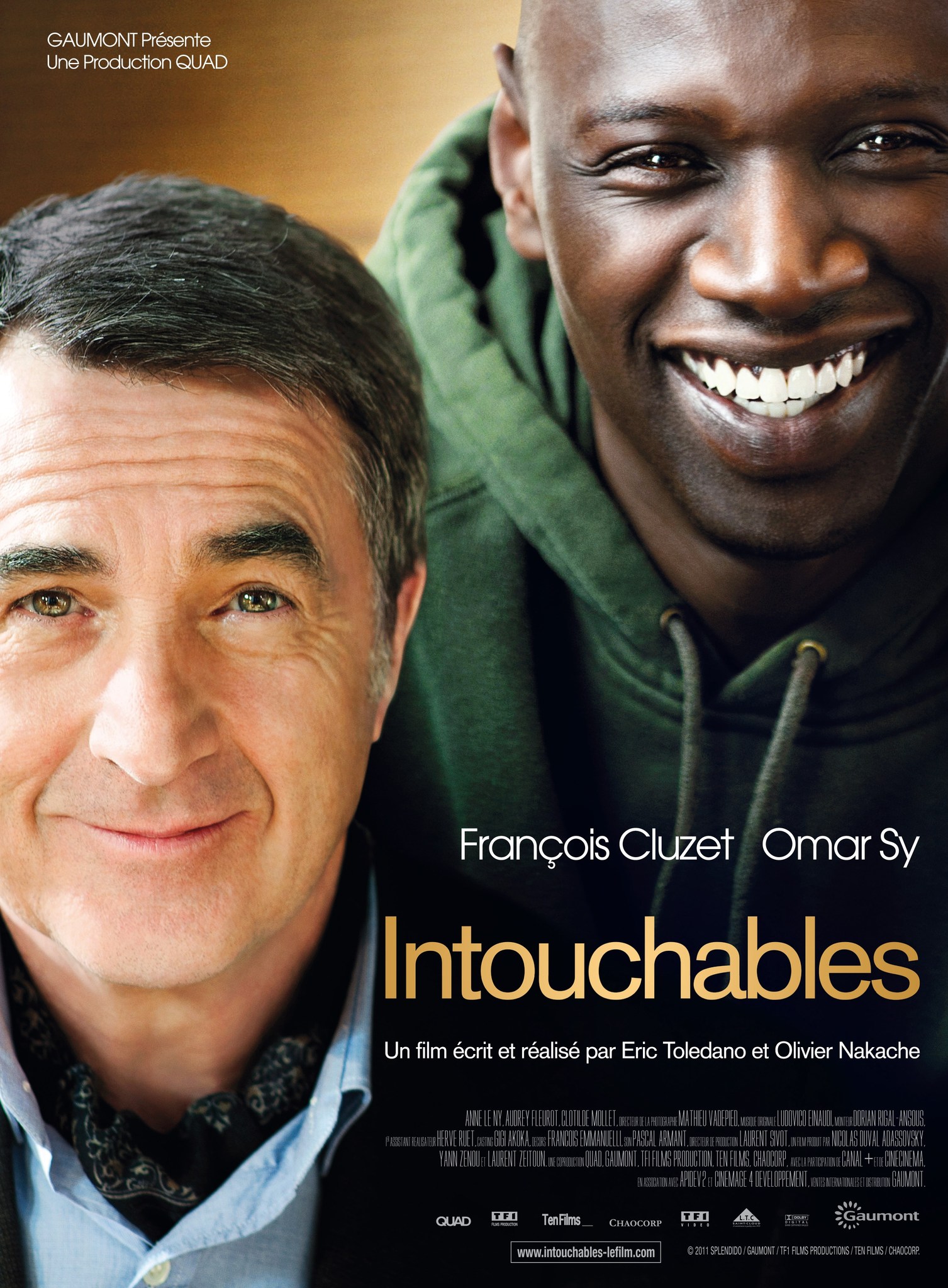
Intouchables – Movie Review

Based on a true story, Intouchables is the movie that took French cinema by storm last year with it breaking admission records and setting itself as one of the biggest movies in French history.

Philippe (Francois Cluzet) is a very wealthy French aristocrat who is also paraplegic and in need of a caretaker. It is then that Driss (Omar Sy) presents to his place in order to get a paper signed for social service, after serving a stint in prison for robbery. Instead of signing the paper and letting Driss go, Philippe takes a chance on the African man and hires him as his caretaker because he figured someone with Driss’s background won’t feel bad for his condition, not knowing that the relationship these two men will spring up, against all odds, social stigma, boundaries and hardships, will change the course of both their lives forever.

This French comedy transcends its genre to become a truly heartfelt story that will tug at your heartstrings as it makes you laugh and smile and get invested in the friendship between Philippe and Driss. Hollywood journalists have been criticizing it for its tendency to get racist at times and that is categorically incorrect. Simply put, those reviewers have not really understood the movie and the jokes may not have translated well to them. How can you convince an American that the joke of Driss looking like Barack Obama in a tuxedo is actually funny and not a pejorative measure of their president? In reality, Driss is not even black. He’s Arab, as the movie shows in real-life segments before the credit rolls. In reality as well, the movie is nowhere near racist – unless by racism you mean showing a typical white man the life of a youth, who happens to be black. Intouchables is also socially accurate – people do judge you differently based on your ethnicity, whether we like to admit it or not. The movie, however, doesn’t judge its characters. It just lets them be. So for those who keep an open mind, there’s no way Intouchables won’t touch you in a way or another as it flips through its scenes, all to the backdrop of either gorgeous Parisian scenery or beautiful French countryside.

When it comes to the acting, Omar Sy and Francois Cluzet’s performances are a crucial central pillar to the movie. In fact, both actors jump off each very smoothly with charming chemistry that can only lead to help the movie’s comedy subject matter to get passed on to the viewer. It shouldn’t come as surprising that Omar Sy actually beat Jean Dujardin for the Best Actor Cesar this year. His performance is nuanced, very sharp and absolutely spot on. On the other hand, Cluzet balances him out quite well and, despite his character’s seriousness and it being grounded. The overall mix of the two is a duo that will entertain you for every second the movie is playing.

Never have I been surprised by a French movie since Amelie Poulain. And while Intouchables doesn’t quite dethrone that movie, it sure comes fairly close. It is a feel good movie that succeeds at what it’s supposed to do. It boasts great leads, a terrific supporting cast, some chilling music composed by Italian composer Ludovico Einaudi. It is a movie about the “choc des classes,” which will leave you shocked as to exactly how much it works.

9/10

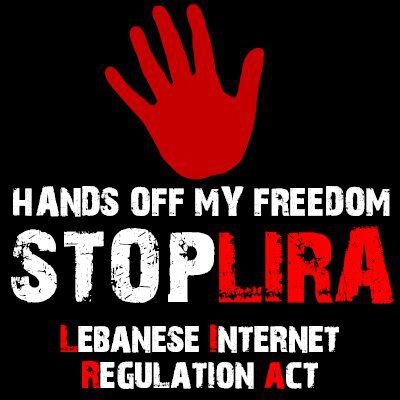
LIRA: The Lebanese Internet Regulatory Act – What You Need To Know

The news about an internet regulatory act, targeting Lebanese bloggers mainly, surfaced a few months ago and then died down. No one had taken the whole affair seriously. After all, in the country of freedom of the Middle East, such a thing could never be viable – or so we thought.

Efforts by minister Walid Daouk to pass the law have exponentially increased recently, including him bypassing parliament and taking the law immediately to his cabinet, an obvious breach of hierarchy, but what could you expect from a minister in a cabinet that has done next to nothing in the year it has been ruling except create hurdles for itself, protest on itself, quit within itself and preach about “shortcomings” of previous governments?

Al-Nahar has published the law in its current form. Blogger Joseph Choufani has translated it to English as well, for those of you who cannot read Arabic.

The law has been dubbed LIRA – the Lebanese Internet Regulatory Act, an interesting name if you ask me. It is the Lebanese version of SOPA and PIPA, which took the internet by storm back in Janurary.

What does the average Lebanese user need to know about LIRA?

Simply put, for a blogger like me, I’ll have to register my blog with the ministry of Information. For me to be able to run this blog, I shouldn’t have committed any crimes or misdemeanors. So if your judicial record is not “clean,” you cannot express yourself online (or even in voting but that’s a different matter) – so your voice is quenched. I also cannot run more than one blog at a time. So you’re stuck with “A Separate State of Mind” by yours truly.

For people using electronic media, the same rules regarding journalism will apply to you. Never mind the fact that most of us use electronic media as a carefree medium to express ourselves, the minister expects us now to behave on our blogs, online accounts and any other social network we are present on as if we are journalists in some fancy Lebanese newspaper – with punishments applicable.

On top of that, the law is actually very vague. It states that every Lebanese website needs to go through the proposed regulations. But what’s the definition of a “Lebanese” website? Is it one hosted in Lebanon? Is it one whose domain has been purchased by a Lebanese?

In simple and concise terms, your whole online presence will have to go through in a way that is approved and clear to the Ministry of Information, conforming with the rules it has set for you.

As BeirutSpring points out, the motivation behind such a law is not to “protect” Lebanese internet users but rather to have a 21st century big brother presence over them, punishing those who stray away from the pack set forth by the law at hand. In a time when neighboring countries are moving towards more freedom (regardless of what you think of the process taking them there), Lebanon, the country which has the most freedom out of the bunch, is taking steps backwards.

This is not only detrimental to us as individuals, it is also detrimental to us a society at a time where online presence has become a make it or break it deal for businesses, people and everything in between. If Lebanon’s online presence, however dismal that may be with our horrible internet, is threatened by regulations on top of our pitiful bandwidth, then we might as well kiss our position in the 21st century bye bye.

Minister Daouk must heard Somalia’s information darkness is very nice all year round. If you care to join him, be my guest. If you don’t, Lebanon’s online community has decided to fight the bill using the medium the act is trying to regulate. The hashtag #StopLIRA will be used on Twitter. Sharing articles with your friends (such as this one) to raise awareness about the issue is a must. Get going, everyone.


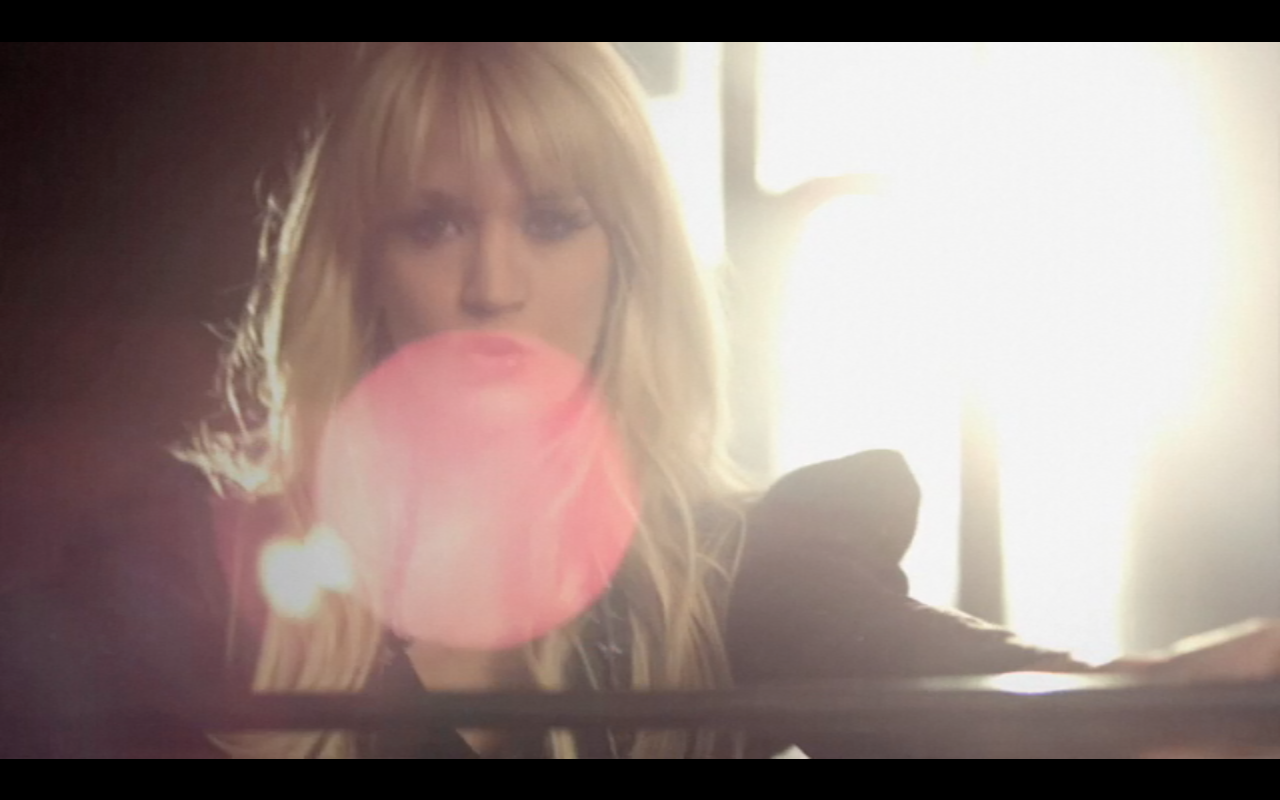
Good Girl (Music Video) – Carrie Underwood

Carrie Underwood has just released the music video for Good Girl (check out the lyrics and my review) and she looks absolutely stunning in it. Playing both good and bad girl, she waltzes through impeccable art direction, many outfit changes and, as I’ve mentioned before, turns up her sex appeal a few notches.

With hints here and there, be it through the dresses or through the flowers (which are a constant fixture in three of her album covers), Carrie is also passing on a subtle meaning that she is moving on to a different direction: the character pulls off the petals from the daisy that was present on the cover of both Play On and her first album Some Hearts.

Some are calling it her best music video yet. Regardless of what your preference may be, this is one of her best, without a doubt. In fact, the professionalism of this video is giving me hope that this album round will not be another color by number era for Underwood. She’s actually trying her best to make it count – and it clearly shows.

The video is also very fast paced, similarly to the song, making it quite fitting and it will surely help Good Girl to become a bigger hit than it already is. And with Underwood hinting that it may soon rival Before He Cheats as her biggest hit, this video will contribute to any crossover attempt the label may be working for.

Without further ado, I present Good Girl:

Beirut Hotel – Movie Review

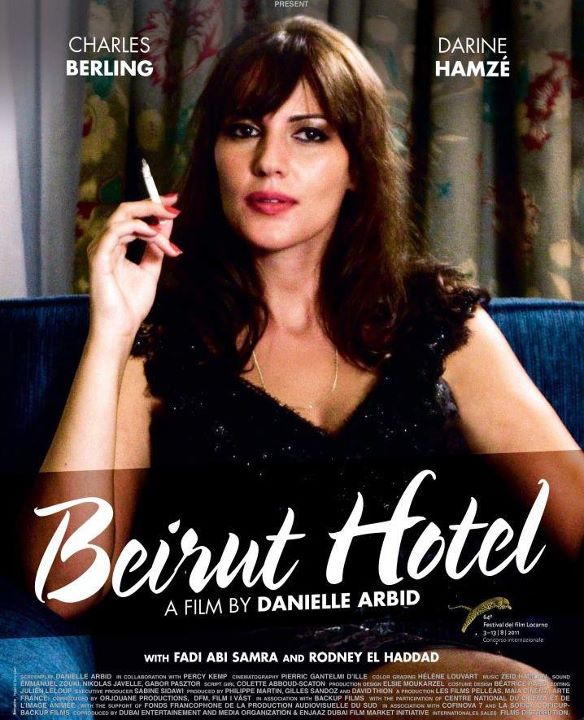
Beirut Hotel Movie Poster
I finally watched Danielle Arbid’s infamous Beirut Hotel, the Lebanese movie that has spurred a huge controversy back in November due to it being banned from Lebanese theaters. The reason I took time to watch it is twofold: one because I hadn’t heard of any good responses towards it. And two because I didn’t want to waste my time on a movie whose trailer made it look cheesy and whose hype was only generated by the simple fact that everything forbidden is usually wanted.

Upon watching Beirut Hotel, I can say for myself that my initial thoughts about the movie were perfectly on point – and no, this is not a case of a self-fulfilling prophecy.

Zoha (Darine Hamze) is a sultry singer, more often than not out of tune, at one of Beirut’s bars. The purpose of her singing is not to please the ear as it is to please the eye and Zoha knows this perfectly well. She then meets an enigmatic French man named Mathieu (Charles Berling) with whom she has a late night talk, including informing him of the bar she sings at, before going back home, after a late night kiss of course.

Soon enough, Mathieu is infatuated by Zoha and starts following her around, which she finds creepy (as well as charming). So she storms into his hotel room the following day and before you know it, the anger subsides and turns into sex. But Mathieu may not be the lawyer he claims he is. And with a man wanting to exchange information about Hariri’s assassination for safe-haven in France, things will get messy. Add to that Zoha’s husband (Rodney Haddad) who can’t seem to let her go.

All of this may sound interesting. But trust me, the script is as cheesy and useless as it gets. Remember when Zoha tells Mathieu where she works? Well, when she storms into his hotel room the following day, she actually asks him how he knew where she worked – that is before they sleep together.

In fact, the Darine Hamze sex scenes in the movie are so out of place you can’t but feel they’ve been put there solely for the reason of making an uneventful movie talk-worthy, along the lines of: “There is a moment where Darine Hamze’s breasts show” – cue in thousands of Lebanese who are shocked that a Lebanese actress actually went there.

It is here that I have to commend Darine Hamze for the guts it took her to bare it all in this movie, be it through the various sex scenes or through the obvious sexual appeal she conveyed. She may be the only “good” thing about Beirut Hotel. It’s sad that what she does comes off as forced in the movie.

If Beirut Hotel had been let be – not made into a big media frenzy because of the Hariri plot line it contained, the movie would have crashed and burned at the Lebanese box office because, whether we like to admit it or not, most of us are very cautious when it comes to Lebanese movies. We only watch them when word of mouth is substantial enough to convince us to spend the ticket money on them. Word of mouth would have failed Beirut Hotel, as it should. The movie which takes Beirut’s name not only shows the city in a negative light, I was more than often surprised to see this is the Lebanese capitol we all cherish, coupled with a silly storyline that grasps at straws to become eventful.

2/10