Is Rihanna Coming to Lebanon for a Concert?

20130416-110919.jpg

Friends of mine who attended Eddie Griffin’s comedy show over the weekend were tweeting about something the comedian said:

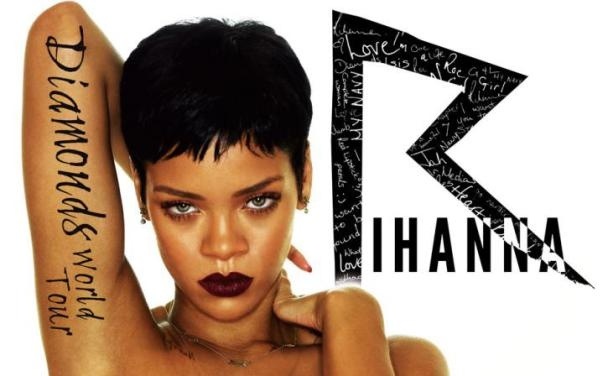
Rihanna might be coming to Lebanon for a concert this summer.

Such prospects would make this the event of the summer. Sorry The Script. Has Lebanon ever had someone as currently popular as Rihanna come for a concert in recent times?

However, for the same reasons it’s improbable for bands such as Coldplay or Muse to hold concerts in Lebanon, does it even make sense for her to come here?

Would an artist who’s used to international sell-out tours that fill stadiums and bring millions of dollars in revenue come to a country where venues such as “Stade de France” do not exist and where, despite potentially inflated ticket prices, profit wouldn’t be substantial and long-term fan base building basically irrelevant?

Either way, if there’s any truth to this, prepare for an onslaught of Rihanna songs on the radio – worse than what we currently have – and people gushing over how important Lebanon has become. I, for one, don’t think there’s much to it though.

Why #ThankBassil Backfired

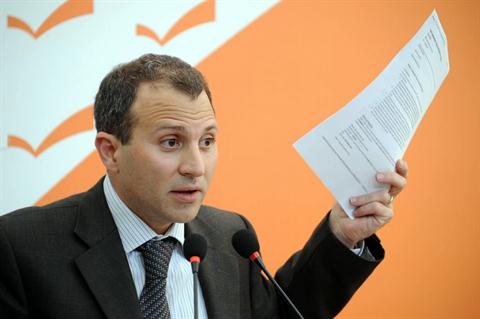
Yesterday night, Nicolas Sehanoui decided to take his twitter presence and use it in support of another minister in his now-defunct cabinet. The minister he decided to support was Gebran Bassil, one of the FPM’s more polarizing figures. Mr. Sehanoui figured that tweeting some of Bassil’s “achievements” in the ministry of energy and water with the hashtag #ThankBassil would get people talking.

Well, people got talking alright. But it wasn’t good at all. Instead of the hashtag turning into something positive to light Gebran Bassil’s future electoral days, no pun, it became a space for people across the twitter spectrum to express their true sentiment regarding the minister. Saying those sentiments weren’t nice would be an understatement: people are still making fun of that hashtag today, almost 24 hours later.

Many FPM supporters cannot fathom how people can’t get past their prejudice agains this man and look at his achievements. But the reasons for that are actually quite simple. Let me try to list them:

1) Gebran Bassil is simply unlikeable. This is common knowledge among Batrounis, even those in the FPM circle. Many of the level-headed FPMers I’ve spoken to admit that any other “choice” for a battle-candidate in the region would get more votes. Why’s that? Because Gebran Bassil isn’t held in the best regards among those in the FPM, despite what they try to show, and he is not liked enough to get the votes of those who are politically “independent” in the region. Case in point? He lost twice. Another case in point? Even in Michel Aoun’s Christian hayday, he barely managed to get a majority in the caza. Nicolas Sehanoui, for instance, shares Gebran Bassil’s views. But he is likeable enough to get me to maybe consider voting for him. I don’t vote in Achrafieh so there’s that.

2) What is the source of said-achievements? It’s easy to categorize everyone on Twitter as a blind supporter of political parties here and there. Many actually are. But you know what’s also interesting about Twitter? It’s a space for many Lebanese who are fed up to express that sentiment. I am one of those people. I have no problem acknowledging when someone has done a good job. What I have a hard time doing, however, is to believe rhetoric that comes from political sources that have an agenda behind each word they blurt out: every number, every syllable, every point.

3) Have you seen some of those “achievements?” One example that comes to mind is the oil achievement. Am I supposed to be grateful and eternally thankful to Gebran Bassil that Lebanon has oil, something which many of us have known for years and years now? For reference, digging sites were set up in my Batrouni hometown in the 1970s for that matter. Or how about all those dams whose projects have been around since 1960? Are all the achievements non-sensical? Perhaps not. But I don’t trust any Lebanese politician enough to give them blind thumps up.

4) Why should I be thankful to anyone again? I’ve said it before in this article (link) but I don’t want to ever be thankful to any politician whatsoever for doing what they are theoretically required to do, regardless of how well they do their job. If I see tangible improvement in a certain area, which I’m not seeing with Bassil so far, I point it out. If them doing their job is absolutely horrendous, Gaby Layoun comes to mind, then I’ll point it out as well. It is our duty as aware Lebanese people not to get carried away with political hype, especially if it comes pre-electorally, and be critical of what we hear and what politicians do. But never, ever, be eternally grateful for something someone should be doing regardless of what his or her predecessors did. Meaning: when I start practicing medicine, please don’t be eternally grateful for me curing you when you are paying me to do it.

5) Does it even make sense for politicians of the same political party to start thanking each other for their accomplishments on social media? What’s next, have Gaby Layoun thank Minister Sehanoui next week and have minister Bassil thank Layoun the week after that? How is ministerial twitter love-fest remotely acceptable?

6) If you’re from Batroun, you’d know that Gebran Bassil is being paraded around these days almost everywhere. Thank you Gebran Bassil posters are literally everywhere across my region (pictures). Why’s that? Because the man is going around the country, to every single place his ministry has started a project, to make sure the project gets affixed to his name forever. Why is he doing that in the first place? Because he knows he won’t be going back to the ministry next time and he doesn’t want his “achievements” to be affixed to anyone else’s name. Two questions can be asked here: Did he take “accomplishments” from previous ministers? And isn’t #thankbassil another extension of the media frenzy?

7) Last but not least, if you’re from Batroun as well, you’d remember a little book that was also distributed across the region in 2009 ahead of the parliamentary elections to list Gebran Bassil’s achievements. Sounds familiar, right? Well, that little book was not only trashed, it was torn apart by criticism because it was so bloated and full of achievements that were not simply true. That little book was one of the reasons Gebran Bassil lost the elections in 2009. If you’re not from Batroun, now you know.

I met Gebran Bassil a while back at my hometown’s local church hall as he paid his respect to a deceased relative. He is very good friends with my aunt who was his classmates all through school days. He was more receptive to me than I was to him. He even joked that I wasn’t “apparently with them.” I laughed as he tapped me on the shoulder to tell me it’s okay.

For the record, I don’t think he’s a bad man. On the contrary, he seemed quite friendly and I wouldn’t mind having a chit-chat with him sometimes away from all the townspeople who couldn’t wait to touch his holy suit. We might end up at each other’s throat but that’s fine.

However, I do think he is a grating politician. Is he corrupt? Perhaps he is. I can tell you about the old houses being traded around Batroun or  the aquifer water well permits being handed out to people as easy as saying A. But he is definitely not the worst and most corrupt of politicians to roam this country. Batroun has better examples to give to that. Kolestone, anyone?

It all boils down to what Twitter user @MWNader said yesterday: You can buy ministries but you cannot buy chemistry.

Refer to Fouad Sanioura for further details.

Photoshoot Woes of Lebanese Politicians

Imagine the following scenario: we have an elections date and a law on which those elections will take place. All of our politicians who want to run for parliament are trying to get their beauty sleep before their major pre-electoral photo-shoot. Then, suddenly, they wake up at night with one thought on their mind.

Boutros Harb

  • Boutros Harb: Do I have any white hair? DO I?

Antoine Zahra

  • Antoine Zahra: Damn it, I have to smile. I’ll look constipated one more time.

Gebran Bassil -

  • Gebran Bassil: How do I turn this into a press conference?
  • Whoever’s running with Gebran Bassil: [sleep apnea]

Samer Saadeh

  • Samer Saade: Conservative for Tripoli? Or more liberal pose for Batroun?

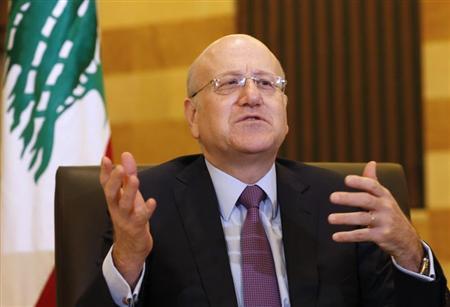
Lebanon's Prime Minister Najib Mikati talks at the Grand Serail, the government headquarters in Beirut

  • Najib Mikati: to point or not to point at all the money that I’m going to use?

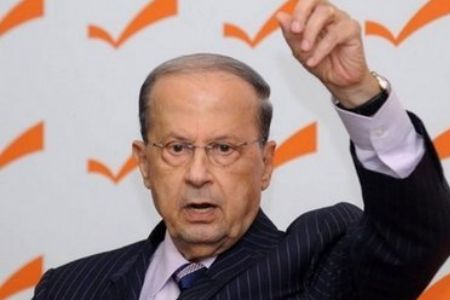
Michel Aoun

  • Michel Aoun: WHOEVER’S GOING TO TAKE MY PICTURE WANTS TO ASSASSINATE ME.

Samir-Geagea

  • Samir Geagea: flower or deflower, flower or deflower, flower or deflower? Deflower! Certainly, certainly, certainly.

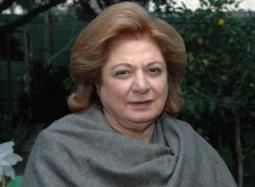
gilberte-zouein

  • Gilberte Zouein: They’re blowing me, right? My hair, I mean.

Naamtallah Abi Nasr

  • Neamtallah Abi Nasr: I should kiss up to Michel Aoun in my picture right? Bring me his shoes!

Saad Hariri

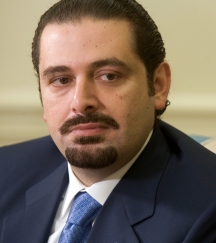
  • Saad Hariri: Hmm, Paris Eiffel in the background?

Samy Gemayel

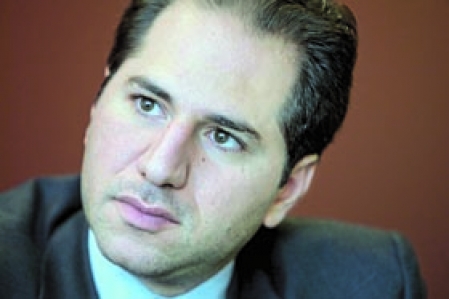
  • Samy Gemayel: I need to make my poster better representative of minorities. Is there any unheard of minority in this country?

Ahmad el Assir

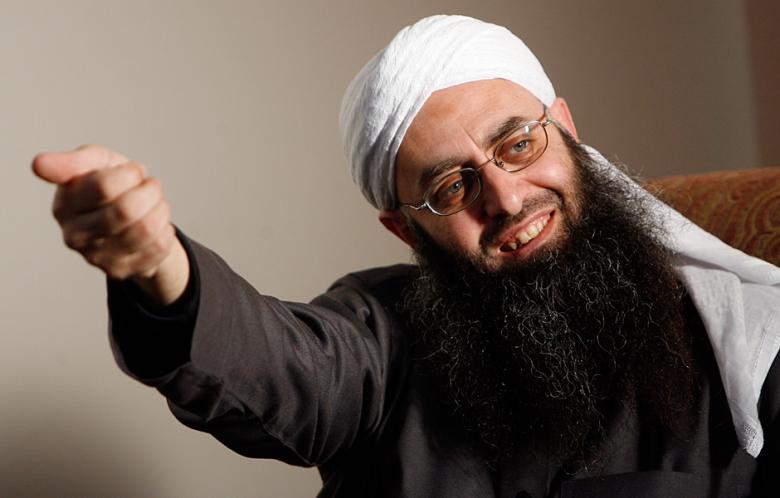
  • Ahmad el Assir: I must connect to the non-extremists. I should probably weave my beard.

M

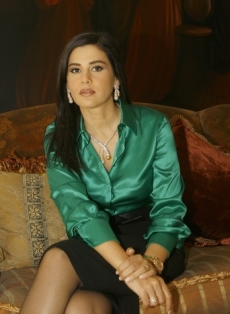
  • Myriam Klink: Antawwww. *chuckles*

sethrida-geagea-

  • Sethrida Geagea: I’m hot.

walid-jumblatt

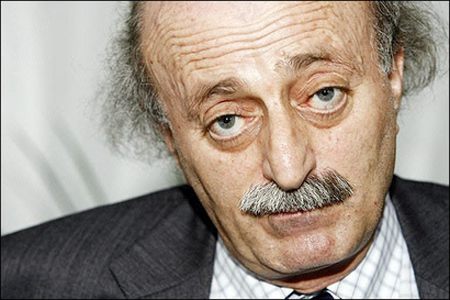
  • Walid Jumblat: Aley and Chouf are mine. Mine. MINE!

Ziad Baroud

  • Ziad Baroud: Good thing the picture is a portrait.

Oh look at all those people I just offended. But wait – one more politician:

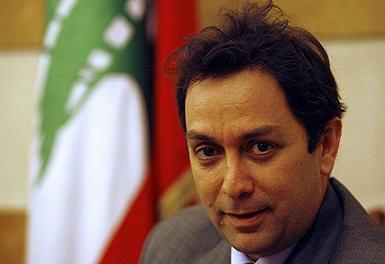
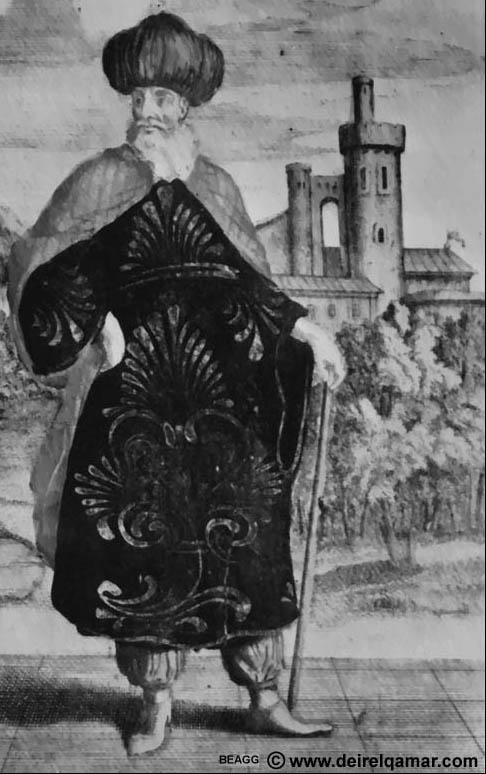
Amir Fakhreddine

The Script Coming to Lebanon This Summer?

20130414-112821.jpg

“The Script” Lebanese fans on twitter have been busy trending #TheScriptToLebanon for the past few hours. Soon enough, Twitter will show it trending as part of Lebanon’s regional “worldwide” trend and they’ll be satisfied.

But there’s actually more to it than a Twitter trend out of nowhere.

A trusted source has recently informed me that a local productions agency – I won’t reveal its name, just in case – is in talks to bring Irish band The Script for a summer concert in Lebanon.

Things are definitely not set in stone yet but the prospects are serious enough for some tidbits to actually leak: The Script are heavily considered to be this summer’s “it” band performing in the country.

Of course, given how things go around here, plans could fall through at any given moment given how preliminary they are at this point.

But Lebanese Script fans, rejoice, your favorite band may be meeting you soon enough.

Accidental Sectarian

Answering “we’re in West Beirut” to a question of location was my mistake. I hadn’t really meant the war-sense of the word but when you grow up hearing about areas being in West Beirut and other areas being in East Beirut, the terminology sticks. 

For the person who heard me, however, I was another one of those – the people whose heads are transfixed with their own region, their own bubble, dismissing everything else in the process. I tried to explain that I didn’t mean it that way. No amount of speech could change things.

Today, a few months after that incidence, I sat reflecting on it and only one conclusion presented itself to me.

It’s not the cliche line about how the war hasn’t really ended yet. It’s not the even more-cliche line about remembering and not repeating: “tenzeker w ma ten3ad.”

I am a person who, like many people from my demographic criteria, is in a dilemma of pride and blame. I cannot not be proud of where I’m from or the houses, families and regions that built me. But there’s also a tinge of blame for those houses and regions and people that I cannot shake off. I am caught between Christian pride and Christian blame. And I think others are caught between Muslim pride and Muslim blame as well – in the sociological aspect of the notion, of course.

But the truth of the matter is that I have no idea what actually happened during those 15 years. I keep hearing about how some politicians were vicious warlords back then who killed people mercilessly or about MPs standing on checkpoints as military men. I keep hearing about those battles whose names keep getting thrown around, as I nod without having a clue what’s being discussed.

Does anyone really know what happened during the civil war, even those who actually lived it? Of course, they would never admit the answer is no. Everyone I know considers their side of the story as scripture. I’m sure the other side of the country has a different story which they take as scripture as well. And both sides get offended if you insinuate they may not know the whole story.

When the current ruling class of the country, most of which was the class leading the civil war, throws around war-era jabs at each other when the going gets tough, what can you expect from all the regular folk who considered those politicians their reference during Lebanon’s civil war?

How could we actually be called to learn from the civil war when those who ran the battles and the politics of the war haven’t sat down and discussed what happened between 1975 or earlier and 1990 to agree on what  needs to be learned in the first place?

We cannot rewrite the history that hasn’t even been written yet.

Until a time when the notion of west and east Beirut becomes purely geographical, I am, like the majority of Lebanese today, an accidental sectarian of the conditions in which I was brought up, of those hidden green lines that exist between regions and people and of the rubble we’re still sifting through 23 years later.