Rymco’s Big Twitter Mistake

We’ve all used our Twitter or Facebook accounts to communicate with some brands, restaurants and whatnot. The idea of that brand being a few characters away and possibly getting feedback from them is one of those paradigm shifts, at least in Lebanon, when it comes to the relation of companies with their customers. As a result, most of the country’s firms that want to keep up with the time have upped their social media presence and most know that there’s an etiquette with which you should abide, one that doesn’t apply to end users like us.

Patrick Chemali was one of those people contemplating buying a car. He had been considering the new Nissan but didn’t like the ad Rymco, the car’s dealer in Lebanon, had done, as is his right obviously. If you haven’t seen the ad, here it is:

So he took his dislike to Twitter and called the ad lame. Instead of having Rymco inquire more about why he thought the ad was as such in order for them to “improve their services” later on, he was basically told they didn’t care for his opinion while being called an attention seeker. Professionalism much?

Who knew not liking an ad could generate such a response from a supposedly professional firm?

Of course, you won’t find all the above screenshot tweets on Rymco’s timeline now as they have been deleted.

Instead of absorbing a customer who simply did not like the ad, not the car, and tell him that the car was still great or to inquire about what he didn’t like in the ad, Rymco went on the attack and lost him in the process as well as many other clients he would have referred had he received a decent service for the money he wanted to invest in their product. Big mistake.

But maybe they were just drunk on a Friday night?

Update: Rymco apologized and are saying the entire thing was staged with them aiming at bad publicity to get publicity. They’re now offering Patrick a car for the weekend. 

How Lebanon’s Armed Forces Spend Your Money

It’d be interesting to see if there are many other non-military countries that have their armed forces spend so much money on self-indulging propaganda.

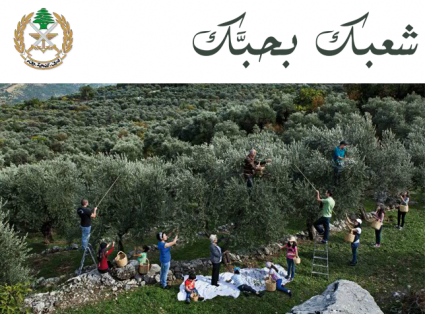
The latest is a Lebanese Army billboard spread all across the country titled: “Sha3bak Bi7ebbak,” which translates to “your people loves you.”

Underneath the caption is a picture of ordinary men, which I’ll assume are army personnel, helping out in the olive picking season which befell Lebanon back in October. This is the billboard in question:Lebarmy-425x314


I don’t get what’s the point of an army telling itself that the people of its country love it. I also didn’t know olive picking was part of an army man’s job description. In fact, isn’t it odd that our army would dispense people to go get their Kodak moment on when the country is on the precipice of collapse and while Tripoli burned?

Sounds like a grave misuse of resources if you ask me.

In the general scheme of things, I will never get why our army and internal security forces feel the need to fill our roads with posters to celebrate their anniversary, to celebrate their importance in keeping our independence come November 22nd or to celebrate anything that they feel should be celebrated.

I will never get the messages these billboards are trying to pass on. Are they trying to remind us that there are armed forces we should love? I daresay a billboard will not induce any affection in me. Are they trying to bring people together by rallying behind a common cause? I daresay that’s not working at all. Or is this just another manifestation of a country that loves appearances with our armed forces being unable to separate themselves from the need to show off?

Instead of buying themselves weapons, instilling new training programs or simply making their entire workforce efficient our armed forces use our tax money and whatever donations they get in order to fill our highway with billboards whenever the occasion arises. And in my opinion, that’s just sad. 

A Lebanese Tragedy: The Devaluation of a Life

Who gives a fuck? was the first thing I heard today when we were made aware of another Beirut explosion. It was just a bomb all over again. And people were dead, as usual, all over again. Typical and warranted was what I had heard.

On the other side of the room, a frantic woman was calling her parents to see if they were okay. If their house was intact. If she still had a roof to return to. Then she drew a sigh of relief. And I was relieved for her. But I was also disgusted.

There I was in a room of supposedly intellectuals with two drastically different reactions to an event that should have, at least, gotten everyone to feel sorry and disgusted and horrified. Pity the nation that was more upset at a cat being microwaved or a concert being canceled than at its own children, men and women getting blown to pieces because of retarded and narrow political calculation.

This is a reply to Qalmoun versus the reply will be in Qalmoun. Are you serious? Lebanese were using this tragedy to give some credibility to their demented politics, as mothers grieved their sons while sifting through the remains that our media were more than happy to show on their screens. Look! I’m holding an arm! Pretty cool eih? 

I guess it’s too redundant to talk about media professionalism, about not jumping to conclusions when news first start trickling in.

There’s a time and a place to die. But 2013 Lebanon on a random Beiruti street, due to a cowardly act of terrorism isn’t it. 2013 Lebanon where your death is meaningless, another figure in a growing number of casualties who will soon be forgotten is not it.

Do you know what the saddest part in all of this is? There are those who believe such deaths are “fida” whoever it is they follow. Perhaps I don’t get it. Perhaps I don’t understand how it is to be part of such a sociological following. But I’d hate for my life to be wasted for someone who couldn’t care less, sitting in a bunker twenty feet under or in a fortress in some mountain throwing accusations here and there before proceeding with la dolce vita once the poison stops dropping.

I’d hate for my life to end and be called  a martyr by entities who cannot not be politically correct in order for my mother to feel better about it while I’m just a victim of this country where everyone does as they please without any ounce of calculations of possible ramifications on all those people, like you and I, who don’t get a say in how things in their country should run, in their safety (or lack thereof) and in the way they should die: not in bits and pieces on a desolate Beiruti street.

Our lives are more important than to pretend it’s okay for us to die as a “sacrifice” for someone, whoever that someone is. My life is not “fida” anyone. Your life should not be “fida” anyone. Thinking that it’s okay for a life to be dispensable for someone is not okay. Thinking that it’s okay for your life to be dispensable means such tragedies will keep on happening as long as there are people who are willing to be collateral damage in a war that isn’t theirs, that doesn’t involve them and that doesn’t infringe upon them except in death.

There is no ulterior purpose being served. There’s no cause being championed. There’s no heavenly place awaiting the victors. There’s grief-struck parents being left behind. There’s a deeply split nation whose divide is growing wider. There are nauseatingly political individuals who have begun milking this for whatever purpose floats their boats. And there are those who are awaiting the next opportunity for their lives to be “fida” someone.

Our turn is next week, a friend of mine from Tripoli said. I couldn’t tell her she was mistaken.  

Meanwhile, life around where I was went on normally. People had no worries on their mind as they shuffled through their daily motions, seemingly indifferent that the other part of their capital was going to cry itself to sleep tonight.

Rest in peace to all those wasted and forcefully devalued Lebanese lives we have lost and we will lose to bombs, explosions, suicide bombers and ruthless politics, those lives that are more important than to be wasted “fida” anyone.

The Hunger Games: Catching Fire (2013) – Movie Review

Hunger Games Catching Fire movie poster

It has become a Hollywood rule that sequels should suck. A few movies have escaped that sophomore slump. Add Catching Fire to that short list. Nay, have Catching Fire occupy an honorary spot on that list. Ladies and gentlemen, this is how sequels should be made.

I am a fan of The Hunger Games book series. I also thoroughly enjoyed the first movie. And let’s just say that the second movie makes my liking of the first seem mediocre, childish, fanboyish. I stand corrected – The Hunger Games was not the movie that brought this series to its potential. Catching Fire does that and so much more.

The events pick up where the previous movie ended: Katniss has to work with the consequences of her defiance at The Hunger Games that resulted in saving both Peeta Mellark and herself. Her act of defiance is seeding a revolution across the country. People are looking at her as their leader. And the Capitol wants her to do what she can to squash that revolution down, as they prepare for a very special edition of The Hunger Games, which have hit their 75th edition.

Saying anything more than that would be treading spoiler-zone worse than a minesweeper game. Catching Fire doesn’t let up. There’s no dull moment. There’s no frame that feels out of place. There’s no scene that makes you shrug at it being useless. It keeps you transfixed throughout its two and a half hour run. Just sit back and enjoy it. Special effects? Check. Riveting cast? Check. Twisted story? Check. Great directing? Check. Cinematography, art direction, costume design? Check, check and check.  Seriously, what more do you need?

Jennifer Lawrence, through her portrayal of Katniss Everdeen, is cementing herself as the actress of our generation. The sheer talent this creature has is simply spell-binding to watch. She captures the essence of Katniss perfectly, delivering one knockout scene after the next like it’s a piece of cake. It helps that she has multi-layered material to work with. But I highly doubt any other actress with less chops could have done the marvelous job she’s doing in this series.

If The Hunger Games series continues its upward trajectory, look for it to mark itself as this classic movie series down the line that we tell our grandchildren to watch as they shrug us off. Those movies? They’d ask. But they look so ancient. They’d add. Except they’re not. Catching Fire, despite it being fiction, feels extremely relevant in the world of today. It may not be the movie that would amass a ton of Oscars. It’s not because it’s not worthy. It’s because it’s just too easy to shrug this off as some silly young adult novel adaptation. Catching Fire, however, is one of the best book adaptations I’ve seen. There have been very few and there will be even fewer movies this year that are as entertaining.

Do yourself a favor and check in whatever you thought about the first movie at the door and head to your nearest cinema this weekend to get on this ride. You’re in for one hell of a treat. The Hunger Games have caught fire and I, for one, am still betting on them.

4.5/5

When Lebanese People Cannot Afford Hospitals

Hospitals have a way of desensitizing you. They overwhelm you so much that shutting off that part of you that is forced to care all the time is the only way possible at coping. And no, I’m not talking about medicine.

There’s a lot to be said about the state of healthcare in Lebanon. I’ve seen some aspects of it. The numbers behind it are all over the place. But no matter how those numbers are shuffled, you are left with almost 1 million or so Lebanese, in a best case scenario, that are not covered in any way or another and are forced to withstand the pressure of Lebanon’s increasingly costly medicine on their own.

Many crumble under that pressure and figure that dying is simply better than getting overwhelmed with debts or simply getting a hospital’s door slammed in your face.

There are a lot of stories to tell. They happen at a lot of the country’s hospitals. I’ve heard of a well-known hospital that wouldn’t take in a 2 month old patient because his parents couldn’t afford to pay down the required deposit for his surgery. I’ve seen old people who have no one left and nothing left to pay for the simplest of blood tests. I’ve seen exorbitant prices for surgeries, some of them possibly warranted given their complexity, that cannot be afforded by 99% of the Lebanese population.

Perhaps Lebanese hospitals focus on the business part of their affairs much more than they should. But are they to blame? They need to run their facilities, pay their employees and still make enough profit to constantly improve their brand of medicine seeing as Lebanese medicine is so specified that not having the latest it-machine at your facility means you’ve fallen behind the times. The people who can pay simply hospital-shop and go to the one with the newest toy, newest hotshot doctor….

Should they provide such highly costly services for free and then not be able to run themselves anymore?

A lot of patients cannot afford healthcare in Lebanon. Insurance companies make sure to screw you whenever they can. The Lebanese ministry of health has a limited budget that is allocated in an even more limited way and benefits mostly those who know someone who knows the minister more than those who actually need something. Many of the people who can afford insurance, for instance, simply do not buy it because they have good enough connections not to pay while those who cannot afford insurance rot at hospital doors.
The national social security fund is not really national and hospitals find themselves in financial problems because of it more often than not and decide to relegate patients who present with that form of coverage into the “we don’t have a place for you bin.”

What does a Lebanese person have to do to receive one of his fundamental human rights? I guess they can just die in a state that couldn’t care less. Many of you probably don’t give this a second thought but it’s time you do. If you can afford insurance, go and buy one as soon as you can. If you can get enrolled in the National Social Security Fund, make sure you do so as well. If you can find any possible means of coverage for you and your loved ones, seek it. There’s no better investment.

After all, we live in a place that is so behind the times that talk about universal healthcare is light years from becoming mainstream enough and where our grandparents’ fate is to get people to feel sorry enough for them to raise money for them to do their blood tests.

I wish I could tell all the stories that I have to tell. Maybe someday.