Lebanese Marwan Youssef Wins Star Academy; Arabs Have A Meltdown About It

As blogger Anis Tabet wisely put it, “the year is 2050, and Star Academy is still on TV.”

Yes, it’s become increasingly redundant and unwatchable as it faces competition from more “appealing” shows as The Voice, but here we are and the Lebanese contestant Marwan Youssef just became the second Lebanese to win the show after Joseph Attieh, arguably the show’s most accomplished winner and graduate.

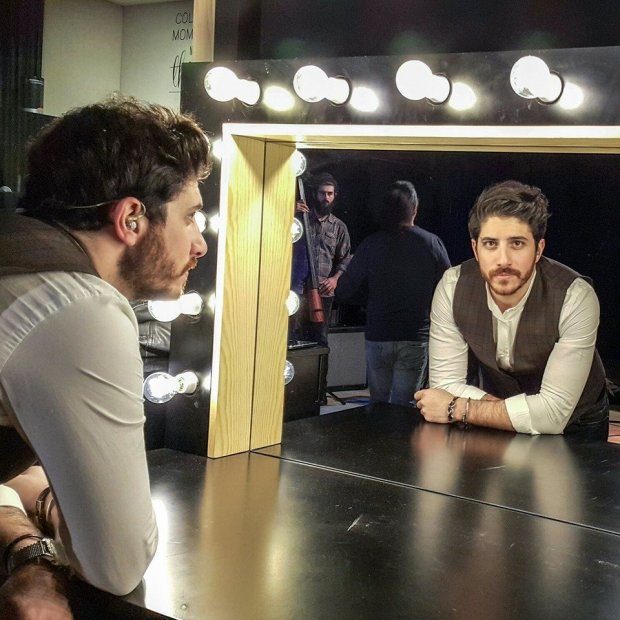
From the town of Obeidat in Jbeil, Marwan is an USEK student in his twenties, and even though I haven’t watched the show, catching up with what he presented over the season on YouTube has shown me that he is immensely talented, and can seriously sing (as can the other 3 finalists).

And since the country had nothing else to worry about over the past week, the ministry of telecommunication slashed voting prices (link) and radio stations as well as LBC led a campaign encouraging people to vote. He ended up getting around 55% of the votes, facing 2 Egyptians and a Tunisian:

But then the drama started.

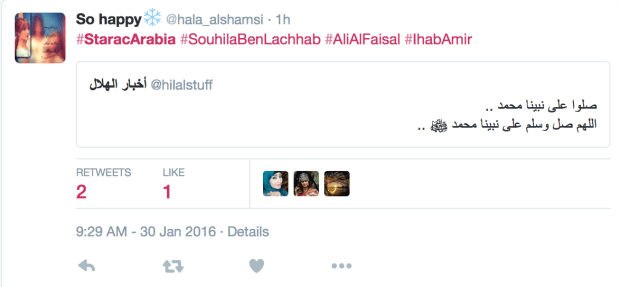
I inadvertently clicked on the hashtag of the show soon after the announcement of the results only to be inundated by conspiracy theories, a slur of racism, accusations of cheating, mocking of Lebanon and a bunch of other hilarious offerings.

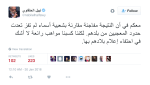
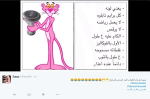
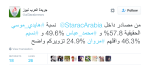
First up there was the news channel speaking about “actual” voting results, except math died in the process.

Star Academy 11 Marwan Youssef Haydi Moussa Mohammad Abbas Nassim el Rayyess Finale - 1

What’s sadder is the amount of people believing the numbers and resharing them.

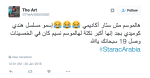
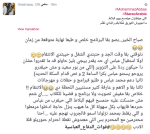
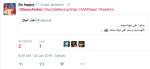
Then there was the Egyptian who knows about our political problems and who figured Star Academy would be the best way to use them:
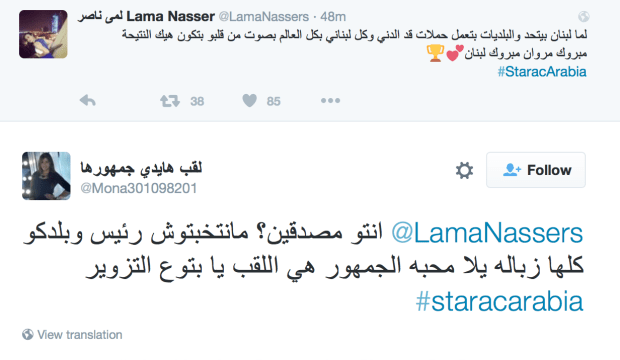
Star Academy 11 Marwan Youssef Haydi Moussa Mohammad Abbas Nassim el Rayyess Finale - 18

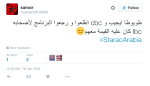
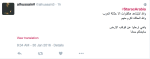
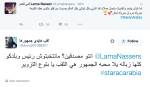
There were also those who had a problem with the country to begin with and couldn’t wait for such a thing to happen to express their #TeamAntiLebanon attitude:

Star Academy 11 Marwan Youssef Haydi Moussa Mohammad Abbas Nassim el Rayyess Finale - 21

Some were also very confused:

Star Academy 11 Marwan Youssef Haydi Moussa Mohammad Abbas Nassim el Rayyess Finale - 7

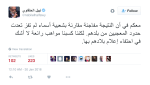
Egyptian journalists with verified twitter accounts were also not that happy:
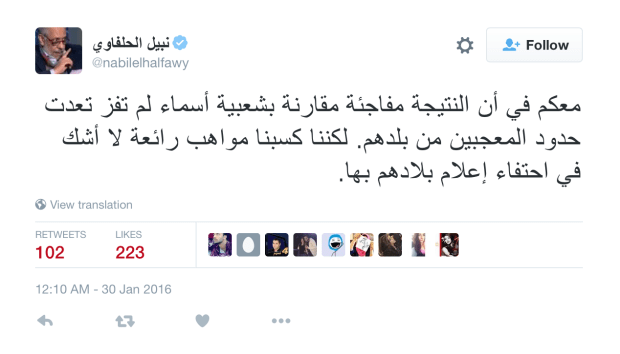
Star Academy 11 Marwan Youssef Haydi Moussa Mohammad Abbas Nassim el Rayyess Finale - 20

It’s safe to say a lot of people were not happy at all:

There’s a whole lot of those where they came from.

Leave it to a talent show to show exactly how fond Arabs are of each other. We’re all good at playing nice with each other as long as no one’s beating the other country’s participant at a talent show. If that occurs, claws are out. Be afraid Israel, be very afraid!

If a useless singing show on its 11th season can elicit such a reaction, what have we left to the things that actually matter? I almost forgot we are dealing with a thing called the Arab Spring/Winter, and that there’s a little thing called ISIS that exists among us.

In the spectrum of Arab priorities, clearly the participant coming from a small country winning a talent show is ranked up high. It is then that they cry foul and cheating. But when their governments do it to them daily, everyone just hits the snooze button and goes about their days daily. Perhaps we went about these revolutions the wrong way? Maybe the best way would have been to hold a phone voting competition and be done with it?

One thing is clear, however: better math is needed in the land that invented algebra.

Marc Hatem: Another Lebanese Singer To Be On France’s The Voice In 2016

Marc Hatem The Voice France

The string of talents we’re exporting to France’s The Voice continues this year in the form of Marc Hatem. I have no idea how long Lebanese are going to go on France’s The Voice, especially when the local version of the show is extremely successful and no French participant has made it on a commercial scale before, but might as well enjoy it while it lasts.

I was told of this news around two months ago from a private source, and given that the show starts tomorrow I figured it’s now the time to share it.

Marc is a young and extremely promising singer who is unlike anything Lebanon has sent France’s The Voice. His voice is reminiscent of a younger Josh Groban that Marc probably considers as his idol given how often he covers him. He is also mostly unknown, to break off from the recent two years in which Hiba Tawaji and Aline Lahoud both tried their luck at the show, and both ultimately not making it with varyingly impressive results.

The reason why Marc might do better on the show – or at least as well as previous Lebanese participants – is the fact that his voice sounds tailor-made to these kind of talent shows whereby those who hit the highest and most spectacular of notes are those that people rally behind.

His musical upbringing being mostly of Western music also means that he won’t be able to rely on using Arabic as a gimmick to get people talking: it will just have to be him and what he can do with his talent. Based on what I’ve heard, he is superb and should make it far.

Good luck to him. The show starts on TF1 tomorrow. Meanwhile, check out a few of Marc’s previous performances on YouTube and I hope you’re as impressed as I am:

And his cover of Hiba Tawaji’s “La Bidayi Wala Nihayi:”


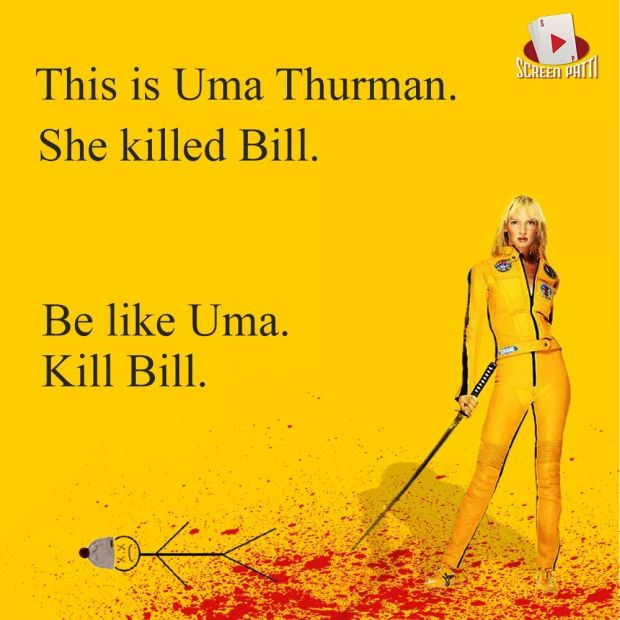
Dear People of Facebook, Your “Be Like Bill” Stick Figure Memes Are Annoying, Not Funny

2015 was the year of Bitstrips.

2016 is the year of Facebook stickfigures.

Modern art is so minimalistic.

I wish we can have bitsrips back. At least those were visually appealing.

I have no idea who came up with this “Be like….” meme, but I’m getting super close to wishing they had never existed. I don’t know if it’s the case in other countries too, but the Lebanese populace of Facebook is not only milking the aforementioned meme, they’ve turned it into a monster haunting every single one of our timelines.

I’m now wishing I can see your selfies adorned with Nietzsche quotes again. At least those were actually funny.

So for those sharing those “Be Like You” memes, let me tell you the following:

  • No one cares you have a partner and don’t tell people about him or her.
  • No one cares that you can do a hundred push ups and don’t advertise it on social media.
  • No one cares that you’re single and happy about it.
  • No one cares that you’ve turned your life around and didn’t tell everyone.
  • The fact that you are making a meme out of it means you are propagating whatever fact you are proudly telling people you did not advertise.
  • No one wants to be like you (unless you have a billion dollars stashed somewhere).

So, stop the ridiculous memes. Stop sharing screenshots of them that pop up on our timelines even after we blocked the app making them. If you’re that bored, go read a book, go Instagram your meals, go watch some porn, or watch the only thing about Bill worth watching:

Uma Thurman Kill Bill

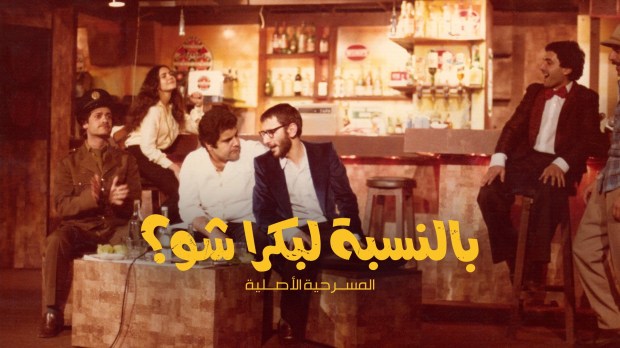
Ziad El Rahbani’s “Bennesbeh La Bokra Chou?” Was Beautiful; “Film Ameriki Tawil” In Cinemas Soon

Belnesbeh La bokra Chou Ziad el Rahbani play movie

Let me start out by saying that I am a Ziad el Rahbani uninitiated.

The tag-line for “Bennesbeh La Boukra Chou?” went: “you’ve been listening to it for 35 years, now come and watch it.” Well, I haven’t to say the least. In fact, apart from the occasional references to Ziad el Rahbani’s golden lines here and there among my acquaintances, my knowledge about his plays would’ve been essentially zero. It’s not something I’m proud of – to be so ignorant of a Lebanese icon is not one of my stronger suits I have to say – but I vehemently refused to listen to plays knowing that sometime in the near future I might be able to watch them.

Well, that future is now.

I was lucky to attend the Lebanese premiere – or the cinematic premiere that is – of “Bennesbeh Laboukra Chou?,” dedicated to the memory of Joseph Saker and Layal Rahbani, which will be in cinemas starting next Thursday, and I have to say: I’m thoroughly impressed.

No, this is not about the play’s sentences that everyone has memorized, or the songs that are engrained in our memories, even mine. This is about the entire experience of it: from film, to seeing the sheer joy on the faces of those watching it, to their reaction to finally seeing the play they’ve known so well on screen in the way that it is.

For starters, the play is filmed well enough for it to be shown in cinema. It’s not Kubrick, of course, but it is decent to the extent that a few minutes in you’ll forget that you’re watching rescued footage of a nearly four decades old play and simply fall into it. In fact, the grainy texture even gives it character: this is not a glossy movie, it’s rustic, full of life and quite charming. It feels documentary-like, which is also the purpose of the play at hand.

No one needs me to talk about the content of course, but I have to say that I was grossly impressed. Ziad’s satirical take on the Lebanese way of life then, the clash of classes and the struggle of the prolitariat, could not be truer even today. In fact, the movie/play starts: there have been many tomorrows after that, but what has changed? The fact of the matter is, so little has, and things are probably worse today than they were back then. Ziad’s monologue towards the end, about the need for work, about providing and trying to escape poverty is chills-inducing. It’s beautiful to see the lines many have repeated over the years be said in front of you “live,” and it’s even more beautiful to see the audience that knows those lines so well react to them.

I asked someone how it felt to watch the play they had listened to endlessly for years, and they said that it felt exactly as they had expected. I had to agree: you may be used to the voices, but the acting is exquisite. I have to say, Ziad el Rahbani may be a great playwright, but he’s an even better actor: the energy that man exuded on his stage is near-unparalleled in these times. No wonder audiences back then fell for him: it brought me such joy to see him perform in the way that he did, and I’m sure it will do the same to you.

You don’t need my words to tell you to watch “Bennesbeh Laboukra Chou?” if it’s something you planned. But let me tell you this: the people singing along to the songs, muttering those lines under their breathes or simply clapping along was an experience in itself, one full of nostalgia and wonder, one that I recommend wholeheartedly.

Film Ameriki Tawil

And, for those of you who want more, a list you can now add me to, there will be more: Film Ameriki Tawil, the even better play as I was told, will be in cinemas in the coming months as well (a source told me in around 2 months), and here’s part of the trailer:

Mashrou’ Leila’s Ibn El Leil; Ab: Beit Byout; Film Ktir Kbeer: When Lebanese Art Is Great

Amidst the very dismal situation in the country, of which I’ve written and nagged your head about plenty, there are currently three emblems of Lebanese art shining bright of which I think we should all take notice. The three acts/events I’m about to highlight have not paid me to support them and probably don’t need my support anyway, but I’ve found their offering to be so impressive that I think it should be highlighted.

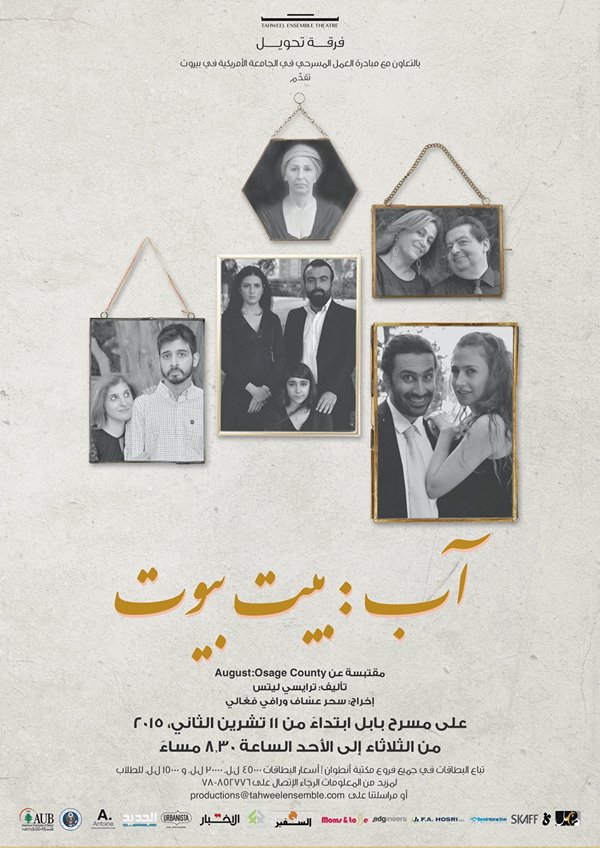
Ab: Beit Byout:

Ab Beit Byout

Ab: Beit Byout is the Lebanese take on August: Osage County, the award-winning turned-movie play, which you probably know because of both Julia Roberts and Meryl Streep who received Oscar nominations for their roles.

It’s the story of a very dysfunctional family meeting around their matriarch at the event of the disappearance and eventual death of their father. What ensues is sheer acting brilliance, a mouthful of dialogue that is as biting as it is seething with anger, regret, sadness and joy.

The adaptation to a Lebanese audience is great. It manages to carry enough of the punches of its American counterpart without feeling like a word for word copy or a subpar rip off. There are enough Lebanese aspects to it to make the play feel very relatable, very “I’ve seen such a thing take place in my hometown.”

Catch it at Babel Theatre in Hamra.

Film Ktir Kbeer (Very Big Shot):

Film Ktir Kbeer Poster

Nothing about this movie encouraged me to watch it. The title didn’t make sense. The poster felt like yet another Lebanese action-movie-wannabe. Confession time: I was extremely wrong.

Film Ktir Kbir is the kind of movies you’ve been wanting Lebanese filmmakers to make but as they were too busy making “Bebe” and movies about the civil war or about Christians hating Muslims and vice versa.

“Very Big Shot” is the story of 3 siblings who, after growing up in lower socio-economic standards, find themselves in deep trouble after getting involved with a drug lord, causing them to devise an ingenious way to save themselves.

There’s plenty of curse words, plenty of “every day” banter, and few cliches that are mostly spun as jokes. The acting is great. The script is extremely tightly written albeit the ending felt a bit rushed. It’s a movie that is equally fiction and equally a criticism of Lebanese society and politics.

Keep an open mind to it and give it a shot. I bet you won’t be disappointed.

Mashrou’ Leila’s “Ibn El Leil”:

Ibn El Leil

The opening song of Mashrou’ Leila’s newest album “Ibn El Leil” is an ethereal, mostly instrumental track called Aoede and it sets the tone for an album that is both more mature, more cohesive and more sonically impressive than anything they’ve offered before.

If you’re a fan of what they’ve done before – their song “Lil Watan” is excellent – then this album will be right up your alley. If you’ve been iffy about this Lebanese band, give this album a shot: there are some tracks there that are so nicely done they might change your mind.

After launching this album at London’s “Barbican,” The Guardian wrote about how this Lebanese band might be on the brink of finally exploding and filling stadiums instead of smaller venues. Perhaps that will happen one day, but what is sure for now is that “Ibn el Leil” is one hell of an album filled with songs that not only defy Arab and Lebanese stereotypes, but are eons above and beyond anything that is offered musically in the region.

In their latest offering, Mashrou’ Leila are breaking the confines of what Arab music was allowed to say. It’s a joy to listen to.


Listen to: 3 Minutes; Kalam; Tayf; Ashabi; Marrikh.