Jhony Maalouf: A Lebanese Contestant on French Singing Show: The Voice (La Plus Belle Voix)

Johny Maalouf is a Lebanese contestant who recently made it to the second round of the newly launched French version of the American TV Show The Voice, La Plus Belle Voix, airing on TF1. Leave it to the French to make a two letter title a whole phrase.

The premise of the show consists of three phases: a blind audition where the contestant sings with the judges having their chairs turned away from him (this is the phase Jhony got past). The second phase is called the battle phase where contestants face off in duets and the third phase is the live performances show, which is judged according to audience voting.

Jhony still has a long way to go and it’s our duty as Lebanese to support him. He’s actually quite good, although he seemed very nervous (and justifiably so).

Good luck to Mr. Maalouf on his future progression on “La Plus Belle Voix.”

Intouchables – Movie Review

Based on a true story, Intouchables is the movie that took French cinema by storm last year with it breaking admission records and setting itself as one of the biggest movies in French history.

Philippe (Francois Cluzet) is a very wealthy French aristocrat who is also paraplegic and in need of a caretaker. It is then that Driss (Omar Sy) presents to his place in order to get a paper signed for social service, after serving a stint in prison for robbery. Instead of signing the paper and letting Driss go, Philippe takes a chance on the African man and hires him as his caretaker because he figured someone with Driss’s background won’t feel bad for his condition, not knowing that the relationship these two men will spring up, against all odds, social stigma, boundaries and hardships, will change the course of both their lives forever.

This French comedy transcends its genre to become a truly heartfelt story that will tug at your heartstrings as it makes you laugh and smile and get invested in the friendship between Philippe and Driss. Hollywood journalists have been criticizing it for its tendency to get racist at times and that is categorically incorrect. Simply put, those reviewers have not really understood the movie and the jokes may not have translated well to them. How can you convince an American that the joke of Driss looking like Barack Obama in a tuxedo is actually funny and not a pejorative measure of their president? In reality, Driss is not even black. He’s Arab, as the movie shows in real-life segments before the credit rolls. In reality as well, the movie is nowhere near racist – unless by racism you mean showing a typical white man the life of a youth, who happens to be black. Intouchables is also socially accurate – people do judge you differently based on your ethnicity, whether we like to admit it or not. The movie, however, doesn’t judge its characters. It just lets them be. So for those who keep an open mind, there’s no way Intouchables won’t touch you in a way or another as it flips through its scenes, all to the backdrop of either gorgeous Parisian scenery or beautiful French countryside.

When it comes to the acting, Omar Sy and Francois Cluzet’s performances are a crucial central pillar to the movie. In fact, both actors jump off each very smoothly with charming chemistry that can only lead to help the movie’s comedy subject matter to get passed on to the viewer. It shouldn’t come as surprising that Omar Sy actually beat Jean Dujardin for the Best Actor Cesar this year. His performance is nuanced, very sharp and absolutely spot on. On the other hand, Cluzet balances him out quite well and, despite his character’s seriousness and it being grounded. The overall mix of the two is a duo that will entertain you for every second the movie is playing.

Never have I been surprised by a French movie since Amelie Poulain. And while Intouchables doesn’t quite dethrone that movie, it sure comes fairly close. It is a feel good movie that succeeds at what it’s supposed to do. It boasts great leads, a terrific supporting cast, some chilling music composed by Italian composer Ludovico Einaudi. It is a movie about the “choc des classes,” which will leave you shocked as to exactly how much it works.

9/10

Good Girl (Music Video) – Carrie Underwood

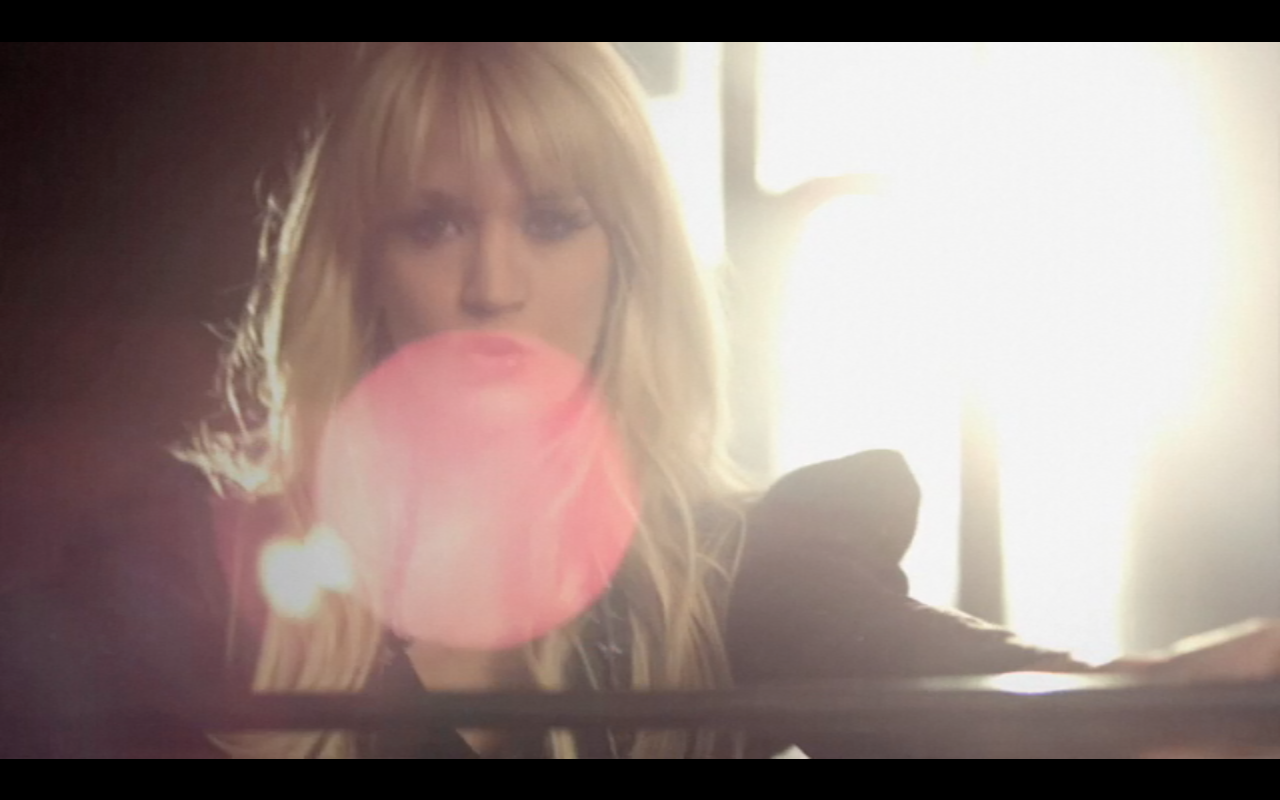
Carrie Underwood has just released the music video for Good Girl (check out the lyrics and my review) and she looks absolutely stunning in it. Playing both good and bad girl, she waltzes through impeccable art direction, many outfit changes and, as I’ve mentioned before, turns up her sex appeal a few notches.

With hints here and there, be it through the dresses or through the flowers (which are a constant fixture in three of her album covers), Carrie is also passing on a subtle meaning that she is moving on to a different direction: the character pulls off the petals from the daisy that was present on the cover of both Play On and her first album Some Hearts.

Some are calling it her best music video yet. Regardless of what your preference may be, this is one of her best, without a doubt. In fact, the professionalism of this video is giving me hope that this album round will not be another color by number era for Underwood. She’s actually trying her best to make it count – and it clearly shows.

The video is also very fast paced, similarly to the song, making it quite fitting and it will surely help Good Girl to become a bigger hit than it already is. And with Underwood hinting that it may soon rival Before He Cheats as her biggest hit, this video will contribute to any crossover attempt the label may be working for.

Without further ado, I present Good Girl:

Beirut Hotel – Movie Review

Beirut Hotel Movie Poster
I finally watched Danielle Arbid’s infamous Beirut Hotel, the Lebanese movie that has spurred a huge controversy back in November due to it being banned from Lebanese theaters. The reason I took time to watch it is twofold: one because I hadn’t heard of any good responses towards it. And two because I didn’t want to waste my time on a movie whose trailer made it look cheesy and whose hype was only generated by the simple fact that everything forbidden is usually wanted.

Upon watching Beirut Hotel, I can say for myself that my initial thoughts about the movie were perfectly on point – and no, this is not a case of a self-fulfilling prophecy.

Zoha (Darine Hamze) is a sultry singer, more often than not out of tune, at one of Beirut’s bars. The purpose of her singing is not to please the ear as it is to please the eye and Zoha knows this perfectly well. She then meets an enigmatic French man named Mathieu (Charles Berling) with whom she has a late night talk, including informing him of the bar she sings at, before going back home, after a late night kiss of course.

Soon enough, Mathieu is infatuated by Zoha and starts following her around, which she finds creepy (as well as charming). So she storms into his hotel room the following day and before you know it, the anger subsides and turns into sex. But Mathieu may not be the lawyer he claims he is. And with a man wanting to exchange information about Hariri’s assassination for safe-haven in France, things will get messy. Add to that Zoha’s husband (Rodney Haddad) who can’t seem to let her go.

All of this may sound interesting. But trust me, the script is as cheesy and useless as it gets. Remember when Zoha tells Mathieu where she works? Well, when she storms into his hotel room the following day, she actually asks him how he knew where she worked – that is before they sleep together.

In fact, the Darine Hamze sex scenes in the movie are so out of place you can’t but feel they’ve been put there solely for the reason of making an uneventful movie talk-worthy, along the lines of: “There is a moment where Darine Hamze’s breasts show” – cue in thousands of Lebanese who are shocked that a Lebanese actress actually went there.

It is here that I have to commend Darine Hamze for the guts it took her to bare it all in this movie, be it through the various sex scenes or through the obvious sexual appeal she conveyed. She may be the only “good” thing about Beirut Hotel. It’s sad that what she does comes off as forced in the movie.

If Beirut Hotel had been let be – not made into a big media frenzy because of the Hariri plot line it contained, the movie would have crashed and burned at the Lebanese box office because, whether we like to admit it or not, most of us are very cautious when it comes to Lebanese movies. We only watch them when word of mouth is substantial enough to convince us to spend the ticket money on them. Word of mouth would have failed Beirut Hotel, as it should. The movie which takes Beirut’s name not only shows the city in a negative light, I was more than often surprised to see this is the Lebanese capitol we all cherish, coupled with a silly storyline that grasps at straws to become eventful.

2/10

The Iron Lady – Movie Review

Behold Meryl Streep who might as well have caused the movie’s producers to change the title from “The Iron Lady” to “The Iron Ladies.”

In a tour de force performance, Streep portrays former British Prime Minister Margaret Thatcher through the rise and fall of her career. Opening in 2005, soon after the London subway bombings, the movie portrays an Alzheimer-inflicted Thatcher as she struggles to cope with life. She imagines herself at times still being a prime minister. Her husband Henry (Jim Broadbent), dead for years now, is also a constant figure in her life through hallucinations.

And as Thatcher sits alone in her house, she remembers as she rose to power, as she defied the stereotypes enforced on her by British society to become the first ever female prime minister of the country and remain in that position for more than eleven years, the longest ever for prime minister in the 20th century.

To speak about The Iron Lady would be to speak about Meryl Streep for one is the other: a whole that cannot be divided into the sum of its parts. In a performance for the ages, Streep sweeps through every second she is on screen, cementing her status as a truly magnificent force and constant fixture to be reckoned with. You can never really go overboard with complementing Meryl Streep on her acting. In fact, I predict future generations to ask us why we haven’t really complemented her more. She pulls off the most difficult of roles and makes it seem like an afternoon walk in the park. When it comes to Thatcher, she nails the tone, the posture, the mannerisms down to the way she tilts her head when making a speech. That is the mark of a great actress – the greatest actress to ever come on our screens. Watching her incarnate Thatcher is a joy to the eye, ear and to the soul.

The heights that Meryl Streep takes The Iron Lady to are marred by what could have been a stronger script. I personally found the movie very engaging, albeit slightly disconnected as it kept going back and forth in time without a strong foothold in either. However, the overall mixture, in my opinion, works. Nevertheless, as possibly the only biopic to be made of Thatcher’s life, I would have liked the approach to be less of a senile woman remembering the days where she ran the country and more of what that woman did when she actually was in charge. Despite the movie being engaging, it is still unfocused. Imagine a movie being made about Ronald Reagen, often mentioned in the movie, focusing more on his years while struggling with Alzheimer’s and not of his two-term presidency. This is the case with The Iron Lady.

Despite some left-wing squeamishness in dealing with the right-wing nature of the character of the movie, The Iron Lady cannot but be considered a great movie solely for the reason of the great lead it boasts. Look at it this way: it is an average script, touched by the hands of a genius who turns in into cinematic gold. It may not be for all tastes but no one can deny the absolute brilliance of Meryl Streep. And for those with whom the movie works, like me, you will be entranced as you watch the life of this woman unravel before your eyes.

8.5/10