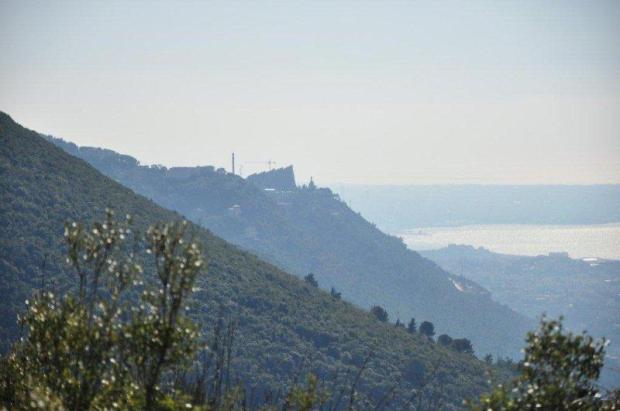
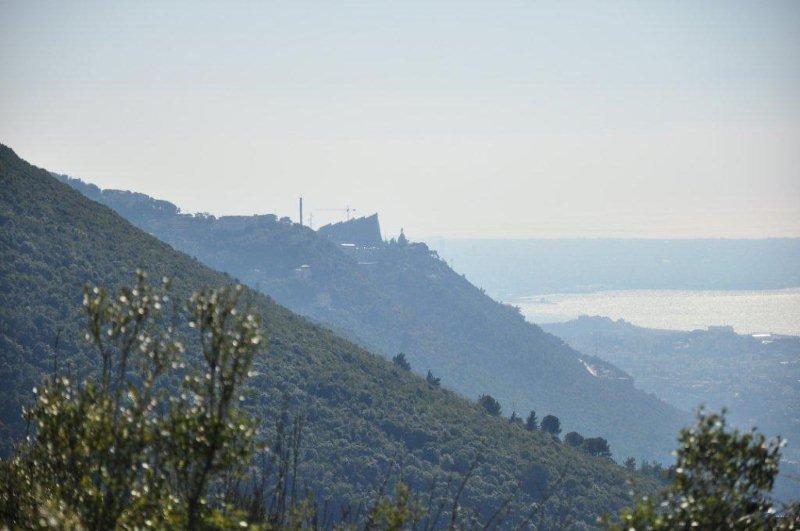
The view from the land sold
Following up with my post from Tuesday about the land in Dlebta that was sold to a Saudi prince, Pierre Daher, the person who had shared the original picture which went viral on Facebook, had the following to say in order correct the information I had shared in my post about the sale:
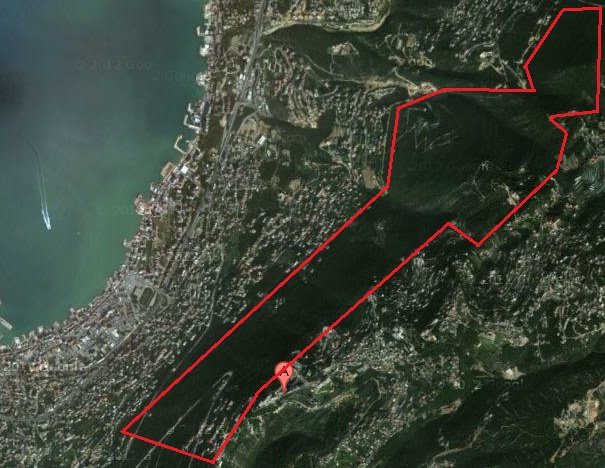
This picture is not representing the Dlebta valley Sold. This is the very nearby area of Harissa Valley! The red line represents the Harissa valley and has NOT been sold. Dlebta is just in the top right corner of the picture outside the red frame.
For reference, you can check out the post in question here and the picture here. In the meantime, these are the facts regarding the land sale, according to this article by Annahar and other sources:
- The decree to authorize the sale of the land to the Saudi Prince was passed in the Official Gazette on April 26th, 2012 – almost a month ago. The land that was sold is not as huge as originally thought. It consists of 4 properties, numbered 76 – 157 – 160 – 1152 in the Dlebta region, a town that hadn’t seen lots of real estate movements similarly to the surroundings towns. The sale was brokered by a Lebanese man who’s not from Dlebta.
- The total area of the land which the Saudi prince purchased is 7700 squared meters. It is part of Tallet el Salib, which neighbors another hill called Tallet Mohammad. Talks are already underway to purchase a part of that hill as well.
- The presidential decree that was signed and passed in the gazette allowed the Saudi Prince to purchase the 7700 sqm land even though the limit for non-Lebanese is 3000 sqm.
- The authorization to approve the sale was signed by President Michel Sleiman, prime minister Najib Mikati and minister of Finance Mohammad al Safadi.
- None of the Christian ministers in the ministry spoke against the sale despite their previous stances against such transactions in Christian areas.
- The owners of the land are a rich Maronite family in the region who had previously sworn not to sell any land to anyone from outside the region. I guess the Saudi Prince is not “ghrib” anymore to the Keserwanis.
- The municipality of Dlebta was not consulted in the matter of this transaction.
A few things, however, still need to be said:
- The fact that the land is not as huge as originally perceived doesn’t mean selling it should be permitted. I am firmly against selling Lebanese land to foreign nationals especially those coming from countries where the people of the aforementioned areas have very limited rights.
- The sale of this land, especially allowing it, sets a dangerous precedence for the entirety of the Harissa Valley, which is highlighted in red in this picture. If they allow this land to be sold, then what would stop the selling of bigger properties in the valley some other time?
- The fauna and flora argument is irrelevant to many Lebanese – but the area in question is one of the few areas in the region that has been kept relatively untouched. In fact, half of the area highlighted in red in the above picture has been made into a reserve by the Maronite Church to prohibit commercial activities in it.
- The Dlebta sale is not the first and won’t be the last. In fact, much worse sales have already taken place and received much less attention. Why so? It could be because they’re not situated in an area Lebanese Maronites consider sacred. For instance, 740 acres were purchased by Hezbollah from a Christian man in the Chouf for a total cost of $240 million – one of the richest land deals in Lebanese history.
- According to this report, here’s how the sales of land breaks down in select areas: the towns of Ajaltoun, Rayfoun, Mayrouba & Kfardebien in Keserwein have 80% of their lands sold to non-Lebanese, as well as 85% of the town of Alma in Zgharta. The story is similar in the Chouf, Baabda, Batroun and other regions as well. This is a reality, not paranoia.
Let me tell you the story of a very good friend of mine from a very small, almost irrelevant, village in the caza of Aley. There was once a man who needed money so he decided to sell the only land he owned and he knew it won’t go for much. Why so? Because the village barely had an access road to begin with and his land was nowhere near it. It was also almost unusable for agriculture. Why would anyone need a land like that?
And yet, an offer from a nearby village came in. It was much higher than what the seller had thought possible. But why would the buyer want to buy this land? Why would anyone buy this land? The town’s people rallied together and pitched in to keep the purchase from passing forward.
True, the example I gave is a matter between Lebanese but when foreigners start to desire and work on getting Lebanese land as well, then we must get very worried especially that many Lebanese can’t afford the prices of land in their current state but those foreigners can. If we keep letting foreigners, regardless of country of origin and supposed limits that they can obviously work around, buy land without any form of regulation, which is the current case, then we won’t have a country to return to.
The people of Dlebta are organizing an event to support their cause this Saturday. You can check it out on Facebook here.





 A Separate State of Mind | A Blog by Elie Fares