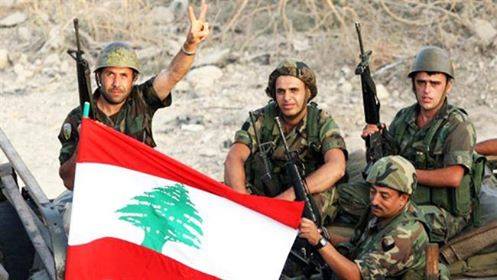
Stop Blaming & Shaming Lebanese Army Freed Hostages For Thanking Their Captives “Al Nusra”

Lebanon Nusra Army

A few days ago, after more than a year and a half of stagnation, a major breakthrough in the case of Lebanon’s hostages with “Al Nusra” came through, culminating in their release in what can only be described as a shameful and despicable swap that paints this proud nation of ours as powerless, useless and utterly, irrevocably castrated.

It took our government more than a year and a half to get our captives home.
It took our government more than a dozen mediations to even reach a breakthrough.
It took our government to beg for the help of foreign nations – as usual – to make sure its sons returned home.
It took our government giving back terrorists, making sure those terrorists are provided for, for our hostages to come back home.

And we still have nine left with ISIS.

The aforementioned is horrific. In fact, the only good thing about the recent hostage swap is that our heroes have returned, that their families are whole again and that this dark, shameful chapter of the history of this nation can now begin to heal.

Most of us don’t even know their names, but here they are for everyone to know:

  • Nahi Abou Kalfouni,
  • Rayan Salameh,
  • Georges Khoury,
  • Ahmad Abbas,
  • Mohammad Taleb,
  • Georges Khazaka,
  • Pierre Geagea,
  • Ehab El Atrash,
  • Abbas Mshik,
  • Sleiman El Dirani,
  • Lameh Mzahem,
  • Rawad Abou Darhamin,
  • Wael Homs,
  • Maher Fayyad,
  • Maymoun Jaber,
  • Ziad Omar.

We also received back the body of Mohammad Hamieh, who was executed in front of his fellow captives on September 14th, 2014.

The release of Al Nusra’s Lebanese prisoners meant the potential for a bombastic field day for Lebanon’s media outlets, and they made sure to benefit as much as they could: Sixteen men freed from a terrorist group meant a whole lot of interviews and “scoops.’

Part of the media frenzy was a New TV interview with freed captive Georges Khazaka which you can watch in the video below:

The video translates loosely to the following:

Georges: I want to also thank “Al Nusra” for the good treatment they gave us.

Reporter: They treated you well? Someone who kidnaps you treats you well? *in semi-outraged tone.*

Georges: Yes, thank God.

Reporter: We used to say you were under pressure to say such things. Today, there are no more outside pressures on you to thank Al Nusra which is a terrorist organization that kidnapped you.

Georges: A terrorist organization, but they were okay with us. No one beat us, no one verbally assaulted us.

Reporter: But you were kidnaped for 16 months! You broke the heart of your families for 16 months. You thank Al Nusra for that?

Georges: Thank God.

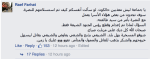
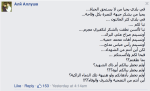
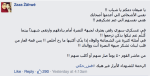
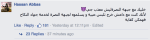
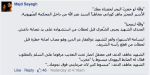
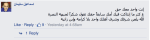
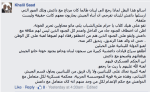
The comments on Facebook are of the same outraged tone that reporter sported while interviewing this man who has been, as she said, held hostage for over 16 months in conditions that – so say the least – are much worse than anything that reporter or any of us has lived through in the past year and a half. Behold an exhibit:
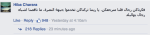
 

You’d think that with the prospect of their release, after more than 16 months of captivity, that there would be some research into what to expect from ANY human being who has been in such conditions for such extended periods of time. You’d think they would know what to ask, how to ask it, how to handle such fragile creatures whose only fault really was to be citizens of a spineless country that couldn’t bring them back until 16 months later.

Yet again, expecting Lebanese media to actually do its job before crucifying people in the public eye is similar to expecting an owl dropping your Hogwarts acceptance letter at your windowsill.

In the mayhem of the freeing of these Lebanese prisoners, no one bothered to look up why these hostages had a sense of gratitude to their captives, and it all boils down to one concept in psychology called the “Stockholm Effect.”


The Stockholm Effect was discovered in Sweden in 1973 after captives at bank were held hostage for five days and then found to have developed attachment to their captors, rejecting governmental assistance at a certain point.

It’s a phenomenon in which people taken into captivity express empathy and even sympathy and could have positive feelings towards their captives. The feelings are considered to be irrational, emanating from the victims believing a lack of abuse at the hand of their captors is an act of kindness.

Research has suggested that hostages may exhibit the condition in situations featuring captors that do not abuse the victim, a long duration before resolution, continued contact between the perpetrator and hostage, and a high level of emotion. It affects around 8% of victims of kidnapping.

A prominent example is that of the 1985 hijacking of TWA Flight 847. Shortly after takeoff from Athens, two terrorists stormed the cockpit and demanded the diversion of the flight to Beirut. After capturing the plane, the perpetrators released the women and children. Two sailors and a group of wealthy American businessmen remained on the aircraft, and the captors held them for 10 days.

During the incident, the terrorists threatened the hostages with guns to their heads and in their mouths. They also beat one of the victims to death and dumped his body out of the tail section of the plane.

After the eventual rescue, reporters interviewed the captives as they disembarked. When asked to describe the captors, one hostage stated, “They weren’t bad people; they let me eat, they let me sleep, they gave me my life.”


There are certain Lebanese media using Georges Khazaka’s interview to showcase ‘Al Nusra’ in a positive light, in the sense of “oh look, they’re not that bad,” and those media are as bad, if not worse, then those who are outraged at what Mr. Khazaka said.

Al Nusra is a terrorist organization. They took soldiers and policemen hostage for over a year. They beheaded some of them for political and theatrical purposes. They are not human. They are animalistic barbaric entities that, like ISIS, should be annihilated. Period.

As some of you mighty keyboard clicking Goliaths click away at your Facebook, YouTube and Twitter profiles to shame our freed soldiers and policemen because of their statements, none of you had to go through what they went through for the past year and a half.

None of us had to be separated from our loved ones.

None of us had to take each day one step at a time hoping we wouldn’t die the next.

None of us were forced to watch as our colleagues were decapitated in front of us.

None of us had to go through what they’ve been through, and yet here are many of us belittling them.

This can be a political ploy. In the political chess game overtaking the region, these soldiers are mere pawns being manipulated by those who are far higher up. And isn’t the following picture the clearest indication of that?

Lebanon AL Nusra - 13

Our soldiers kneel while higher powers rise above. Isn’t that the truth everywhere?

Before being soldiers, our hostages are people. And they are people who lost everything they knew for more than a year. They’ve been broken, humiliated and decimated.

Before being soldiers, our hostages are people. Understanding that they might be prepared to fight terrorism in Arsal, where they were placed probably because they don’t know someone who knows someone who can assign them to less risky areas, but were not ready to be taken into captivity for more than a year is key.

Before being soldiers, our hostages are people. Wearing a police suit does not mean they are exempt from being human beings who can be hurt, changed and maimed too.

I’m not saying Stockholm Syndrome is a certainty. I’m saying it’s a possibility. Asking our soldiers to move on from their ordeal just because they’re freed is akin to asking a depressed person to snap out of it. We will never get it. We will never know. Whether psychology or politics, everything that we do will remain nothing more or less but speculation.

But when it comes to me, I look at Georges Khazaka and see a man whose humanity comes first and who breaks my heart at him being nothing more than a scarred pawn in a game of nations that is much bigger than him, than me or any of us will ever be.

 

Mashrou’ Leila’s Ibn El Leil; Ab: Beit Byout; Film Ktir Kbeer: When Lebanese Art Is Great

Amidst the very dismal situation in the country, of which I’ve written and nagged your head about plenty, there are currently three emblems of Lebanese art shining bright of which I think we should all take notice. The three acts/events I’m about to highlight have not paid me to support them and probably don’t need my support anyway, but I’ve found their offering to be so impressive that I think it should be highlighted.

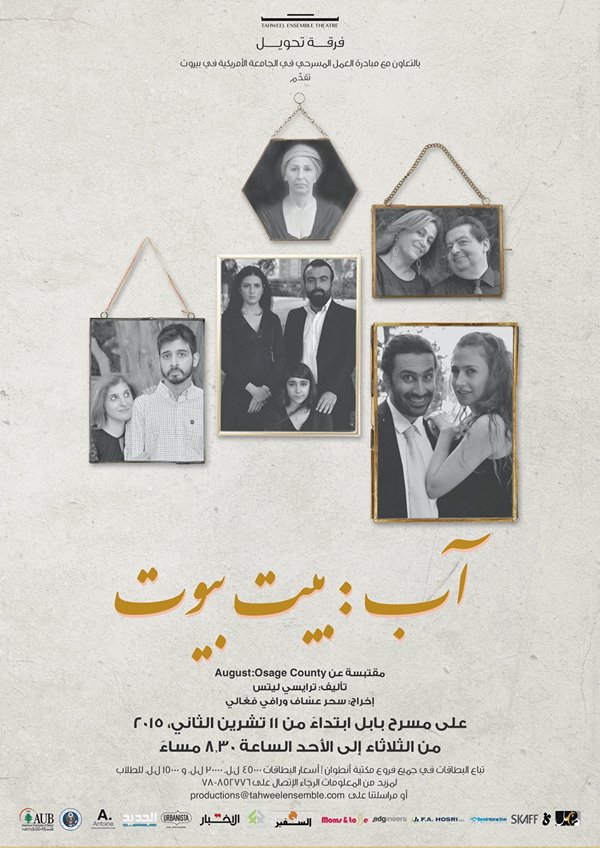
Ab: Beit Byout:

Ab Beit Byout

Ab: Beit Byout is the Lebanese take on August: Osage County, the award-winning turned-movie play, which you probably know because of both Julia Roberts and Meryl Streep who received Oscar nominations for their roles.

It’s the story of a very dysfunctional family meeting around their matriarch at the event of the disappearance and eventual death of their father. What ensues is sheer acting brilliance, a mouthful of dialogue that is as biting as it is seething with anger, regret, sadness and joy.

The adaptation to a Lebanese audience is great. It manages to carry enough of the punches of its American counterpart without feeling like a word for word copy or a subpar rip off. There are enough Lebanese aspects to it to make the play feel very relatable, very “I’ve seen such a thing take place in my hometown.”

Catch it at Babel Theatre in Hamra.

Film Ktir Kbeer (Very Big Shot):

Film Ktir Kbeer Poster

Nothing about this movie encouraged me to watch it. The title didn’t make sense. The poster felt like yet another Lebanese action-movie-wannabe. Confession time: I was extremely wrong.

Film Ktir Kbir is the kind of movies you’ve been wanting Lebanese filmmakers to make but as they were too busy making “Bebe” and movies about the civil war or about Christians hating Muslims and vice versa.

“Very Big Shot” is the story of 3 siblings who, after growing up in lower socio-economic standards, find themselves in deep trouble after getting involved with a drug lord, causing them to devise an ingenious way to save themselves.

There’s plenty of curse words, plenty of “every day” banter, and few cliches that are mostly spun as jokes. The acting is great. The script is extremely tightly written albeit the ending felt a bit rushed. It’s a movie that is equally fiction and equally a criticism of Lebanese society and politics.

Keep an open mind to it and give it a shot. I bet you won’t be disappointed.

Mashrou’ Leila’s “Ibn El Leil”:

Ibn El Leil

The opening song of Mashrou’ Leila’s newest album “Ibn El Leil” is an ethereal, mostly instrumental track called Aoede and it sets the tone for an album that is both more mature, more cohesive and more sonically impressive than anything they’ve offered before.

If you’re a fan of what they’ve done before – their song “Lil Watan” is excellent – then this album will be right up your alley. If you’ve been iffy about this Lebanese band, give this album a shot: there are some tracks there that are so nicely done they might change your mind.

After launching this album at London’s “Barbican,” The Guardian wrote about how this Lebanese band might be on the brink of finally exploding and filling stadiums instead of smaller venues. Perhaps that will happen one day, but what is sure for now is that “Ibn el Leil” is one hell of an album filled with songs that not only defy Arab and Lebanese stereotypes, but are eons above and beyond anything that is offered musically in the region.

In their latest offering, Mashrou’ Leila are breaking the confines of what Arab music was allowed to say. It’s a joy to listen to.


Listen to: 3 Minutes; Kalam; Tayf; Ashabi; Marrikh.

From Beirut, This Is Paris: In A World That Doesn’t Care About Arab Lives 


When a friend told me past midnight to check the news about Paris, I had no idea that I would be looking at a map of a city I love, delineating locations undergoing terrorist attacks simultaneously. I zoomed in on that map closer; one of the locations was right to where I had stayed when I was there in 2013, down that same boulevard.

The more I read, the higher the number of fatalities went. It was horrible; it was dehumanizing; it was utterly and irrevocably hopeless: 2015 was ending the way it started – with terrorists attacks occuring in Lebanon and France almost at the same time, in the same context of demented creatures spreading hate and fear and death wherever they went.

I woke up this morning to two broken cities. My friends in Paris who only yesterday were asking what was happening in Beirut were now on the opposite side of the line. Both our capitals were broken and scarred, old news to us perhaps but foreign territory to them.

Today, 128 innocent civilians in Paris are no longer with us. Yesterday, 45 innocent civilians in Beirut were no longer with us. The death tolls keep rising, but we never seem to learn.

Amid the chaos and tragedy of it all, one nagging thought wouldn’t leave my head. It’s the same thought that echoes inside my skull at every single one of these events, which are becoming sadly very recurrent: we don’t really matter.

When my people were blown to pieces on the streets of Beirut on November 12th, the headlines read: explosion in Hezbollah stronghold, as if delineating the political background of a heavily urban area somehow placed the terrorism in context.

When my people died on the streets of Beirut on November 12th, world leaders did not rise in condemnation. There were no statements expressing sympathy with the Lebanese people. There was no global outrage that innocent people whose only fault was being somewhere at the wrong place and time should never have to go that way or that their families should never be broken that way or that someone’s sect or political background should never be a hyphen before feeling horrified at how their corpses burned on cement. Obama did not issue a statement about how their death was a crime against humanity; after all what is humanity but a subjective term delineating the worth of the human being meant by it?

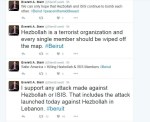
What happened instead was an American senator wannabe proclaiming how happy he was that my people died, that my country’s capital was being shattered, that innocents were losing their lives and that the casualties included people of all kinds of kinds.


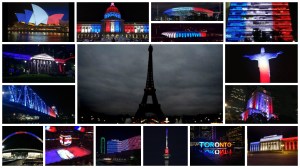
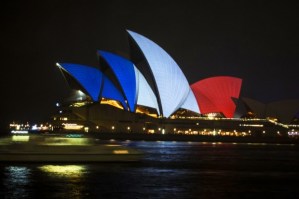
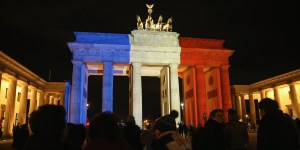
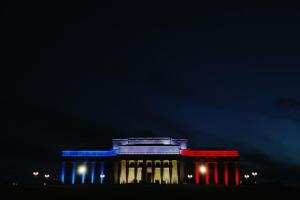
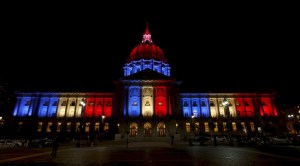
When my people died, no country bothered to lit up its landmarks in the colors of their flag. Even Facebook didn’t bother with making sure my people were marked safe, trivial as it may be. So here’s your Facebook safety check: we’ve, as of now, survived all of Beirut’s terrorist attacks.
 

When my people died, they did not send the world in mourning. Their death was but an irrelevant fleck along the international news cycle, something that happens in those parts of the world.

And you know what, I’m fine with all of it. Over the past year or so, I’ve come to terms with being one of those whose lives don’t matter. I’ve come to accept it and live with it.

Expect the next few days to exhibit yet another rise of Islamophobia around the world. Expect pieces about how extremism has no religion and about how the members of ISIS are not true Muslims, and they sure are not, because no person with any inkling of morality would do such things. ISIS plans for Islamophobic backlashes so it can use the backlash to point its hellish finger and tell any susceptible mind that listens: look, they hate you.

And few are those who are able to rise above.

Expect the next few days to have Europe try and cope with a growing popular backlash against the refugees flowing into its lands, pointing its fingers at them and accusing them of causing the night of November 13th in Paris. If only Europe knew, though, that the night of November 13 in Paris has been every single night of the life of those refugees for the past two years. But sleepless nights only matter when your country can get the whole world to light up in its flag color.

The more horrifying part of the reaction to the Paris terrorist attacks, however, is that some Arabs and Lebanese were more saddened by what was taking place there than what took place yesterday or the day before in their own backyards. Even among my people, there is a sense that we are not as important, that our lives are not as worthy and that, even as little as it may be, we do not deserve to have our dead collectively mourned and prayed for.

It makes sense, perhaps, in the grand sense of a Lebanese population that’s more likely to visit Paris than Dahyeh to care more about the former than about the latter, but many of the people I know who are utterly devastated by the Parisian mayhem couldn’t give a rat’s ass about what took place at a location 15 minutes away from where they lived, to people they probably encountered one day as they walked down familiar streets.

We can ask for the world to think Beirut is as important as Paris, or for Facebook to add a “safety check” button for us to use daily, or for people to care about us. But the truth of the matter is, we are a people that doesn’t care about itself to begin. We call it habituation, but it’s really not. We call it the new normal, but if this normality then let it go to hell.

In the world that doesn’t care about Arab lives, Arabs lead the front lines.


Adel Termos: The Lebanese Hero Of the Borj el Barajneh Terrorist Attacks

45. The number means utterly nothing, and I’m sad to say that even after today this number will still mean nothing. We’re a country that never learned and will never learn. It’s just a bomb. It will always be just a bomb.

We call them martyrs. But they did not choose to die that way, burned bodies melting on the tarmac of a neighborhood they called home, their only fault was to live in an area that demographics and politics dictated would be related to this faction or the other.

We call them martyrs, because it’s easier to lump them under one title, to pretend they’re all the same, to pretend that knowing their names is not important, to make it easier for us to comprehend. We call them martyrs to dehumanize them, even more than the dehumanization that occurs with the politicization of those victims that’s contingent upon the area targeted.

But they are people. And they are somebody’s loved ones. And there are families tonight that were whole and complete a few hours ago, and they are sitting now maimed and shattered because of cowards, of abominations that dare to call themselves human beings.

Tonight, politics are irrelevant. Tonight is about the people and this country whose people are dying, and burning, and whose lives are being lost for absolutely no purpose.

Tonight, Haidar lost his mother and father. Shawki Droubi and Khodr Aleddine, a nurse, were lost to their families. Hussein Mostapha passed away with his wife, leaving their son behind. Samer, a Syrian father of two who fled horrors in his country, was killed in what he had feared back home, and Hussein, a Palestinian man whose family sought refuge here, also passed away. Alaa Awad, a third year law student, was also among the victims. Rawan Awad was a school teacher. Hanady Joumaa, Bilal Hammoud, Ahmad Awwada, Rawan Atwi were among the victims too.


They are not nameless.

45 is a number that could have been much, much higher if it weren’t for the bravery and courage of one man named Adel Termos, a father of two. When the first suicide bomber committed the first terrorist attack, Adel saw the second one approaching the crowds gathering outside the targeted mosque.

He ran at him and tackled him, causing the second terrorist to self-detonate. Tonight, Adelis no longer of this world, but his legacy will live on for years, and the repercussions of his heroism will become a tale to tell: Adel is the reason we are not talking about fatalities in the three digits today, he is the reason some families still have their sons, daughters, fathers and mothers, he is a Lebanese hero whose name should be front and center in every single outlet.


Adel’s story holds striking resemblance to that of Abou Ali Issa who did the same thing when his city Tripoli was attacked earlier this year. The parallelism is horrifying. It also shows how this country is always going in circles: terrorists attack, people die, heroes emerge, and all is forgotten in a week or a month. The politics maybe change, but with so many victims dying for so little, petty politics become irrelevant.

May all the victims of tonight’s terrorism rest in peace.

US Presidential Nominee Jeb Bush on Lebanon: “If You’re A Christian, You’ll Be Beheaded”

Jeb Bush

The joy of Republican primaries unfolds as their latest took place yesterday, right on their safe haven Fox, in yet another scene of Donald Trump and, to a lesser extent, his friends making fools out of themselves for everyone except their base, much to the shock of the entire world and the dismay of the intellect of a few billion people around the World. Yet again, what’s new.

Their discussions veered from building walls to stop Mexicans from entering the United States, to throwing a few million immigrants out of the country and back where they came from, along with a few pinches of homo and xenophobia before going on about how comprehensive healthcare and equality are the satanic manifestations of the coming of the anti-Christ.

Sure, such topics are interesting to discuss in times when you’re just bored out of your mind with Lebanon’s stagnant politics that you feel like talking about something that’s stimulating to a certain extent. Did you know politics can be more than just the whole “to be or not to be” mantra? For years, I had no idea.

Except yesterday, while trying to score a few points in a growingly depressing campaign, Jeb Bush – the brother of infamous previous American president George W. Bush – decided to score a few points on our behalf by flexing his muscles and pretending that he, out of all people, cared for those Christians of the East, notably Lebanese Christians, who are getting beheaded in their own country. And no, he is not smart enough to mean that in the sense of Christians not having a president and thus having their figurative political head absent.

The exchange went as follows:

Trump was going on about how Putin “going in and we can go in and everybody should go in,” presumably to Syria, Fox cut to Bush on the split screen, shaking his head, waiting to tell people how Trump was wrong. Brace yourselves for his big moment.

“Donald is wrong on this,” Bush said. “He is absolutely wrong on this. We are not going to be the world’s policeman, but we sure as heck better be the world’s leader. There’s a huge difference.”

Hurray! Big words. World’s leader and not its policeman, whatever it means, serves as a helluva good sentence for future America, don’t you think?

The audience applauded. Could Jeb Bush use this moment to turn the tides?

Of course not. He then used the next few moments to talk about Syria being a board game akin to monopoly, unless you count the few hundred thousand people dying in the process, before moving on to his magnum opus as it pertains to us: “If you’re a Christian, increasingly, in Lebanon…you’re going to be beheaded.”

Ladies and gentlemen, Lebanese Christians have something more to fear than red Starbucks cups. Someone is out there to behead us, if only I knew who. Care to enlighten me Mr. Bush?

This post won’t be about how Jeb Bush is wrong. Any person with a sane mind who is willing to go beyond what is being told on a biased, xenophobic and Islamophobic TV station will probably know that Christians are not – contrary to popular opinion – currently walking around Lebanon, like Nearly Headless Nick, with their heads propped on their shoulders.

Any person with an inkling on foreign affairs would know that Lebanon is such a big fat religious cliché it’s become not only nauseating to tell, but a huge hurdle to overcome when it comes to making things in governance work. But that’s another topic for another day. The biggest threat to Christians in Lebanon today, Mr. Bush, is probably the fact that there’s no way to get their garbage picked up.

The truly horrifying aspect of Mr. Bush’s statement is not only in its ignorance, but in its repercussions. It shows how this man, who really, really wants to be president just like his brother and father, knows next to nothing about a very important facet of ruling a country that wants to become/remain? the world’s leader as he so eloquently said. If Jeb Bush thinks Lebanese Christians are dropping dead on their country’s street, what has he left to the people of the Middle East whose suffering actually extends beyond not being able to party at SkyBar this summer or pretending that their political rights are being eaten away while they discuss the best way to buy a $700 Balmain dress (whatever that is) at H&M.

Dear Mr. Bush, my parents are not afraid of being beheaded. They’re afraid of how the long-standing repercussions of the instability your country helped incur on their region will affect their children’s stability, their job prospects, their ability to make ends meet and to live life and have it abundantly. And yes, that’s a Bible verse paraphrased in case you didn’t know.

Dear Mr. Bush, my parents are not the only ones afraid in this country. Everyone is in danger. We’re all victims of a government that has no idea how to govern. We’re all victims of your own country’s blind policies that only sees the region as “Israel and Others.” We’re all victims, Muslims and Christians of being constantly lumped as those beheading and those beheaded by those who have no idea how it is to live in a country teetering at the age of chaos.

Dear Mr. Bush, sometimes the best thing to do is to stay quiet. I suggest you do this sometimes and find other ways to beat Donald Trump than to let people think I’m writing this from beyond the grave.