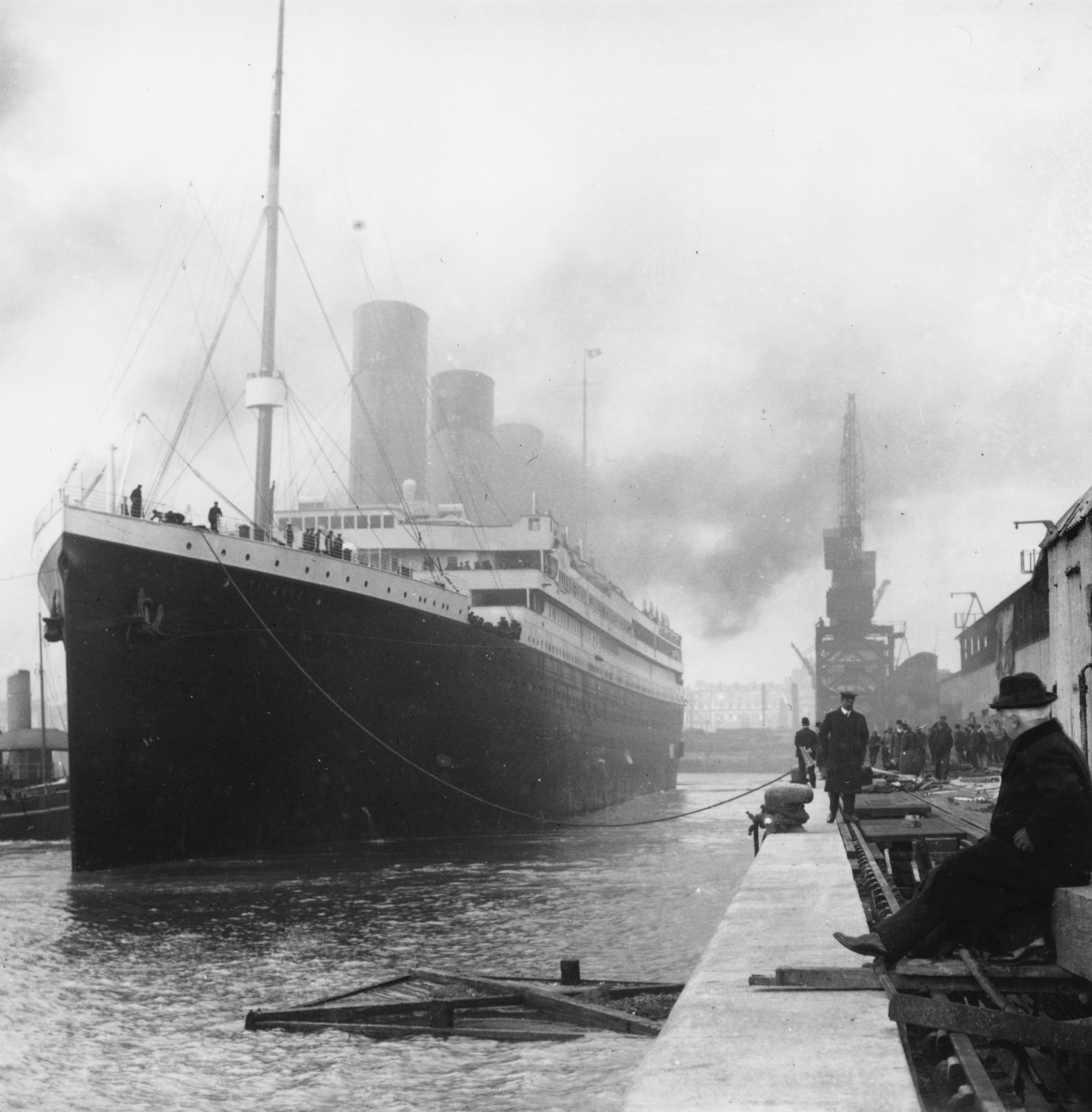
The RMS Titanic and Lebanon

As many of us were going to sleep yesterday, the idea that 100 years ago, 2000 people were going through an ordeal stranded in the middle of an ocean escapes us. 100 years is surely a long time – but for many, the whole tragedy of the Titanic has become a laughable matter.

How so? It was turned by Hollywood into a movie, which later on became a common area of jokes. For many, the word Titanic nowadays is followed by the word “meh.” We fail to remember that for many, especially Lebanese, we’ve had great-grandfathers, great-uncles, aunts & family on that ship, many of whom died, either by drowning or by getting shot.

I grew up listening to the story of Daher Chedid, a man who was trying to escape the Ottomans in Lebanon only to find death at the hands of the Atlantic ice. I couldn’t escape the haunting stories of the people from Hardin, how they prayed and danced Dabke until their very last moments. The people of Kfarmishki lost 13 people on the Titanic – how could we call that funny?

A man from Zahle saved his wife and swam away, losing hope with every second of being saved. He wasn’t. Two men from Zgharta got shot for wanting to survive – they left families behind.

How could we ignore all of those stories and act as if the Titanic is one big popular event that happened, got turned into a cliche and shouldn’t be talked about?

Lebanon lost many people on the night of April 14th-15th, 1912. The least we can do is to honor their memories by telling their stories, at least on the centennial anniversary of their passing.

For many, their interest will only be transient, as is our interest in many things. And when it comes to the Titanic, although worse tragedies have happened over the years, we – as Lebanese – should feel involved because we have lost many people there. Some say as much as 93 – in a country as small as ours, at a time where the population was very little, 93 is a tragedy.

They say people truly die when they’re no longer in anyone’s memory. This is my attempt, at least briefly, to get the Lebanese of the Titanic back into people’s memory so they’d be alive on the 100th anniversary of the ship sinking.

There are many more Lebanese whose stories I couldn’t tell. Perhaps I’ll tell them later on. But for those stories that I told, I hope they made an impact – even if it’s in a small number of people.

Many asked me if those stories were correct or made up. Many asked for my sources. Many accused me of stealing them from Al Arabiya. To those I say: these stories are not exclusive to any news service. They are not written by anyone as a novel, they were not first reported by Al Arabiya and they won’t stop with a report from MTV. These stories were written with the lives of the Lebanese passengers that went on that ship, seeking a better life for themselves and their families, away from the oppression in the country.

My sources were from books I had bought back in 1998 about the tragedy, newspaper articles that I had saved over the years, as well as stories that I was personally told when I was young.

Today, most countries are holding events to remember their deaths aboard that ship. Lebanon, who lost more people than most of those countries, is not.

May the victims of the Titanic generally and the Lebanese especially rest in peace.

Stories of Lebanese on the Titanic – Part 5: The People of Zgharta & Choueir

For part 1, click here. For part 2, click here. For part 3, click here. For part 4, click here.

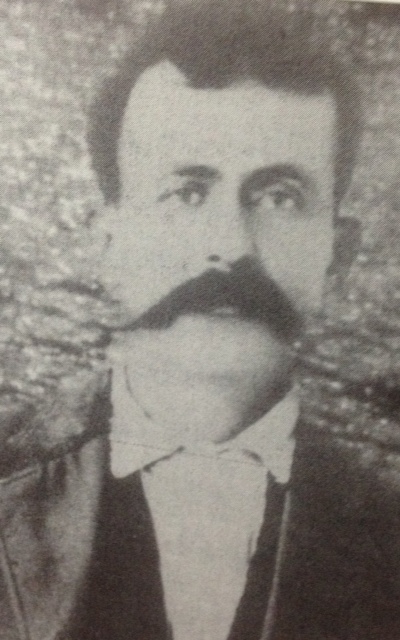
Sarkis Moawwad was a 35 year old man from Zgharta, preparing his papers to travel to the United States. While on an excursion to Tripoli, a palm reader told Sarkis he’d die drowning. Believing the superstition, Moawwad almost stopped his travel plans, which involved a ship. His friends, however, convinced him otherwise by reminding him that the ship he was boarding, the RMS Titanic, was supposedly unsinkable. God himself cannot sink this ship, they said.

Aboard the Titanic, and on the night of April 14th when it hit the iceberg, Moawwad raced to the ship’s deck and was faced with a dilemma. One part of him told him that women and children ought to go on the boats first. The other part of him begged him to get on a boat – every shred of him was begging to fight for survival. Moawwad succumb to the latter part and got on one of the rescue boats.

The captain of the Titanic looked at him. Within a few seconds, the captain had held his gun and shot Moawwad, killing him instantly. The palm reader was not right. Sarkis Moawwad didn’t drown. He was shot, leaving behind a family of four.

Sarkis Moawwad

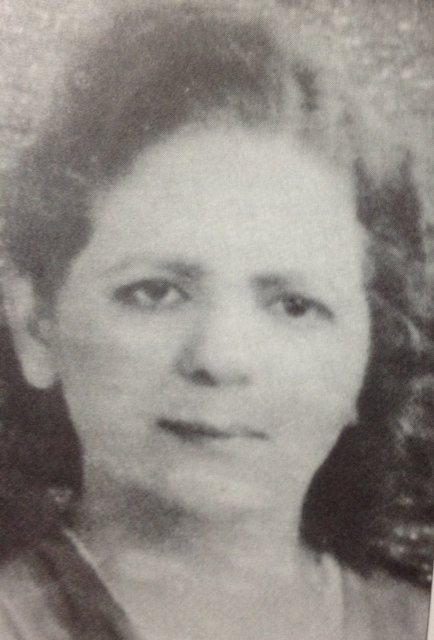
Another man from Zgharta was Tannous Keaawi, a 21 year old married man. Tannous was a fighter. When in 1912, some Ottomans raded his friend’s farm and took over his cattle, it was up to Tannous to get them back. So he took a riffle and, with his blood boiling, raced to where the Ottomans lived and waited for them until the got home. Once they did, he held the riffle to their heads and asked them to give back the cattle. They refused. So he shot them one by one.

After his actions, Tannous couldn’t stay in Lebanon so his friend gave him enough money to secure a trip to New York for him and his family. On their way to the Titanic, his family got held up in Marseille because his daughter had chickenpox. His wife decided to stay behind with their children while he continued.

Once on the Titanic, Tannous also tried to get on a rescue boat, along with Sarkis Moawwad. And he met the same fate as Sarkis, at the hands of the same gun by the same man.

Of the three men from Zgharta that were on board the Titanic, only one survived. His name was Hanna Makhlouf. Hanna also tried to get on a rescue boat with his two other friends. The difference was that he was lucky enough to have found a large enough skirt for him to hide. And hide he did and watched both his friends get shot before the boat was lowered into the water and taken away to sea. He later on went to Waterbury, CT where he settled down.

Mona, the wife of Tannous Keaawi

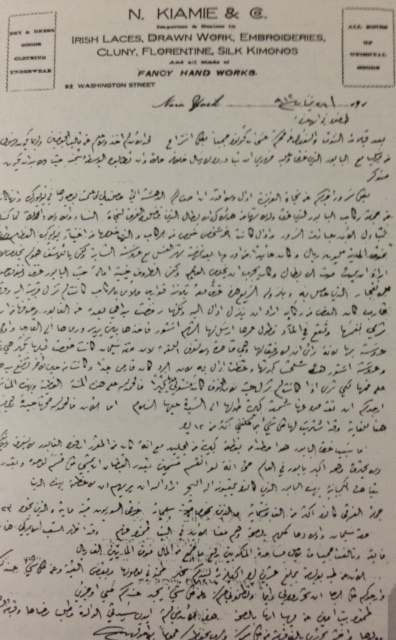
In another side of Lebanon, in the Metn town of Dhour el Choueir, Adele Kiame was summoned by her father to join him in New York where he had started a silk-work company. In a letter that her father, Najib, sent to Lebanon to ask to send his daughter to America, he asked her to bring with her some Turkish carpets which are much better in Lebanon. He also asked her to get him some fancy tobacco seeing as the kind he was smoking in New York was nowhere near as good.

Adele left her hometown with a woman named Latife Beaaklini who also took her daughters with her, to follow her husband who had opened a pharmacy in the United States.

One of the letters that Najib Kiame sent

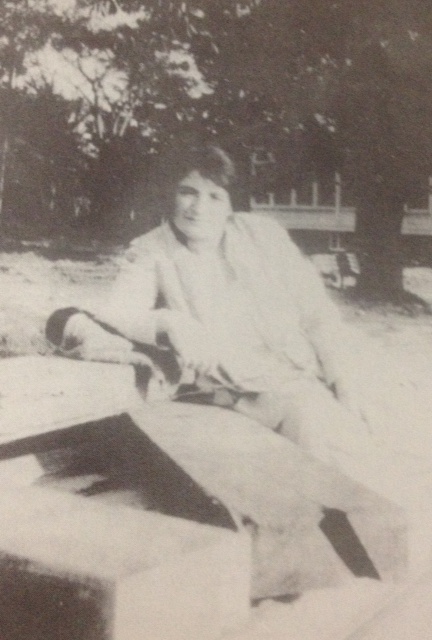
Once news of the Titanic sinking reached them, Adele, Latife and her daughters went to deck and got on a rescue boat. However, Adele decided to go back to try to rescue whatever she could of her belongings, including some amount of money she had hidden in socks. She didn’t stop with at the socks. She tried to get some dresses and other belongings with her. The crew refused and threw them all away.

Adele

Meanwhile, Latife took her daughters and put them in waterproof bags that she dangled off the sides of the rescue boats. A man gave way for Latife to get on the boat and he helped her tie her daughters to the side. He then went back to the ship where he drowned. When Adele returned, the boat was full. So Latife started shouting, as the boat was being lowered, for them to stop and let Adele on. She was screaming in Arabic. The crew couldn’t understand and there was nothing they could do – the boat was already full.

Adele, stood stranded on deck: a 16 year old minor who didn’t know the language.

She caught the eye of the person you’d least expect: John Jacob Astor, the ship’s wealthiest man. So he carried Adele and gave her to his bride whom he had secured on one of the recue boats. Astor’s wife then took off her coat and gave it to Adele who was afraid and shivering.

Once they reached New York, Adele’s father hosted the survivors. Latife’s youngest daughter, Eugenia, contracted pneumonia due to the cold that night and died soon after. Latife then gave birth to a boy named David, on January 28th, 1913. She raised her family and died year 1962.

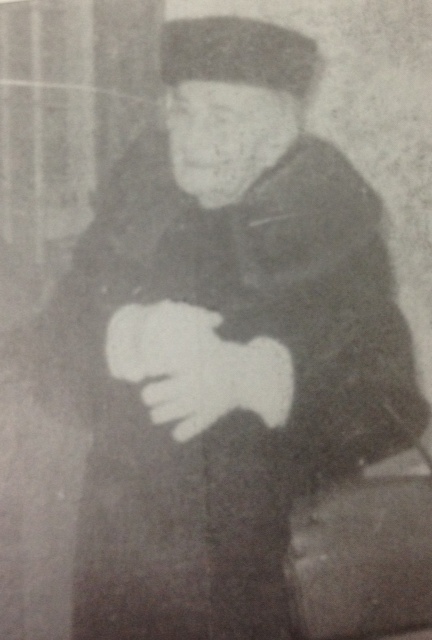
Latife, in the 1940s

Adele, on the other hand, got married in Brooklyn and had two children: Mitchel and Layla. She then fell ill and died, at the age of 26. The year was 1924.

The story of the people from Dhour el Choueir is not this simple. Doubts arose over the years about whether Adele went back to her cabin because she was stingy, as people had said, or because Latife had asked her to. Moreover, some doubt that it was really John Jacob Astor who saved her.

Either way, we can never be sure of some things when it comes to stories that are over a hundred years old. Both women went on to live for years and have families.

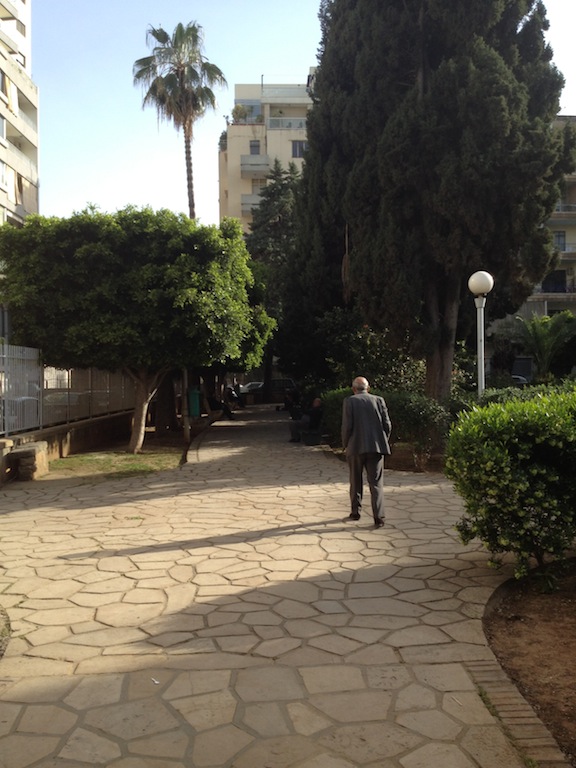
Jesuite Garden – Achrafieh, Beirut

Over the years, this garden located in Geitawi, Achrafieh, became a shortcut for me not to go around the block in order to reach my house. When I was younger, my grandparents used to take me to play there with my brothers and friends.

As I grew up, I outgrew it I guess.

Now, with my time in Achrafieh becoming less and less abundant, I look at the Jesuite garden and can’t help but smile. The place today is full of old men and women, going about the rest of their days, succumbing to the reality that they’re not what they used to be.

The maids now bring the kids to play. When I used to be a kid who came to this garden, parents were the chaperons of their kids. Times have changed.

There’s also a new public library. The garden now has wifi as well. Times have changed. Yes they have.

But once I pass next to the Jesuite garden, when I eventually find a place to park in Achrafieh, I can’t help but smile as I remember how it used to be to hold my grandfather’s hand and walk into its doors, my heart racing in order to run to that swing.

My memories of the garden today are different. They are ones of gratitude, filled with happiness that I really had a great childhood, some of which was spent in its midst – even though it was the place where I broke my arm during the Easter vacation of 1996.

As I pass the Jesuite garden, I see familiar old faces. And then some time later, I don’t see them anymore and I know that their time must have come. Other faces replace them. Those faces become familiar and the cycle repeats itself.

This is the heart of Beirut – the one we should never forget.

This is where I broke my arm

The public library

The New York Times & Beirut Love Affair – A New Article: Beirut, the Resurgent Haven for Arabs

The picture used by the NY Times

If you felt that the NY Times is writing way too many articles about Beirut lately, you’re not mistaken.

A new article which appeared online yesterday talks about a resurgent Beirut, becoming a haven for the whole region. The point of the article is to show Beirut as a safety zone for the Arabs of the region, escaping the woes of their own country.

Of course, the backdrop of this safety zone is a cosmopolitan city that’s reborn where women strut on yachts in heels and Louis Vitton bags – I’m not kidding, this is how the article starts.

Sure, Beirut is among the safest cities in the Middle East today. But does talking about the safety of Beirut necessitate briefly taking about the fragile political status quo of the country and focusing more on the importance of Zaitunay Bay and Cafe Younes in harboring those seeking shelter?

In a way, I think the article is too superficial, making the city look, from the perspective of Arabs this time, as a place where they can escape the torment of their regimes and the situation of their countries by sunbathing and going shopping and laughing about the situation where they’re form.

Call me critical but I think a Syrian spending her time in Zaitunay Bay and an Egyptian taking a break from the political suspense of her country are not representative of the people in their corresponding countries, most of whom cannot afford to call Beirut a haven. Perhaps if the NY Times had bothered extending its scope from the few rich Syrians enjoying la dolce vita in Beirut, ignoring whatever’s happening in their country, they’d look at the thousands in refugee camps in the North, afraid to go back to their country and not exactly sunbathing on a boardwalk?

I love that Beirut is a safe city. I love that we’ve been in a state of peace for more than 4 years now, with very minor hiccups along the way. But this very narrow journalism and drawing conclusions based on very limited observations isn’t the best way to showcase Beirut.

I guess it’s what people like. Either way, we are sure proud of our little safe haven here.

Carrie Underwood’s “Blown Away” Album Tracks Description

Many country radio personnel are already getting to listen to Carrie Underwood’s fourth studio album, Blown Away, and the reviews so far have been astounding.

From people who think the album crosses the whole gamut: from dark and intense to fun and tropical, every single reviewer is blown away by a different song. Some are calling “Wine After Whiskey” the album’s highlight. Others are saying the title track is a work of art that is beyond intense vocally, lyrically and arrangement-wise. Some have complemented the folky “Leave Love Alone.”

A new addition to Carrie Undewood’s website has a lengthy article about her upcoming album “Blown Away” in which many of the tracks are described. It’s a great read, so do that here.

And this is a brief summary of some of the tracks on the album, just to give you a taste of what awaits on May 1st.

Good Girl: We’ve all heard the song – it’s about Carrie telling the good girl about the bad boy she’s with. (Review)

Blown Away:  a swirling, atmospheric production and intense lyric about abuse and revenge. The song is about a daughter getting revenge on an alcoholic, abusive father.

Two Black Cadillacs: the story of a wife and mistress who conspire to get even with the man who betrayed them both.

See You Again: A song that was originally written for The Chronicles of Narnia about how someone who touches your heart and is always there.

Thank God for Hometowns: a song that celebrates the understated pleasures of small-town living. “Thank God for hometowns, first kisses and touchdowns….”

Cupid’s Got A Shotgun: a high-energy track, and it gets an extra kick from Brad Paisley contributing his signature guitar licks. A fun song, with a touch redneck and very country.

Forever Changed: is about a young girl meeting the love of her life, getting married and having a baby. It takes you back in time, and there is something old fashioned about it. At the end, the mom’s slipping away a little bit. It is a sad song, but it’s not meant to be a sad song. It’s about love, being forever changed, forever loved.

Good In Goodbye: co-written by Carrie, Lindsey and Ryan Tedder, is a bittersweet look at life beyond heartbreak that offers tender truth in the lines “As bad as it was/As bad as it hurt/I thank God I didn’t get what I thought I deserved.” Some reviewers called it a song with a good message.

Nobody Ever Told You: which Carrie wrote with Luke Laird and Hillary Lindsey, boasts an empowering lyric and a breezy, engaging melody. It’s about how people need to hear compliments more – how they need more people to tell them “I love you” and “you are beautiful.”

Leave Love Alone: a folky song about how despite all, you just can’t leave love alone.

Wine After Whiskey: a country lament about how everything after a certain relationship is watered down, like having wine after whiskey. (Lyrics)

One Way Ticket: A song with a tropical mood, with a Zac Brown Band feel to it.

Who Are You: contains the following lyric: Who are you? my everything.