Al Akhbar & Lara Fabian: Disturbing Lebanese Journalism

You know what’s very sad? It’s when a leading Lebanese newspaper, amid all of what’s happening in Lebanon and the region, decides to have a picture like this as their headline, with the words “Lan Ta2ti” [She’s Not Coming] to top it all off:

I mean, who cares about the thousands getting killed in Syria? Who cares about Lebanon’s electricity crisis? Who cares about development projects with a very dangerous security cover? Who cares about the Achrafieh building collapse & Lebanon’s rental laws? Who cares about Lebanon’s crumbling infrastructure? Who cares about anything relevant, important, vital & crucial that might be happening?

Besides, Lara Fabian and a picture of the Star of David… she MUST be an Israel spy. It’s not like the Star of David is a religious symbol for Judaism or anything.

For a newspaper like Al Akhbar, the fact that Lara Fabian is not coming to Lebanon is the “it” news for a day. I’m sure they consider it a victory. And that’s a very sad thing for Lebanon and journalism. It’s sad that some journalists and newspapers might be so narrow-minded as to believe a concert in Lebanon by someone who sang in Israel is high-treason. As if the tickets revenues are going to buy rockets to fire on Lebanese and Palestinians.

It was Al Akhbar, after all, that made a big deal of the rumor that she might have been coming back after all. I wonder though, where do they stand on the very “lean” verdict that Fayez Karam got regarding his dealings with Israel? Or is it only high-treason when someone high-profile and not belonging to their political niche does it?

Al Akhbar, it’s time to stop your over obsession. No one cares anymore.


Batroun’s Bal3a Dam: The Iranian Interference

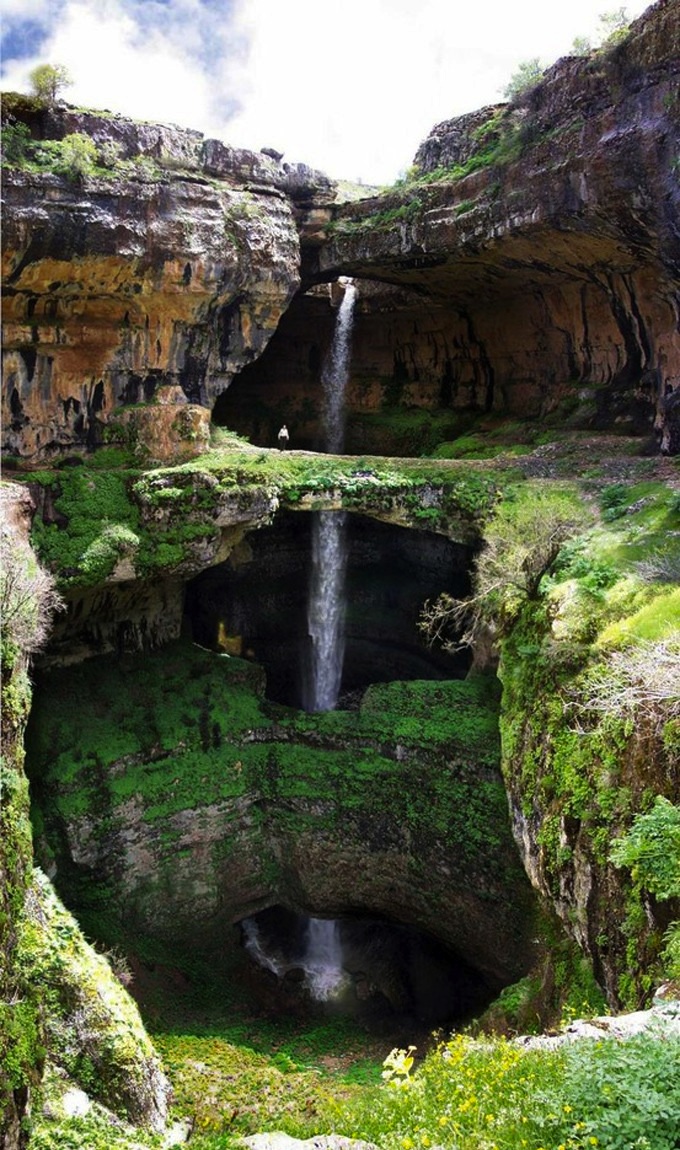
This is Bal3a

Bal3a is a region in the mountainous village of Tannourine, in the east of the Batroun caza, North Lebanon’s first district. Home for its famous sinkhole, Bal3a is also the source for the “Joz” river, Batroun’s main water source.

A very ambitious project has been in the works for Bal’a for a few years now. The plans for a dam, to be built on the Joz River, have been in motion. This dam would increase the water resources for the whole Batroun caza by drastic amounts.

To build this dam, bids were submitted to the government back in June. Moawwad and Eddeh Contracting Company won the contract to build the dam, with a total amount of $32 million. For reference, this is the same company that built the Shabrouh Dam in Keserwein. However, this company was surprised a few weeks ago with a decree issued by the government, via the ministry of energy, to accept an Iranian donation of $40 million with one stipulation: an Iranian company was to build the dam, a project that would take four years.

The Lebanese company has filed an official complaint with the ministry of energy, managed by nonother than son-in-law prodigy Gebran Bassil. As if the electricity crisis was not enough for Bassil. The company still hasn’t gotten a reply as to what exactly happened.

But let’s contemplate this. The project will take four years. If everything goes as “planned” for Bassil & co, the Iranians will be roaming the Batroun mountains freely, under the umbrella of a security network, which will be provided by Iran’s allies in Lebanon: Hezbollah. Who knows what they’ll do other than build the dam.

If this Iranian company ends up beginning the constructions, Hezbollah and the Iranian Revolutionary Guard would have gained a stronghold in one of North Lebanon’s main mountains. And with Tannourine’s geographical contact with the Beqaa, a known Hezbollah stronghold, along with its proximity to other Mount Lebanon mountains where Hezbollah has already set foot, the possibilities become endless.

Let alone the fact that the Lebanese government has apparently preferred to hire an Iranian company over a Lebanese one, I have no idea how Gebran Bassil can let his own region be defiled in such a way and consider it simple “contracting” with the government. How can Gebran Bassil think he has a viable chance at getting elected in 2013 when he’s letting the people who killed Tannourine’s own Samer Hanna into his home?

And just a final question so I don’t let this drag on. Why, as a Batrouni, do I have to bear with someone I did not choose to represent me?

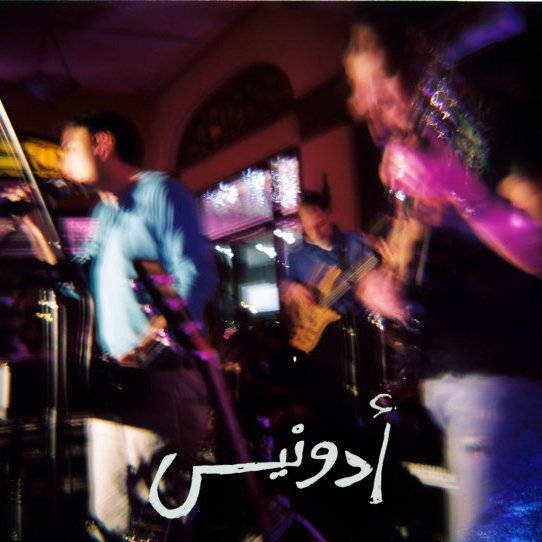
Adonis: A New Lebanese Band

Adonis is the latest band to grace the Lebanese music scene, after the successes of Meen and Mashrou3 Leila. After wanting to and not being able to go to a concert they had at Beirut’s new “it” place Dictateur, I wanted to know what Adonis was: what their sound resembled and if they were worth the hype that reached me through word of mouth. I only got exposed to their music today through their second music video, for the song “Ma Kan Mafroud,” which features Tina Yamout.

The band started last year when lead singer Anthony Khoury and a friend of his, Joey Abou Jawdeh, the band’s guitarist, got together and decided to put some music to Anthony’s lyrics. Soon enough, Anthony’s brother Fabio Khoury, the bassist, and his friend Nicola Hakim, the band’s drummer, and Vladimir Kurumilian on piano. Slowly things started happening for Adonis. They wrote more songs, met musicians with whom they collaborated and from whom they learned. Then they started recording and doing shows here and there. During 2011, their reputation started growing around Lebanon as they appeared in many festivals and had a music video out, as well as an album called “Daw el Baladiyyi.”

The inspiration of their name comes from the small town of Adonis in Mount Lebanon. For lead singer Anthony Khoury, the dullness of this town gave him inspiration for the songs that he wrote. Or as he describes it:

“I started finding magic in the smallest and most fleeting of details, like a street light under which I had my first kiss, or a rooftop on which my childhood friends and I used to hang out on hot summer nights, or a sidewalk or a water tank or or or…. These things and places became solid anchors around which stories, memories, characters are built and given life. The name Adonis evokes in our local imagery the small town as much as the myth, the dull as much as the magical. And it’s precisely in the flickering boundary between these two, the dull and the magical, the ordinary and the poetic, the common and the sacred, that our music is weaved.”

Their sound is very folky. It’s more Mashrou3 Leila than Meen but it’s quite dissimilar from Mashrou3 Leila as well. Lead singer Anthony Khoury describes their sound as one “based on lyrics. We shape our music around texts that generally deal with belonging and identity conflicts, in a sometimes light, sometimes darker and more nostalgic tone, [while] we stay away from direct social commentary and parody.”

And it shows. If anything, their song with Tina Yamout and the fusion they create reminds me of a folk American band I have come to appreciate very recently called The Civil Wars. That is without a doubt a compliment to the sound of this band because The Civil Wars are stunning.

Also, lucky readers, it so happens that I know one of the people who’s part of their most recent music video, for  “Ma Kan Mafroud,”  a song which deals with the theme of loss and the natural instinct to eventually move on.

The video was shot in one night in Sin El Fil and it tells the story of four characters: one that had a miscarriage, one that lost a sister, one that had her country stolen and one who lost a lover. Each one of those characters has a sad story and is seeking catharsis. This salvation will happen through their journey in the bus. The music video, directed by Robert Cremona, depicts the bus ride, where we find Tina Yamout and the band as omniscient narrators, to the backdrop of the characters as they express their grief and their desire to move forward with their lives.

Check out the new music video:

As well as their Facebook page and website.

The Case of Lebanon’s History Book

As a Lebanese who has gone through our educational system, I’ve learned about Lebanon’s history in two separate grades: grade 9 and grade 12, as a preparation for the official exams that I, similarly to many other students, undertook come the month of June of that corresponding year. The difference in the material between grade 9 and grade 12 was literally nonexistent. We used the same book, same notes and discussed the same era all over again. It was as if our history stopped around 1946, when the French army left our country, marking their departure with a carved stone at the Nahr El Kalb valley.

The thing about writing history is that no matter who writes it, it will never be objective. Even the most objective of historians cannot have the history they write be absolutely devoid of a personal touch here or there, which, albeit subtle, can convey a different meeting altogether.

Recently, however, the talks about writing a history book for Lebanon that goes beyond the 1946 obstacle and into the 21st century was in the works. And for that matter, a governmental committee was appointed to discuss what was relevant and what was not.

The members of the committee are: minister Mohammad Fneish, minister Nicolas Fattouch, minister of education Hassan Diab, minister of culture Gaby Layoun, minister Ali Kanso, minister of health Ali Hassan Khalil, minister of justice Shakib Kartbawi, minister of information Walid Daaouk, minister of tourism Walid Abboud and minister of sports Faysal Karami.

In the case of this committee’s attempt at writing a history book for Lebanon, which will be later submitted to the Parliamentary Education committee for approval, their definition of objectivity is: write whatever you want, omit anything you don’t like and voila.

In the draft for this book, every single mention regarding Hezbollah addresses the party as the “Resistance” and glorifies all its struggles and conflicts with Israel, from the 1980s up till now.  On the other hand, minister Mohammad Fneish refused any mention of the March 14 “Cedar Revolution” and anything about the Syrian occupation of Lebanon. The book was also going to omit anything about the protest of the opposition in Beirut’s downtown for two whole years, including the May 7 incidences in Beirut.

In short, anything related to the mistakes Hezbollah did and anything that showed the Syrians in bad light in Lebanon was to be omitted, which is perfectly understandable coming from people like Ali Kanso and Mohammad Fneish, with them belonging to their correspondant political parties.

But what’s worse is a statement for FPM minister Gaby Layoun who said: “the March 14th “Cedar Revolution” is only but an illusion set by that camp.”

And that’s what’s truly horrifying. Set aside the fact that this committee is as one-sided as one-sided goes and ignore the absolute necessity of having at least a counter opinion regarding something as vital to Lebanon as its history book. If the FPM ministers are now ignoring something they were a vital part of and calling it an “illusion” then what can one expect from those who were vehemently against such the movement that got their Syrian BFFs out of the country?

If Hezbollah ministers did not want any reference to the struggles many Lebanese had to go through with regards to the Syrians, which has always been part of their hypocritical propaganda of Israel being our only enemy, when did the Syrian epoch become nonexistent for the FPMers too?

In simple pictures,

according to Mohammad Fneish, Ali Kanso and Gaby Layoun, who happen to be a ministers in:
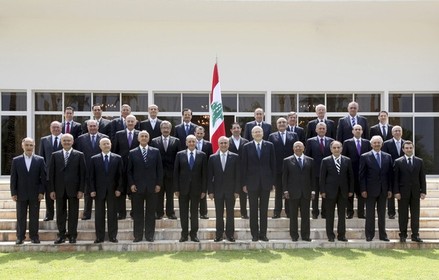
Lebanon's current government

the following:
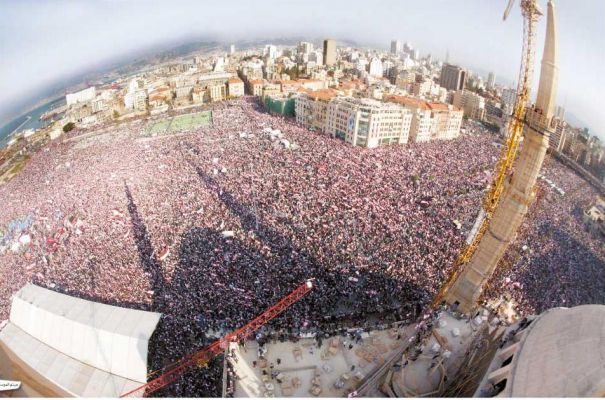
the Cedar Revolution

is as real as:
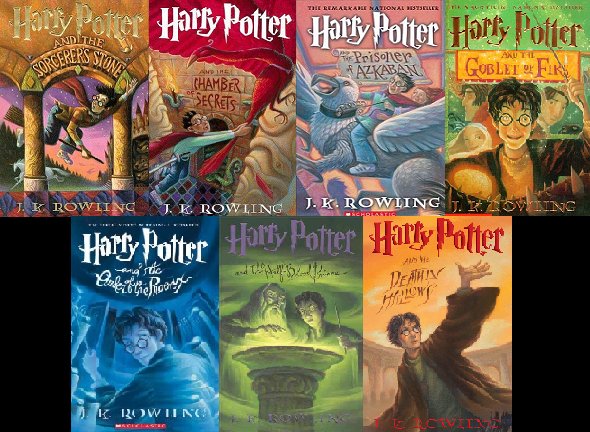
Harry Potter

I’m fairly certain such a draft for our history book will not pass. But you know what, even if it did, the thing about history is that it comes from more than one source. I don’t remember much of the history I was spoon-fed in grades 9 and 12. But I do remember what I lived through and I am writing about it. This blog, for instance, along with all its political content, will be here long after I’ve stopped blogging and long after I’ve even stopped existing. Well, try to censor that I guess.

What’s truly troubling, though, is how such a draft came to exist in the first place. What’s terrifying is that some minds can fully rationalize writing that draft. What’s absolutely frightening is that those minds are in absolute power.

Moneyball – Movie Review

Moneyball, based on the book of the same title, is a movie about a baseball team manager, Billy Beane (Brad Pitt), in his quest to build a formidable team that can go through the year long tournament. To do so, he enlists the help of Yale economics graduate Peter Brand (Jonah Hill), who has a theory that building a team not based on a player’s reputation but based on his statistical averages is the way to go. The idea proves tantalizing for Beane seeing as his team, the Oakland Athletics, has a very dismal budget to begin with. As he put it, “There are the rich teams, then there are the poor teams, then there’s 50 feet of crap, and then there’s us.”

So instead of splurging on A-list players, Beane hunts down players whose days are apparently behind them. Some have nerve injuries to their elbows, some are too old to play and others have a bad reputation behind them. The critics will rise against Beane and his experiment but he perseveres in an attempt to prove everyone wrong. Moneyball is based on a true story.

To say Brad Pitt delivers a tour de force performance as Billy Beane would be an understatement. I have not watched all the Oscar nominated actors yet but I can safely say that among all the actors who have gotten and are getting award-hype this season, Brad Pitt is without a doubt my favorite so far. He’s being pitted against George Clooney in The Descendants (check my review) as the frontrunners. No offense to George Clooney but Pitt’s performance is lightyears better. It is more engaging, more thrilling, more interesting, more nuanced. It is exquisite. He portrays his character with the exact amount of strength and emotion that it needs. At times, he shows Beane’s fragile side as he faces the looming fear of failure and at other times, as he sits in the changing rooms behind the stadium, he shows undeniable resolve. Sometimes he shows both in one frame. You can actually say that Moneyball is Billy Beane and Billy Beane is Moneyball. The symbiosis between this character and the movie is that strong. Brad Pitt embodies Billy Beane perfectly.

Jonah Hill is very interesting as well as Beane’s assistant. His performance has been rightfully nominated for many awards, including an Oscar. In fact, one of the driving forces for Moneyball is the chemistry exhibited on screen by Brad Pitt and Jonah Hill’s characters. Philip Seymour Hoffman, as the Athletics’ manager, is great as always in a more silent yet comical performance.

Moneyball has a great screenplay as well, as only can be expected from The Social Network‘s Aaron Sorkin (check my review of The Social Network) and Steven Zaillian, responsible for this year’s The Girl With The Dragon Tattoo (check my review), to accompany the all star cast it enlists. The movie flows smoothly, never feels slow. And for a movie about baseball, a sport that I don’t particularly understand, it rises above the toughness of the game and turns this movie into one that is truly heartfelt, comical at times and entertaining throughout.

At the end of the day, Moneyball isn’t a movie about baseball as it is about changing the game, defying the system and breaking the boundaries imposed by other people on you. It is a movie that defies the baseball genre in which many people categorize it and rises above every single other baseball movie ever made. In fact, Moneyball might even be the best sports-related movie ever made because it doesn’t dwell on the technicalities of the sports it portrays, it rises above it to show a humanitarian aspect that everyone can relate to.

9/10