Lebanon’s Cheesecake Factory Was Very Bad

chesecake-logo

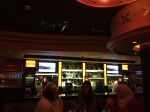
My attempts at trying the Cheesecake Factory go back to when I was in the U.S. a few months ago and couldn’t manage to find a table back then. I stood around, watching as servers shuffled around seemingly endless tables, carrying plates with enormous food portions. The cheesecake fridge looked great, but that was the extent of my experience at the time in early April.

Fast forward around 8 months, and the renowned American chain has recently opened up in Lebanon, in its continuing development in the Middle East, after opening up several branches in GCC countries.

Lebanon’s Cheesecake Factory is super busy. Wait times so far, even a week later, are still in the one hour range. They could rise even more. The hostesses were boasting yesterday, as they informed us we were lucky enough to only have to face a 20 minutes delay, that earlier that day some people had to wait three hours.

I have no idea why anyone would want to wait anyone for anything food related, and I’m really thankful I only had to wait 20 minutes to get my “Cheesecake Factory Experience, Lebanon style” because that was the maximum extent of my time – or anyone’s time – that such an experience deserves.

Me No Speak Arabic:


When your wait time is done and your buzzer vibrates for salvation, you get a very cheerful hostess – American style – take you to your seat. She gives you the menus, informs you in English that servers will be with you shortly and disappears.

So far so good. At that point, her English doesn’t feel out of place even though you’ve used only Arabic to communicate with all the employees, but no matter.

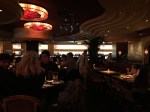
The server shows up. You ask them in Arabic about their recommendation, because the menu is barely readable with the super dim lighting in the place. They reply in English, sometimes borderline incomprehensible, but you try to maintain the conversation anyway. After taking your order, all forms of interactions with the server occur in English. That is you talk to them in Arabic and they reply in English.

When asked why they kept talking to me in English, their reply was that: this was the store’s policy. As I asked the manager about this, because it gets super annoying, and he said that the American head company has such a stipulation as a requirement to give customers the “American” experience.

Except we’re not American – sadly (unless the experience comes with a free passport) – and while many of us are bi or trilingual, there is absolutely no need to use any other language than my native tongue at a restaurant in my home country unless I wish to do so, and in most cases I do not, and I sure as hell did not want to feel like I was being rendered stupid by talking Lebanese to a server and being replied to in English, à la “get your language up to standards, sir.”

Perhaps this rule works best in GCC countries where most of the Factor’s customers are not native Arabic-speakers, but they desperately need to re-check this policy over here.

Overwhelmed Staff & Subpar Service:

Lebanon’s Cheesecake Factory boasts, according to the manager, more than 96 servers at an average of around 2 tables per server. You’d think with such a low ratio of tables to servers, you’d get excellent service.

It’s far from the case.

The huge number of servers leads to total chaos across the entire restaurant. You get to a point where you don’t know who you’re supposed to talk to in order to communicate a request or a complaint.

The level of the staff being overwhelmed is so high that there were serious shortcomings across the board. I’m not the only one who suffered from this, as several of my colleagues and friends also noted on their visits earlier in the week.

Perhaps it’s opening-week-jitters, but with the presence of staff from already-established Cheesecake Factory outlets to help in the launching phase, I don’t know how much of the service’s shortcomings can be attributed to nervousness.

Maybe it’s the language requirement?

Besides, the service is definitely not as “American” as you’d think it is. We got an aluminum foil piece in the item we ordered and no one reacted until, before paying the bill, we requested to see the manager to inform him about how horrible the experience was and about how we would most likely not visit again, not that they need our business anyway.

The Food Is Overpriced, But The Cakes Are Great:

I don’t know about the bloggers who were invited there for the opening, but if you go there as a normal civilian, you are looking at a bill that is above and beyond anything you’d pay at any other similar Lebanese restaurant, even if it’s American in origin.

In deciding what I wanted to order, I googled the best items of the Factory and found a bunch of results that agreed on a couple of chicken-based dishes, which I ended up ordering. While they food was good enough, it was definitely not worth the $24 price per dish that we paid.

The food is also extremely fatty. Even the “skinnilicious” menu is not that “light.” I’m still stuffed more than 15 hours later, and we were sharing.

The saving grace, however, is that the cheesecakes are great. Seriously. I really hope they offer a way for people just to buy pieces of the cakes without queuing. We ordered a couple different kinds and the “Godiva Chocolate Cheesecake” is God-send. Absolutely great.

Stay Away For Now:

My advice to you, dear reader, is to resist the urge and steer clear of that place until either the mania dies down, or the staff becomes better trained, or they become more accustomed to the Lebanese market and adapt accordingly.

Until then, I have to say I was severely disappointed and would not recommend this place to anyone who’d listen.

It’s nice for the country to bring business in, but I refuse to be taken for granted as a Lebanese customer who can’t wait to set foot in any given franchise, which is sad really because I honestly had high hopes.
 

From Beirut, This Is Paris: In A World That Doesn’t Care About Arab Lives 


When a friend told me past midnight to check the news about Paris, I had no idea that I would be looking at a map of a city I love, delineating locations undergoing terrorist attacks simultaneously. I zoomed in on that map closer; one of the locations was right to where I had stayed when I was there in 2013, down that same boulevard.

The more I read, the higher the number of fatalities went. It was horrible; it was dehumanizing; it was utterly and irrevocably hopeless: 2015 was ending the way it started – with terrorists attacks occuring in Lebanon and France almost at the same time, in the same context of demented creatures spreading hate and fear and death wherever they went.

I woke up this morning to two broken cities. My friends in Paris who only yesterday were asking what was happening in Beirut were now on the opposite side of the line. Both our capitals were broken and scarred, old news to us perhaps but foreign territory to them.

Today, 128 innocent civilians in Paris are no longer with us. Yesterday, 45 innocent civilians in Beirut were no longer with us. The death tolls keep rising, but we never seem to learn.

Amid the chaos and tragedy of it all, one nagging thought wouldn’t leave my head. It’s the same thought that echoes inside my skull at every single one of these events, which are becoming sadly very recurrent: we don’t really matter.

When my people were blown to pieces on the streets of Beirut on November 12th, the headlines read: explosion in Hezbollah stronghold, as if delineating the political background of a heavily urban area somehow placed the terrorism in context.

When my people died on the streets of Beirut on November 12th, world leaders did not rise in condemnation. There were no statements expressing sympathy with the Lebanese people. There was no global outrage that innocent people whose only fault was being somewhere at the wrong place and time should never have to go that way or that their families should never be broken that way or that someone’s sect or political background should never be a hyphen before feeling horrified at how their corpses burned on cement. Obama did not issue a statement about how their death was a crime against humanity; after all what is humanity but a subjective term delineating the worth of the human being meant by it?

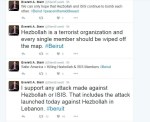
What happened instead was an American senator wannabe proclaiming how happy he was that my people died, that my country’s capital was being shattered, that innocents were losing their lives and that the casualties included people of all kinds of kinds.


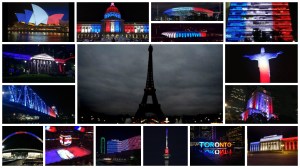
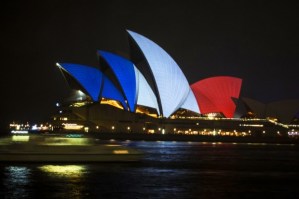
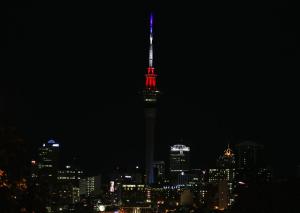
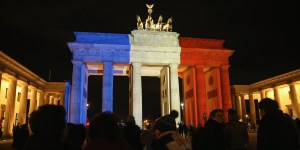
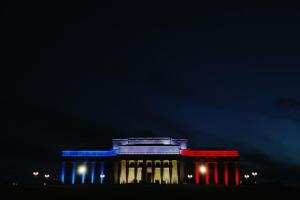
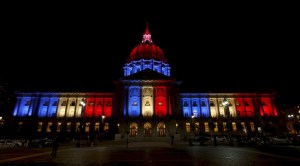
When my people died, no country bothered to lit up its landmarks in the colors of their flag. Even Facebook didn’t bother with making sure my people were marked safe, trivial as it may be. So here’s your Facebook safety check: we’ve, as of now, survived all of Beirut’s terrorist attacks.


When my people died, they did not send the world in mourning. Their death was but an irrelevant fleck along the international news cycle, something that happens in those parts of the world.

And you know what, I’m fine with all of it. Over the past year or so, I’ve come to terms with being one of those whose lives don’t matter. I’ve come to accept it and live with it.

Expect the next few days to exhibit yet another rise of Islamophobia around the world. Expect pieces about how extremism has no religion and about how the members of ISIS are not true Muslims, and they sure are not, because no person with any inkling of morality would do such things. ISIS plans for Islamophobic backlashes so it can use the backlash to point its hellish finger and tell any susceptible mind that listens: look, they hate you.

And few are those who are able to rise above.

Expect the next few days to have Europe try and cope with a growing popular backlash against the refugees flowing into its lands, pointing its fingers at them and accusing them of causing the night of November 13th in Paris. If only Europe knew, though, that the night of November 13 in Paris has been every single night of the life of those refugees for the past two years. But sleepless nights only matter when your country can get the whole world to light up in its flag color.

The more horrifying part of the reaction to the Paris terrorist attacks, however, is that some Arabs and Lebanese were more saddened by what was taking place there than what took place yesterday or the day before in their own backyards. Even among my people, there is a sense that we are not as important, that our lives are not as worthy and that, even as little as it may be, we do not deserve to have our dead collectively mourned and prayed for.

It makes sense, perhaps, in the grand sense of a Lebanese population that’s more likely to visit Paris than Dahyeh to care more about the former than about the latter, but many of the people I know who are utterly devastated by the Parisian mayhem couldn’t give a rat’s ass about what took place at a location 15 minutes away from where they lived, to people they probably encountered one day as they walked down familiar streets.

We can ask for the world to think Beirut is as important as Paris, or for Facebook to add a “safety check” button for us to use daily, or for people to care about us. But the truth of the matter is, we are a people that doesn’t care about itself to begin. We call it habituation, but it’s really not. We call it the new normal, but if this normality then let it go to hell.

In the world that doesn’t care about Arab lives, Arabs lead the front lines.


Blocking Downtown Beirut From The People Is Unacceptable; This Is The True #AbouRakhousa

Lebanon wall Downtown Annahar Le Grey #YouStink

The Lebanese Government has no idea what it’s doing. If you thought it had an inkling before, be certain now that it’s essentially an establishment that only functions on reflexes; their latest reflex is blocking Downtown Beirut at its main entrance near Le Grey in order to prevent entry to protests to those streets to which not only should they be allowed access, but to which they have a fundamental right.

A couple of weeks ago, our government build a big concrete wall near Riyad el Solh square to block protests from having a 1% access – even less – to the Grand Serail. The Beirut Wall lasted 24 hours at the time before it was brought down. Every single minister declared that the wall in question was not their doing. Yeah, right. One thing became clear, however, that wall – as irrelevant a barricade as it was – signaled the massive divide between governance and people.

Any political system that wants to self-sustain should not be afraid of its people. It should be from the people, to the people. Our government is squarely against us. They beat us, they humiliate us, they rob us of our fundamental rights and still have the audacity to play victim.
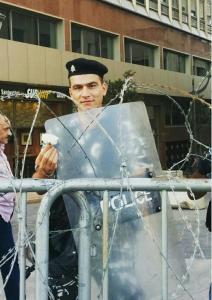
That concrete wall was then replaced by massive barbed wires, which are now adorned will all kinds of slogans berating those hiding themselves behind such barricades, cowering away from the people demanding they be held accountable. But even that slide.

On Sunday, the #YouStink movement held a march with several thousand people all the way to Downtown Beirut, at the gates of Nejmeh Square. The march was to demand access to parliament, to demand fair elections to try and replace the current governing body we have (or so I think). The protestors were met with riot police adamant about not letting them pass. The entrance to Nejmeh Square was barricaded, of course, and it still is until this day.

Our government, however, decided to take this a step further yesterday night and block the entirety of Downtown Beirut from all kinds of people, protestors or not, by erecting concrete blocks at its main entrance, near Annahar – Michelle Tueini should be happy – and Le Grey – Nicolas Chammas would be happy too.

Check out the pictures via Abir Ghattas:

A few days ago, Nicolas Chammas – the head of Beirut’s commerce syndicate – was “worried” that the protests taking place in Downtown Beirut now at the hand of protestors he called were “communists,” because clearly only leftists and communists would have an issue with the current establishment, were turning his beloved Downtown area into a cheap market which he dubbed “Abou Rakhoussa.”

Little does Mr. Chammas know, however, that in its current form Downtown Beirut is not only “abou rakhoussa,” it’s cheaper than cheap. As the Lebanese popular saying goes: “bteswa franc b iyyem l ghala” and no amount of Hermes, Chanel, Aïshti shops and fancy hotels or restaurants can change that.

They wonder why Downtown Beirut is not popular with the Lebanese populace.

Maybe it has something to do with the fact that the average Lebanese income is nowhere near the one needed for minimum purchase power there? Or that the area was built by raping the property of common Lebanese folk who were not able to challenge the system back then to give them their right?

Maybe it has something to do with the fact that there’s a security zone every other meter there, or that there’s someone in it that feels threatened every single waking moment of their life so they feel the necessity to draw endless perimeters around their holy being to stay safe from people who just want to have a good time?

Maybe it has something to do with the fact that the entire area is not meant for us but for tourists who are not even coming here anymore because they have much nicer places to go to elsewhere?

Maybe it has something to do with the fact that cheapness is not a measure of how cheap the area is, but how lifeless, dead, horrifying, without charm and character an area actually is?

Downtown Beirut fits those to the letter.

That new barricade they built at its main entrance to keep us out is a disgrace. They want Downtown Beirut to remain their area, the place where they feel exclusive, the place where they can sit and chastise the average Lebanese about not being “western” enough to care about fancy facades and empty cores, the place where they can make sure the average Lebanese they fear always feels excluded, not-belonging, ostracized and shut out.

Nejmeh square is not a property of our politicians. The Grand Serail area is not a property of our politicians. None of the streets in Downtown are their property, but they sure act like it all the time. Beirut is not their city alone; it’s also ours. They’ve robbed it and claimed it enough.

I’d like to see them running tourist-attracting ads now. Come to Beirut, see our state of the art walls and empty streets. We promise you’ll love it; no Lebanese are allowed here. There’s nothing more disgraceful and despicable than a government that thinks it’s more important than its own people.  You see that barricade they’re building to keep us – the people – out of their exclusive area? It’s not keeping us out, it’s locking them in.

This is the real Abou Rakhousa: an area worth billions, but is being rendered uninhabitable, foreign with total shutting out of anything and everything Lebanese. The area’s worth is not its buildings and empty streets, but the people. Without us, your billion dollar projects are worth nothing.

This is apartheid, Lebanon-style. Someone pass the lexotanil pills to Nicolas Chammas, please.


When Beirut Was At Its Most Beautiful In Years

Protest YouStink Beirut August 29 2015 - 1

Beirut is its most beautiful when it’s alive. Over the past few years, it hasn’t been that way. No, parties at Skybar (RIP) don’t count.

Beirut is not beautiful when it’s a strange land to its people. It’s not beautiful when its center is always empty, when its heart is devoid of its people, when it’s forcibly maimed beyond recognition. No, Beirut is not beautiful when it doesn’t have us, when it’s full of flags that are not of the country which it represents.

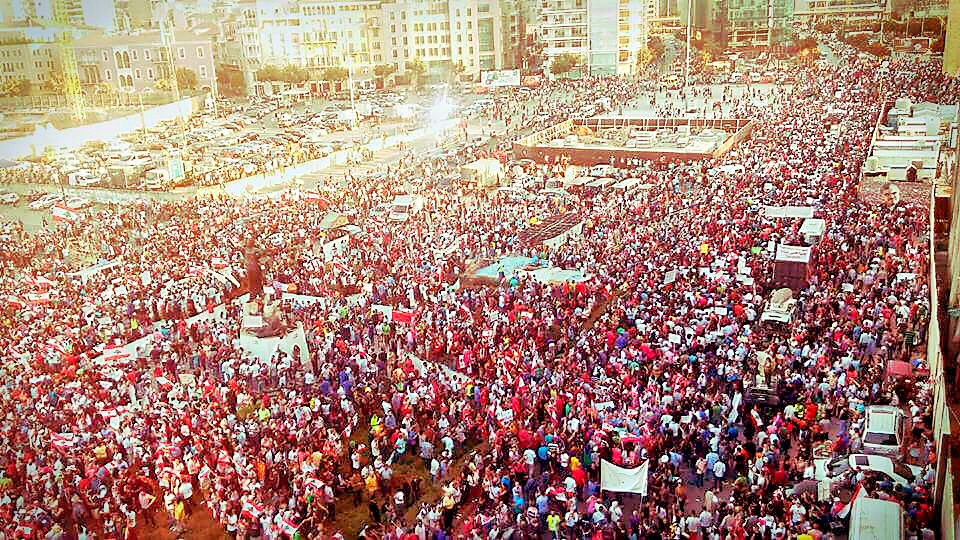
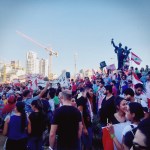
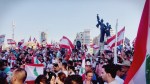
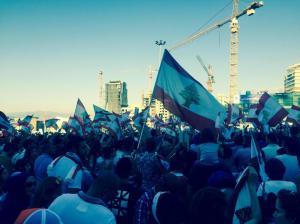
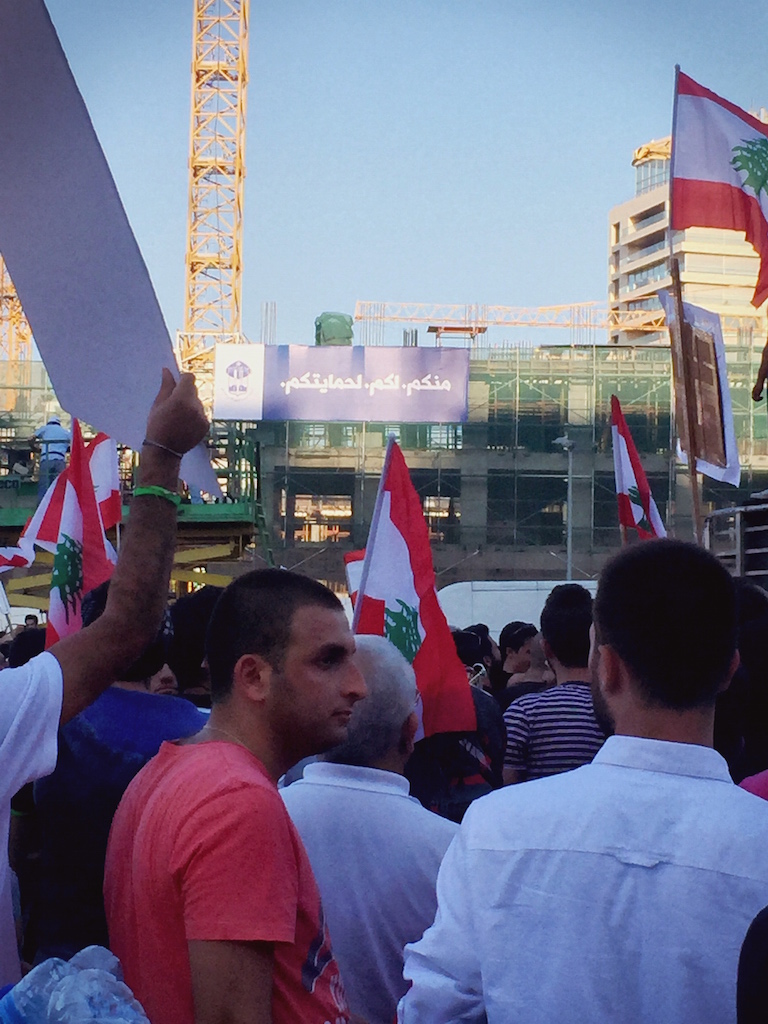
On August 29th, 2015, Beirut not only had us, but it had enough of us to make it the most beautiful it’s been in years. Yesterday evening, Beirut was gorgeous. It was our own city finding its voice again, finding its calling again, finding its own identity again.

Beirut is nothing without its streets that should be filled with people. Yesterday, we filled its heart. Beirut is nothing without a beating center. Yesterday, Martyrs’ Square was beating in tachycardia. Beirut is nothing without us. Yesterday, we were Beirut.

Over 100,000 people gathered yesterday in Martyrs’ Square to say enough is enough. They chanted against the system. They chanted for their rights. They chanted with every ounce of voice they had in them for the causes they believed in.
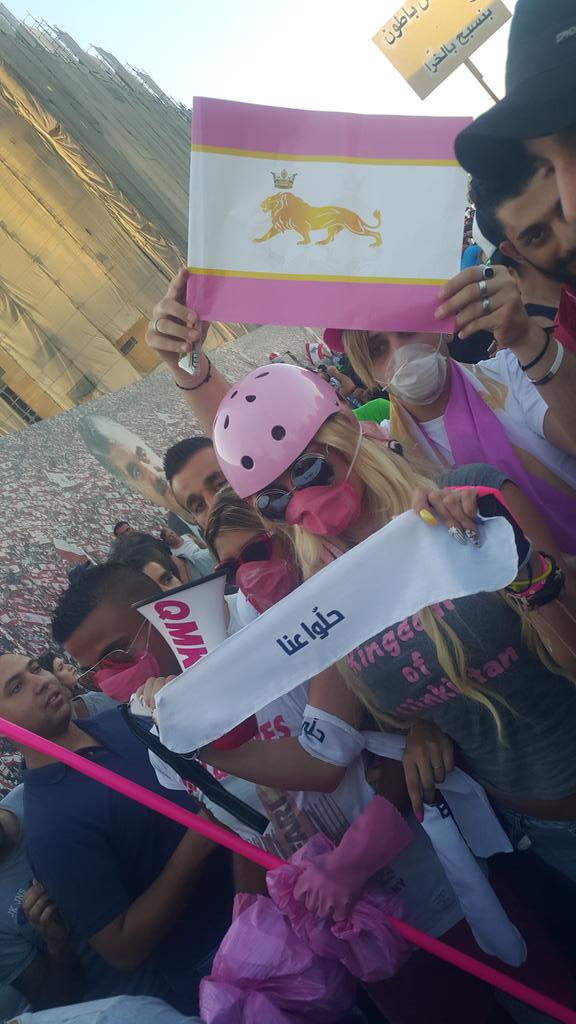
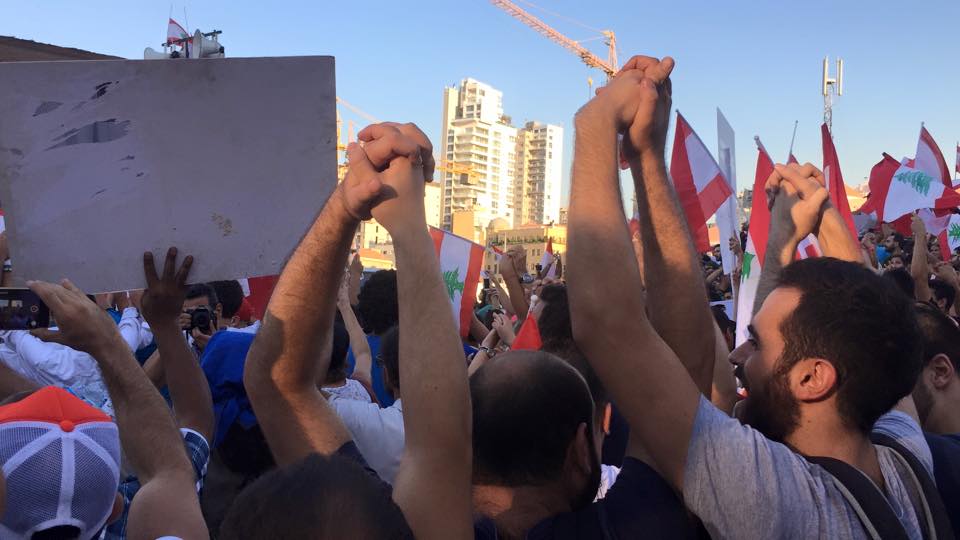
This is how beautiful Beirut was:


And people had their hands intertwined to signal unity:

Protest YouStink Beirut August 29 2015 - 25

The people also brought posters.

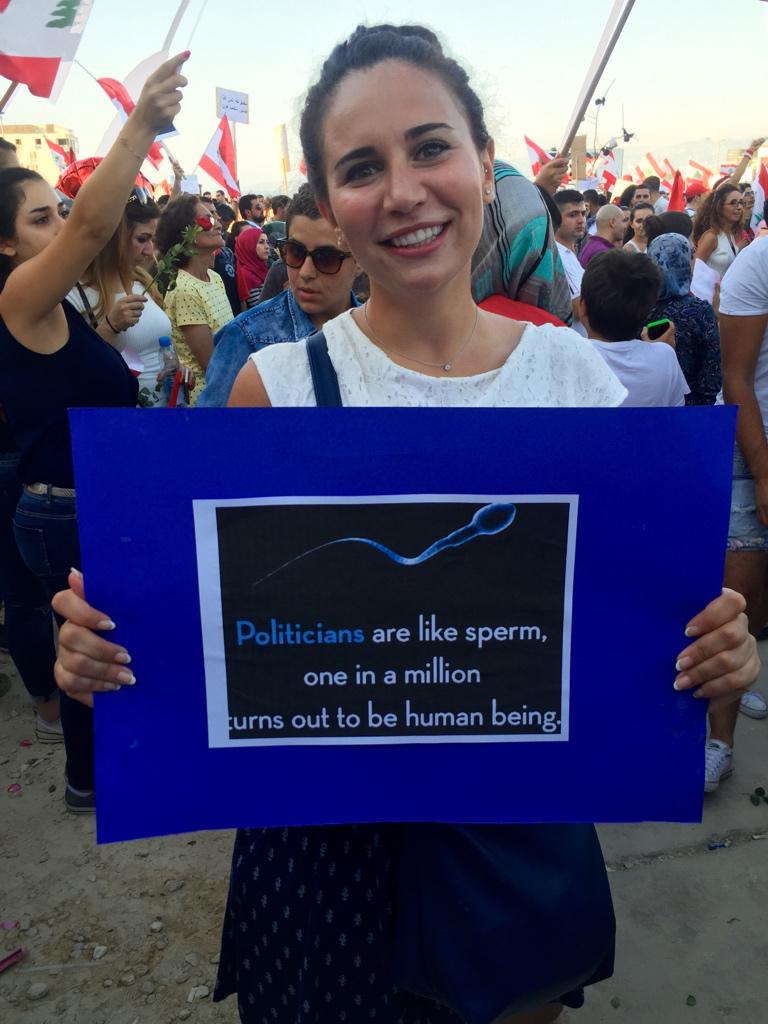
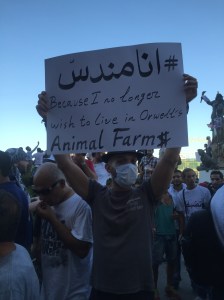
Some, like my friend Racha’s poster, were hilarious:

Protest YouStink Beirut August 29 2015 - 10

She’s going to kill me for this going viral.

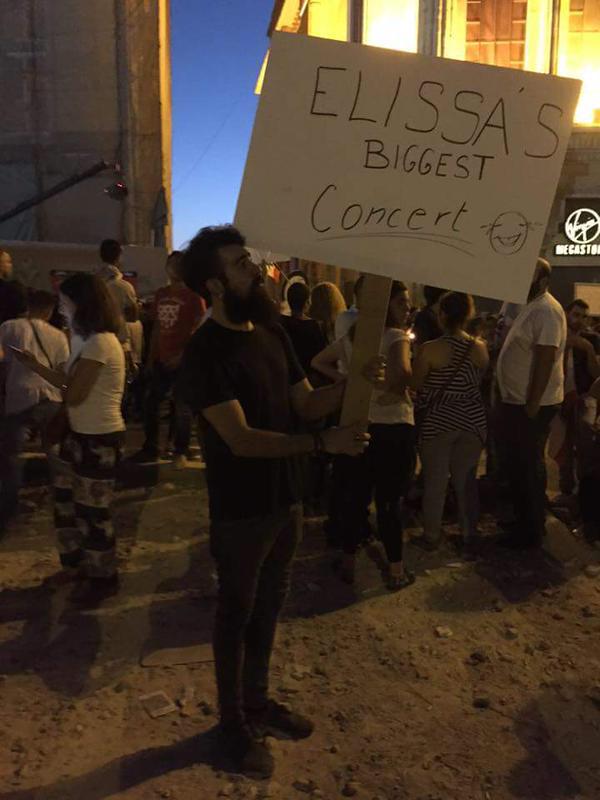
Youssef Nassar, inspired by Elissa’s now famous Twitter gaffe, brought out the big guns:

Protest YouStink Beirut August 29 2015 - 21

#Best #Concert #Ever! #With #My #Besties.

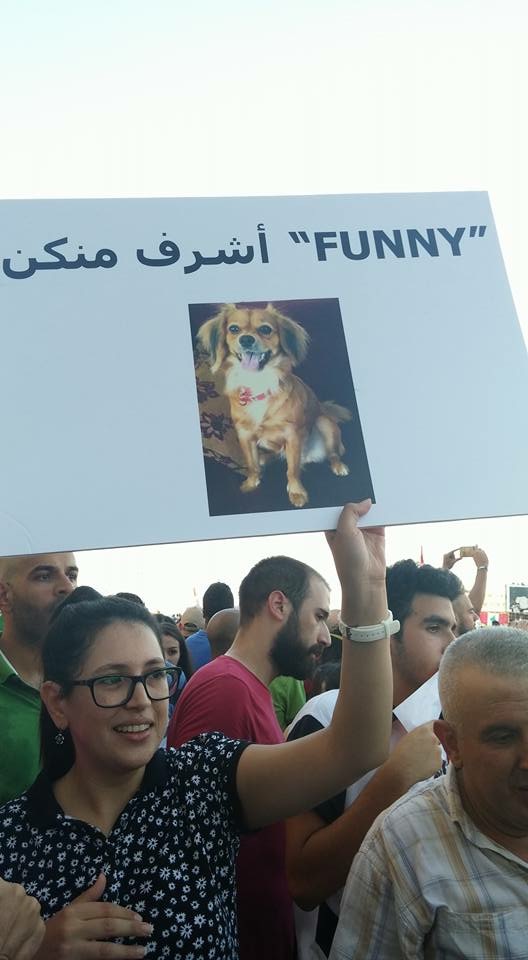
My friend Izzie, meanwhile, compared our ruling class to her dog, “Funny.” Obviously, they wouldn’t amount to how adorable her puppy is:

Protest YouStink Beirut August 29 2015 - 14

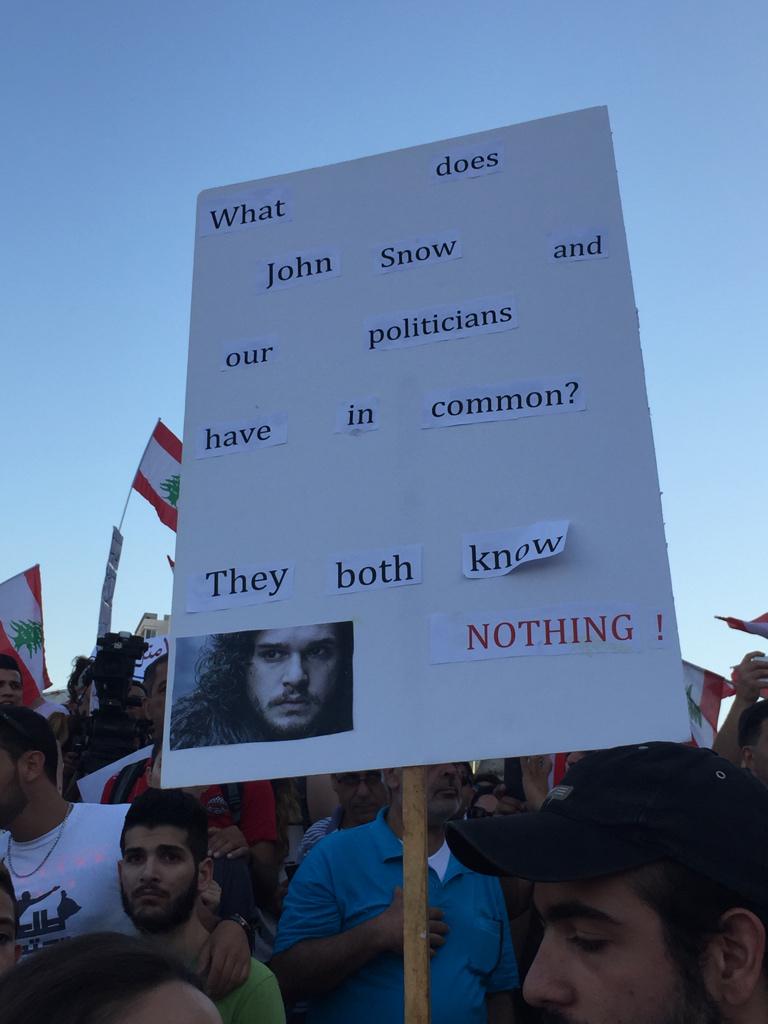
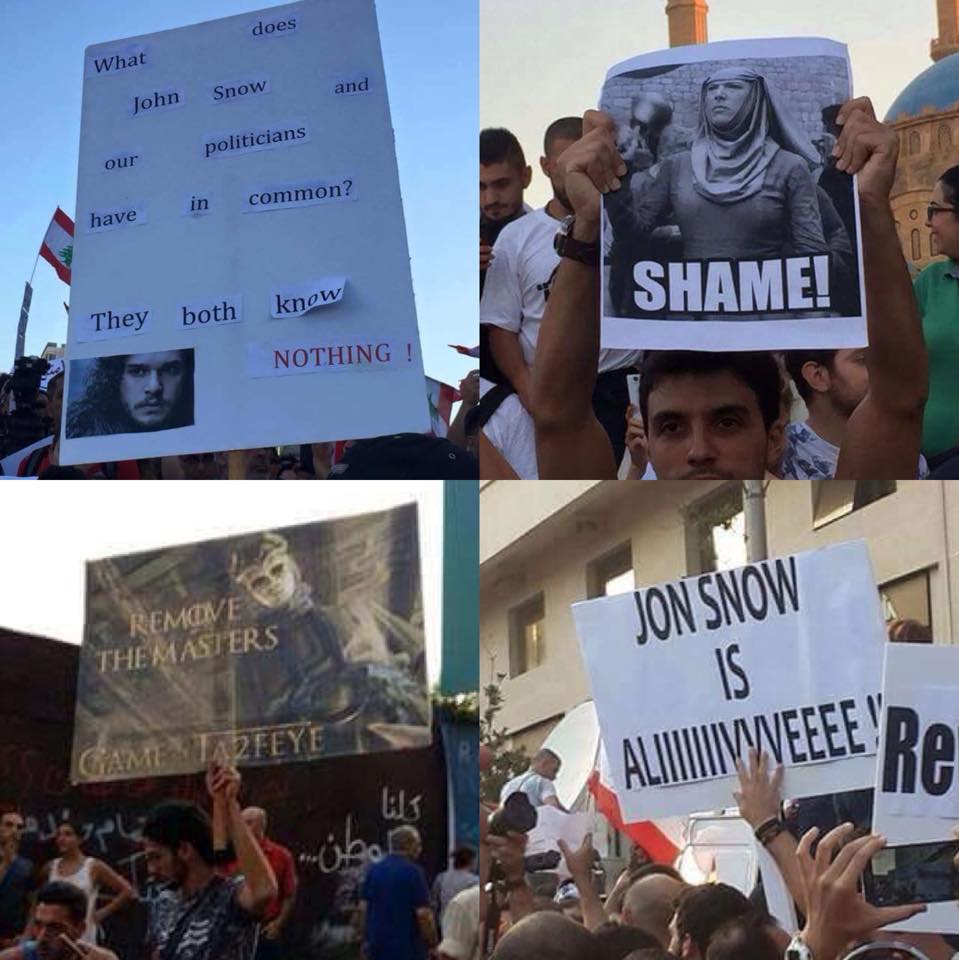
Pop culture also made an appearance in the form of “Game of Thrones.” What do our politicians have in common with Jon Snow? You guessed it:

Protest YouStink Beirut August 29 2015 - 7

That wasn’t the only Game of Thrones-inspired poster around:

Protest YouStink Beirut August 29 2015 - 24

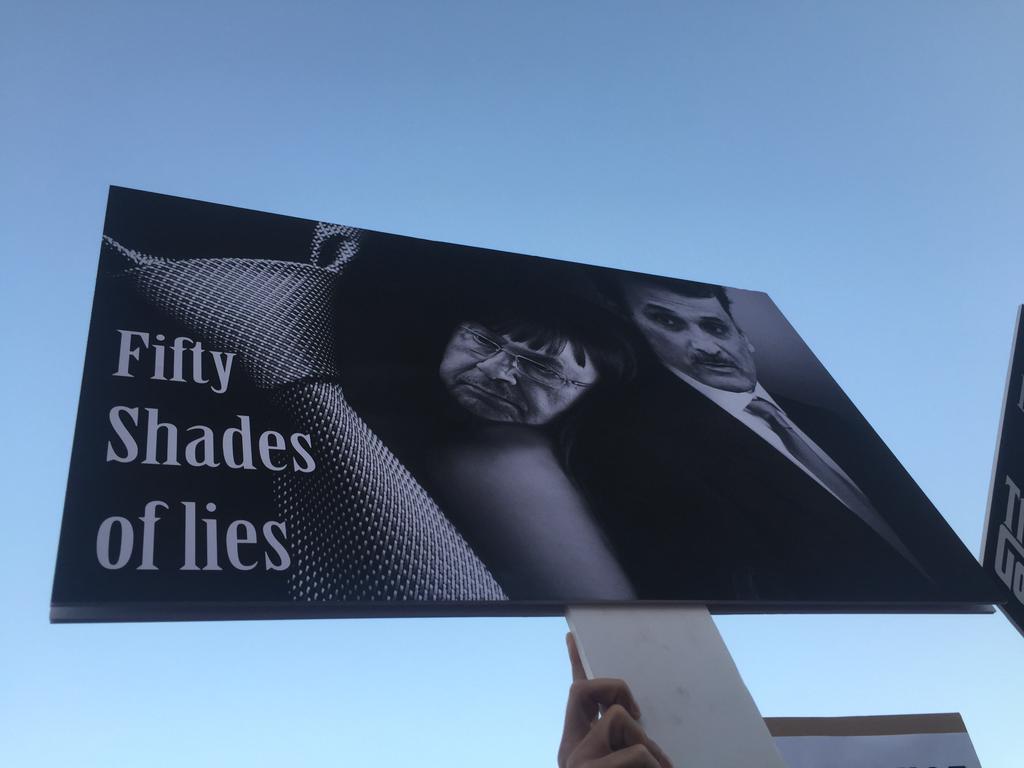
Pop culture made another appearance in the form of a “Fifty Shades” pun:

Protest YouStink Beirut August 29 2015 - 4

The whole “I kneel in front of you oh General” line that Bassil delivered recently now has an entirely different meaning.

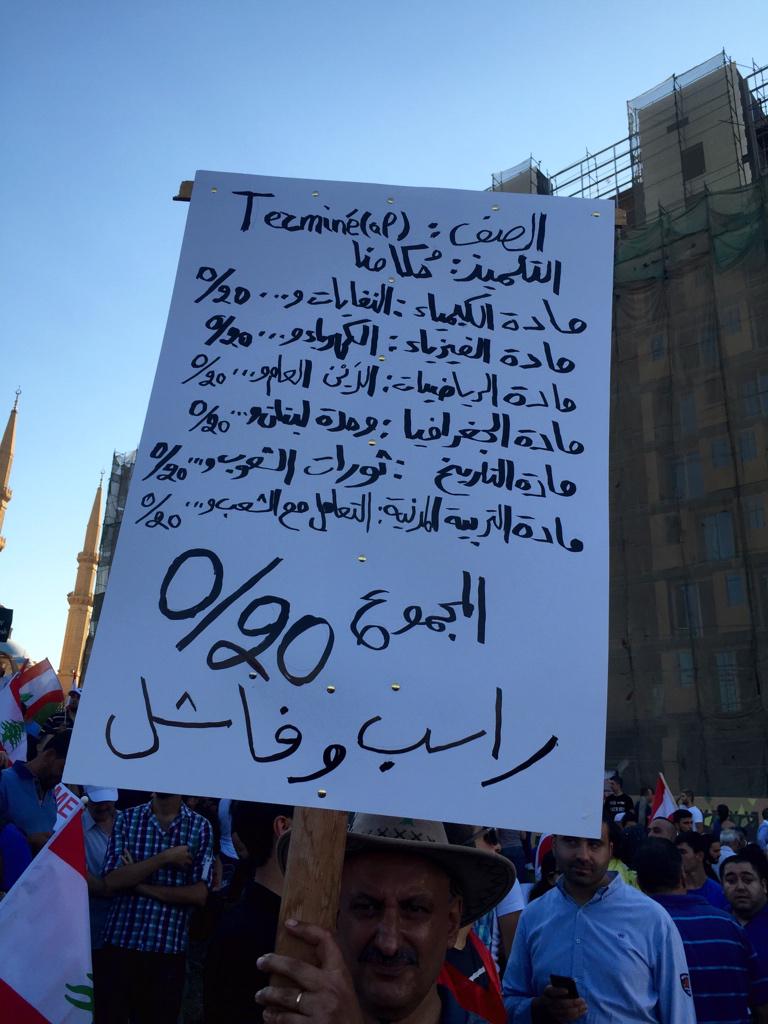
And since we’re a very competitive country, our politicians had their report card released. Needless to say, it’s not very flattering:

Protest YouStink Beirut August 29 2015 - 8

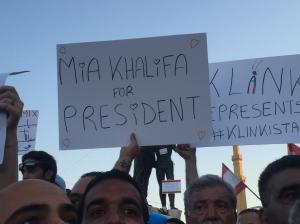
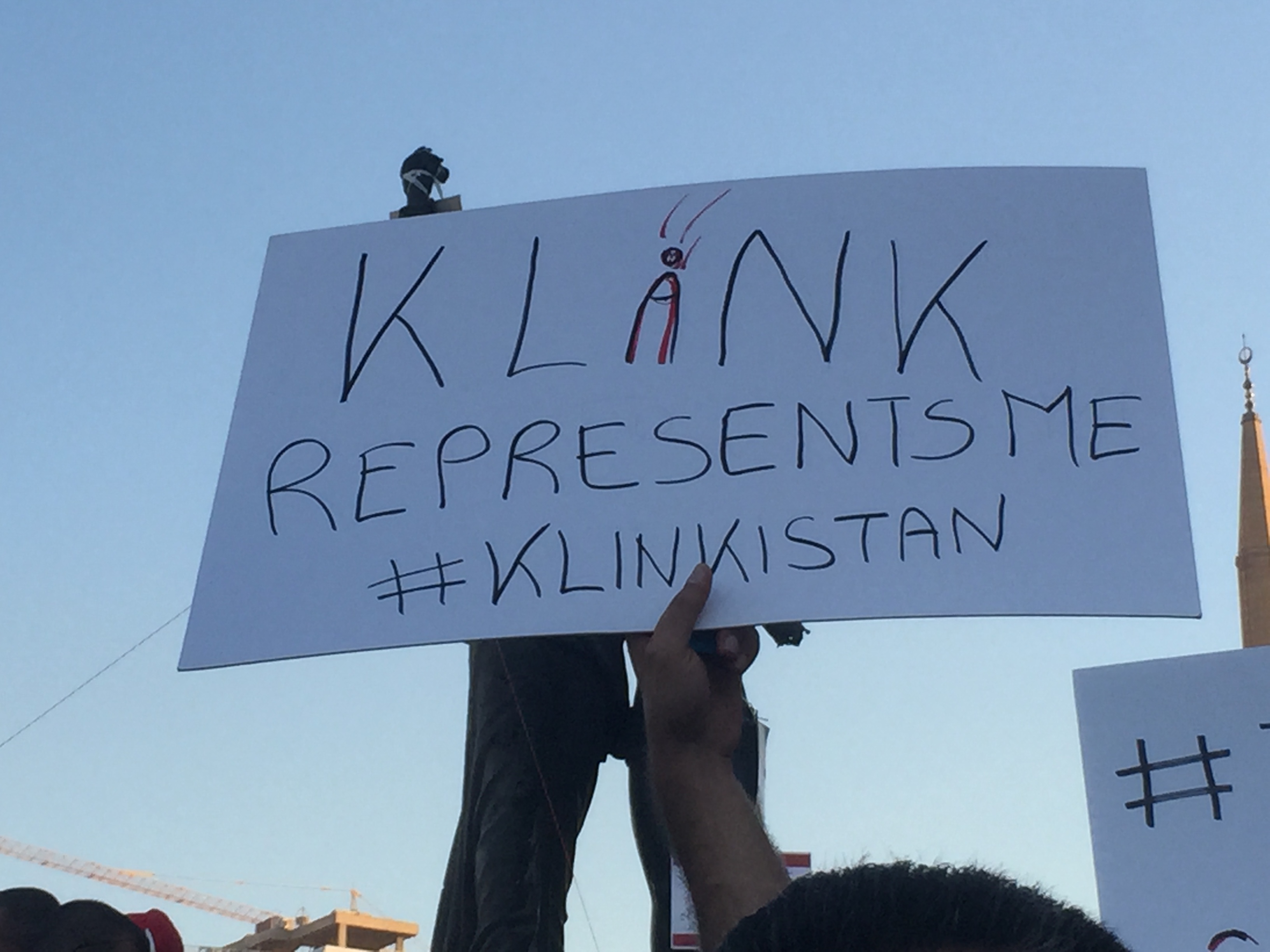
Because this protest was a BIG deal, Myriam Klink made an appearance:

By Ralph Aoun.

By Ralph Aoun.

But Klink will probably NOT approve of the content of this poster, zico zico and all:

Protest YouStink Beirut August 29 2015 - 16

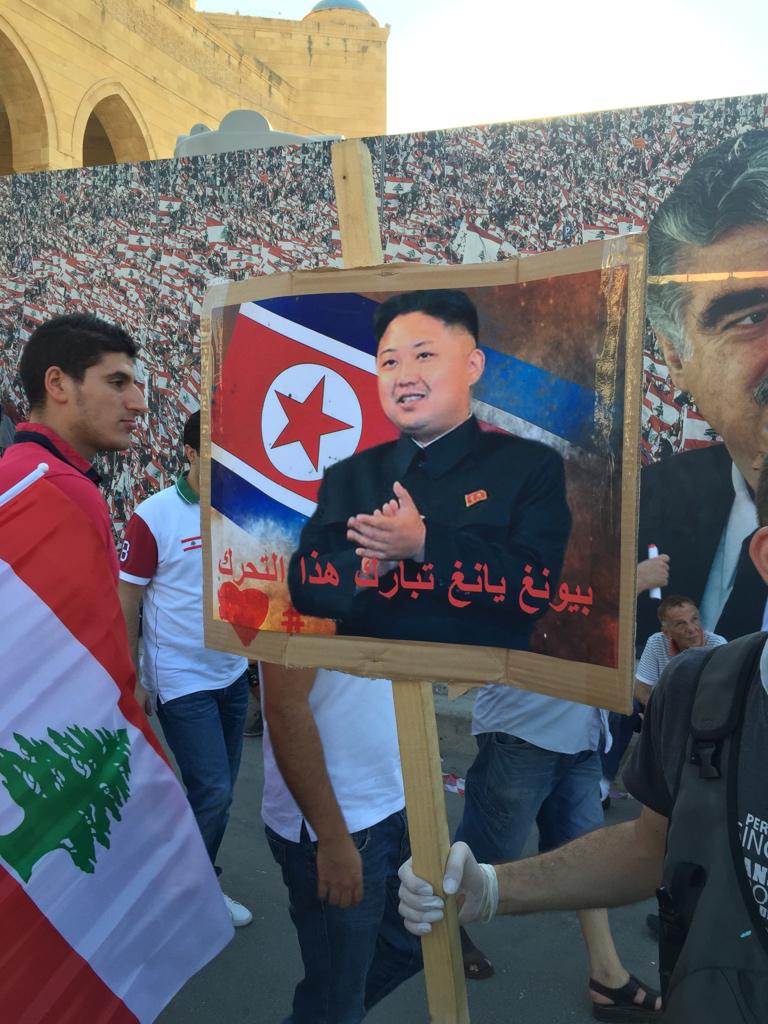
And because no protest in this country happens without foreign approval, this protest was under the auspices of North Korea. Thank you Pyong Yang!

Protest YouStink Beirut August 29 2015 - 9

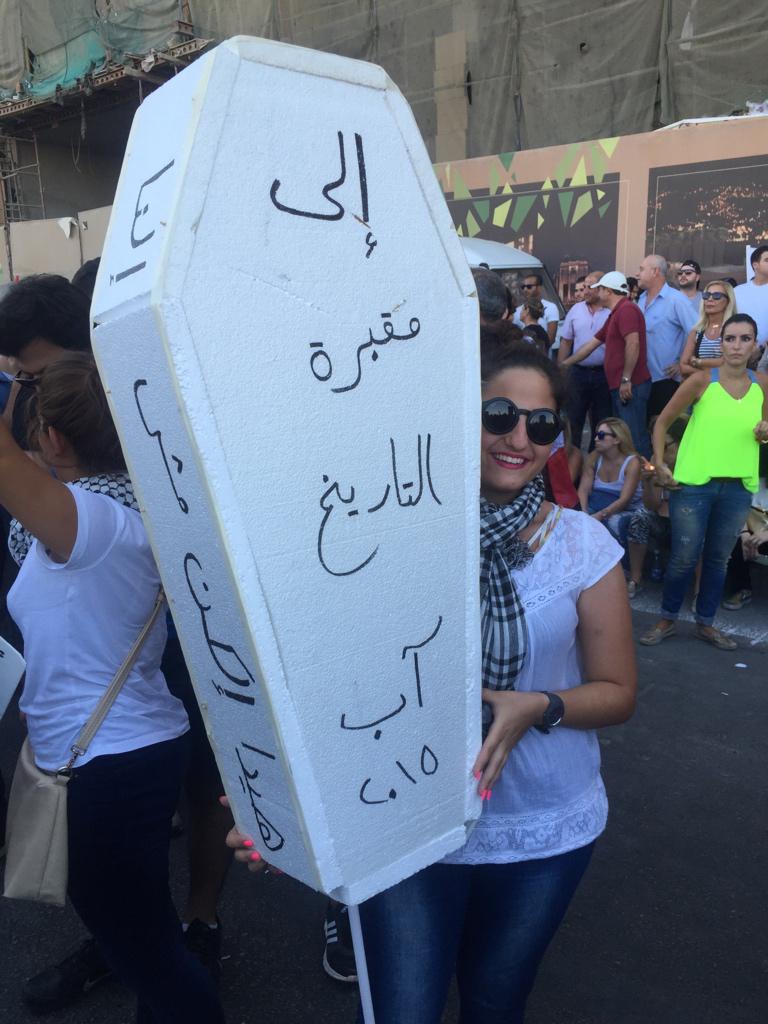
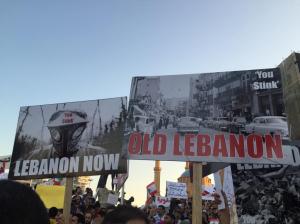
Some people brought figurative coffins with them to bury the system that has been killing us for years:

Protest YouStink Beirut August 29 2015 - 12

Some made jokes about our security forces:

Protest YouStink Beirut August 29 2015 - 20

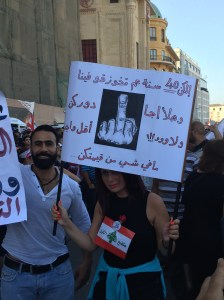
Some were not as polite:

Protest YouStink Beirut August 29 2015 - 6

But at least they have good calligraphy.

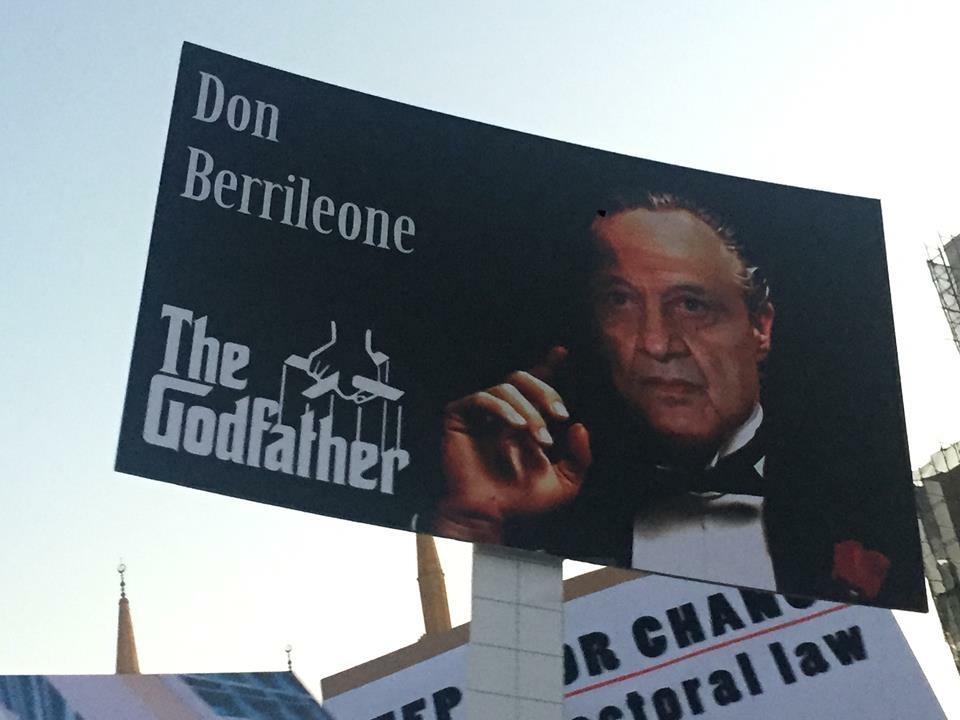
This time around, Berri got a few jabs:

Protest YouStink Beirut August 29 2015 - 13

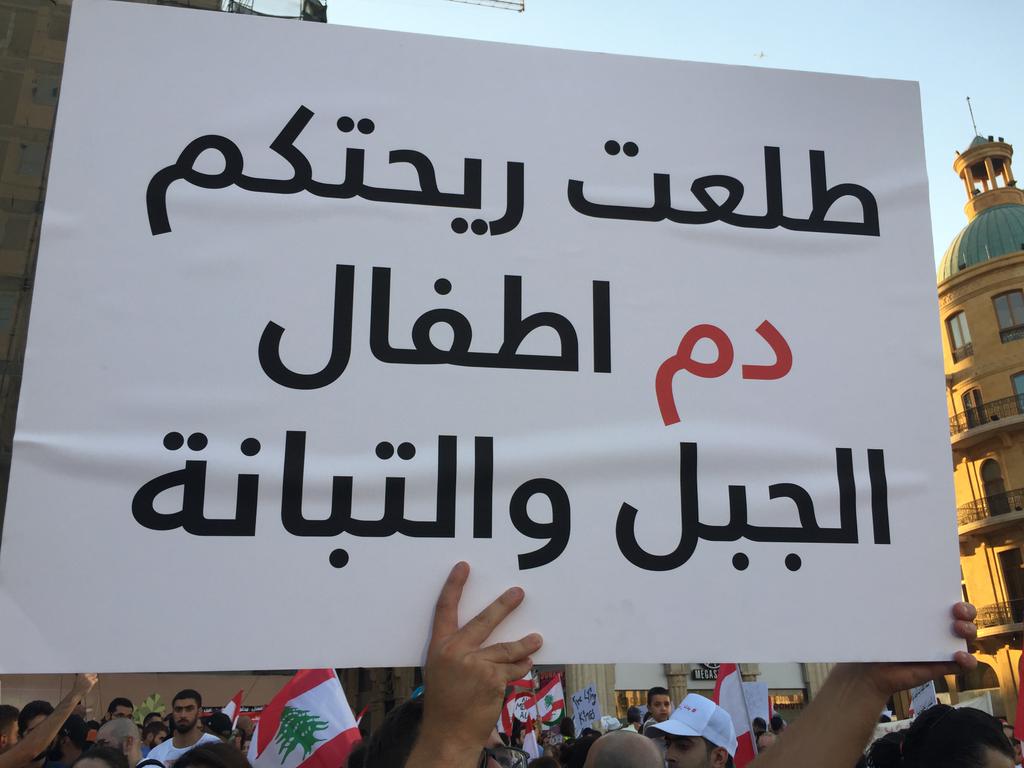
Others, and this is the poster that resonated with me the most, wanted to remind everyone of how much we’ve lost being submissive to this system for the past several years, and how many innocent lives paid the price. May all the children of Tripoli rest in peace:

Protest YouStink Beirut August 29 2015 - 5


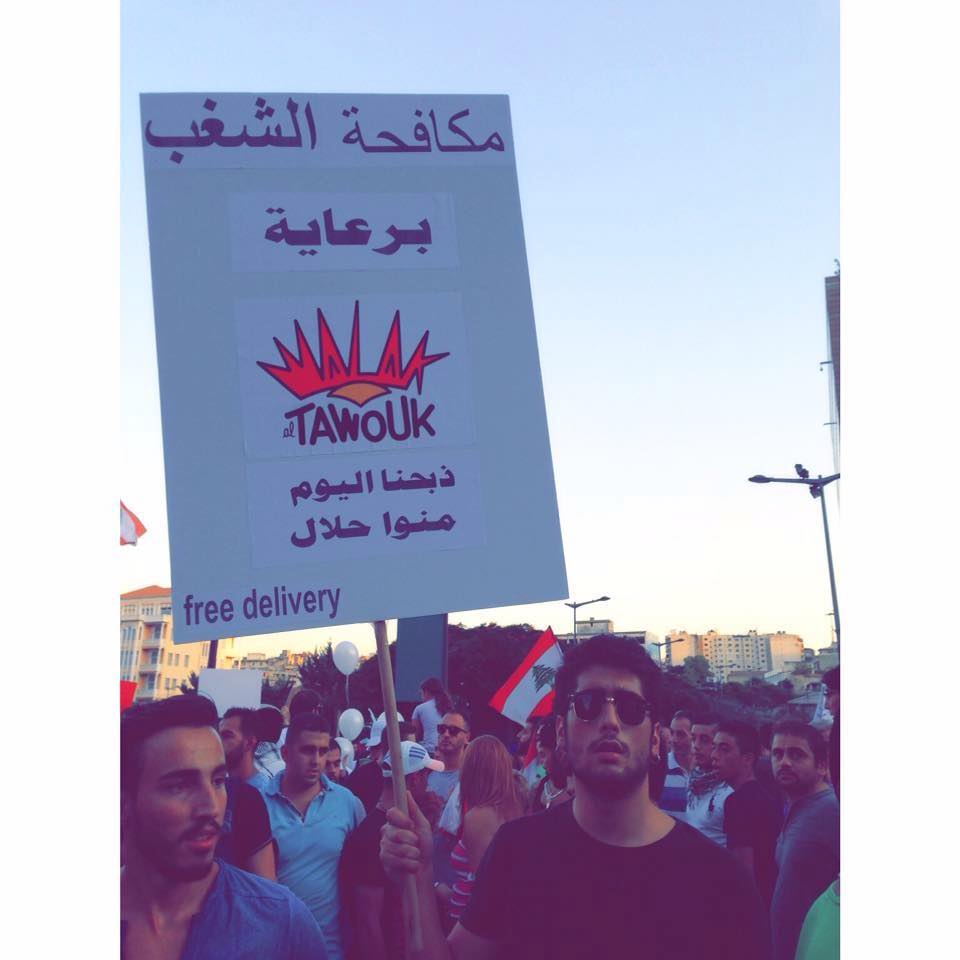
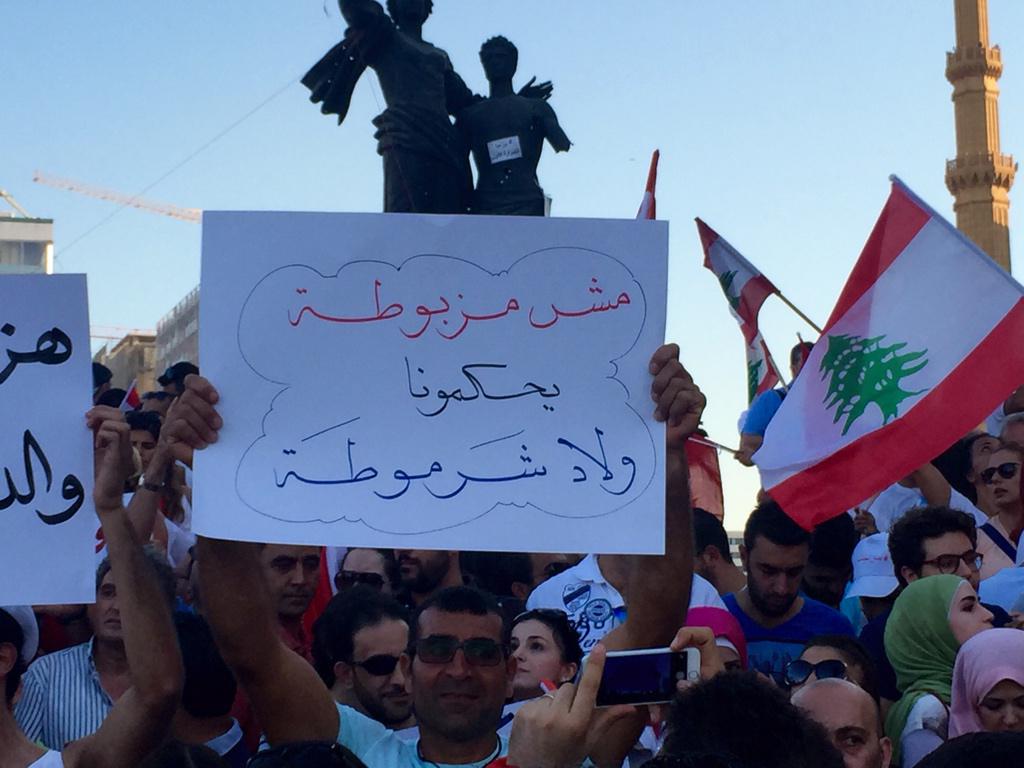
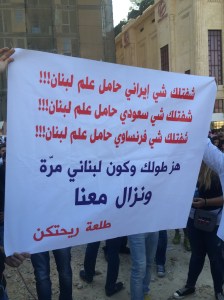
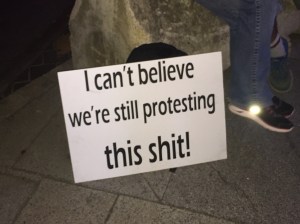
And here are a few more:

All of this happened to the backdrop of the most ironic poster of them all:

Protest YouStink Beirut August 29 2015 - 9

Beirut is its most beautiful when its people are this free, when they are this creative and when they finally find their voice that has been forcibly silenced for years, at times when we thought such a thing wouldn’t happen.

Yesterday’s protest was the BIGGEST manifestation of secular, non-partisan but very politically driven individuals in the history of the country. If August 29th leads to results in the coming few days, this protest will go down in history as another form of Beirut Spring, in the heart of a country that has long shown democracy to the region.

This post is not about what should have happened, what should happen next and what is expected of this movement. This is about how beautiful and glorious our sight was, and how beautiful we made Beirut in the process.

Cheers to everyone who made Beirut great again. Cheers to those who sang, and chanted and shouted. Cheers to hopefully saying one day: “I was there.” Cheers to us.

North Lebanon Will NOT Be Turned Into Beirut’s Garbage Dump

In a stroke of pure “magic,” our politicians have “solved” the country’s garbage crisis. In the beginning there was Sukleen and the Nehmeh dump. Now, we have Sukleen again – yes, seriously – and the Nehmeh dump, in Beirut’s proximity, has been moved to a place that’s more than a hundred kilometers away from Beirut.

In a stroke of utter “genius,” the Lebanese government has decided that the Northern caza of Akkar will now be where the people of Beirut and its suburbs dump their garbage. In case you had your doubts before, be certain now: Lebanon does not have its areas equal. There’s Beirut and Mount Lebanon, a beacon of hope and love to the masses and the tourists and where all the money flows, and there are the peripheries, notably North Lebanon, where the only thing fitting is to give its people those other regions’ trash.

Sukleen will also be handling garbage again at the price of about $160/ton, that’s more than what they used to get paid before, and about 4 times the normal amount that any decent country in the world pays to handle garbage.

Akkar – The Real Tragedy:

Here’s how the situation is in Akkar today:

  • There are villages that got electricity for the FIRST time in 2013 (link).
  • There are villages that do NOT have road access yet. I remind you this is 2015.
  • The caza does NOT have any decent hospital in it. Its people have to make the trip to Tripoli to begin getting decent medical coverage, and a lot of them have to make the trip even further south to Beirut in order not to die.
  • The caza does NOT have any decent schools and universities. Its people have to make the trip to Tripoli as well or move to Beirut for better opportunities.
  • Akkar is the country’s poorest area on record, only paralleled in poverty by Tripoli’s Tebbaneh and Jabal Mohsen areas. The numbers are astronomical: 40% of the population is considered poor and more than 18% live below the extreme poverty line.
  • The “best” way for the people of Akkar to make a living is for its men to risk their lives volunteering in the army; hence, calling Akkar “the basin of the army.”

Why don’t you hear about any of this? Well, I’ve tried to highlight how horrendous the condition in my region (the North) is on many occasions, but when it’s that *far* for the people of Beirut, as is anything north of the Madfoun checkpoint, nobody cares.

Another aspect of why you don’t hear about this is because no one, even Akkar’s politicians, care. The only time they do give a rat’s ass is come election time, in order to give the starving population a loaf of bread, a few sandwiches and a couple hundred bucks to sustain them through the coming four years (or seven).

Well, now we have another reason to give Akkar a second glance, so let’s spin this positively: Lebanon’s politicians have FINALLY remembered Akkar other than at the time of elections. Hurray!

How so? Well, our government and politicians want to turn areas of Akkar into the garbage dump for Beirut and its Greater Area’s garbage. Obviously, because they say no other region in the country can work, but it’s because the people there are so poor they can’t fight the decision of the government to kill them before their own eyes.

The details of the Akkar deal are as follows:

Ahmad el Hariri met several weeks ago with Tarek El Marhebi, the son of former MP Talal el Marhebi, who agreed to give him a land of around 1.4 million squared meters, to which was added another property culminating in about 2 million squared meters of area, in order to create a garbage dump to solve Beirut’s garbage problem, in an area is called Srar.

The Ministry of Environmental Affairs then studied the land and came to the conclusion that the type of soil used was NOT compatible with that required to do a dump, risking the toxins of the garbage infiltrating down to the underground water, which supplies the many villages of the caza since the government has NOT supplied the area with water as it is.

The Future Movement figures involved the aforementioned deal “denied” such claims a few weeks back. Today, with the news of such a dump being closer to reality than anyone expended, the claims they denied are not only true, they’re becoming a reality.

How is the government trying to buy the silence of the people in Akkar in order to effectively kill them with the waste of a region that is more than a hundred kilometers away? 100 million USD will be used to fund select developmental projects in the caza over the course of the next three years, money that is Akkar’s right and for which it does NOT have to reciprocate with receiving Beirut’s garbage. And to make things worse, the area will probably never going to see that development anyway.

This is governance 001 for the Lebanese system that doesn’t seem to care for an area unless it’s called Beirut and Friends:

  1. No, it’s not acceptable to silence the people of that area with money that you haven’t used for years to give them their rightful development, money that is rightfully theirs,
  2. No, it’s not acceptable to risk the health and lives of hundreds of thousands of people because you’re worried about the image that having your capital drown in garbage gives to the world,
  3. No, it’s not acceptable to risk the greenest region in the country’s environment because you’re too bloody corrupt to come up with a solution that limits your monetary return,
  4. No, it’s not acceptable and will not be accepted that Akkar ends up as Beirut’s garbage dump.

Akkar Isn’t The Only Northern Entity To Get Screwed:

If you thought Akkar was alone in getting screwed, you thought wrong. The entire North is under threat of being turned into Beirut’s waste disposal zone. Batroun’s areas of Hamat and Rasenhash have received a few shipments of garbage trucks from Beirut already. For reference, the area has your very lovable picturesque Nourieh convent.

Kefraya, in the Koura caza, also received a few garbage shipments, as did the city of Amioun before its people blocked roads and protested.

Tripoli is also having a true environmental disaster as it keeps getting shipments of Jounieh’s garbage, which are polluting its sea, soil and air. In the meantime, Jounieh’s mayor is bragging his city is the first to clear its garbage mess. How despicable.

North Pride:

I’m a son of the North. Batroun is my home. Koura is my home. Tripoli is my home. Akkar is my home. This is my land, and I will not have my land ruined, tarnished, maimed and irrevocably damaged just because I exist in a system that thinks I’m worthless for not having “Mount Lebanon” or “Beirut” stamped across my ID.

I’m a son of the North. My region is the country’s most forgotten, most ignored, most ridiculed and most stereotyped. My region is the country’s least developed and least considered (except when it’s for garbage it seems).

I’m a son of the North, and I will not have my home be filled with the garbage of those who not only couldn’t care less about it, but who will very likely not give a rat’s ass about where their garbage is heading the moment they don’t see it on their streets anymore.

I’m a son of the North and I say this: “Kell wa7ad yemsa7 kha*a b ido.”