What We Know So Far About J.K. Rowling’s “The Casual Vacancy”

This year’s most anticipated book release drops this Thursday. The project has been under tight wraps from the moment it was announced, reminiscent of the supreme amount of secrecy surrounding J.K. Rowling’s Harry Potter releases. Don’t you miss those?

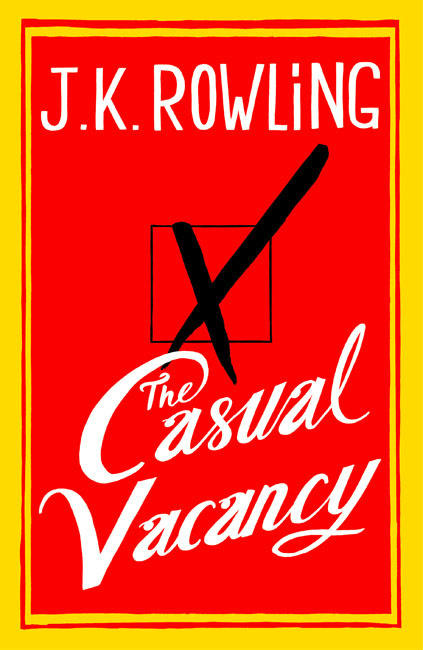
The Casual Vacancy is 512 pages thick. The idea of it was conceived on a plane where Rowling thought “local elections” and the idea wrote itself out. She says it was the sort of idea that hits you and you know it will work. It was the same with Harry Potter.

The title was initially “Responsible.” But when Rowling stumbled on a newspaper with the words “casual vacancy” in it, she immediately knew that it fit her story better. She has been writing the book since Harry Potter was done and considered publishing it under a pseudonym but she figured it would be much braver if she published it under her own name.

And it is her name alone that’s causing this book to be a success even before it is released.

The Casual Vacancy opens with the death of a parish councillor in the village of Pagford. Barry, the councillor, had grown up on the Fields, a nearby estate that’s drenched in poverty, with which other citizens of Pagford, notably the middle class, have lost patience. If they can fill Barry’s seat with one more councillor sympathetic to their disgust, they’ll secure a majority vote to relinquish responsibility for the Fields and hand it over to a neighboring council.

The battle for the seat starts. And it’s not a simple election as one can conceive, it is the story of a town at war. Pupils at war with their teachers, sons and daughters with their parents, the rich with the poor…. It is the battle of different classes. The chairman assumes the seat will go to his son, against whom are a cold GP and a deputy headmaster with ambivalence towards his son, a self-possessed adolescent whose subversion takes the form of telling the truth.

The Fields’ most notorious family is the Weedons.

Terri Weedon is a prostitute, junkie and a victim of abuse. She is struggling to stay clean to stop social services from taking her three-year-old son away from her. But it is her daughter, Krystal, who will take up the mantle of being the mother. But the death of Barry, the only adult whom Krystal considered as a friend, leaves her alone and struggling in the poverty that she lives in.

Anonymous messages will then start appearing on the parish’s website, exposing the laundry of the people living there and the town sinks into paranoia and tragedy.

The novel is written from multiple perspectives. So it invites the reader to delve into the head of different characters. Some journalists who were offered the chance to read the book said that this differing perspective made them think the book was closer to a comedy until it really sank in and they were hit by the severity and tragedy of it all as they delved into the Weedon’s minds.

The book is about the middle class of Britain. It is a representation of what J.K. Rowling says a “phenomenally snobby society.” And she has laid it bare. It is the story of heroin addiction, teen sexuality and economical problems. So it is as an adult book as it can get without it being Fifty Shades of Grey. The book is so unlike Harry Potter, in fact, that even the language used is one that would definitely shock any Rowling fan.

Some quotes from the book are as follows:

  • “The leathery skin of her upper cleavage radiated little cracks that no longer vanished when decompressed.”
  • [A lustful boy sits on a bus] “with an ache in his heart and in his balls.”
  • And there’s a reference to a girl’s “miraculously unguarded vagina.”

The Casual Vacancy has already sold more than one million copies in pre-orders and will be the year’s top selling new release. I will review it as soon as I finish reading it upon its release this Thursday. But I have high expectations.

(Sources: 1 and 2)

The Kourah July 2012 By-elections: What It Is & What It Isn’t

In about 7 hours, the citizens of the Northern caza “El Kourah” will head to the polls to choose between basically two candidates: Walid el Azar (SSNP) and Fadi Karam (LF) to replace Farid Habib (LF) who died back in May.

This isn’t the first time I write about this issue. A previous post of mine dealt with the SSNP’s serious lack of understanding of the basic elements of the democratic game with them turning the whole elections into a matter of life and death only because the LF nominated someone from a place they consider as their “fortress.”

Check out that post here.

On Friday, LF leader Samir Geagea held a press conference during which he declared that voting for his candidate means voting:

– For the Lebanese state.

– For the improvement of Kourah as a caza.

– Against Bashar el Assad and his regime.

– To overthrow the Syrian regime.

And the list goes on.

Sorry Mr. Geagea but your electoral rhetoric, while enticing, is simply full of it. A person casting a ballot for Fadi Karam won’t lead to the Syrian regime crumbling. An extra MP for the LF won’t change the balance of powers in the country. It won’t lead to a brilliant future nor will it change the fortunes of the Koura Caza.

It’s understandable that political leaders need to charge up people before heading to the polls for maximum results. The sad thing is people believe this.

On the other hand, the SSNP is still beating around the same old story: the LF are threatening our existence in an area that we’ve historically been the strongest in, etc…. That is also useless.

The fact remains that the Kourah elections will not change things. It will not do anything worth mentioning except have the party that wins celebrate for a few days, declaring how the tides have “turned.”

However, the Kourah elections is an indicator of what we could expect in 2013 especially if the results are read from sect to sect. It will be an indicator for the Future Movement to see exactly how much popular support they still have and how much they have lost. It will be an indicator for Christian parties to check their popular tracking with different sects. It will serve as a platform to base 2013 electoral hopes upon.

The clearest proof to that is both Farid Mekari and Nqoula Ghosn (the caza’s other two MPs) maximizing their electoral machine’s yield to help the LF candidate. They want to prove that they exist, that they can bring out the vote and that they should have a say in what happens in 2013.

How many people will vote tomorrow fully thinking it’s a vote against the killers of Bachir Gemayel, against the allies of Bashar, against the allies of America and for their own view of the Lebanese “state”? I would assume the absolute majority. Will anything change come 2013? I hardly think so. I can imagine the slogans from now. Depending on whether the Syrian regime falls or not, they will range from votes against Bashar and the Islamic state in Lebanon to votes against the zionist agenda and against corruption.

But the truth remains that those claiming change and reform haven’t done that one bit. And those claiming fighting for freedom are as powerless as the poor Syrian children getting massacred in their homes. Who cares, though. Let’s go vote. And win. And celebrate. And live in bliss. And then realize that we’ve accomplished nothing.

Did I mention you should vote for Fadi Karam? Yeah, I get to bring out the vote as well. Shou we2fet 3laye? 

The July 2012 Kourah By-Elections: When the Concept of Democracy Escapes the SSNP

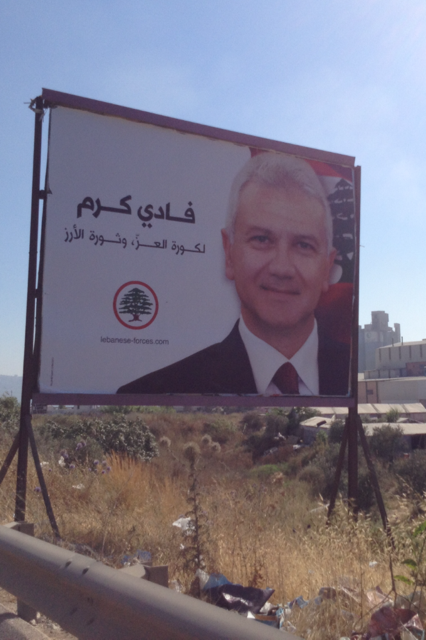
Fadi Karam posters are everywhere on the North Lebanon highway

12 days from now, the northern caza “Al Kourah” is going to have a round of elections to elect an MP to replace Farid Habib, who passed away from cancer back in May.
The build up to the elections was interesting to watch. The first question that came up on the political scene soon after the parliementary seat became vacant: would elections take place?

The LF, who had previously won the seat, decided that their party will proceed with the elections. Therefore, based on their new internal laws, consultations took place with high ranking officials of their base in Kourah and they chose Fadi Karam, a dentist and former head of the Order of dentists in North Lebanon.

Soon after Karam was chosen, the SSNP decided that this is a direct confrontation for them. Why’s that? Because Karam is from their base town Amyoun. They considered it as a direct challenge from the LF for them to nominate someone from Amioun. They, therefore, decided to have a candidate run for the Kourah elections. Not because they wanted to. But because they were “forced” to by a blatant act of defiance.

What the SSNP seems to have totally evaded is the concept of democracy. The notion that in an election people who meet certain legal criteria can run regardless of where they are from is not in the SSNP directory. I guess Antoun Saadeh missed that part in whatever party principles they are obviously not following.

I wonder, had the LF nominated someone from Dhour el Shweir, wouldn’t they have considered it an act of defiance as well? Better yet, had the LF nominated someone from Bterram, another town in Kourah where the SSNP have great influence, wouldn’t they have considered it an act of defiance too?

Why hide behind lame excuses when you want to test the ground for the 2013 elections as much as your opponent?

The SSNP also declared that they would have had no problem letting the elections go for a win by default for a lone candidate  had the LF kept their candidate in MP Farid Habib’s family by either nominating his wife or son. Apparently they believe the seat “belongs” to that family since it was only taken from them by death.

Now I have to ask the SSNP, where was this “we respect the dead” attitude when Amin Gemayel was running against an unknown FPM candidate for the seat vacated by the assassination of his son in Metn? Or does it only apply in places where the chance of the SSNP winning are next to none?

Yes, their candidate has no chance of winning in Kourah.

Moreover, why should the concept of a seat belonging to a “family” be even a part of the discussion to begin with? The seat belongs to the citizens of Kourah. It would be a grave insult to their rights not to have the correct path of electoral democracy take place and have one candidate thrown on them forcibly just because some parties are too afraid to lose inexistant momentum a year before the 2013 parliemntary elections.

As part of their campaign, the SSNP are also busy reminding the voters of el Kourah about the LF’s militia past – about how the LF (and the LF alone) killed their sons and children way back when. Let alone the fact that this is nowhere near true (the SSNP had its fair share of atrocities done all across Lebanon and them pretending otherwise would be an a insult to voters’ intelligence), but what good does it do to bring forth into the conversation a civil war people shouldn’t even take into consideration with their votes anymore?

Does the SSNP even know that Fadi Karam was not a militant with the LF during the civil war? Do they know he rose among the ranks of the party after Samir Geagea was released from prison in 2005? Do they know he represents a rising class of LF politicians and enthusiasts who absolutely have nothing to do with the war?

Yet the SSNP is throwing a war Karam had nothing to do with on his shoulders. If you can’t beat them at the polls, beat their reputation with lies, obviously.

In a democratic country like Lebanon – regardless of what you think about this type of democracy – making a big deal out of the village a candidate was born in is unacceptable. Making a big deal of having been “forced” into elections is unacceptable. Making a big deal out of everything but the issues at hand is unacceptable.

You don’t want to run for elections? Then don’t. Don’t whine endlessly about irrelevant reasons for you deciding to run.

Come July 15th, the citizens of Kourah have such a clear choice in front of them it’s even silly to point it out. But regardless, what July 15th should and will be is a triumph for democracy and freedom over the concept of hate and cowardice.

Lebanon at the Heart of a French Political Scandal

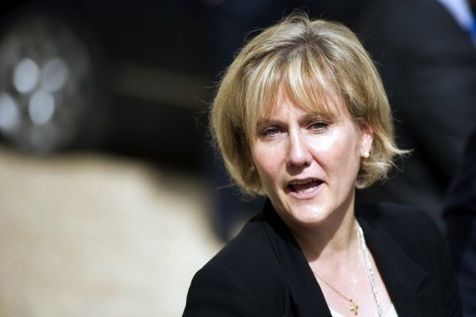
Gérald Dahan, a French imitator and comedian, faked being Louis Alliot, the #2 man of Le Pen’s right-wing Front National, and called UMP candidate to the legislative elections and former minister Nadine Morano, who’s of Italian origins.

Asking Morano about Le Pen, she replies that she thinks Le Pen has lots of talent and that there are many aspects of her policies upon which she agrees.

It’s worth noting that Morano was struggling in the polls of her corresponding district and was obviously in need to schmooze the many voters of the National Front.

Seconds later, a seemingly busy Morano hurries to end the conversation and does so by pitching a final idea which she believes should be enough to bring the fake-Alliot to her side. She declares her support for Marine Le Pen’s proposal not to let foreigners vote in France. Her argument?

J’ai pas envie que ça devienne le Liban chez moi.”

I don’t want it becoming Lebanon here.

Listen to the conversation:

Many French-Lebanese expressed outrage at the analogy she turned our country into. But I have to wonder, doesn’t she have a point?

I’m assuming she means the following: I don’t want France becoming a country where every other nation gets a say.

Isn’t that the case in Lebanon? Don’t we always nag about our decision not being in our hands?

I guess it’s different when some “outsider” tells it to our faces.

On the other hand, it’s not like things are much better in Morano’s native Italy.

The bottom line is: Lebanon is everywhere, in scandals and things that would make you proud to be Lebanese.

Why I’m Against Proportional Representation (Nesbiyé) in Lebanon’s 2013 Elections

One of the main debates going on in the country currently is regarding the 2013 electoral law, mainly whether to include proportional representation in it or not.

Politicians’ views are already diverging on the matter and they break down to the following:

– Walid Jumblat: Against. He wouldn’t be totally dominant over the Druze vote and would lose a decent amount of his influence.

– Saad Hariri: Against. While he’s not as affected by this representation-wise as Jumblat, his stance has varied from being supportive of proportional representation to against it solely because he wants to bring Jumblat to his side for the elections.

– Hezbollah: With. They get about 90% of the Shiite votes in elections, which is where they have candidates. 90% in the proportional representation law would give them all the seats with very minimal effect. It’s a win-win situation for them so why not demand Lebanon as one district with proportional representation to have bigger gains across the map?

– Michel Aoun: With. Why wouldn’t he approve of something that would make him benefit from all the votes of the party mentioned above?

– Samir Geagea: No idea. He has made arguments than can go both ways so his stance regarding this matter hasn’t been fully formulated yet.

One of my main problems with proportional representation is that it is thought of as the cure to our system when it is far from being the case. Many believe that applying “nesbiyé” in the 2013 elections will start decreasing sectarianism by having different people from certain sects getting representation.

In order to do that, the electoral districts being thought of are getting increasingly bigger. Some are even suggesting to make Lebanon one whole electoral district. The argument? This is the only political elections where the population gets to vote so why not get the whole country to vote for everyone?

The way I see it an MP is a representative of their corresponding region first and foremost. Increasing electoral districts to make “nesbiyé” work will not lead to better representation. Or is it “representation” only when certain parties that wouldn’t dream of a parliament seat get one even if they don’t represent the woes of a region? Does a citizen from Beirut know what are my concerns as a citizen from Batroun? I don’t think so. Do I know what are the concerns of my friend in the South? Absolutely not.

What gives me the right to choose their MP and them mine? The sake of national unity? Please.

And for those who believe districts should be medium-sized, say according to the mohafaza – what do people in Batroun know about what a caza like Koura needs? What do people in Zgharta know about the demands of people in Bsharre?

When during parliamentary sessions an MP talks about his district as his main focus, you know this is what they represent not the whole country as we so gullibly want to believe. And it is definitely their right. The whole idea that we, as a country, need everyone to vote for everyone in order to reach unity is non-sensical. You don’t see it happening anywhere else in the world that a country votes for all the MPs its parliament has.

Let’s talk about how practical applying nesbiyé would be. I, in Batroun, get 2 MPs. In the 2009 elections, the margin for those who won was 53%-47%, which in a nesbiyé-equipped scenario means that the result wouldn’t be 2-0 but 1-1. Is that a representation of the will of the caza? Definitely not. Of course, applying proportional representation means Batroun would be merged with other districts, which brings me back to the point I mentioned previously. In reality, most cazas don’t have an overflow of MPs they get to vote to.

It is here that I have to ask: what’s the point of people voting and giving someone a majority when everyone gets to power either way? When I vote for someone and against another person, that means I do not want that person to represent me. If the results of my district turn out to be in my favor and the person who lost ends up in office anyway, then what’s the whole point of elections to begin with?

Moreover, in the current state Lebanon is finding itself today, especially with armed parties swaying the balance of power, would nesbiyé truly be fair, as it’s alluded to be, for parties that don’t have weapons?

In the current form of sectarian Lebanon today, when all sects except Christians give a majority that cannot be contested to one specific party, wouldn’t proportional representation with bigger districts dilute the Christian vote to a point of irrelevance as we’ve seen, for instance, in the 2000 and 2005 elections in certain districts?

In a country where division is based on sects and regions, any law will be accused of increasing either tension. The 2009 law is blamed for increasing sectarianism. We say that because we love to hide and pretend as if our regions are not a mass aggregation of people from one specific sect when, in fact, the only reason we look at the 2009 law negatively is because the results it brought about was a collection of people who couldn’t rule to begin with and others who don’t know how to rule.

Just take a look at a map of Lebanon and you’ll see exactly how one-colored most regions are. This is a demographically situation, not an electoral one.

No, proportional representation is not bad, as some politicians are saying, because it increases Syrian influence in Lebanon. Proportional representation is bad because it’s so ill-timed it is nowhere near the solution it is made out to be. It can only possibly work with bigger circumscriptions, and everything aside, this is an inherent flaw that cannot be ignored. It can only work when the political system of the country is not a disproportionate sectarian representation to begin with. It can only work when the main parties that will make part of it have, at least, some varying degrees of equal influence. When not everyone is fundamentally on equal footing, you can’t have a law that equalizes them in voting booths.