The Case of Lebanon’s History Book

As a Lebanese who has gone through our educational system, I’ve learned about Lebanon’s history in two separate grades: grade 9 and grade 12, as a preparation for the official exams that I, similarly to many other students, undertook come the month of June of that corresponding year. The difference in the material between grade 9 and grade 12 was literally nonexistent. We used the same book, same notes and discussed the same era all over again. It was as if our history stopped around 1946, when the French army left our country, marking their departure with a carved stone at the Nahr El Kalb valley.

The thing about writing history is that no matter who writes it, it will never be objective. Even the most objective of historians cannot have the history they write be absolutely devoid of a personal touch here or there, which, albeit subtle, can convey a different meeting altogether.

Recently, however, the talks about writing a history book for Lebanon that goes beyond the 1946 obstacle and into the 21st century was in the works. And for that matter, a governmental committee was appointed to discuss what was relevant and what was not.

The members of the committee are: minister Mohammad Fneish, minister Nicolas Fattouch, minister of education Hassan Diab, minister of culture Gaby Layoun, minister Ali Kanso, minister of health Ali Hassan Khalil, minister of justice Shakib Kartbawi, minister of information Walid Daaouk, minister of tourism Walid Abboud and minister of sports Faysal Karami.

In the case of this committee’s attempt at writing a history book for Lebanon, which will be later submitted to the Parliamentary Education committee for approval, their definition of objectivity is: write whatever you want, omit anything you don’t like and voila.

In the draft for this book, every single mention regarding Hezbollah addresses the party as the “Resistance” and glorifies all its struggles and conflicts with Israel, from the 1980s up till now.  On the other hand, minister Mohammad Fneish refused any mention of the March 14 “Cedar Revolution” and anything about the Syrian occupation of Lebanon. The book was also going to omit anything about the protest of the opposition in Beirut’s downtown for two whole years, including the May 7 incidences in Beirut.

In short, anything related to the mistakes Hezbollah did and anything that showed the Syrians in bad light in Lebanon was to be omitted, which is perfectly understandable coming from people like Ali Kanso and Mohammad Fneish, with them belonging to their correspondant political parties.

But what’s worse is a statement for FPM minister Gaby Layoun who said: “the March 14th “Cedar Revolution” is only but an illusion set by that camp.”

And that’s what’s truly horrifying. Set aside the fact that this committee is as one-sided as one-sided goes and ignore the absolute necessity of having at least a counter opinion regarding something as vital to Lebanon as its history book. If the FPM ministers are now ignoring something they were a vital part of and calling it an “illusion” then what can one expect from those who were vehemently against such the movement that got their Syrian BFFs out of the country?

If Hezbollah ministers did not want any reference to the struggles many Lebanese had to go through with regards to the Syrians, which has always been part of their hypocritical propaganda of Israel being our only enemy, when did the Syrian epoch become nonexistent for the FPMers too?

In simple pictures,

according to Mohammad Fneish, Ali Kanso and Gaby Layoun, who happen to be a ministers in:
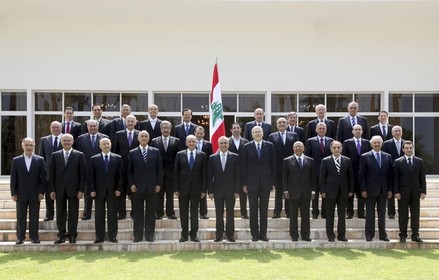
Lebanon's current government

the following:
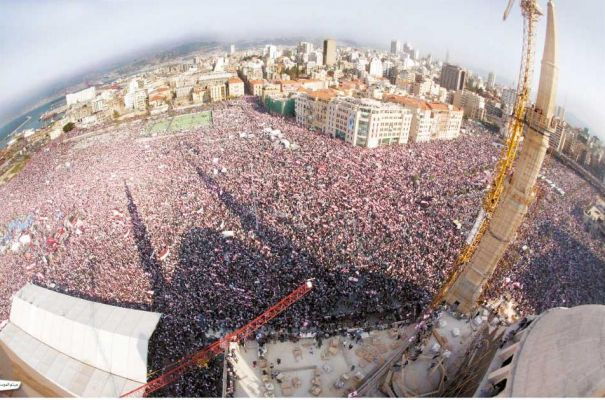
the Cedar Revolution

is as real as:
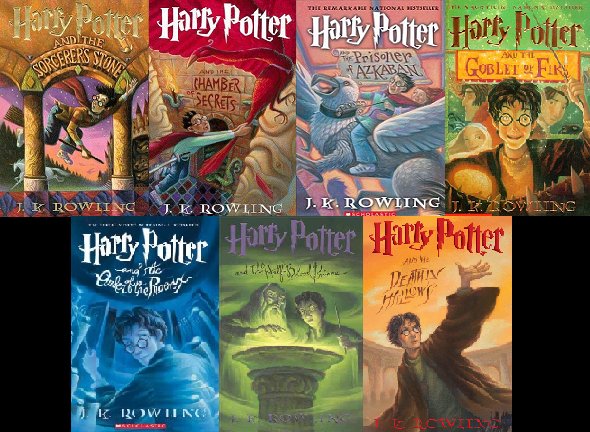
Harry Potter

I’m fairly certain such a draft for our history book will not pass. But you know what, even if it did, the thing about history is that it comes from more than one source. I don’t remember much of the history I was spoon-fed in grades 9 and 12. But I do remember what I lived through and I am writing about it. This blog, for instance, along with all its political content, will be here long after I’ve stopped blogging and long after I’ve even stopped existing. Well, try to censor that I guess.

What’s truly troubling, though, is how such a draft came to exist in the first place. What’s terrifying is that some minds can fully rationalize writing that draft. What’s absolutely frightening is that those minds are in absolute power.

A Lebanese Parody on the State of the Music Industry: 7assesne Enne Rkheesa

The lyrics for this “song” have been circulating around for a while now. And now there’s a video to boot. For those who thought the lyrics were actually serious, fear not. They are but a parody on the over-sexualizing in the music industry today, be it American pop or Lebanese music.

Trust me, I wanted to dismiss this as a gimmick but they do have a point, somehow, somewhere.

For non-Lebanese readers, the title “7assesne enne rkhisa” translates to “Make Me Feel Cheap,” which is how the people who did this believe music nowadays represents women.

Check the video:

I’m sure it won’t put a dent in the trend of music today. But at least people are noticing that there are less and less songs you can listen to with another person on radio without feeling awkward about their content. Case in point: Rihanna’s latest album has more than numerous proclamations of “F*** me.” Even the reviewers of that album said they felt self-conscious listening to it. I did not bother reviewing it.

Guess I’ll return to my safe country music bubble now. Good Girl, anyone?

Lara Fabian coming to Lebanon After All?

Honestly this is getting quite confusing.

After demands to cancel Lara Fabian’s concerts and stop her from coming, the Italian-Belgian singer complied and wrote a passionate love letter to her Lebanese audience saying she won’t be a reason for tension between them.

And just when we thought the whole Lara Fabian saga is behind us, it looks like the story refuses to go away. Lara Fabian is coming for her concerts on valentine’s day and February 15th after all, according to a very heated article reposted by Lebanon Files from Al Akhbar (The article comprises the sentences: Lara Fabian not coming to the country that got Israel to kneel, etc…). You only need to read the last paragraph to see exactly how much they hate her.

Briefly, Fabian and her crew got visas to enter the country, Virgin Megastores are still selling tickets and the billboards on highways have not been removed.

I won’t go into how ridiculous and absolutely hilarious I think the statements containing “usurping entity” and “concert” in the same syntax. But this is going to be interesting to watch. And for those of us who simply can’t afford to splurge on Lara Fabian, time to bring out the pop corn and watch.

Lara Fabian’s concert organizers to BDS: “check.”

An Open Letter from the Syrian Revolutionaries to the Lebanese People

An open letter, written in Arabic, from the Syrian National Council to the Lebanese People has just surfaced online. You can check it here.

The highlights:

1) The open letter acknowledges the troubling Syrian-Lebanese relations and blames the Syrian transgressions in Lebanon on the tyrant Syrian regime.

2) The open letter declares that a free Syria will acknowledge Lebanon as a free and sovereign state, therefore the relations between both countries would become on equal footing, between equals.

3) A new Syrian regime will honor the Taef agreement and will look into all the Syrian-Lebanese accords, set the international borders between both countries (including Shebaa Farms) and regulate them, cancel the Higher Lebanese-Syrian Council, end the age of Syrian intelligence in Lebanon and look into the situation of the Lebanese detainees in Syrian prisons.

The open letter is more extended than this and it’s definitely worth a read. I don’t know to which extent I should believe all of this, but one can hope. Either way, down with the Assad regime and down with all the tyrants of the region.

The “Arab Spring”… One Year Later

Yesterday, January 25th, marked the Egyptian revolution’s first anniversary. To celebrate this, millions of Egyptians went to Tahrir to protest the current situation in their country:

The protest in Tahrir on Jan 25, 2012.

Yes, the Egyptians are protesting after a parliamentary elections that birthed a parliament with people like these in power. Thinking about it, though, if one wanted to give an overall description to the “Arab Spring,” the most accurate expression would be: rise of the fundamentalists.

It serves as a catchy Hollywood title, no? Arab Spring: The Rise of the Fundamentalists. I should trademark this. And nothing describes the way it is in Egypt, Tunisia and other countries that protested better than this picture:

A caricature circulating currently in Tunisia

Who cares that Egypt has a soaring poverty rate or that Tunisia has a ridiculously high unemployment average. The first thing the new Egyptian parliament did was not to start serious discussions about the country’s future but to refuse to commit to women rights. Again, who cares about women rights, men rights, children rights, animal rights. Who cares about the Copts getting killed on daily basis because of their faith? What matters is saying no to overly revealing clothing and taking extended naps during parliamentary sessions.

Just some food for thought but perhaps one of the few things keeping the society in Lebanon from absolutely crumbling is the fact that fundamentalism cannot and will not get to power.