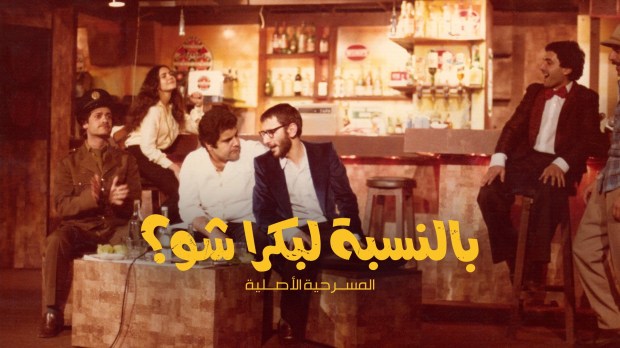
Ziad El Rahbani’s “Bennesbeh La Bokra Chou?” Was Beautiful; “Film Ameriki Tawil” In Cinemas Soon

Belnesbeh La bokra Chou Ziad el Rahbani play movie

Let me start out by saying that I am a Ziad el Rahbani uninitiated.

The tag-line for “Bennesbeh La Boukra Chou?” went: “you’ve been listening to it for 35 years, now come and watch it.” Well, I haven’t to say the least. In fact, apart from the occasional references to Ziad el Rahbani’s golden lines here and there among my acquaintances, my knowledge about his plays would’ve been essentially zero. It’s not something I’m proud of – to be so ignorant of a Lebanese icon is not one of my stronger suits I have to say – but I vehemently refused to listen to plays knowing that sometime in the near future I might be able to watch them.

Well, that future is now.

I was lucky to attend the Lebanese premiere – or the cinematic premiere that is – of “Bennesbeh Laboukra Chou?,” dedicated to the memory of Joseph Saker and Layal Rahbani, which will be in cinemas starting next Thursday, and I have to say: I’m thoroughly impressed.

No, this is not about the play’s sentences that everyone has memorized, or the songs that are engrained in our memories, even mine. This is about the entire experience of it: from film, to seeing the sheer joy on the faces of those watching it, to their reaction to finally seeing the play they’ve known so well on screen in the way that it is.

For starters, the play is filmed well enough for it to be shown in cinema. It’s not Kubrick, of course, but it is decent to the extent that a few minutes in you’ll forget that you’re watching rescued footage of a nearly four decades old play and simply fall into it. In fact, the grainy texture even gives it character: this is not a glossy movie, it’s rustic, full of life and quite charming. It feels documentary-like, which is also the purpose of the play at hand.

No one needs me to talk about the content of course, but I have to say that I was grossly impressed. Ziad’s satirical take on the Lebanese way of life then, the clash of classes and the struggle of the prolitariat, could not be truer even today. In fact, the movie/play starts: there have been many tomorrows after that, but what has changed? The fact of the matter is, so little has, and things are probably worse today than they were back then. Ziad’s monologue towards the end, about the need for work, about providing and trying to escape poverty is chills-inducing. It’s beautiful to see the lines many have repeated over the years be said in front of you “live,” and it’s even more beautiful to see the audience that knows those lines so well react to them.

I asked someone how it felt to watch the play they had listened to endlessly for years, and they said that it felt exactly as they had expected. I had to agree: you may be used to the voices, but the acting is exquisite. I have to say, Ziad el Rahbani may be a great playwright, but he’s an even better actor: the energy that man exuded on his stage is near-unparalleled in these times. No wonder audiences back then fell for him: it brought me such joy to see him perform in the way that he did, and I’m sure it will do the same to you.

You don’t need my words to tell you to watch “Bennesbeh Laboukra Chou?” if it’s something you planned. But let me tell you this: the people singing along to the songs, muttering those lines under their breathes or simply clapping along was an experience in itself, one full of nostalgia and wonder, one that I recommend wholeheartedly.

Film Ameriki Tawil

And, for those of you who want more, a list you can now add me to, there will be more: Film Ameriki Tawil, the even better play as I was told, will be in cinemas in the coming months as well (a source told me in around 2 months), and here’s part of the trailer:


To The Lebanese & Arabs Mocking The Siege On Madaya And Its Starving People

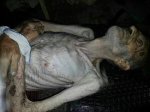
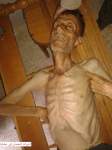
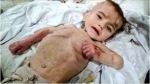
Huddled in the Anti-Lebanon mountains, Madaya is a Syrian village housing tens of thousands of innocent people who are being starved to death at the hand of a siege enforced by the Lebanese allies of the Syrian regime. Their strife is not new. They’ve been going through hell for months, eating whatever they can get: leaves, dirt, cats, dogs. International aid groups are calling the famine there the tip of the iceberg of the crisis taking place in that village of 40,000 people, and no one has been able as of now to fully grasp the picture of the human tragedy taking place there.

They say a picture is worth a thousand words. Forgive the shock value of the following pictures, but the victims in Madaya deserve to have their voices heard on top of those belittling them for being forced to protractedly die.

Today, some Lebanese and other Arabs are pioneering once again.

I didn’t think that there was potential for some aspects of my country to sink any lower, but color me surprised because not only have we done that, no, we have set the standards on how low you can go. Starting now, I beseech the entire world to consider us as a standard for being despicable, inhumane and revolting because it can’t get worse than this, because there can’t be people who are worse than those about whom I’m writing now.

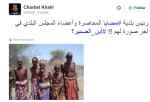
As the news about Madaya’s humanity crisis broke, some people in my country and the region had the audacity not only to stand with the siege, but to mock the dying people of Madaya. Behold a few samples:


I don’t know if these creatures are people, because people cannot be so lacking of compassion, of humanity and of any ounce of civility to actually think that their own political agenda is worth advancing by useless social media posts over the frail, cachectic bodies of men, women and children.

I don’t know if these creatures are of the required intellect to be aware of the horror of watching your child die in front of you because you are not able to feed them.

I don’t know if these creatures grasp how horrifying it is to watch your parents waste away in front of you, and you in front of them, because all of you are not allowed to eat.

These creatures are savages whose existence is an abomination, who are not worthy of the air they breathe, the food they eat, the space their bodies are wasting by merely existing.

Ladies and gentlemen, we share the country with entities who cannot rise above their demented, twisted politics even when it’s as clear as the dying body of a child who has lost all color in their face and all the life out of their cheeks. They cannot grasp the notion that there are things in life far worthier than defending what you know at all costs.

Ladies and gentlemen, we live with beings who can fathom making fun of people who are being starved to death just for the sake of being funny.

It’s one thing to be apathetic to the plight of the people in Madaya, but to actively wish them further harm, to actively make fun of them is something beyond words.

I want to never wish them the hunger that the people of Madaya are feeling. I want to never wish them seeing their loved ones waste away in front of them not because of disease, but because of lack of food. I want to never wish them to see their pets being turned to stew. I want to never wish them what they are wishing to the people of Madaya. But I can’t, so here are their names, and their faces.

Do with them as you please. I may not believe, but I believe those people will one day face their reckoning: اللَّهُ يَسْتَهْزِئُ بِهِمْ وَيَمُدُّهُمْ فِي طُغْيَانِهِمْ يَعْمَهُونَ.


Everything You Need To Know About The “New” Lebanese Passport Rules

  
4 days prior to a deadline that was suddenly imposed on every single Lebanese, it turns out that the passports we paid hundreds of thousands of Lebanese liras to renew recently are turning obsolete.

The Why:

Our passports are ancient. They lack biometric data that have become standard all around the world. Moreover, renewal with handwritten notes is also against international regulations.

Over the past year, Lebanon’s General Security stopped renewing passports and started issuing new ones instead. Of course, unless you knew someone doing a passport within the last year, there would have been no way for you to know of such regulation.

The How:

Starting January 10th, no Lebanese will be allowed to travel out of the country using a passport with handwritten renewal dates. That is to say if you paid 60,000 last year for renewal or 300,000 for a 5 year extension, you are out of luck: you will be stopped at the airport, your passport confiscated and you will be sent back home to get a new passport.

If you’re abroad and coming to Lebanon, your passport will be confiscated the moment you arrive at the airport and then your Lebanese stay will become a bureaucratic mess of you trying to get a new passport in time.

The Details:

If you’re Lebanese in Lebanon, just go and apply for a new passport. The money you paid for a renewal will be lost, as would happen when you try to renew and the officer at the General Security thinks your picture is too young or too different.

If you’re a Lebanese coming from abroad, get your family here to ready passport papers for you at the nearest Mokhtar in order to have an easy path. You will need new passport sized pictures and a recent ID card.

If your ID card is not new (it still has your childhood picture), you will need an Ekhraj Eid in order to get the passport procedure rolling. Yay!

If you are one of those lucky people with long duration visas, your old passport will be attached to your current one meaning the visas will remain functional. 

It Will Get Worse:

The passport you’ll be getting is the same as the one you currently have, except it doesn’t have handwritten notes. In a few years, when they start using passports with biometric chips and data, they’ll force you to give up your old passport and pay another fee for a new one, a fee that promises to be higher than the exorbitant one we already pay. 

Why This Is Unacceptable:

It’s not my fault as a Lebanese citizen that my government is so inadequate that they couldn’t even properly inform its citizens of such regulations until 4 days prior to the deadline.

They said that they issued statements before. But those statements have not been picked up by media outlets and as such we had no way to know and were also issued on Christmas. Maybe we should have asked for new passports for Christmas instead?

You’d think an institution that makes sure to bombard you with their birthday propaganda or with any form of self-indulgent material would actually bother informing you about such an important event. But no, as it stands: the average Lebanese citizen is getting the short end of the stick, as usual.

Why do I have to pay again for a passport that I already paid for when it’s not even my fault that my passport is useless to begin with?

Till when do we, as Lebanese people, have to constantly be screwed by our government just because they have no idea what they’re doing?

Mabrouk people. In case you have travel plans, start panicking about actually being allowed to leave the country because your perfectly decent passports will become obsolete in 4 days. 

Attempting To Bring Affordable Medicine To Every Lebanese And Refugee in Lebanon

As I’m starting my career in medicine in Lebanon, I noticed that the biggest hurdle facing patients is accessibility. This can take many forms. For the few that I serve at the tertiary center where I work, such issues are second rate: many of them can afford the healthcare provided at my institution and wouldn’t bat an eyelash at the thought that there are actually others in their country who are not as fortunate.

But the truth is that the healthcare sector in Lebanon is a tragedy. The numbers speak for themselves: Almost half of the Lebanese populace has no other means of coverage other than the Ministry of Health, whose budget is less than 5% of the total country’s budget. So what happens when that budget runs out, which happens ever so often? Over 40% of the Lebanese population finds hospital doors closing in their faces, as our news outlets race to pick up the media scoop without actually delving into the issue and finding out why it’s an issue in the first place.

To try and break this cycle, a bunch of doctors from the University of Balamand and the American University of Beirut, along with a few of their colleagues in other fields, have teamed up to attempt and get affordable healthcare to every Lebanese out there, regardless of income range and of geographical location.

It doesn’t matter whether that Lebanese can afford hospital entry or not; in a lot of the case a simple visit to a doctor can suffice to diagnose and treat a particular issue. It’s getting access to a decent doctor that’s the problem, and, when access is available, actually being able to afford the fees.

In a project launched on Zoomaal (link), the aforementioned Lebanese doctors are trying to change that reality to the best of their capacities.

They are creating a platform that allows the following:

  • Patients to get in direct contact with real life doctors for minimal fees, have their histories taken and maybe even get management.
  • Allow those patients to be visited by doctors and get examined and assessed also for minimal fees.

To achieve this, a phone call, video call or a house visit can be arranged. The details are all at this link.

This is the first attempt that I can think of by any Lebanese entity to bring healthcare to the entirety of the Lebanese populace, regardless of income and regardless of geographical constraints. This project is trying to do what the Lebanese government has failed to do: actually care about those who need it most and who don’t have the same amenities that should be a given right in the beginning of 2016.

In a country of over 4 million people, and more than 2 million refugees, having most of your population not having access to healthcare is a disgrace. It’s a shame it’s not as headline grabbing though as Mia Khalifa being the top pornstar in the world or Jbeil’s Christmas tree being listed somewhere. That would’ve gotten people interested.

No, Lebanon Has Not Legalized Captagon To Get The Saudi Prince Off The Hook… Yet

For the past two days, Lebanon’s internet has been abuzz with news that a Lebanese court has set a precedence to consider Captagon’s trade as a crime within the spectrum of pharmacy laws and not within drug laws. The implications of such a precedence were assumed to set the way to exonerate the Saudi Prince Abdul Mohsen Ben Saoud, currently held in (five stars) custody in Lebanon, and send him on his merry way to his execution-loving human-rights-hating homeland.

Why We’re All Talking About Captagon:

For those of us who have not been that into the drug trade in the aftermath of the Syrian war, Captagon is the trade name of an amphetamine called Phenethylline, a highly potent stimulant first synthesized in 1961. The drug has no approved medicinal uses but has shown some efficacy in some psychiatric illnesses.

This is not why we’re discussing Captagon.

Since the start of the Syrian war, Captagon has been at the forefront of the growing drug trade circulating through Syria. It’s reportedly the most used drug by the militants in that country, and is being manufactured in Syria for export to the countries of the region.

It is in that way that Abdul Mohsen Ben Saoud was caught in Beirut’s airport on October 28th, 2015, as he tried to smuggle enormous quantities of the substance out of the country.

Lebanon To Try And Exonerate The Saudi Prince?

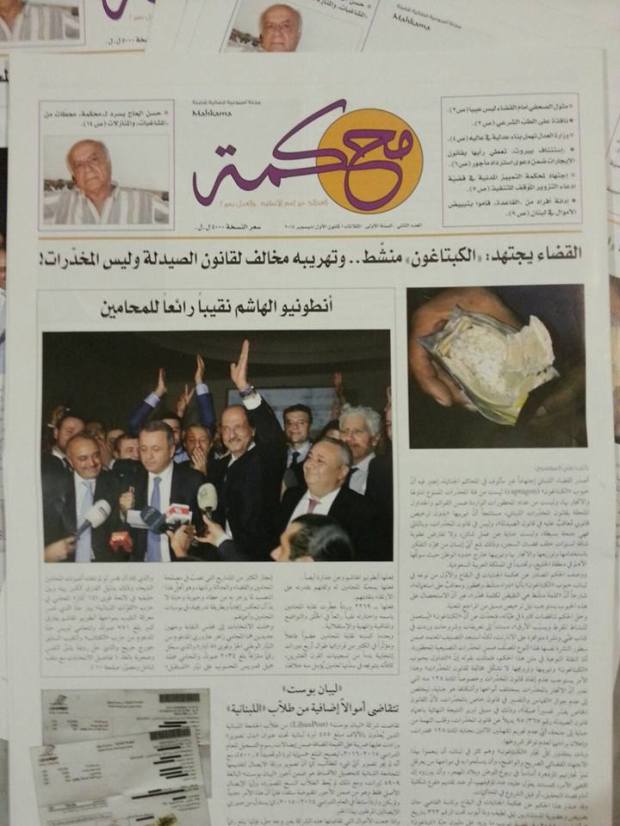
So naturally, it’s been assumed that it will only be a matter of time before Lebanon finds a way to send that Saudi Prince on his way home. Yesterday, Lebanese blogger Gino Raidy shared a snapshot of a newspaper clip of an article detailing how a Lebanese judge set a legal precedence by considering the trade of captagon not to be a crime under the subtext of drug trade laws but under medicinal pharmacy laws. This meant that the sentence associated with such a crime would be much softer and, to extrapolate, would help the Saudi Prince’s case.

Lebanon’s internet was ablaze with the news, and, if true, such a legal precedence would’ve been another mark of shame for this great Republic to live in.

But a few things did not feel right about this newspaper article.

Why Wasn’t It Reported Anywhere Else?

Regardless of the fact that I had never heard of the newspaper that published that article, my initial reflex was to google the title to see whose else had reported it. As of a few hours ago, Google returned two results both of which were talking about precisely that article, both of which had popped in the last 12 hours, since Gino’s post went viral, and both of which were also of non-reputable sources.

Let’s also assume that this news were true, don’t you think that the Saudi-Arabia-hating camp of Lebanese politics would have jumped on it by now and shoved it in everyone’s face to show how corrupt our judicial system is, and by extension minister Rifi?

Let’s also assume that this news were true, don’t you think that there would be ANY other Lebanese news outlet that would have reported it? It’s a ghost town out there.

This could be part of a cosmic cover up to bury the news, which is why neither Google nor Lebanon’s news outlets know about it. But since when are we conspiracy theorists?

Or this could be something that is essentially irrelevant to the cause of the Saudi Prince.

What Really Happened:

992841_10205015694088497_4276483254586981385_n

The excerpt that was shared online, as it turns out, was not recent. It was of a decision set forth by judge Jean Bsaibes months prior to catching the Saudi Prince, essentially meaning that even if a Lebanese court had set that precedence before, it couldn’t have possibly done it thinking that a Saudi Prince would one day be caught in our airport trafficking 2 tons of this drug.

The decision in question took place at a Beqaa court, whose jurisdiction does not cover the court handling the Saudi Prince in Baabda.

Moreover, the judge’s decision was later overruled by Lebanon’s supreme court (Tamyiz court) effectively keeping Captagon where it is: a drug, ruled by drug trade laws.

The Saudi Prince Isn’t Leaving Anytime Soon… Yet:

There’s nothing I’d love more than to crucify the Lebanese establishment, when it comes to any facet pertaining to our daily lives, especially if it tries to get a Saudi Prince off the hook for trading drugs worth millions of dollars and hundreds of lives.

But today is not the day for us to do so.

Our legal system, as of now, is still firmly holding the prince in custody with no resolution for his situation in sight. Moreover, I suppose the question to ask at this point is the following: is maneuvering the legal system the best way to get the Saudi Prince back to his country?

If anything, the resolution of the Saudi  prince situation will not occur through a legal precedence but will be part of a political deal in which he is an important bargaining chip.