Let’s Talk About Lebanon’s 2013 Elections: The Orthodox Gathering Law

One can argue that the French mandate was the root of Lebanon’s sectarian system. Its goal was to make a country that serves as a safe-haven for Maronites, with an edge in parliament seats and in governing powers. The sectarian divide in power reflected upon the people over the years. Blame the French? Blame everyone I guess.

Growing sectarianism and a feeling of injustice among sections of Lebanon’s population led to the Lebanese Civil war which culminated in the Taef agreement. The agreement took away most of the president’s powers, rendering him a near-puppet in a growingly tense political scene, and equalized between Christian and Muslim representation in parliament, despite the case not being so demographically.

Subsequently, a Syrian-led Lebanese regime managed to fragment Christian communities even more. The demographics, due to constant persecution, low birth rates and high immigration rates of Christians, continued to become even more lopsided. As it stands, Lebanon’s population is 60% Muslim and 40% Christian. That’s on a good day of statistics.

The problem with a skewed demographic, however, with an equally split parliament is that many of the minority’s seats cannot be chosen by said minority, regardless of what that minority is. This wouldn’t be a problem in a place where majorities and minorities didn’t view themselves as such: I have the power of numbers, therefore I rule over you.

That’s how the idea for an Orthodox Gathering Law came to be: the power that Christians lost over the years “must” be recuperated. And that should be done despite Christians not having the power of numbers anymore.

Here’s what’s given about the Lebanese situation today:

  • There’s no such thing as a Lebanese social fabric.
  • There’s no such thing as national unity – it only exists in the wildest fictive ideas of those who live in their own Lebanon-utopia
  • There’s no hope to achieve a state of national unity under current circumstances.
  • The biggest obstacle towards national unity isn’t regional (i.e. coming from different cazas across the country) but sectarian.
  • Sects always feel threatened by different sects in the country.
  • Sects are already more or less isolated and with rising bouts of extremism.

Apart from a minority in the Lebanese population, people identify with their sects first and foremost. They are more inclined to feel sympathy towards another person’s strife if that person is from their corresponding sect. It’s sickening, definitely. It’s horrible, you bet. But it’s the way things are. To fix this, you need to fix sectarianism.

You can’t fix sectarianism by forcing secularism upon people. You can’t tell a country with many who associate the current political system with being “religious” that the country is now secular which they will undoubtedly believe is also correlated with atheism. Off with their heads! No, the change towards secularism has to be gradual just as Lebanese gradually but surely became a sectarian state. People need to leave behind their sect-survival instincts in order to adopt a more global approach towards how they vote, towards how they act regarding others who are different from them, towards how they perceive those who are different.

For instance, here’s a little experience that I observed firsthand recently.

As news of Hay el Sellom in Beirut being flooded broke out, I saw two drastically different reactions in front of me. In my own little piece of the Lebanese Bible belt, people asked: Are those Shia? If they are, then ma3le (it’s okay). On the other hand, as Lebanese journalist commented on those people of Hay el Sellom’s grave violation of the law in where they built their houses, half of Twitter’s Shias, who tend to be on the more liberal side, were up in a fit.

Sectarianism is there – even among those who claim not to be sectarian.

As it stands, Lebanese people vote in a “to be or not to be” mantra. This needs to change. They are voting as such because:

  • Christians are made to fear wilayat al Fakih and those bearded Islamists.
  • Sunnis are made to fear the Shia weapons.
  • Shia are made to fear everyone being after their weapons.
  • Druze are made to fear anyone trying to breach their tightly-knit community.
  • Minorities are made to fear everyone else.

As this article is heading, you might believe this is in defense of the Orthodox Gathering law. If you had asked me a few days ago where I stood regarding that law, I would have told you this: Based on the current way that Lebanon is run, given the country’s state and fabric, the Orthodox Gathering Law makes sense. The way I see it, it doesn’t increase sectarianism and it might help, if sects stop feeling threatened, to get people to vote based on accountability which is very needed in this country. On the long run, if sectarian parties can no longer fuel people in a sectarian way then maybe – just maybe – that would help with things.

But that was a few days ago.

The MPs going on and on about how the Orthodox Gathering Law is unconstitutional and how it’ll increase sectarianism and whatnot are full of it. The only reason they are panicking isn’t because they want to keep the idea of Lebanon being an example of non-existent co-existence intact. They want to have their own behinds saved from the chopping block of a law that most probably wouldn’t vote them in again. Our MPs – all of them – are only seeking out a law that ensures they return to power. It’s as simple as that. The discussion isn’t about the country’s sake, it’s about their own personal interests.

Today, when I think about the Orthodox Gathering Law, I am not on the fence, I am against it. It’s not because I don’t believe it’s a must to tackle the growing “injustice” towards Lebanese Christians, whatever that may be. It’s not because it is demographically incorrect as it gives Christians more weight than they’re supposed to have. It’s not even because it’s sectarian in principle. It’s not because it makes it harder for centrists to break in. It’s not because it drowns out a secular minority that can’t identify with it.

I am against the Orthodox Gathering Law today for very simple reasons:

Why should I, as a Lebanese Christian, have the prerogative of having a law tailor-made for my sect and have it applied to all other sects as well? Don’t other Lebanese sects have woes as well? Don’t they have “minorities” whose voices are also drowned out by a Christian majority somewhere?

Why should I, as a Lebanese Christian, consider myself to be the only sect in this country who has rights eaten away and who needs some “justice” restored?

Why should I, as a Lebanese Christian, have to vote only for people who correspond to my sect without knowing if those people share my worries or if they’re even aware of the issues that I want to vote for? Does a person from a certain sect running for office automatically mean that person is knowledgeable of the issues that their sect faces? No.

My problem with the Orthodox Law today is simply that it tells me that I, Elie E. Fares, a Maronite Christian (on paper) from the mountains of North Lebanon, should have a problem in having a Sunni or a Shia or a Druze or a Catholic or an Orthodox or a Jew or a Alawite or an Ismailite or a Syriac or an Evangelical or an Armenian or whatever sect a person belonged to have a say in a parliament member that represents them all, not just me.

I believe that what the Orthodox Law is telling me is unacceptable. But I’m a Christian minority in thinking so. Most Maronites and Christians, especially some of our politician who double as Christian saviors-wannabes, want you to believe that what I believe is wrong. They are telling you that their way is the only way for you to get your rights. They want you to believe that if Christians don’t elect every single Christian-designated MP, then they’re being persecuted.

The Orthodox Law isn’t the way we get back our “rights.” We get back our rights by voting to people who can fight for those rights without turning it into a media propaganda as they kickstart their 2013 election prospects. We get back our rights by actually knowing what our rights are. And let me tell you, those rights aren’t Lebanon’s Christians selecting half of its parliament all by themselves.

So as our politicians play a game of chess with each other, you know what your rights are according to some of them? You only have the right to be afraid of everyone else all the time. You only have the right to believe you are persecuted all the time – that those big bad Sunnis and Shia and Muslims are after you all the time. Welcome to the state of mass paranoia. And we just can’t live like that – not as Christians, not as Muslims, not as Lebanese and we can’t allow laws that are based on our paranoia as Christians rule the entire country.

Batroun’s Politicians – Antoine Zahra, Boutros Harb, Gebran Bassil – Are A Big Fat Failure

It is customary for Lebanese politicians to pay their condolences when someone who has affiliations with their party passes away. That was the case a few weeks ago when a relative of mine died. Don’t worry, the story isn’t about politicians taking the family’s place during the funeral.

Gebran Bassil, arguably Lebanon’s most hated minister, came over to my hometown which lies at a mere 6 km from the main city of my district Batroun in order to offer his sincere condolences to the deceased’s family. Yes, I have Aounists in the family, however shocking that may sound. As he sat with the family in our Church’s hall, both his drivers (one drives him, the other is a decoy) were busy smoking outside. I overheard the following conversation:

– Man, did you see this fucked up road?

– Yes I did.

– Did you tell Gebran about it?

– To be honest, sta7eit menno (I was too shy to tell him).

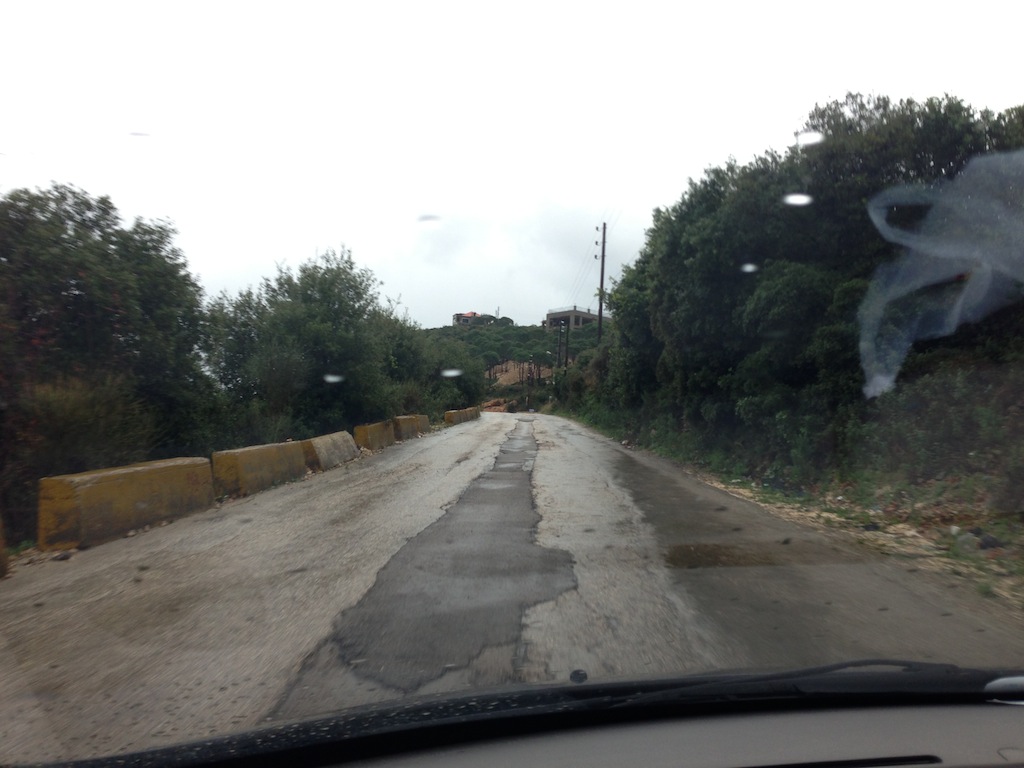
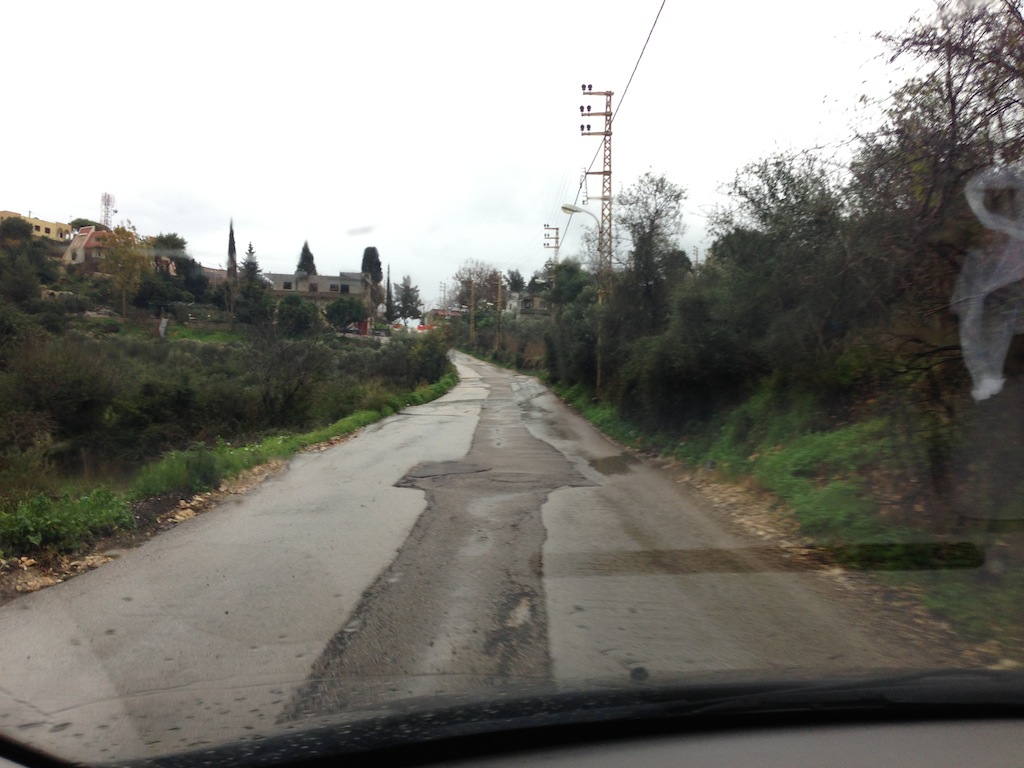
The main road of the Batroun district which spans from the city to my hometown has been in total ruin since June. By total ruin I mean: breaking your car every single time you go up and down the hill, potholes that spring up out of nowhere, four attempts to fix it so far that have all been an absolute and utter failure, newer asphalt of such bad quality that a drizzle suffices to rip it off from the road. And the list goes on.

This started when an ambitious project to lay down sewage and water pipes started. Of course, both projects had different contracting companies so they dug on different sides of the road. Sewage went in the middle, water went on the side. We also had a third contractor to supposedly fix the road once the work was done. If that’s not a waste of our taxpayer money, I don’t know what is.

This isn’t a post about the project which I believe is a must in the 21st century. This is about Batroun’s three main politicians: its two MPs Antoine Zahra of the Lebanese Forces, Boutros Harb who is apparently now an independent (insert insane laughter) and its one minister Gebran Bassil of the Free Patriotic Movement.

Our three politicians should theoretically use this road very often. It is 1) the only way into the main and big villages of the district (Ebrine, Douma, Tannourine) and 2) the way home for both Zahra (Kfifan) and Harb (Tannourine). Haven’t they heard that the situation has become unacceptable? Or are they waiting until our cars have gone to the repair shop twenty three times before they decide to do something about it, perhaps around April or May, just in time to cash in on those votes?

I’m not even sure my district’s politicians know about the road. They sit in the back of their luxury cars with their dark tainted-windows, totally oblivious to the massacre their overpriced car is going through. They go about their business, shake a few hands, have their asses kissed a few times and then head back to Beirut to their fancy mansions where the woes of their district don’t haunt them.

The least I can expect from my district’s politicians is to care about the people of their district first and foremost as the place that may or may not vote them back in come June 2013. If they’re not aware of the situation of their district’s main road, what does that say about them?

Future TV has already visited the area to document the road’s current state and interview a few people in the hopes they’d pin it all on Gebran Bassil. What Future TV doesn’t know, however, is the following: the fact that the Batroun’s caza main road has fallen into the state of disrepair that I will show you in a few without any of the district’s politicians caring is a reflection on 1) how big of a failure they are, 2) how little they care about us outside of our electoral votes and 3) how little they are willing to work if it doesn’t bring immediate rewards.

Accountability is key. If we, the newer generation isn’t critical of how things are run around our own neighborhoods, what do we leave to those on whom the ship has sailed? I refuse to have my first time voting be nothing more and nothing less than a sheep being taken to a ballot.

I, Elie Fares,hereby proclaim that I will not be voting for any of these three politicians come June if the road is not fixed. As an influencer, I will also do my best to strip all three of them from as many votes as I can. I’m sure this article will reach party officials that have been taking my vote for granted for far too long now. Therefore, consider this: kaleim youssal.

These are the untouched & unaltered (except for size reduction) pictures that I took with my iPhone while driving back home yesterday:

Batroun Road Lebanon - 1 Batroun Road Lebanon - 2 Batroun Road Lebanon - 3 Batroun Road Lebanon - 4 Batroun Road Lebanon - 5 Batroun Road Lebanon - 6 Batroun Road Lebanon - 7 Batroun Road Lebanon - 8 Batroun Road Lebanon - 9 Batroun Road Lebanon - 10 Batroun Road Lebanon - 11 Batroun Road Lebanon - 12 Batroun Road Lebanon - 13 Batroun Road Lebanon - 14 Batroun Road Lebanon - 15 Batroun Road Lebanon - 16 Batroun Road Lebanon - 17 Batroun Road Lebanon - 18

The "fixed" part of the road is a hole in itself as evident by the mini-stream flowing through it

The “fixed” part of the road is a hole in itself as evident by the mini-stream flowing through it

Batroun Road Lebanon - 20 Batroun Road Lebanon - 21 Batroun Road Lebanon - 22 Batroun Road Lebanon - 23 Batroun Road Lebanon - 24 Batroun Road Lebanon - 25 Batroun Road Lebanon - 26 Batroun Road Lebanon - 27 Batroun Road Lebanon - 28 Batroun Road Lebanon - 29 Batroun Road Lebanon - 30 Batroun Road Lebanon - 31 Batroun Road Lebanon - 32 Batroun Road Lebanon - 33 Batroun Road Lebanon - 34 Batroun Road Lebanon - 35 Batroun Road Lebanon - 36 Batroun Road Lebanon - 37 Batroun Road Lebanon - 38 Batroun Road Lebanon - 39 Batroun Road Lebanon - 40 Batroun Road Lebanon - 41 Batroun Road Lebanon - 42 Batroun Road Lebanon - 43 Batroun Road Lebanon - 44

Zero Dark Thirty [2012] – Movie Review

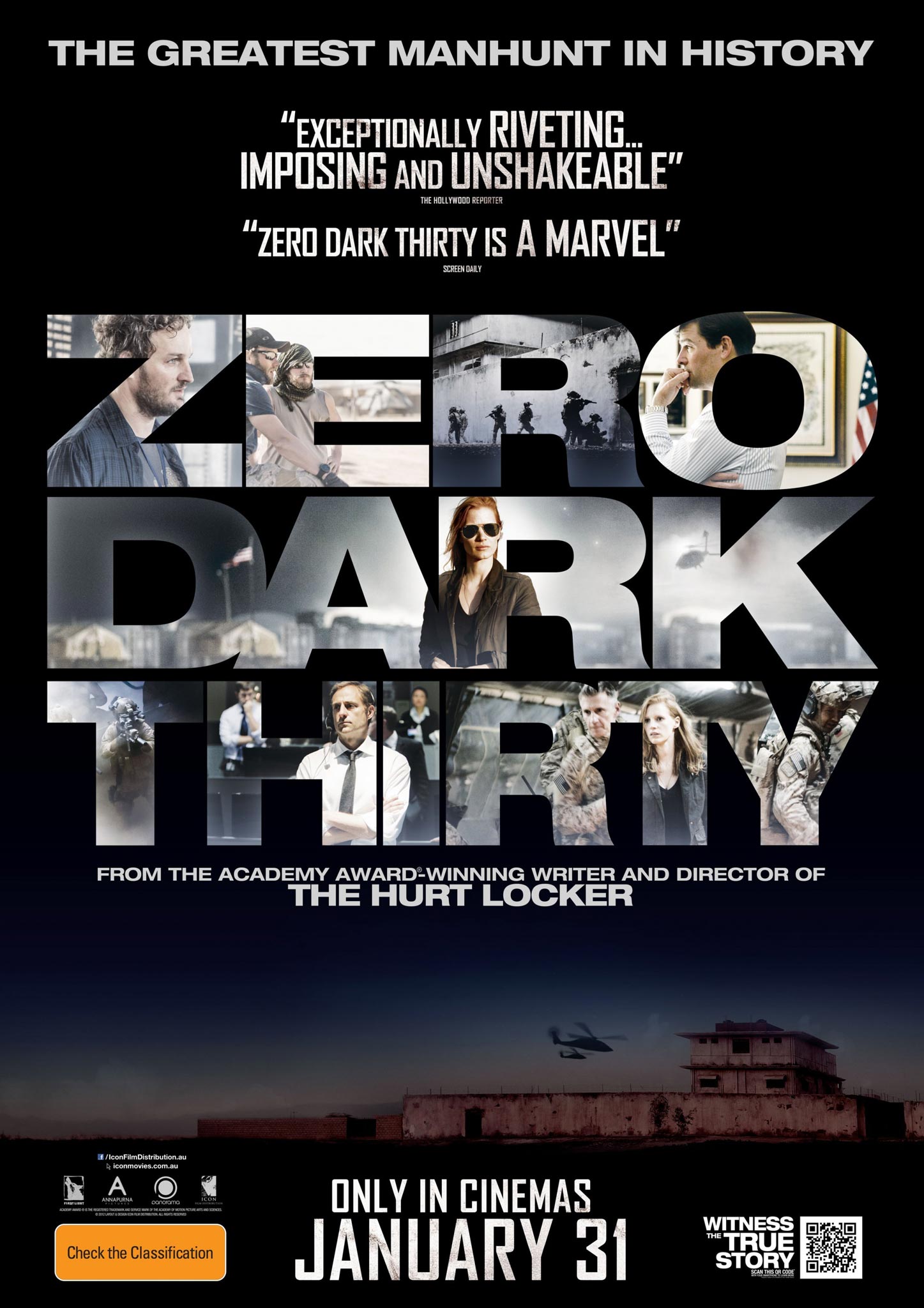
zero-dark-thirty-poster

Here it is. Arguably the most challenged American movie of the year (a recipe for those little golden statuettes): Kathryn Bigelow’s Zero Dark Thirty. U.S. Senators of both parties came out against the movie because it portrayed the use of torture in many of its scenes in order to extract information about the whereabouts of Bin Laden. You know, because the CIA surely did not use torture. Ever.

Zero Dark Thirty is the story of CIA agent Maya (Jessica Chastain) on her pursuit of Al-Qaeda leader Osama Bin Laden over the course of a decade. The torture methods her agency employs, which include but are not exclusive to food and sleep deprivation and waterboarding, lead her to a man called Abou Ahmad Al-Kuwaiti who, for every single non-idiot person out there, obviously comes from Kuwait. Except it’s not as obvious for the movie’s CIA agents who spend more than an hour of the movie’s 157 minutes running time on a manhunt before realizing that – GASP – Al Kuwaiti means he is from Kuwait. As they search for Osama Bin Laden’s main means of communication with the outside world, these CIA agents are faced with people who don’t want them to succeed leading to terrorist bombings in CIA headquarters, of fancy hotels, of different capitals around the world and a lot of exasperated agents who can’t fathom how they would be targeted as such.

It seems the dreadful The Hurt Locker did not satisfy Kathryn Bigelow’s appetite for American neo-political-military-award-magnet-dramas. I mean, why wouldn’t she tackle the same theme in one way or another all over again to become the first female director to win best director at the Oscars twice? Therefore, Bigelow is at it again. And Zero Dark Thirty includes not only every single thing I hated about The Hurt Locker but much, much more as well.

Jessica Chastain’s character Maya is definitely unlikeable. I hated her character to the extent that I couldn’t even appreciate her acting performance. She came off as grating, whining, overly melodramatic at times especially in a shouting scene with a CIA chief in Pakistan when she asks for extra man power in a man hunt that had been proving futile at that point. However, this type of performance is definitely the type to draw in award-voters: a charismatic female character at the heart of a male-dominated institute in the midst of the hunt for the world’s most wanted man? I can hear those voters orgasming already, which is a damn shame because if she ends up winning, she most certainly does not deserve it. Her strongest scene is right at the movie’s end as she silently reflects on the end of this decade-long era of her life. But even that scene’s potency isn’t enough.

One thing to say about Zero Dark Thirty, however, before I start grilling it is that Bigelow does well directing the movie from an “artistic” point of view. Some sequences are very well filmed, especially the raid on Bin Laden’s compound, and the movie is very technically proficient. However, a political movie like Zero Dark Thirty necessitates a politically oriented review. So here it goes.

Zero Dark Thirty is an insult on your intelligence. If there’s any movie which will get you outraged at its inaccuracy, it’s this. As a movie which wants to give itself authenticity by going the whole mile and asking you to “witness the whole truth,” it only comes off as mass propaganda about how the CIA is making the world a better place just by them being there and it portrays all those filthy Arabs living in these parts of the world as the scum of society: Muslim terrorists who can’t wait to blow up some Americans.

As they hunt for Abou Ahmad Al-Kuwaiti in some Pakistani city, the CIA van is stopped by Pakistani men. One of the Pakistanis driving gets out of the van in order to reason with the armed youth. “Shou ya chabeb?” he asks them in arabic – levantine Arabic no less – for: what’s up guys? A simple wikipedia search would have told Mrs. Bigelow that Arabic is, in fact, not spoken in Pakistan or any -stan ending country. But why would she care? Arabic-language, terrorist, Pakistan… it’s all the same for her intended audience. In fact, the movie’s scenes in Pakistan feature less Pakistani than Arabic, which is odd and definitely not “witnessing the truth” or as American critics are saying: “a movie reveling in keen detail.” Since when do Pakistanis speak Levantine Arabic?

The use of Arabic in the movie doesn’t only stop at Pakistan, it extends to various interrogation scenes where someone has to translate to Chastain’s character what the man is saying. Fair enough.

As one of the CIA agents sets up a meeting with a supposed worm within Al-Qaeda around Christmas time, she is found talking to Chastain’s character about baking a cake for the man to which Chastain replies: “Muslims don’t eat Cake.” Really? In fact, the entirety of Zero Dark Thirty doesn’t even bother to draw the line  between a religious extremist and a Muslim: it gets the boundary between the two to be so blurred that it’s so easy to confuse one with the other, making the entire movie not only highly stereotypical but highly nauseating and shallow as well.

For an American viewer, Zero Dark Thirty is definitely fascinating and I was even taken by its earlier scenes before the rhetoric started. American movie critics who don’t understand the other languages spoken in the movie and don’t have the ability to tear the movie apart from a non-cinematic perspective won’t care about the aforementioned points. Arabic, French, Pakistani – who cares? American movie critics believe that the way the hunt for Bin Laden was dramatized is chilling. They believe that the movie is politically non-biased. For those of us who can actually read into Bigelow’s Zero Dark Thirty, it only comes off as severely culturally-inaccurate and offensive.

Bin Laden was a bad man. He killed a lot of innocent people and I’m glad he’s dead. The CIA and whichever other intelligence agencies that helped the Americans to catch that filth of a man need to be commanded for their job. But this movie is not the way. Zero Dark Thirty wants to be the definite movie about the Bin Laden manhunt. Bigelow wants the honor of being the first and last director to tackle this issue. But that is far from the case. Again, while technically proficient, the movie is not perfect. It is too slow at times and at other times, when it moves, it is only like an arthritic ninety year old man. The first twenty minutes of torturing a Saudi are chilling to watch. They are followed by almost 90 minutes of scenes that might as well be considered as an antidote to insomnia before delivering again with the Bin Laden killing scene.

By aiming to be technically proficient, Zero Dark Thirty undercuts itself by becoming emotionally detached from the material it’s trying to portray. By showing torture scenes that more often than not lead to no-tactical results, the movie is amoral. By turning the entire struggle of all of 9/11’s victims, as it starts with real-life audio from the twin towers on that horrible day, into a vehicle for Chastain and Bigelow to cash in on some rewards, the movie is also despicable. By portraying every single non-American aspect of the movie in such gross inaccurate ways, Zero Dark Thirty is horrendous. Zero Dark Thirty is, eventually, over two and a half hours of pure propaganda that is not only offensive to the memory of the Americans who died on 9/11 but to a lot of viewer’s mental capacities.

You know what’s common between Bin Laden and Zero Dark Thirty? They are both horrifyingly bad and an abomination to existence.

1/5


Lincoln [2012] – Movie Review

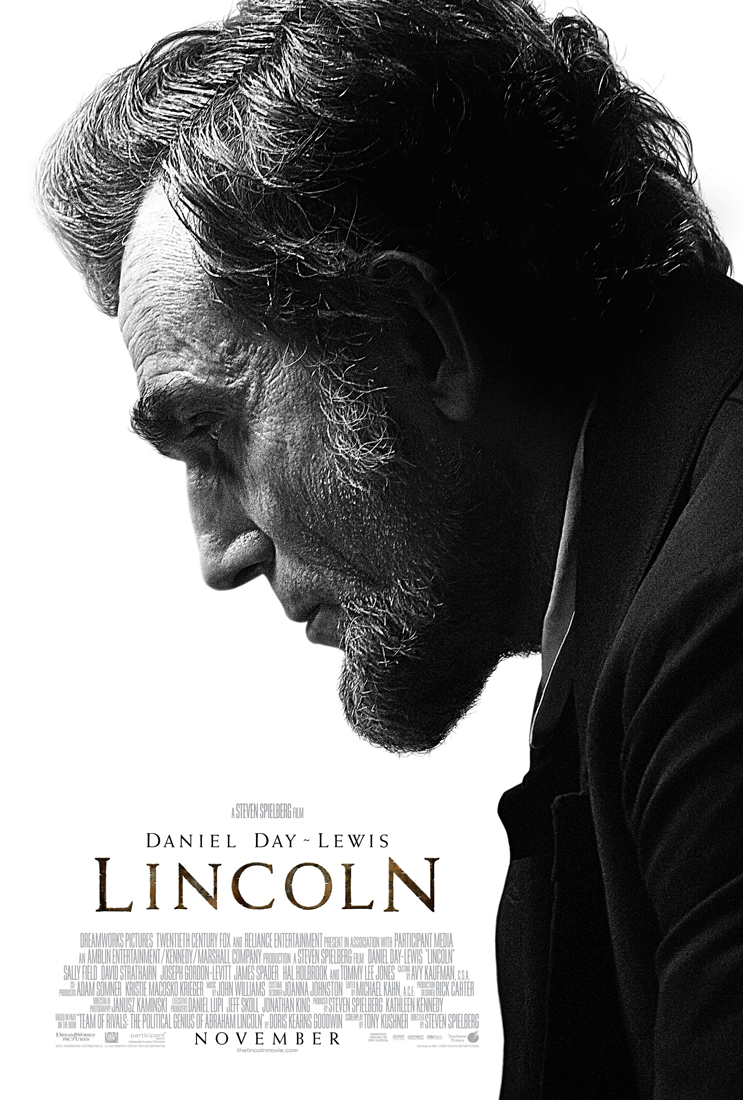
Lincoln Movie Poster

Steven Spielberg’s new movie, Lincoln, is the American Civil War-era story of the United States’ 16th president on his quest to get Congress to pass the 13th amendment to the constitution, effectively ending slavery, something he wants done before his inauguration ceremony for the second term which he had just won. In order to do this, he must gather a 2/3 majority in the House of Representatives – one that goes beyond the 56% majority that his Republican party held and into Democrat territory, a party that is staunchly against such a thing.

Lincoln is Spielberg’s best movie in a long time, something that is definitely helped by the fact that the director has been fascinated by Abraham Lincoln since he was a little boy. In this highly dignified portrait of the late American president, you are invited to delve into a world of charged polarizing politics on a story with an undertone of liberty and humanity. The movie can be divided into two halves: A strong first half sets the tone – the era, the characters, the entire situation and its framework.  The even stronger second half shows how the wheels set forth in the first half play out.

The true gem of Lincoln and what helps elevate this movie into a masterpiece is Daniel Day Lewis who incarnates the character he’s portraying to the letter – from the mannerism, to the tone. Lewis’ subtle, engaging, deep and highly emotional performance is one for the ages. His portrayal of the late American president is spot on in every sense. It never wavers, never falters, never drops from the standard that is set with the movie’s opening scene down to the last frame. He adds a sense of humanity to the commander in chief: a man who tells stories, laughs at his own jokes, cares deeply for his family. This sense of humanity gives the character an entirely new dimension.

Daniel Day Lewis is helped as well by chilling performances by Sally Fields and Tommy Lee Jones. Fields plays Mary Todd Lincoln. As a mother, she’s afraid for the life of the sons she still has and as wife, she’s growing more distant by her husband’s coldness towards her after the death of a child that she blames on him.

Tommy Lee Jones plays Thaddeus Stevens, a “Radical Republican” congressman whose goal in life is to establish equality between America’s black and white populations.  Jones is the only character in this movie that knows, deep down, that blacks are equal to whites in every way. The hurt that his character has to go through as he’s forced to tone down his convictions is passed on convincingly in a multi-layered and highly engaging performance.

However, not all acting performances in Lincoln are as great. Joseph Gordon Levitt, for instance, as Lincoln’s oldest son who wants to enroll in the army but is forbidden by his protective parents never quite finds his footing, causing the father/president-son story arc to falter and be less compelling than it could actually be. The father-son story that is interesting, however, is Lincoln’s relationship with his younger son Tad, played by Gulliver McGrath, as a young boy who wants his father to curl up next to him besides the fireplace and look at portraits of slaves who should be freed.

Tony Kushner, who wrote the screenplay for Lincoln, did a great job at turning a mostly dialogue-driven movie into something that doesn’t drag on and, despite the extensive running time, doesn’t feel overstuffed. His take on the story is very focused and specific which in itself is a very good thing if you’re familiar with the history behind the movie, which I believe every American viewer is and should be. In a way, it is the screenplay that sets Spielberg in a certain framework that helps him not turn the movie into an overly melodramatic mess but to give it a documentary grit. However, many non-American cinema enthusiasts, who will end up watching Lincoln because of the attention it’s garnering, might end up being overwhelmed by the details causing them to care less about the story which should be front and center and seek entertainment in the acting performances that I’ve previously mentioned or other attributes that I will mention subsequently.

What helps Daniel Day Lewis in his Lincoln incarnation is a stunning make-up work that transforms the actor’s face into that of the late president’s identical twin. In fact, Lincoln is bolstered by a technical team that spans from the aforementioned makeup to the cinematography to the sound mixing to the art direction. Almost every aspect of this movie is taken care of in a way to ensure authenticity.

Lincoln is a highly engaging and entertaining film, one that stops being a historical portrayal and becomes a character study of what many Americans believe is one of their best presidents. By becoming a character study, Lincoln also becomes a movie about politics which are the wheels that get the movie rolling: how these characters interact to make legislation, how these characters use each other’s flaws in order to advance their agendas, how this presidential character so deeply believes in the sanctity of freedom, how this presidential character wants peace for his nation and for himself.

If I were an American, I’d be proud to have a movie such as Lincoln portray one of my presidents.

9/10


The Maturity of Lebanon’s Educated Youth

Students from party X at some university in this country were offering Christmas candy. They run across students from party Y who refuse to take their candy.

Therefore, a student from party X has a shouting row with another student from party Y. They start fighting. Their buddies join in. Soon enough, a bunch of students from party Z see the fight and join in with their political allies Y. They can’t leave 3dam l ra2be (their backbone) alone like that.

That’s one version of the story. Other versions exist. All versions don’t matter. You can substitute X, Y and Z to whichever current Lebanese political party that gives you peace of mind.

The result is several bloodied students who, after having the bejeezus beaten out of them, are posing for pictures with their favorite political sign while they sit on a gurney in the back of an ambulance. Their pictures are then shared by other educated students who support their political movement. Exhibit A:

Taratattata to the hospital! Woohoo!

Taratattata to the hospital! Woohoo

Sadly, at the time of writing this, I didn’t have pictures from students from other political parties.

The previous picture held the caption “till martyrdom” by the other student that shared it. It seems martyrdom these days has become about fighting for Christmas candy rights.

The following day, students from those same parties but at an entirely different campus found themselves in an even worse fight. The details are irrelevant. People will believe what they want to believe. However, this is what’s becoming more and more certain:

This educated youth that our fathers and forefathers (and mothers) are counting on to help better the crappy state of our country is absolutely hopeless. Be it from those who are starting the fights over absolutely meaningless things when they’re supposed to be attending classes to those who are proud and sharing these people’s pictures on Facebook with all kinds of praise.

If the educated youth of Lebanon which should give the country hope are as brain-dead as the current ruling class and if these educated youth are the ones behaving like this, then what have they left to those who are less educated? You know, those people we love to hate because they’re poor and illiterate and easily driven by politicians?

What’s worse is that these people who made a fool out of themselves and out of the political parties they represent will not be reprimanded. On the contrary, their corresponding political leader will congratulate them for standing up to injustice. For standing up to what’s right. For believing in their party’s principles. For defending their brethren’s honor. For not letting those despicable others leave without broken noses. For being mature enough to know right from wrong. For taking a stance… all for some Christmas candy-coated political crap, in the time of forgiveness and all that jazz.

‘Tis the season not to turn your back and leave confrontations but to offer people a bloody eye while you ditch your course to spread Christmas glee. Merry Christmas!