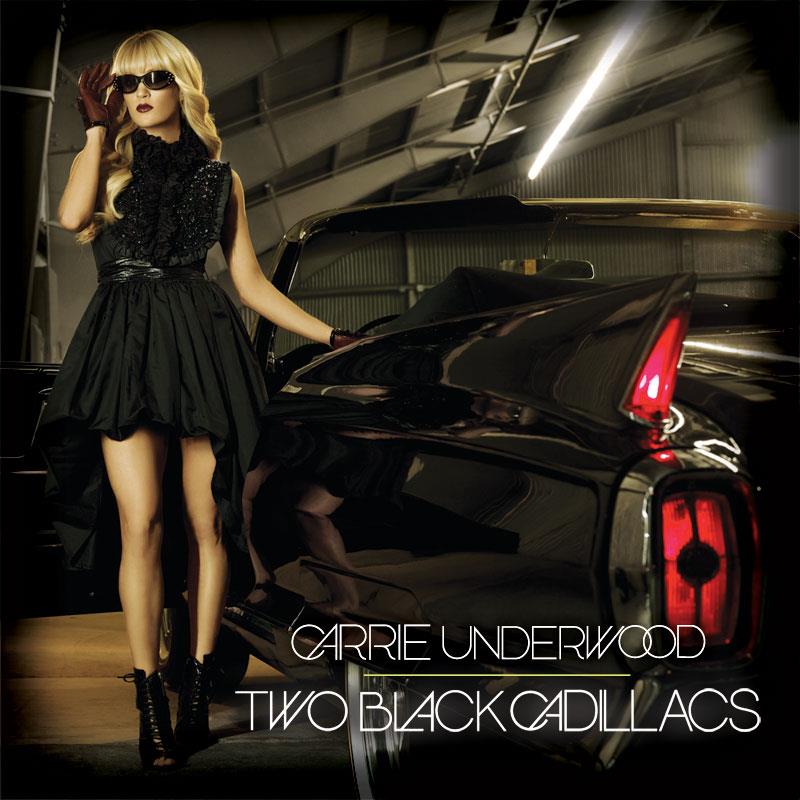
Two Black Cadillacs (Single Review) – Carrie Underwood


Carrie Underwood’s new single, off her platinum selling album Blown Away and as a follow up to one of 2012’s biggest country hits Blown Away, is Two Black Cadillacs, a song which sets an ominous tone the moment the first note strikes.

Two black Cadillacs driving in a slow parade. Headlights shining bright in the middle of the day. One’s for his wife, the other for the woman who loved him at night, Underwood sings as a dramatic melody plays in the background. She immediately throws us into the setting of a funeral where a preacher man is saying the man being buried was a good man and his brother says he was a good friend.

But the two women in the black veils have a secret to hide. The story could very well serve to make a movie drama and Underwood delivers it effortlessly in a few minutes.

Two months ago his wife found the number on his phone, turns out he’d been lying to both of them for far too long. They decided then he’d never get away with doing this to them, Underwood lets the plot thicken. The women, taking turns in lying a rose down on the coffin and throwing dirt into the deep ground, also have a secret to hide. So they share a crimson smile and leave their secret with the man they killed, at the grave, to die with them.

Two Black Cadillacs is a hauntingly dark song by Underwood that serves as a one-two punch by the country star as she delivers her album’s most critically acclaimed tracks as back to back singles. The darkness with which her tone delivers this song would make you think she’s lived these events herself but it’s only telling of the caliber that Underwood has turned into as a performer. As she sings “bye bye” to signal the women biding farewell to the man who betrayed them both, you can feel her voice pierce through.

Two Black Cadillacs is a song where the musicians playing couldn’t stop after it was done so they kept playing and playing. Part of them jamming is found on the album track and will probably be cut with the radio edit. The song goes fifty shades deep and is Underwood’s darkest and most thought-provoking single release to date. From the haunting thumping melody that is reminiscent of a funeral march to the rich and multi-layered storytelling lyrics, Carrie Underwood delivers. Releasing a “softer” song may have been a safer bet. But Underwood is here to let her detractors know that Blown Away was just a storm warning. Bye bye, bye bye. 

A.

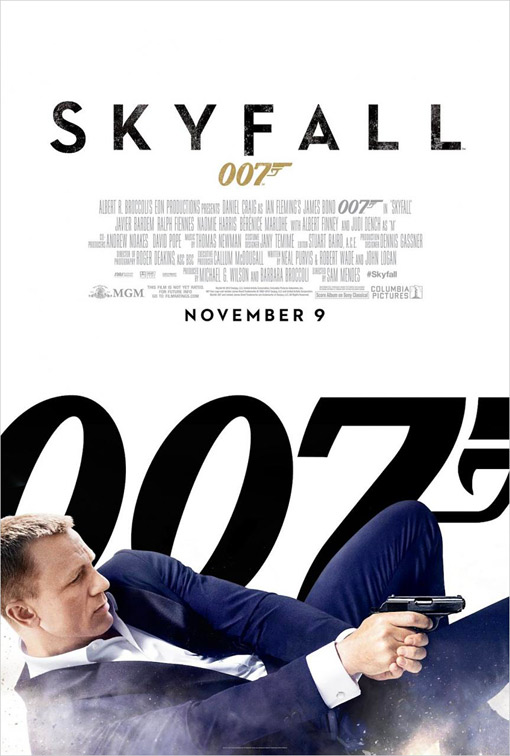
Skyfall – Movie Review

This is the end. Hold your breath and count to ten, Adele croons as Skyfall’s breathtaking opening scene comes to an end. A car-turned motorbike-turned train chase in the busy streets of Istanbul is as big of an adrenaline rush as you can get. The one-two hit of Skyfall‘s opening ten minutes is more than enough to keep you hooked in your seat for the ride that is going to unfold.

James Bond is assumed dead. MI6 is threatened, right in its heart. And M is taking all the blame for it. But she is resilient and set to find out who’s the player in the shadows causing all this mayhem – after all, it can’t but be someone she has worked with before, someone who knows MI6 as well as she does. Could M and James Bond finally meet their match in the series’ most unhinged villain, so reminiscent of The Dark Knight‘s “The Joker” in its complexity?

Daniel Craig’s greatest legacy as James Bond is bringing humanity back to the character. Long gone are the gimmicks, the overt supernatural technologies that filled installments such as “Die Another Day.” Long gone are the days of James Bond being near indestructible, near invincible. Long gone are the days where James Bond doesn’t show his emotional side. Long gone are the days where James Bond is just a killing machine that doesn’t fail physical tests, doesn’t get shot. Long gone are the days where James Bond is anything but weak. We had gotten a glimpse of that with Casino Royale. It slipped in the horrid Quantum of Solace. But Skyfall is a great return to form for the character and the actor.

Judy Dench as M is captivating as the wounded agent who has given her life for the agency that’s now crumbling before her eyes, trying so hard to cling to the only thing she’s ever done well and terrified at the prospect of having everything she knows change.

The new additions to the roster such as Ralph Fiennes and Javier Bardem do exceptionally in their corresponding roles. Skyfall boasts a terrific British cast that knows what they’re doing every second they are on screen.

Sam Mendes, the director of this installment, has to be credited for breathing new life into a series that seemed to be nearing its final breath with Quantum of Solace, a movie that threatened to bring the reboot to its knees. His take on the franchise roots it in the real world than any other 007 entry, making Skyfall oddly relatable and passionate for a movie about a spy agent.

Skyfall is definitely an addition to the 007 series to be proud of. It is a movie that will make you stand tall after it’s done and as everything crumbles around our favorite agent. The lengthy run time of over two hours will feel surprisingly short as you’re immersed into their oddly familiar world. I believe it is one of the best 007 movies of the entire series. And as the movie reaches its climax, you realize that Skyfall is where it ends. Skyfall is also where it begins again. So hold your breath. And count to ten.

9/10

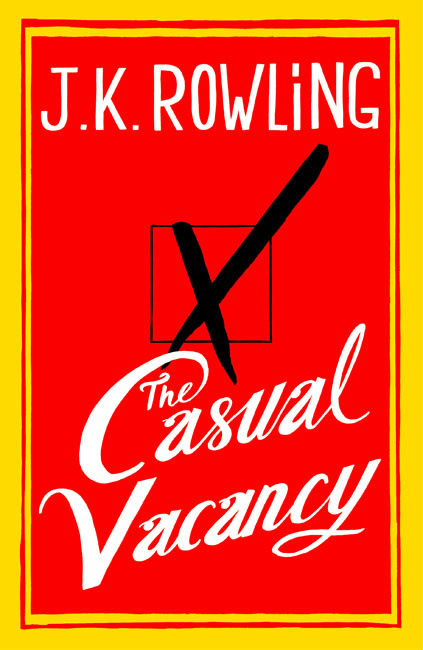
The Casual Vacancy (Book Review) – J.K. Rowling

J.K. Rowling’s first book for adults, The Casual Vacancy, is the negative film of her previous work: the Harry Potter series. It is set firmly in Muggle land. It is as disenchanted and grim and dark as it goes. And worst of all? It is gut-wrenchingly real.

Set in a small English town called Pagford, The Casual Vacancy opens with the death of Barry Fairbrother, a fair-tempered man on the town’s Parish council and a role model for many, especially Krystal Weedon, a deeply troubled teenager living in the poorest part of Pagford: the Fields.

For many, Barry’s death due to an aneurysm is a sad event that wouldn’t cause a ripple. But for some citizens of Pagford, Barry’s death represents the opportunity to change: to get the Fields off of Pagford’s back and onto that of the bigger town nearby and to shut down the rehabilitation clinic that has become an economic burden on them.

The deeply divided Parish council members represent their deeply divided families. Parminder Jawanda, a general practitioner coping with the death of closest ally, requires much more from her youngest daughter than she’s willing to give. The pressure from her parents, coupled with ridicule from her peers, lead Sukhinder to cut herself to seek relief, in the corner of her bedroom where no eyes can see her self-mutilation.

Collin Walls, a deputy headmaster with a serious case of paranoia and Barry’s best friend, is horrified at everything that goes on and immediately comes up with the most cataclysmic scenarios of which he is front and center. He wants to fill Barry’s shoes and continue his work but he knows deep down that he’s beyond unfit for the job. His son, Fats, doesn’t help in easing things for his dad. On the contrary, his eerie approach to life makes things harder for everyone around him. Honesty was his currency – he believed it frightened people when you were honest because most of them are filled with embarrassment and pretense.

Andrew Pierce can respond to his father’s blows very aptly – but only mentally. He has to endure mental and physical abuse from his father, a corrupt man, day in day out against his young brother, Paul, his mother, Ruth, and himself. His bloody cheeks and swollen eyes are always caused by his clumsiness as he falls off his bike. Always.

Howard Mollison, a beyond overweight snobby man, wants to get his son Miles to replace Barry on the council and finally secure the majority vote he needs to go through with his plans. He sees in Pagford as the elite place in the entire country. And he considers himself to be the first citizen of Pagford, a belief that is shared by his wife Shirley. Samantha, Miles’ wife, is unhappy with the slum that her life has become. She seeks relief in fantasies about her daughter’s favorite boy band and finds refuge in the idea of her beyond the confines of the small town she has become to hate as her husband pursues goals that would further cement him on the cobbled streets she despises walking on.

And Krystal Weedon, living in a toxic environment of drug use and prostitution and child abuse, has to cope the best she can to give her three year old brother, Robbie, the life that he deserves and which her mother, Terri, cannot begin to provide with her relapsing to shooting up needles into her arm whenever she faces the simplest difficulties and bringing men to have sex with right in front of her son as a form of payment for the crack her veins crave.

The Casual Vacancy is black comedy. It is a book that will feel humorous – a sort of satire of all our communities – until it really sinks in when you delve into the misery of it all and once it goes deeper into breaking the facade that people give to others in order to keep their image poised. Even the villains of the book, the Mollisons, have people with whom you can sympathize and who, after a gin or two, will get you to laugh even in the book’s bleakest moments.  The Casual Vacancy turns into a comic tragedy – one that feels so real that the reading becomes riveting and you unable to put the book down. The pages keep on turning and your mind keeps on consuming this suburban life, this lack of magic, this reality of it all.

The Casual Vacancy is the story of small community, one that most of us hail from. A community where you know who the “town whore” is and you still see people smile out of courtesy, as if they are clueless, when she passes by. A community where you know who the poor people are and you feel disgusted when they pass by, despite you preaching about moral responsibilities for ears that would listen. A community where drug addicts are ostracized and where those who are the worst possible candidates for a certain position end up winning and where mothers and fathers treat their children badly without them even knowing.

It is the injustice of it all – one that even culminates in the not happy ending – that makes The Casual Vacancy so believable. There isn’t a moment on those pages that feels odd. If anything, some of what happens there may be too morbid. But it still beats against you like the pulse of blood behind a wound. The Casual Vacancy is a brave book by an author who was brave enough to leave her home turf into uncharted territory. And she excels at it. It is a joy to read how many parallel plots can be unleashed simultaneously without them even getting remotely tangled – except when J.K. Rowling wants them to.

The Casual Vacancy is a deeply moving novel and morality, mortality and the importance of responsibility by an author that understands these elements very well. But where Harry can apparate to wherever he wants (except Hogwarts of course because you should have read Hogwarts, A History by now) and flick his wand to solve some impeding problem, the well-developped characters of The Casual Vacancy have to settle for the mundane to get by in their densely-imagined, well-crafted and exquisitely written world, not very unlike ours. It is the story of all the casual vacancies in the hearts and souls of these people as they strive for normality and for acceptance.

9/10

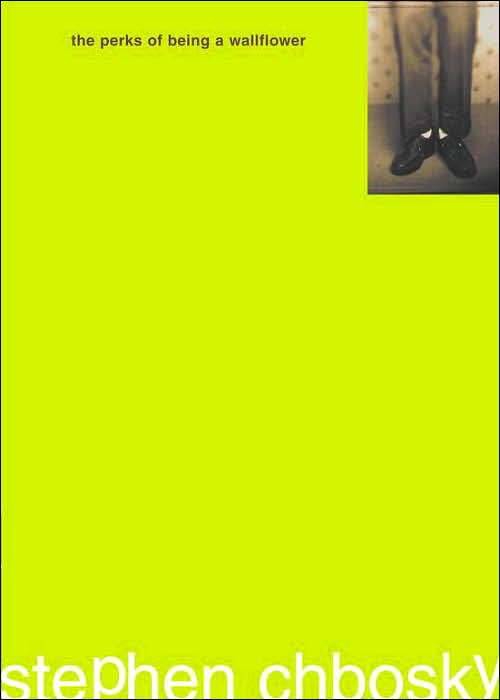
The Perks of Being a Wallflower (Stephen Chbosky) – Book Review

I started reading this book this morning. I am reviewing it in the afternoon. If this isn’t a testament to exactly how “captivating” it is as a read, I don’t know what is.

It’s 1991. Charlie is a fifteen year old boy about to start his freshman year of high school. And he’s terrified. Especially after one of his friends commits suicide a few months earlier. The only way he manages to cope with the looming idea of what awaits him is to write letters to a “friend” who doesn’t really know him, with no return address and no way to trace back the letters.

The letters he sends are, more or less, diary-like entries: elements from his every day life that he feels are important to share, events that he feels are shaping his life, changing him and making him grow up. During his freshman year, he meets Sam and Patrick, two seniors, who accept him in and show him the life that they’ve been living. Be it driving in Sam’s truck through a tunnel with her standing in the back feeling in the fresh air to experimenting with LSD and pot at parties to opening up to sexual experiences.

Sam and Patrick, and later on their other friends, open Charlie’s eyes to a wide range of opportunities in life that he’s unfamiliar with. They call him a wallflower: a person who listens, observes, doesn’t talk about things and understands them. They make him feel included. They make him accepted. His advanced English teacher, Bill, realizing Charlie’s brilliance, starts giving him extra readings to do, shaping up this young man’s life. And in doing so, the new additions to Charlie’s life help him cope with the dark past that he is oblivious to and which lurks under his skin, ready to surface at any moment.

Published in 1999, The Perks of Being a Wallflower is a much deeper book than it seems to be. It is easy to categorize it as a simply a teenage trashy book simply because of its general mood. But when you know that this book is one of the most challenged by parents in the United States, you are forced to reconsider. Why do parents feel The Perks of Being a Wallflower is “dangerous” to their children? Because the themes the book deals with are gut-wrenchingly real and they are dealt with in such a brilliantly realistic manner. Drugs, pregnancy, abuse, sexuality – all of these topics that matter to teenagers are approached in the book in a way that isn’t complex. The writing is very simplistic, approachable and easily comprehensible. At the same time, the book runs deeper than the easy language it boasts.

It is a coming of age book, like the story of its protagonists, that is candid. Charlie shares his stories with remarkable honesty, pulling you into whatever emotional state he conveys in his letters. When he’s happy, you can’t but smile. And when he goes into dark phases of depression, you can’t but empathize. The Perks of Being a Wallflower is a collection of Charlie’s most important moments and his realization of the need to live those moments as much as you can, be it a shortcoming or a victory.

As Charlie discovers that he likes girls that are unconventionally beautiful to books that require him to be a filter not a sponge to the realization that truly loving someone is about wanting to see not hurt at all, even if it means being apart, you see him grow on the pages in front of you and transform from an insecure kid to a growing young adult. And as he comes to the realization that in order to reach his full potential in life he needs to stop being a wallflower, you can’t but share his infamous sentence and say it out loud: “And in that moment, I swear we were infinite.”

Teenagers should read more of this and less of Justin Bieber related things.

8/10

Early Reviews For Harry Potter and the Deathly Hallows – Part 2

The Harry Potter series is concluded with the last installment in its movie adaptation set to be released in less than a week’s time and with it a great chapter in the lives of many comes to a conclusion. And if you haven’t done so already, check out 13 Reasons to Love Harry Potter.

For those of us who can’t handle any sort of wait when it comes to Harry Potter, we resort to reading movie reviews before we actually get to see the movie. So I’ve decided to make a spoiler-free compilation of what top critics have said about the new movie so far, soon after its premiere a few hours ago in London.

Reuters write that the final movie is a statistical anomaly in the Harry Potter series since it brings its A-game from start to finish. They say if you’re a Harry Potter fan, you will come out of the movie with a sense of catharsis and a slightly damp handkerchief. They wrote that the movie’s running time of about 130 minutes was too condensed to fit everything that it felt sort of rushed and that this was the only flaw in the movie. The actors and actresses brought their game on and screenwriter Steve Kloves wrote a screenplay that doesn’t dwell on explaining to newcomers as much as it delivers to veterans.

Todd McCarthy from The Hollywood Reporter’s review can be summarized by: “An outstanding capper to the most lucrative film franchise of all time.” He commended the series for giving viewers an astonishing, gripping and exhilarating ending. He spoke about Steve Kloves’ very well-done screenplay as well as the eye-popping visual effects that don’t even need 3D to grab you. The performances of all the actors are actresses was described to be top-notch, saying that the movies have always been spot on with the casting department, hiring the best of the best British actors and actresses. Even the trio Daniel Radcliffe, Rupert Grint and Emma Watson get to spread their wings in this one and shine.

Variety’s Justin Chang writes in his review that the end surges ahead with urgency, spell-binding spectacles and overwhelming emotions. At 131 minutes, this is the shortest movie of the series. Why the rush, he asks, since such an ending deserved a longer running time for more catharsis. He expects this installment to garner in more revenue than the series’ most lucrative first movie. He complemented director David Yates and screenwriter Steve Kloves for their work in making this movie better than the first part, making for a more exciting cinematic experience. He says the movie builds up to a great moment which he thinks fails since it doesn’t really capture the magic in Rowling’s universe. But he says that everything is taken to an immaculate standard in the movie, making for a highly satisfying conclusion.

Peter Shaw from The Guardian writes that the Potter saga could have hardly ended on a better note. Saying that previous movies had begun to sag, this final piece brings back the magic to the Potter legend. He says it’s even superior to T.R.R. Tolkien’s The Return Of The King. The spectacle is grand, marvelous and dramatically satisfying, justifying the two-movie split. He says he was on the verge of tears in many moments of the movie to show the immense amount of emotions that this finale held. He said the movie reminded him of the thrill he had watching the first movie 10 years ago.

Grant Rollings from The Sun described the movie as too much to bear. In the good sense that is. When their preview ended, people were wailing in the theatre for the end of such an era. He says that our favorite boy wizard gets the send off he deserves and in glorious 3D to top off the magic. He describes the movie as epic, dizzying and thrilling, even before the movie reaches its long-awaited climax. He says the movie makes brought everything out for this final film but said Daniel Radcliffe could have brought his game up. He concludes his review with “a terrific movie and a great British success story.”

The Dailymail’s Baz Bamigboye found the final installment in the Harry Potter franchise to be more than satisfying. He found it to be thrilling. He watched the movie with child-like wonder, taken away by how much the actors and actresses (especially the trio) grew up over the course of the eight movies. He counted over 1132 names in the ending credit. He says they’re probably out of a job now. But “what a way to go.”

The Telegraph commended director David Yates on making the movie a terrifying spectacle where the central trio does not disappoint and nor do any of the other actors and actresses of the movie. They even believe that screenwriter Steve Kloves fine tunes some of what they described deficiencies of the final book, to grasp the epic feeling instilled in the movie. They say this is “monumental cinema awash with gorgeous tones, and carrying an ultimate message that will resonate with every viewer, young or old: there is darkness in all of us, but we can overcome it. This is not an end. How could it be?”

And since I’ve said over and over again that this movie is looking to be a serious Oscar contender, Emmanuel Levy shared my view in his review, in which he gave the movie a grade of A-. He wrote: the finale does justice to the whole series. And even though Academy Award members are known for their short memory, this movie should be in serious consideration for a multitude of academy awards such as best screenplay for Steve Kloves, best director for David Yates, best supporting actor for Ralph Fiennes in his chills-inducing performance of Lord Voldemort and best picture, as well as a nomination in every technical category.

I’ll be watching Harry Potter and the Deathly Hallows in an early Lebanese screening on July 13th and I will review it immediately afterwards. When will you catch this brilliance on screen? It will not disappoint you. After all, how many movies with a unanimous critical approval fail to match their hype? This will not happen with Harry Potter.

And for good measure, watch the trio along with J.K. Rowling saying goodbye to the series at the London Movie Premiere.