Lebanon, Screw This

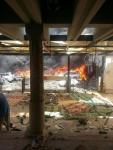
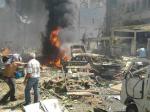
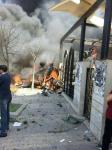
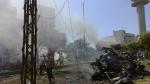
It’s been one week since our news broadcasts last cut out regular useless programming to let us know that a part of our country was burning to the ground following an explosion, that people were dying, that terrorism had struck yet again.

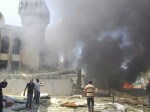
It’s been one week since innocent people lost their lives just for being at the wrong place at the wrong time. Last week, those people were shopping. This week, those same people were praying. How many more wrong places and wrong times are we supposed to accept as a justification to the absolute hell we are living through?

What is the current situation in Lebanon? I don’t really know. There’s no diagnostic criteria to follow to really ascertain how deep this goes. There’s simply a sense of “if no one I knew died then it’s sad but forgettable” that’s roaming around. Till when are we supposed to be happy that someone we know didn’t die just because he was at the wrong place at the wrong time?

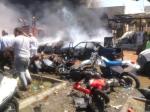
Till when will our media worry first and foremost about the explosion being in the proximity of a politician’s house, one that he barely uses, then after making sure that politician was okay turn around to examine the possibility of other irrelevant casualties like you and me and then parade their burnt corpses for sheer shock value left and right – except those pictures don’t even shock us anymore?

What is this country in which you are forced to worry about doing the most mundane of things just because you might die doing them? What is this cause that needs to target people who are praying? What is this cause that needs to target people who were shopping?

Why are these causes and wars entering our country through open wide doors? Why is my country always getting screwed, always in a state of violence?

What is this need for people to start throwing blame on those who satisfy their rhetoric of choice just moments after an explosion, while the wounded are still bleeding and the victims have still to be found?

What is this life in which our mothers waste all their tears away, worrying for our sakes, while the only thing that we might have done is drive past a street that ended up becoming ground zero a few minutes later? Till when will our fathers regret not leaving and establishing our families in countries where they don’t have to worry about their sons and daughters meeting their demise on the blown up tarmac, resting on blown up concrete?

How further can our cities handle being ripped apart this way? How much more can the people of Tripoli take in a city that has not only been destroyed by gun violence but now has an affinity for explosions as well?

What is this life in which a strange car on your home street can cause you insomnia? What is this life when your own home doesn’t feel safe anymore?

How is this any different from the times they want us to believe are long gone, “tenzeker w ma ten3ad?” How further down the abyss will every single one of our politicians take us now that they have yet another opportunity to get their rhetoric to sink further, to let their anger seep to surface even more, to let people hate each other more than they already do?

All the words resonate emptily. All of our mothers’ tears fall down on useless surfaces. All of our worry won’t change a thing. All our anger won’t make a dent. All of the victims will soon be forgotten. All of the explosions are to be replaced by the next explosion which takes center stage. All of the people are to mourn in days that are becoming way too many. Nineteen have died in Tripoli today as a first estimate. Nineteen men and women and children died just because they felt like being closer to the entity they worship on a day of worshipping. If there’s really a God, He must have left this land a long, long time ago.

It’s just a bomb, again? Should we be “resilient” again? Lebanon, screw this.

The New Brand of Lebanese Threats: I Will Shoot You

Things have been calm in Tripoli lately. There have been no mass shootings for Lebanese media not to report. Ramadan had been a more or less safe month on the city and Lebanon as a whole despite some irregularities here and there.

Yet there was something rising to the surface during those days that has apparently become so redundant that the people of that city had become used to: individual shootings.

Two people had a fight or a quarrel in the street? Their natural reaction was to draw weapons at each other. In case weapons were not available on them, their verbal threat to shoot the other person sufficed.

Meanwhile, passerby just passed by.

It’s easy to dismiss Tripoli as something out there in the North which many of you don’t care about.

This “I will shoot you” mentality, however, is not exclusive to there. It’s present in areas and settings where you’d expect such threats never to be issued, let alone possibly carried out.

It is probably my luck for Eid to fall on the day I had chosen to do my hospital duties. As I awaited the X-ray results of a patient with some breathing difficulties, the phone next to me rang. It was almost midnight so I answered out of courtesy as no one was around.

“Are you serving on the obstetrics floor?” The man asked.
“Yes,” I answered.
“Can you tell the man who just showed up on your floor to come move his car? It’s blocking the hospital’s entrance.”
“Yeah, no problem.” I hung up.

How problematic could such a request be, I figured. Guess again.

I knocked on their room door, got in, introduced myself and relayed to the husband what the security personnel asked of me.
“Can you call them back and tell them to fuck off?” He replied.
“Excuse me?” I said, not quite hearing what he was saying.
“Yeah, call them back and tell them this car belongs to the president.”
“What president?” I asked with a tone of obvious sarcasm in my voice.
“Tell them I’m not moving my car and if they ask again, I’m going downstairs to shoot them all.”
He had a gun on his waist and a Kataeb wallpaper on his iPhone. I simply looked at him sideways, rolled my eyes and left.

I will shoot you has apparently become the go-to threat for a Lebanese who doesn’t like what he’s being asked or getting exposed to. Nothing can justify this man’s outburst. I’ve seen countless women in labor pain. I’ve seen countless men who are standing by their wives supportably, obviously worried but holding it together.
This was a man, a sample of many others in this country, who are armed, brainless, moronic and ready to act out on it. And yes, we are all used to it.

Next time a psychologist wants to give you some tutorship on how to deal with shooting threats, tell them as Lebanese, we simply walk away and shrug our shoulders.

Lebanese Christian Egoism

Fake-sympathy.

That’s what many Lebanese Christians express to news that touch upon other parts in the country but not them. Of course, it’s not necessarily an attribute to that part of Lebanese society. I’m sure all other sects indulge in the act of caring while not really caring.

But when it comes to Christians in Lebanon, we take this act to a whole new level as we glorify ourselves in the process.

Here’s a conversation that took place this morning which I was lucky to observe. Let’s call the three characters Elie, Georges and Joseph.

Joseph: did you hear that Beirut was up in flames last night?
Georges: really? What happened?
Joseph: two Sunni sheikhs were beaten up and roads were cut as a result.
Elie: I heard Sunni militants beat up people of other sects as well with the army standing there looking.
Joseph: I don’t expect otherwise.
Georges: Do you know which areas were affected?
Elie: You know, typical West Beirut.
Georges: Meaning?
Joseph: Enno, shi matra7 honik. Ass2as, Verdun, whatever.
Elie: Aslan mannon sha3b tarsh… The whole country is screwed because of them.
Joseph: 100%. You would never see such a thing with us.
Georges: Yeah, thank God we can actually think for a change.

The Elie in question is not me – I had to put it out there because some people like to call me an Islamophobe. Fa ktada l touwdi7 .

Many Lebanese Christians actually think they are outside of the current debacle in the country, or as it is commonly known the Sunni-Shia feud, simply because they are better people, they know better, they are more educated and are simply above such petty acts.

The civil war, which was partly caused by Lebanese Christians clinging to the power the French gave them against every thing (that’s not to say others wouldn’t have done the same), was a pure act of civility from the part of the Christians.

But wait. The Civil War is behind us, they’d say. We are better than that now, they would explain.

I’d like to see this Christian civility that they often speak of when somehow we’re thrown in the midst of any Lebanese conflict. With the presence of the mentalities similar to those of Elie, Georges and Joseph what “civility” are we talking about?

The most prevalent thing in our societies today is a severe bout of egomania. You know what they say: The bigger they are, the harder they fall. And we’re all big with nothing but emptiness inside – the fall is going to be one beautiful thing to behold.

The Disgusting Men of Lebanon

You’d think that in 2013, the least you could expect not to find is men in Lebanon who ridicule the struggle of our country’s women to be able to secure themselves and their children. But what can you expect from a country in which marriages of met3a and maysar and underage girls are absolutely legal while civil marriage causes a fatwa of apostasy.

It would have been more honorable of the mufti to issue a fatwa against the mentality of some of our country’s men.

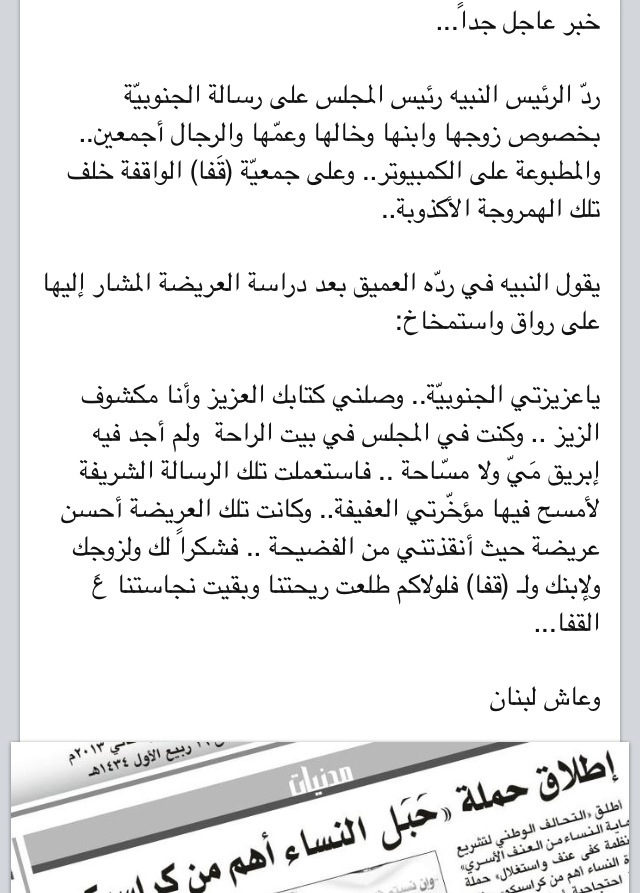
The following image is something I have seen many men jump around on Facebook as a reply to the letter sent to Nabih Berri by a Southern Lebanese woman who was afraid for her life after the domestic abuse she had to go through.

20130131-095204.jpg

Yes, these people exist. And many of them might be people that we actually know: who believe that women’s rights in this country should be non-existent. She is there to please and feed and breed. They are also more numerous than we want to believe.

We, as Internet users and people who fall mostly on the “liberal” side of the Lebanese spectrum, want to think we are a majority in the way we think and act. We want to believe that the majority of the country has similar ideologies. But that couldn’t be farther from the truth.

The even sadder realization is that even if the proposed law passes, which is unlikely given some of the illiterate greatness we have in parliament, it will do little to protect the women of a state where applying laws is belittled, frowned upon and ridiculed.

They say a goat is lucky to find a resting place in Mount Lebanon. A goat, yes, but not a woman. Steer clear from here and some of its ridiculously stupid men.

A Visit To Bab El Tebbaneh

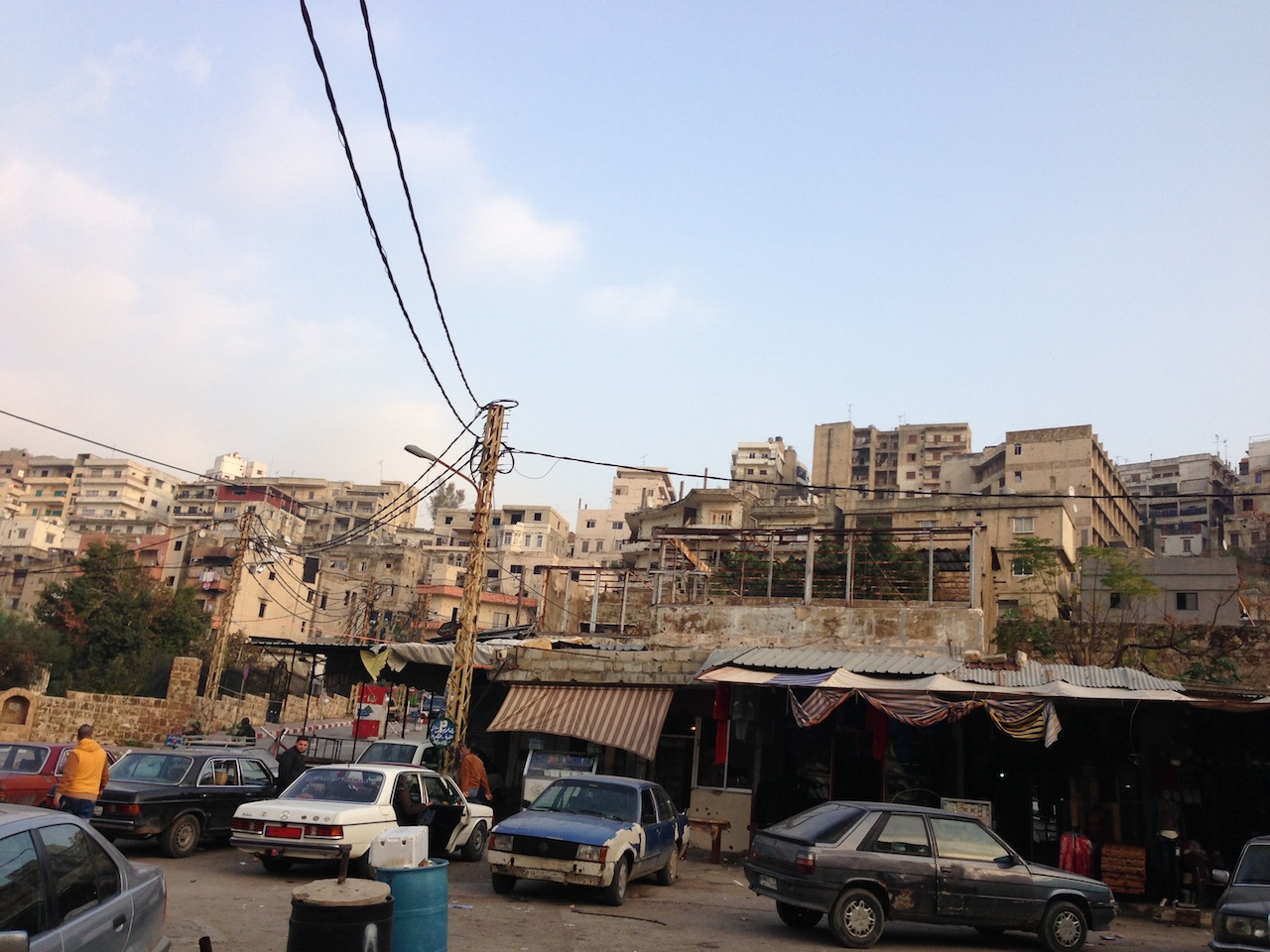
I recently visited an area of Tripoli that few want to think of, let alone set foot in: Bab el Tebbaneh. After my visit, I can see why. Even though the area is only a 25 min drive from home, it makes you feel like an outsider to your own country: nothing about you fits there. The people don’t want you to fit there. You don’t want to fit there.

The people of Bab el Tebbaneh thought I was a foreigner. I found it odd at first – we all share the same identification papers. But I later took it to my advantage. It’s much easier to pretend to be a gullible foreigner who has no idea what he’s doing than to try to reason with them using your native tongue. A foreigner can get away with more.

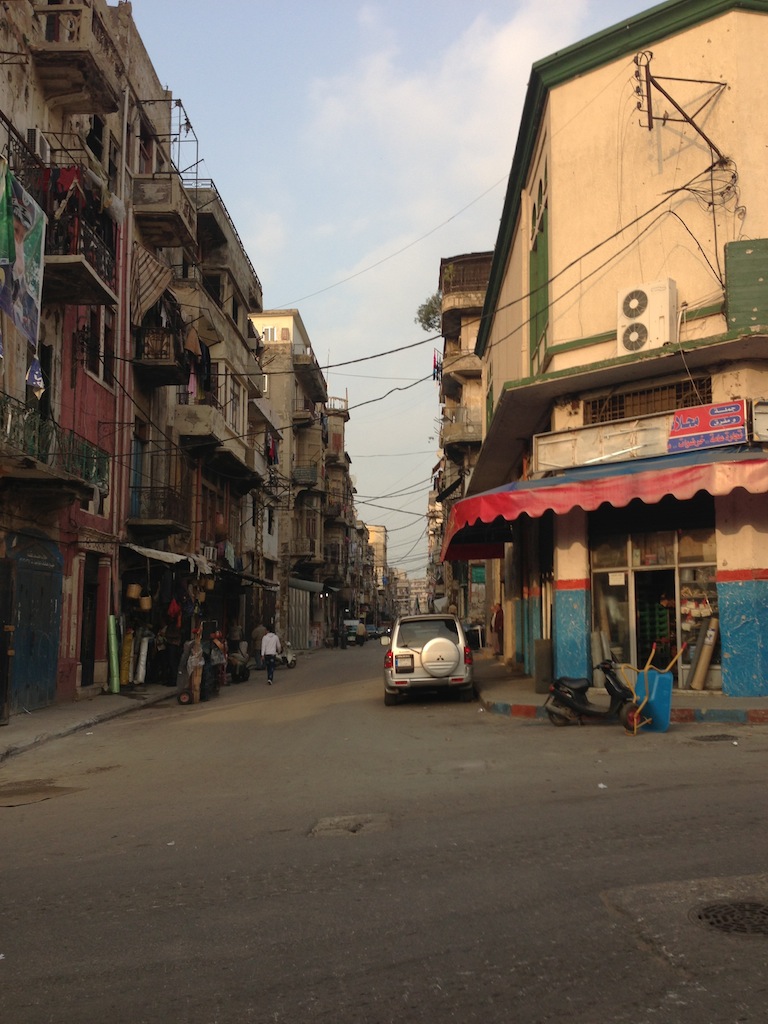
A few years back, when I used to visit the area’s vegetable market frequently, the people seemed to be much more at ease. They were poor back then as well and they were without prospects back then also. But they were hopeful. Little hope can be found in the faces of the people of Tebbaneh anymore. My visit to Bab el Tabbaneh exposed me to a section of our Lebanese society that is in constant paranoia – of that outsider walking among their shelled buildings, among their tarnished markets, violating their area.

We tried to delve deeper into Tebbaneh but faced resistance the likes of which I hadn’t seen in Lebanon before. We went up a flight of stairs that seemingly led nowhere only to have young men come out of nowhere to ask us what we’re doing there. Somehow they thought we were an “archeological team.” They let us through. Moments later they came back: “But there’s no archeology up this way.”

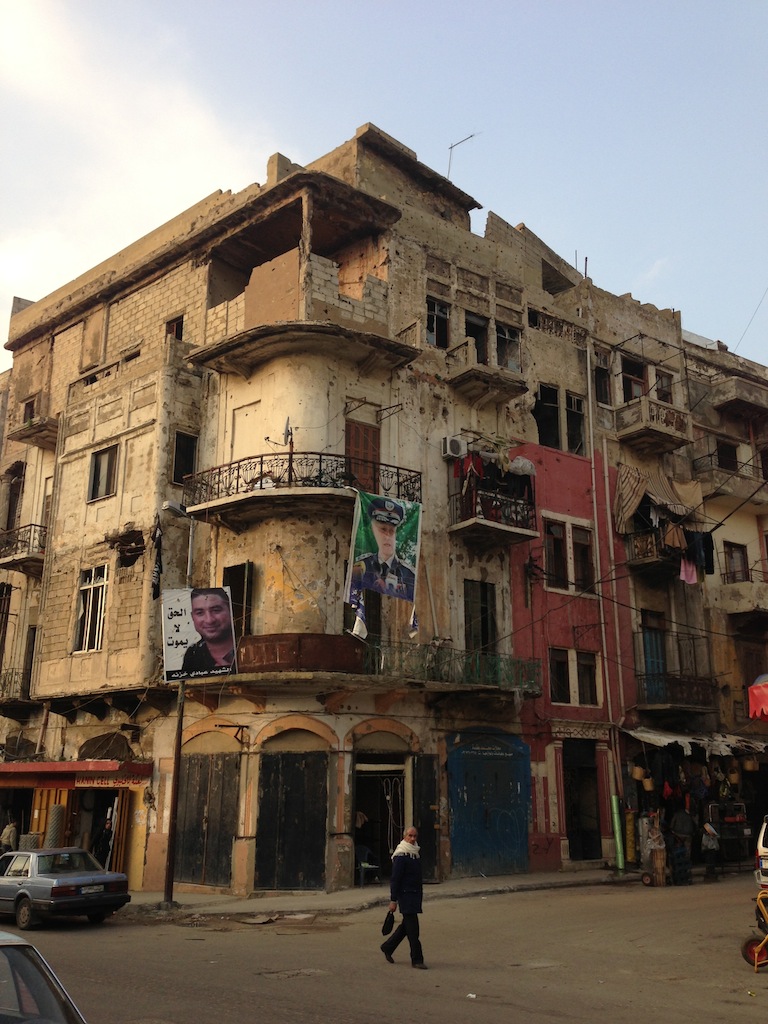
Bab el Tebbaneh is now a place where you are not allowed to take pictures and where you being out of place might warrant the Lebanese army to come hassle you as well. The people of Bab el Tebbaneh who were more than welcoming way back when look at every outsider suspiciously now. Their eyes will stalk you like a hawk whenever you move, tracing your every step, wondering what your plans are.

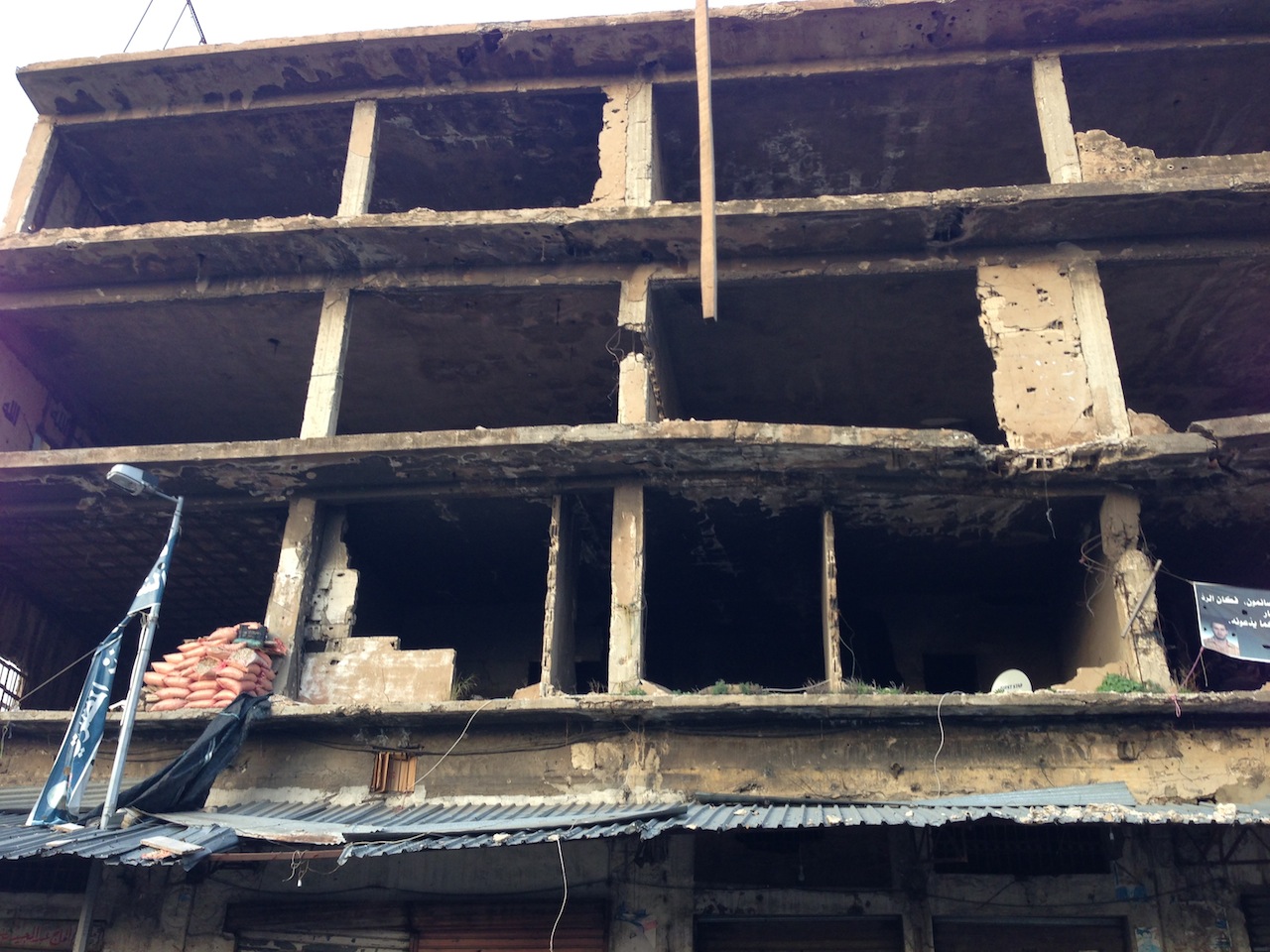
It is an area where the mosques are shelled, where little kids feel that those semi-demolished buildings are a point of pride and want you to go check them out. It’s a place where poverty is so entrenched in every fabric of that society that you have absolutely no idea how or where to start fixing.

“We are all poor people here,” a man came up to me and said, smiling, as I made my way through his street. “You won’t see anything but poverty.” I smiled back and moved on. There was really nothing I can do.

Where can one start? The politicians promise these people better lives every four years and end up doing nothing. They are untouchable. The religious men who sport the latest cars and equipment use these people’s poverty to their advantage in order to radicalize them. Factions use these people’s needs in order to carry on with their battles after handing them copious amounts of weapons. Most Lebanese hate the people of this area and the “image” they give their country and are more than willing to bash them in and out.

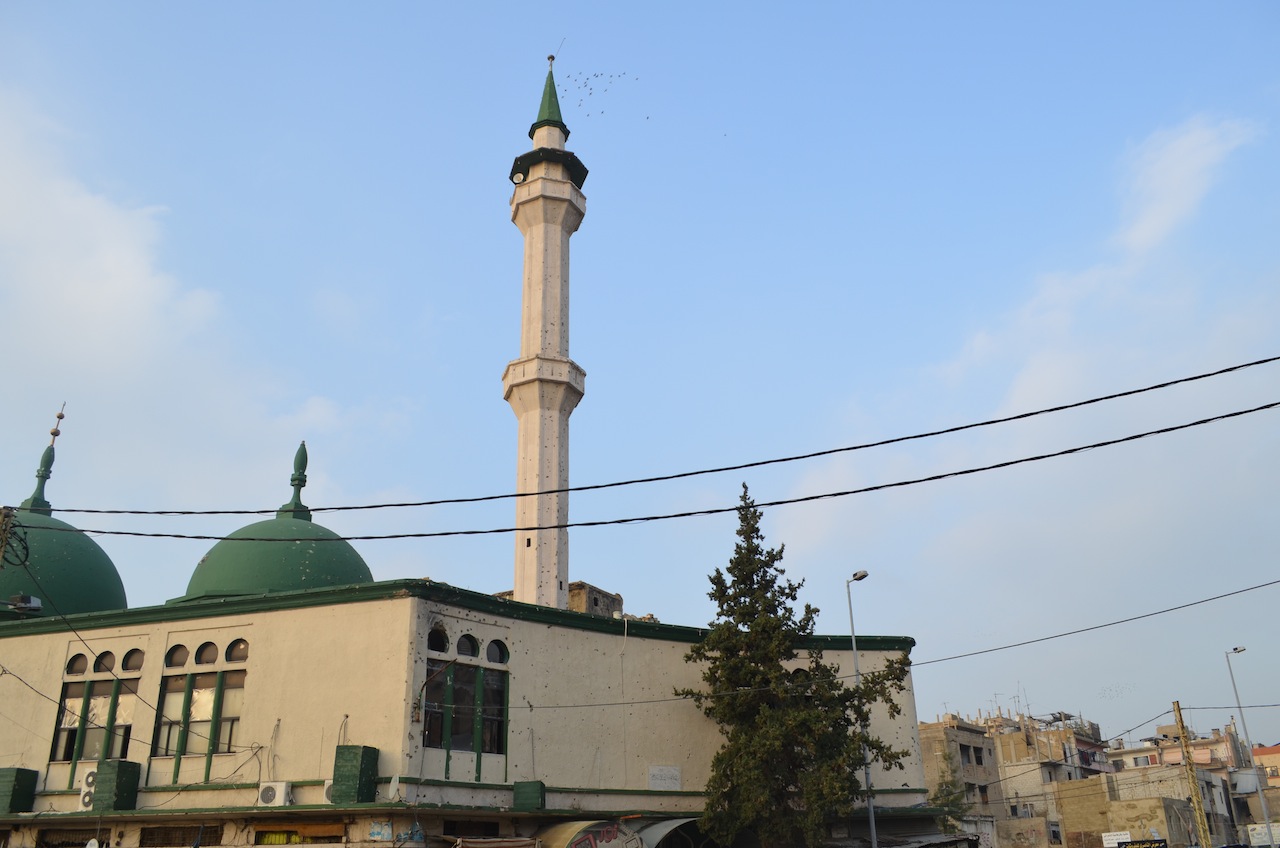
As we reached the point of saturation of what little we got access to of Bab el Tebbaneh and made our way out, as a man shouted at us not to take pictures anymore, another stopped us and pointed at a mosque whose walls were filled with bullet holes. He was exasperated by all the fighting. But he knew there was nothing he could do.

I would be lying if I said I wasn’t relieved when I reached the newer parts of Tripoli. It’s hard to imagine how this poverty can be found at a stone’s throw away from the house of one of Lebanon’s richest men. Then you realize that all of Lebanon’s richest men feed off this poverty and help perpetuate it. It’s how they remain powerful.

The mosque and its bullet holes.

The mosque and its bullet holes.

The section we couldn't visit

The section we couldn’t visit

"Come see all the destroyed houses."

“Come see all the destroyed houses.”

"You can't take pictures here."

“You can’t take pictures here.”

People used to live here.

People used to live here.