756 Lebanese Individuals and 486 Companies Named In Panama Leaks

Panama Leaks

I find it weird that no Lebanese media has been all over the Lebanese aspect of the Panama Leaks and the names that have rose to prominence as part of those documents.

The Panama Leaks have been, over the past two months, the biggest and most extensive data reveal into the corruption that reaches up to celebrities, politicians and governments. They basically name people who have set up shell corporations in Panama for a variety of purposes.

A shell corporation is a company that serves as a vehicle for other operations without itself having significant assets or operations per se. It serves a multitude of processes, and it can be used for legitimate reasons, but they can also be used for tax evasions.

The Panama Leaks are already shuffling political cards around the world. UK PM David Cameron was faced with huge protests after being named in the leaks. The prime minster of Iceland was even forced to resign after he was named in those leaks as well.

Recently, the International Consortium of Investigative Journalists (ICIJ) made the data available for the public to see and sift through, so I went ahead and saw how many Lebanese were involved in such leaks.

This does not mean that the Lebanese companies and individuals named in those leaks have committed anything illegal. Shell corporations can be used for money laundering, tax evasions, among other things. If anything, the complete neglect that Lebanese media has put over the leaks and their Lebanese aspect is the fishier aspect of it all.

The question to ask is: why do some Lebanese banks need to establish shell companies abroad when laws in the country are extremely favorable for them to begin with? And why do Lebanese individuals need to establish such companies in the first place, given that Lebanon’s banking system is secretive, where taxes are kept at a minimum and where the economy framework is built on a laisser-faire approach, rather than an actual developmental plan, which enables the individuals who can establish shell companies from not needing to.

Of the names revealed by the Panama Leaks, I cite the following:

  • Tahseen Khayat, a businessman and head of New TV,
  • Neaamat Fram, a CEO of many companies around the country such as Industrial Development Company.
  • Elias Bou Saab, current minister of education,
  • Nader Hariri, Saad’s cousin.

Of the companies revealed by the Panama Leaks, the following are examples:

  • HSBC Lebanon,
  • Audi Bank,
  • New TV,
  • Medgulf.

I search for other politicians but couldn’t find any. Search queries for Miqati, Hariri, Safadi, and other moguls have yielded no findings. Don’t fret though, those people have plenty to be happy about in Switzerland. 

For the full names, click here.

That “Lebanese” President of Brazil You’re Proud Of Is Very Corrupt, Like Lebanese Politicians

Michel-Temer

In the surge of Lebanese pride that one of their “own” is now the president of Brazil, while the country celebrates its second year without an actual Lebanese president in Lebanon, not one outlet has bothered to look into Mr. Michel Temer, beyond the fact that his parents immigrated from Btaaboura around 80 years ago.

His interviews with Lebanese media during his first and last visit to his “motherland” a couple of years ago have been circulating like wildfire. Him proclaiming to have a “Brazilian heart” but “Lebanese blood” were on a loop. He probably couldn’t care less.

What is certain, however, is that Michel Temer is corrupt, semi-fascist, just like those Lebanese politicians we all love to hate.

He Screwed Over His Own President:

The only way Temer became president was by screwing over Dilma Roussef, the now-suspended president of Brazil, in a textbook Frank Underwood-esque plot.

Through a series of orchestrated leaks, which he “claimed” not to have anything to do with, he effectively managed to throw his president under the bus so he could rise to power. For instance, he leaked a statement to the press about how he was upset he was not involved in key decisions by his president… and then said he was outraged by the leak.

Then he leaked a Whatsapp message to Brazilian parliament members claiming they needed a “new government.” He was later “outraged” by that leak as well.

Through it all, he was the main orchestrator behind the scene of the coup against the president, and in bed with big money and right-wing-run Brazilian media to further make him inevitable.

He Is Corrupt As Hell:

Temer’s ascent to power means that a political party that didn’t win Brazil’s elections is now effectively taking power. Once he is in power, he will reportedly appoint Goldman, Sachs, and IMF officials to run the economy. Those are the same people that American politician Bernie Sanders is accusing of corruption and electoral campaign fraud.

Michel Temer also has his own saga with corruption. He was ordered to pay a fine only this week for violating campaigning regulations and is being prosecuted for it. He may be banned from pursuing further office later for up to 8 years.

During his campaign for vice president, Michel Temer was also involved in other campaigning scandal when he received up to $1.5 million from a company to whom he provided preferential governmental treatment in construction contracts.

He has also been accused of involvement in an illegal ethanol-purchasing scheme which has brought him back millions of dollars.

Michel Temer is also said to be involved in the “Petrobras Scandal,” a partly-governmental owned oil company that some Brazilian officials profited from by laundering some of the profit through a Lebanese-origin intermediary called Alberto Youssef, and transferring it to secure accounts in Switzerland.

To put it bluntly, Temer is accused of more corruption than Dilma Roussef. Only 2% of the Brazilian electorate would vote for him and over 60% believe he should be impeached also. The only reason his political career is not ending is because 1) he is a man, 2) he serves the interests of corporations that want to see someone with his agenda in power.

He’s Already Targeted Women, The Blacks and LGBT People:

Michel Temer’s upcoming government is rumored to be composed only of men, a long way down from a country that just had a woman president.

It doesn’t end here. He has also been active in closing many LGBT and black rights offices, and will reportedly continue on his rampage now that he’s ascending further up the power echelons.

Let’s Not Be Proud Of Everyone Who Happens To Be Lebanese Anywhere and Everywhere?

If any Lebanese politician were accused of what Temer has done, you’d be up in arms about how disgraceful, horrifying they are, how they’re ruining your country.

Can we not pretend this is any different just because that politician has ascended to power in Brazil?

There are times and places to be proud of entities pertaining to our heritage. This is not one of them. The world finally has a Lebanese president…. That’s not really a good thing.

Sectarianism & Islamophobia: Jounieh Wants To Become The “Christian Capital” of Lebanon


On the slope of how low some electoral programs can sink to try and attract votes, the FPM-backed “Karamet Jounieh” takes the cake.

You’ve probably seen their billboards all over the highway. From their super lame: Weina Jounieh? To them revealing it was “MasJounieh” before launching into a full blown attack about how they would bring back Jounieh’s dignity.

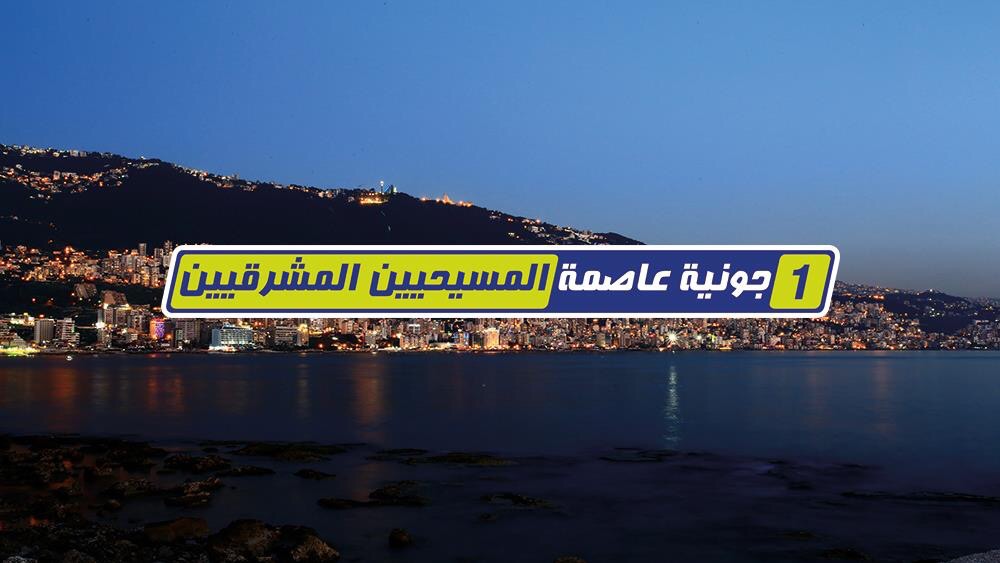
Now, 2 days before Jounieh votes, they went full force into the attack by proclaiming they would make Jounieh the “capital of Middle Eastern Christians.”

Out of a 9 point platform tackling various aspects of the city’s life, making it the capital of Christians in Lebanon was their #1 priority with it being the top point on their list.

How would they accomplish so? By building a multitude of Churches and religious centers for Near-East Christians to feel closer to each other so that if “Copts in Egypt are affected, we feel it in Lebanon as well.”

Because, you know, the hundreds of thousands of Muslims dying across the Middle East don’t deserve us “feeling it as well” because they don’t pray that way, or that we, as Lebanese, are supposed to “feel” with the Christian in South Sudan before we feel with our fellow Lebanese in Bab el Tebbaneh, simply because that Lebanese is not Christian.

Let us make Jounieh the capital of Christians. While we’re at it, why don’t we make Beirut or Tripoli the capital of Sunnis? Why don’t we make Tyr the capital of Shiites as well? I mean, why not? If Christians are supposed to have their own city, then why shouldn’t other sects too? Why doesn’t Keserwen then just secede into the Democratic Republic of Maronistan with Harissa in the center of its flag and be done with it?

This kind of xenophobic and horrific rhetoric has no place in elections aiming for LOCAL development in 2016. “Karamet Jounieh” claims that them wanting their city to become the capital for Christians is to face the persecution affecting Christians in the Middle East and to further solidify the importance of Jounieh with its strong Christian history.

For a moment there, I thought Daesh was at the footsteps of Maameltein and that Jesus did not come out of Nazareth but of Haret Sakher and Maronites did not get persecuted in the mountains of North Lebanon, but in the streets of Sarba.

In the face of such disgusting slogans, I invite this blog’s followers who vote in Jounieh to refuse such hateful, xenophobic notions and to vote for the list opposing “Karamet Jounieh” on Sunday, which is the list calling itself “Jounieh El Tajaddod.”

At a time when Christians in Beirut refused to be treated with the hateful, segregating rhetoric that Karamet Jounieh is giving its people in Jounieh by voting for Beirut Madinati, the last thing we need in this country is for such divisive talk to be center stage in any elections. Less fear and hate, more tolerance.

What Beirut’s Election Results Tell: Lebanon Can Hope For Change

Beirut Madinati - bIERTE list 2016 2

This post was written with Ramez Dagher from Moulahazat

As promised earlier, this is the more detailed look at how Beirut voted, beyond the surprisingly great outing of the civil movement Beirut Madinati’s list, which even though it didn’t get actual seats, still has plenty to celebrate.

It is important to note that in the most optimistic of cases, the chances for any list other than the list of the political parties to win was next to zero. No this isn’t retrospective analysis. 

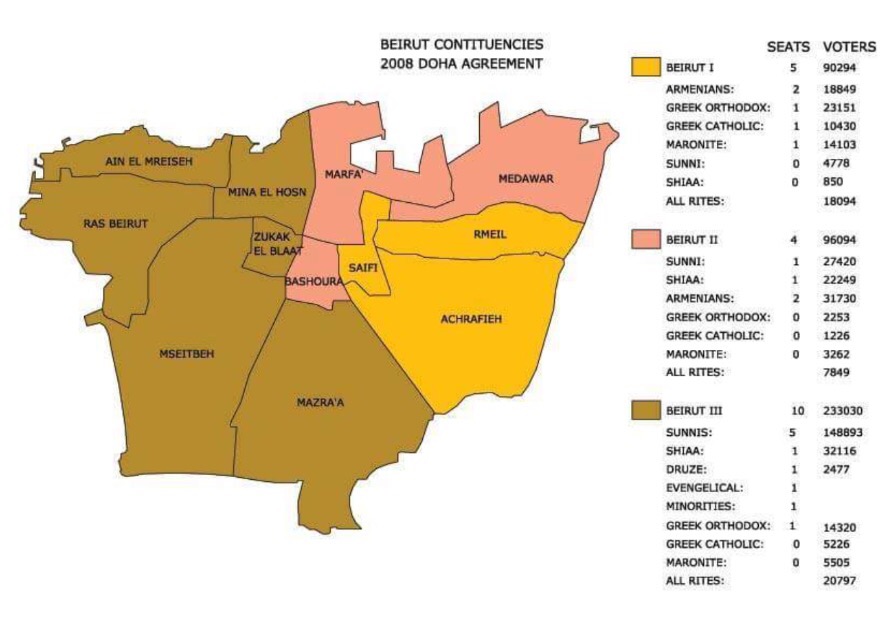
Despite the context of the trash crisis, rising corruption, overall voter discontentment, parliament extending its mandate twice, etc… the math of the Beirut electoral equation was never in favor of any non-political movement: the division of districts, the system, demographics, the sectarian propaganda – The Bierteh list had tried to attract voters – especially Christian ones – by proposing a 50-50 Christian/Muslim list, although Beirut Madinati had also kept the same quota.

So no, the cards were not the best that could be given for Beirut Madinati, or any other movement for that matter, simply because those cards were being played on a table that served only one side: the political establishment.

As a result of all of the above, the loudest of voters on Sunday was the low turnout.

20% Voted:

This is not a historically low number. In 2010, 18% of Beirutis voted. Beirutis simply do not vote in Municipal elections, and only do so at slightly higher numbers in parliamentary ones: 33% in 2009.

This is due to many factors. Voter learned helplessness is an important one, but so is the feel that there really isn’t a contest to begin with further increasing the sense of voter apathy. 

33% voted in 1998, the first election since the Civil War, and the lower turnout since should be enough to tell you how much people lost faith.

Many partisan voters were also not willing to vote for the “zayy ma hiye” list but did not want to break lines.

Achrafieh El Bidayi:

Beirut Madinati won the Beirut 1 district with around 60% of the vote, a blow to the rallying calls of Christian parties in the area for their supporters to vote for the Bierti’s list. The 60% figure is not only exclusive to the mostly-Christian Beirut 1, but is also applicable to the Christian vote in the rest of Beirut.

This doesn’t mean the weight of the LF and FPM combined is 40%. Many LF and FPM leaning voters voted for Beirut Madinati more against Hariri, but it sets the precedence that politically affiliated people can go beyond their affiliations and vote in a way that breaks what they were instructed to do.

Boycotts from the bases of the FPM, LF, and Kataeb were also there on election day, as a sign of disagreement with the recent choices of their parties: The FPM electorate isn’t a fan of Hariri; the LF base isn’t a fan of an alliance with the FPM, and the Kataeb aren’t fans of anything.

This lack of enthusiasm was probably one of the causes of the lower turnout in Christian polling stations.

The context of such a vote, however, is probably not sectarian as is circulating. Achrafieh is one of Beirut’s higher socioeconomic areas, with higher income and education rates. You’ll probably see a similar phenomenon in the higher socio-economic districts of Beirut III. Those residents are more likely to vote for issues such as reform, transportation and trash sorting. Those are also the voters that are the less afraid of change.

Many if not all of Lebanon’s parties count on clientelism to widen their electoral base. In higher socio-economic echelons, the reliance of the electorate on the mainstream parties is less.  Those voters don’t need their political parties in the neo-socialist way that most parties in Lebanon function. In Achrafieh, for example, the LF and FPM do not provide medical services, free education, job opportunities for Achrafieh voters as much as other parties in other districts, so throughout the years, the electorate managed to develop an independence from traditional Christian parties.

The Example Of Tariq El Jdide: Anyone Can Be Reached

Sectarian talk is terrible, but is a necessary evil until the political system is not one where people go and vote in segregation based on how they pray. If you crunch Beirut’s numbers, you will end up with a rough figure of around 30% of the Sunni vote not going to Hariri.

This is probably as important, if not more, than BM winning 60% of the vote in Beirut 1.

I don’t believe we can call this a dissent from the Future Movement yet, but it is a continuation of the gradual and progressive Sunni dislike of the way Saad Hariri is running things, even with his rise of popularity after his return.

The reason the Future Movement won is not because voters are “sheep.” It’s because the Future Movement, through various governmental policies, has forced the people of many Sunni areas to always remain in need for their intervention to get the basic necessities that should be a right for every Lebanese citizen, which many in other areas have access to without needing their political parties: do not cut the hand that feeds you.

The political framework of the elections is important. They come at a time when Sunnis in Lebanon feel increasingly threatened by being categorized as potential-Islamists, to the background of a party in power fighting for a regime they do not approve of in Syria.

The need to not break rank was never greater. They may not approve of Hariri, but this was not the time to show it, and yet 30% did. The situation in the country is not one where sects have the prerogative to show cracks in their facade, or have we forgotten how Christians have also forced a seemingly unbreakable veneer over the past few months as well?

All of this makes the 30% figure of Sunnis who did not vote for Hariri all the more impressive and courageous. It’s the kind of percentage that breaks taboos.

Moving Forward:

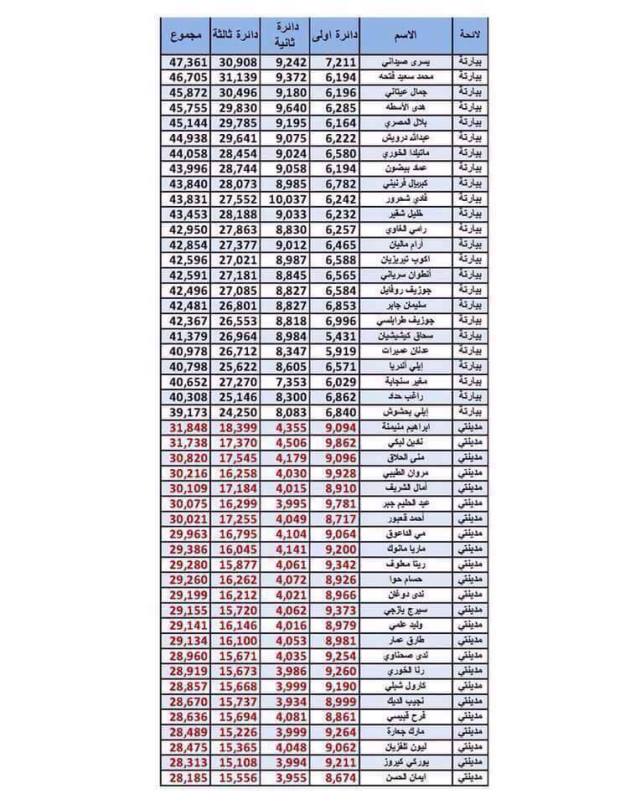
The election’s overall results are telling. In Beirut I, the LF representative Elie Yahchouchi and the FPM’s Traboulsi lead their allies in the FM by around 800 votes (of around 6500 the list got). In Beirut II, with its important Shia and Armenian electorate, almost all of the winning candidates from LB are in the 9000 votes region. One candidate however, Amal’s representative, stands out as having 10000 votes. In the third district, Yahchouchi and Traboulsi are 5000 votes behind the FM’s candidates.

The difference between the first and the last of list is around 8000 votes for LB, and 3000 votes for BM. In other words, most of those who voted BM did not make major changes to their lists (“tochtib”) and were convinced with almost all of BM’s candidates, while the base of every single party in power was modifying the names.

That is the biggest proof that the ruling coalition is unstable, and that in 2017, even a minor split between the parties in power can lower that 60% and give way to an independent breakthrough. Check the results here.

But now is time to look ahead.

Our voting process needs to be modernized. 36 hours to go through Beirut’s voting results is a disgrace. There are no excuses.

The rhetoric we need to adopt should never call those who do not vote the way we want sheep or other varieties of animals. It is demeaning, and not any different than the system we want to change. Such horrific name-calling only alienates voters from your platform. The core of democracy is one where many will not vote the way you find is best.

Our rhetoric should also be more inclusive, and less elitist. Our bubble in which we believe our paradigm of Lebanese politics is scripture is exclusive to the people that are reached by our message, but the bulk of voters exist outside of that bubble. We need to be aware that what we know and believe is true doesn’t translate to others and work on reforming our message to make it holistic.

This means that calls to divide Beirut into smaller districts just because Achrafieh voted one way and Tariq el Jdide voted another are horrifyingly xenophobic. Beirut is a city that is 18 km2 with 500,000 voters only. It is too small to be divided. We need policies to bring people together, not segregate them into separate cantons.

Accomplishing so starts by championing policies to better the conditions of all Beirutis, especially those that exist in impoverished areas. Beirut Madinati did not, for instance, campaign as much as it should have in Tariq el Jdide.

Political parties in the country keep people at bay by keeping them afraid and hungry. Keep them as such, and they remain at their mercy. The first step in breaking this political hegemony is to make them need their political parties less: advocate for better schools, better and more comprehensive healthcare, fight economic inflation, raise the minimum wage, adopt a better taxing scheme, etc…

Such measures, however, cannot be done by simply complaining on Facebook. Modernizing our elections isn’t only about getting electronic voting machines, but also about having an electoral law that is fitting of the year 2016. The only law that can work to represent all different sections of Lebanon’s society is a law based on proportional representation. If such a law were adopted, for example, Beirut Madinati would have obtained 9 seats out of the available 24 on Sunday.

Proportional representation, as proposed during a cabinet meeting in 2010 tackling the municipal electoral law, is one of many reforms, such as electing the mayor directly from the people, and a 30% women quota, that are napping in parliament. The establishment is making it harder, but that shouldn’t mean that pressure should stop.

We also need to realize that, despite disagreeing with them, political parties are not going away. If we are to leave a mark, we have to find a framework in which we organize into a party that can compete better in elections, in politics and do so in unity: one of our biggest failings in this election was having like-minded people run on two different lists.

Today, we should be cautiously optimistic at what the future holds. Change in Lebanon is not a sudden process. It’s a tedious affair that needs planning over many years. Start planning for 2017’s parliamentary elections today and 2022’s municipal elections yesterday. Do not despair, and most importantly, always challenge the status quo regardless of how comfortable you are in it.

 

40% Of Beirutis Voted For Beirut Madinati: Yes, Change Is Possible!

IMG_3944

After more than 36 hours, Beirut’s results have been revealed and Beirut Madinati, the little list that could, ended up getting 40% of the Beiruti vote, in an election where the super low voter turnout was probably the loudest voter.

The race turned out to be much closer than the Future Movement’s electoral machine said it was. On the same day of the elections, they called victory theirs with a difference of 25,000 to 30,000 votes. The actual result turned out to be half that.

In fact, the difference between the lowest vote getter on Hariri’s list and the highest on Beirut Madinati is only 7000 votes.

The results per Beiruti region are as follows:

13165931_10154823413818294_8449035637678219607_n

This translates to the following:

Beirut 1: BM 60%, LB 40%;

Beirut 2: LB 65%, BM 35%,

Beirut 3: LB 64%, BM 36%.


This shows that change is possible. If 6 months’ work ended up with such a massive result, it shows that people are willing to go beyond their political lines to choose that they find would be better for their future.

As I said yesterday, Beirut Madinati are victorious even if they didn’t actually win. I will write a more detailed post about the numbers later.