The Lebanese Army is Becoming Way Too Reckless

A couple of years ago, a friend of mine was heading back to his hometown in the Chouf. Knowing the road like the back of his hand, he didn’t think there would be a military checkpoint which was set up there in the few hours he wasn’t home. So while driving back, he didn’t stop at the checkpoint.

As a result, the army spiked his car’s tires, deflating them all and stopping him in his tracks. He ended up paying over $500 for new tires. In retrospect, my friend was very lucky.

If this had happened with him today, my friend would have been dead.

Charbel Rahme is the latest casualty to the Lebanese army. What was Charbel Rahme’s fault? He didn’t stop at the Madfoun checkpoint. Should he have stopped? Definitely. Everyone should stop at a Lebanese army checkpoint. But is not stopping enough reason for the army to kill someone?

I refrained from commenting on the army killing Sheikh Abdul Wahed last week. Let’s wait for the investigation, I figured. Perhaps Sheikh Abdul Wahed had a ton of arms with him in the car. Perhaps his convoy shot at the army first. Perhaps, perhaps, perhaps. Too many suppositions.

But in Charbel Rahme’s case, he didn’t shoot at the army. He didn’t threaten their lives. And still he died. His car was shot 6 times. There’s no room for randomness with 6 bullets. He was shot in the head. He died instantly. He was 38.

Charbel Rahme’s brother is a major in the army as well.

Two theories come to mind. Either this is the act of reckless individuals within the army, in which case they should be trialed as soon as possible. Or there’s a command from high-above to shoot to kill. When it comes to the former, the fact that this incident has happened twice in one week means there are way too many reckless individuals within the army and if the “myth” of the army being protective to all Lebanese is to stand then massive pruning is needed.

As for the latter theory, how can I expect protection from an army who would kill me if I run a checkpoint? The argument that I’m a civilian who “doesn’t understand” doesn’t stand. I’m the civilian whose life is threatened here. I’m the civilian getting killed in a meaningless situation no one should die in. I’m the civilian whose trust in the army is waning dangerously thin. I’m the civilian whose support the army desperately needs. I’m the civilian who can’t understand why I have to die if I don’t stop at a checkpoint.

We are not hypocrites. We supported the Lebanese army when the hypocrites proclaiming Lebanese army love today laughed at some of the army’s martyrs. But when it comes to our lives, some things need to be said. The Madfoun checkpoint has a puzzle of barricades to prevent people like Charbel Rahme from speeding away from the checkpoint. The army would have had way too much time to spread out the spikes needed in order to stop the car.

The spikes wouldn’t have allowed Charbel Rahme’s car to go more than 20 meters with deflated tires. Even if Charbel Rahme had continued trying to move away, his body has way too many points the army can hit without killing. And yet, Charbel Rahme’s body is lying cold in the morgue of the Batroun Hospital with a bullet hole in his head.

There’s no other way to spin it. The Lebanese army is getting reckless with the lives of the people it should be protecting. The Lebanese army is becoming way too reckless with the weapons it has especially with people against whom these weapons should never be used.

Alla ye7me l jeish? I beg to differ. Alla ye7mina ne7na iza heik.

Is Lebanon fast turning into a military state where your life ends depending on how you behave at checkpoints? Is not stopping at a military checkpoint now a threat to the national security of the country?

The people of Bsharre are now ringing the bells of their churches, lighting candles and praying for the soul of Charbel Rahme. May he rest in peace. His death was unnecessary, uncalled for and much more dangerous than the death of Sheikh Ahmad Abdul Wahad. Why? Because Charbel Rahme was a regular citizen, like you and me.

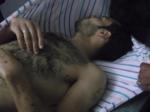
This is Charbel Rahme

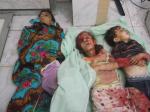
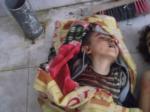
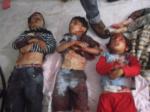
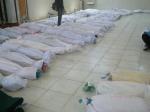
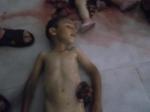
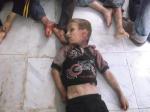
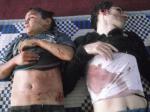
The Little Children Terrorists of Syria

Caution. These pictures of the Houla Massacre are extremely graphic. You can also see more pictures (some that verify the place) here.

————————————————————————————————————————————-

Because these children are part of the international conspiracies against the Syrian regime…

Because these children were fighting firsthand against the regime…

Because these children represented an undeniable threat to the regime’s hold…

Because each breath these children took represented less air to the free Syrians…

Because these children are so useless no one would care about them…

Because these children are so terrifying, they need to be eradicated….

Because these children’s lives are a burden to Syria…

Because these children’s lives are already spent trying to fight the Syrian regime….

Because these children threw stones instead of going to school…

Because these children don’t know the importance of Syria…

Because these children are expendable…

Because these children are useless…

Because these children are little terrorists….

Because these children don’t deserve to live…

Kill them all.


Yours Sincerely,

The honorable Bashar Assad

For more pictures, click here.

A Convent in Lebanon… Or a Farm?

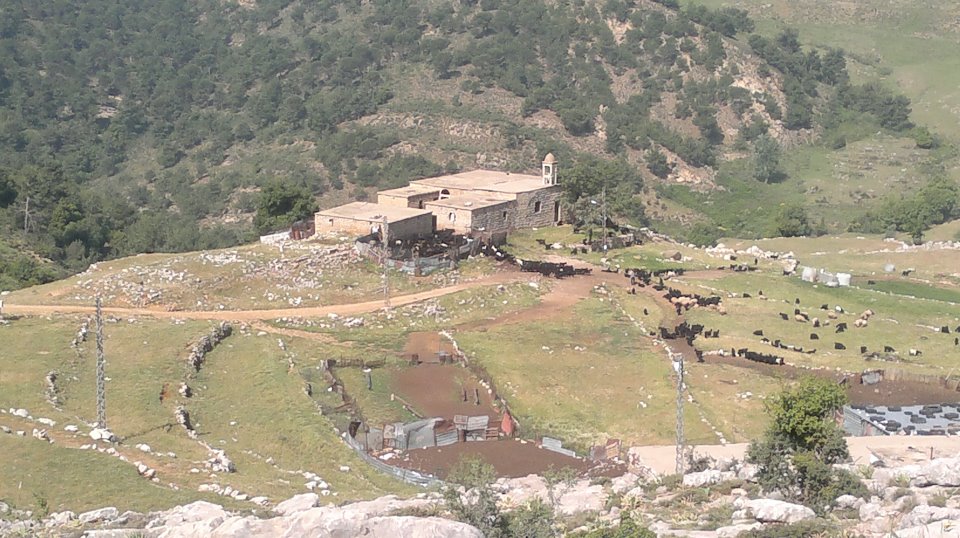
The following is a picture taken in the Southern caza of Jezzine of a convent in the region of Atroune.

The place looks very forgotten. Do Maronite clergy know that a convent exists in this region? Or have they simply ignored its presence hoping no one notices?

Shouldn’t the presence of goats and sheep in a convent be at least frowned upon when the Lebanese Catholic Information Center panics about movies portraying people having sex in a convent?

Shouldn’t the MPs and the political representatives of the region protest about this when they’re so adamantly proclaiming themselves as the defenders of Christians in Lebanon? Or is the “70% myth” only applicable in political discourse to get their followers’ pride through the roof?

I guess we’ve officially seen it all in Lebanon.

The Facebook Camera App: My Impressions

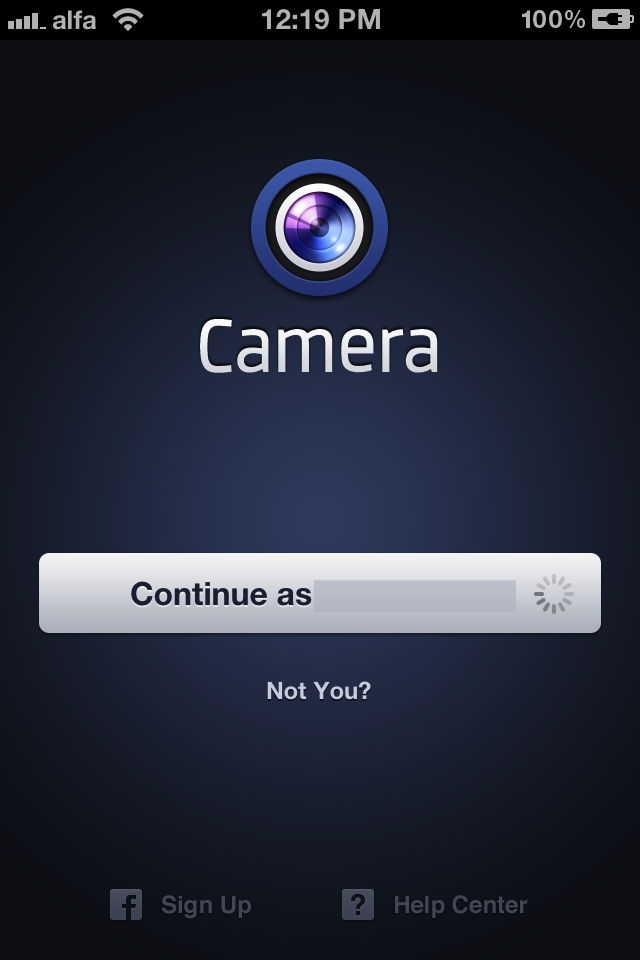
Seeing as I have a US iTunes account, which I dearly cherish, I got to download the Facebook Camera app, currently exclusive for iPhone, before its availability on other stores. So I tested it for a whole day on my iPhone 4S and these are my initial impressions.

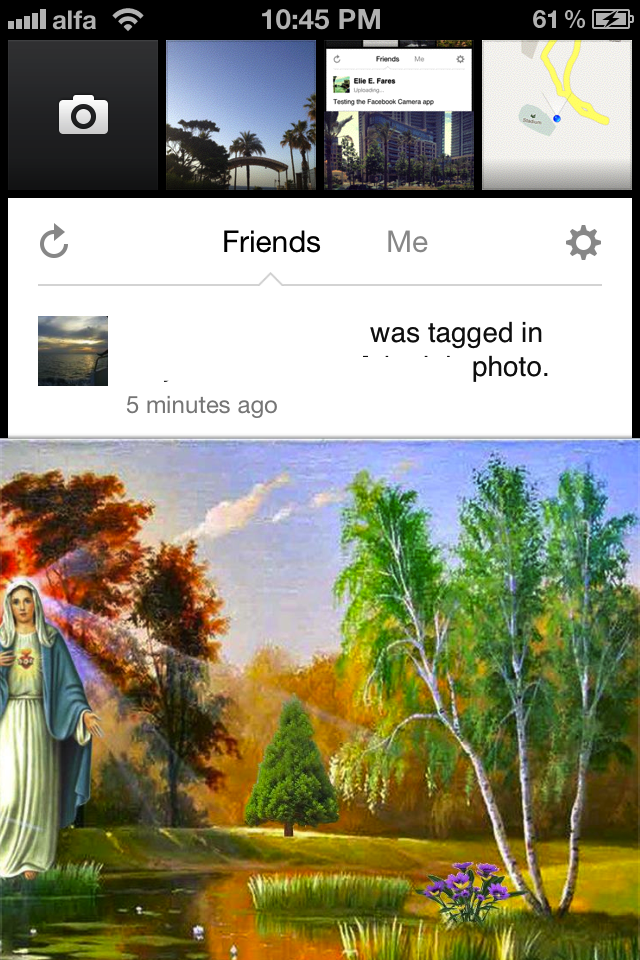
It’s pretty fast. Once you launch the app, it takes you immediately to a news feed version for Facebook’s photos. You can see pictures that your friends uploaded and comment on them. This is where the pictures you take will go as well. You can swipe among the pictures your friends were tagged in. Loading the pictures is much faster than the regular Facebook app, which I think is horrible at handling pictures.

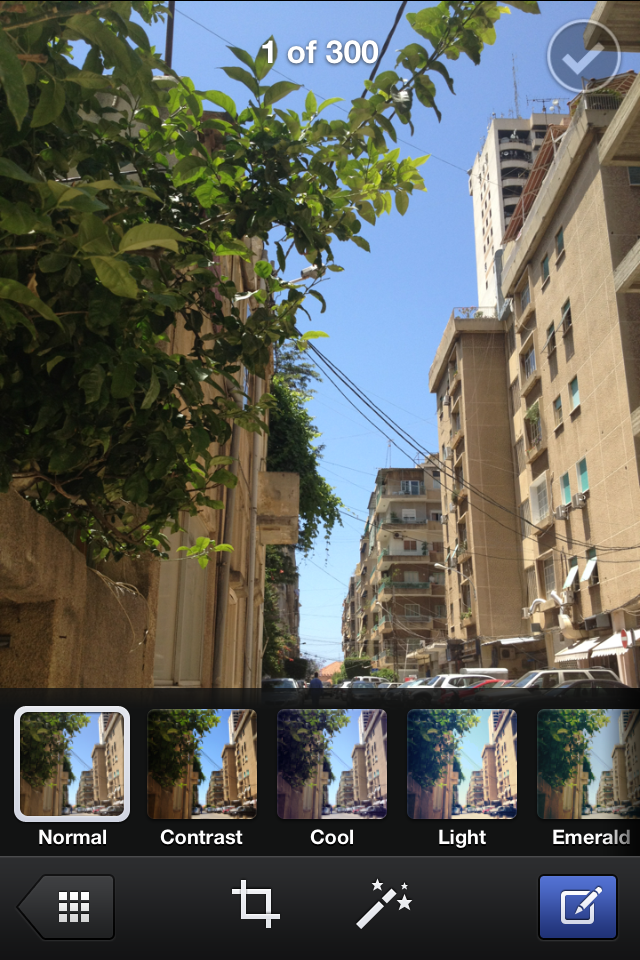
Facebook Camera is streamlined enough to post pictures on your Facebook timeline without much effort. Once you take the picture, you’ll get many filters to choose from before sharing your work. Those filters are a total of 14 (apart from normal). You access them by tapping on a brush button similar to that in Apple’s iPhoto app. They are similar to the filters you get in instagram but are named differently, obviously. You can upload pictures in batches, faster than with the regular Facebook app, and in higher resolution.

Once you’ve chosen the filter of choice, you click on the button to post. Now you’re back to familiar territory, similar to the Facebook app for iOS. However, you can actually save a post draft here in case you decided you wanted to save sharing the picture for later. That’s something I hope they add for the regular Facebook app.

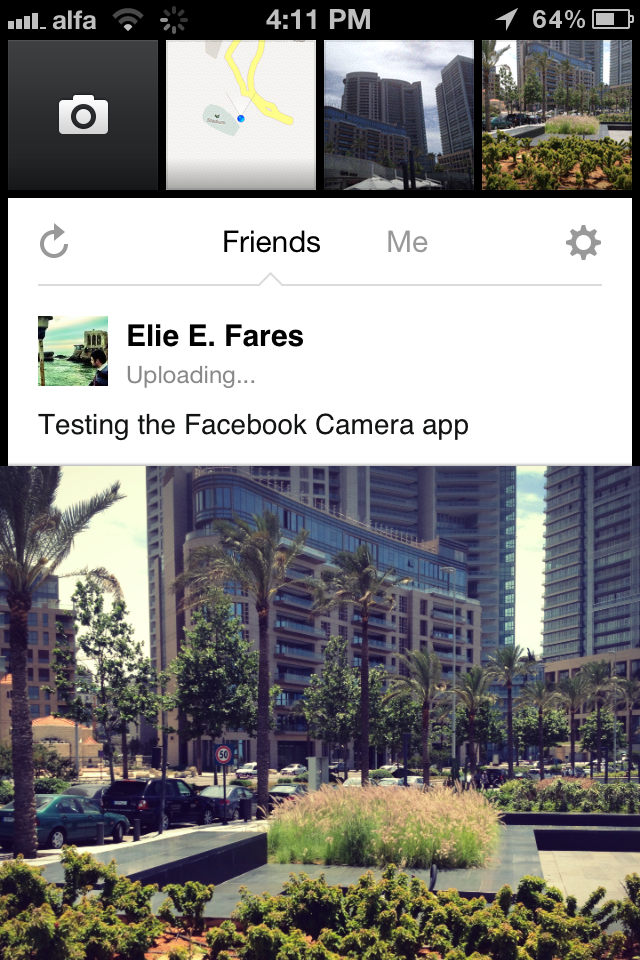
Once you share the picture and it uploads, it’ll appear on your timeline as posted from “Facebook Camera.”

Overall, I think it’s an interesting app. I really like the icon, actually. But it’s not quite a home-run. Will it overtake instagram? I doubt that’s Facebook’s intention but they’re not betting right if they think it will. While it has its advantages, such as saving the original picture in your camera roll immediately after taking it, it has its drawbacks as well. For instance, it doesn’t save the modified picture in your camera roll, unlike Instagram.

Instagram has become so ingrained with users that uprooting it will take much more than an app which shares exclusively on Facebook and using it means flooding un-wanting users with pictures of things you find interesting but they have no interest in.

At the end of the day, where Facebook Camera falls short is in it not being a photo-exclusive platform. It comes with the baggage that is “Facebook.” Bonafide photography applications, such as Instagram and Camera+, cater to those who have a hobby for photography. They created an environment where those users can stretch their wings with exotic shots that they wouldn’t necessarily want to share with their Facebook friends.

Facebook Camera caters to the Facebook crowds whose pictures are less interesting than the Instagram crowd. But they are much, much more numerous. For once, however, Facebook has created a mobile app that is actually good. Hopefully that’s a sign of what’s to come for the regular Facebook app.

Brace yourselves, everyone, the Facebook Camera posters are coming.

Happy Liberation Day, Lebanon?

I remember May 25th 2000, 12 years ago, when I came back home all giddy with them letting us off from school early. We had heard whispers at school: “The Israelis have left…. the South is ours again.”

I felt happy. I felt proud of my country. Even though I had never been to the South, I felt liberated.

So today, I salute all the readers of my blog who come from South Lebanon, however few they may be. Blame it on my political stance that drastically differs from theirs. I salute all those who fought for Lebanon’s freedom from Israel before that fight started being used for political gains here and there. I salute all the martyrs that died in the process of trying to take back every inch of Lebanese land.

But today, 12 years later, I can honestly say Liberation Day has lost some of its flavor to me. Not because of current political reasons, not because I utterly hate the political party which led to that day but because it reminds me that my own occupation is nowhere near to be acknowledged.

April 26th…. That day I saw the Syrian army trucks leaving my land, hopefully to no return. That day I saw my mom shed a tear as she drew a sigh of relief – the horror has gone. That day I saw my grandfather smile like a child as he breathed for the first time in his Syrian army-free hometown.

When will Lebanon truly admit that Israel and the South weren’t the only entities in the country occupied for years? When will we admit that Northerners and people from Mount Lebanon struggled almost as much as people in the South?

When will we admit that your “brother” becoming your enemy is much more dangerous than a stranger enemy with whom you barely have anything in common?

Today, May 25th is another day that reminds me of Lebanese hypocrisy, of how the deaths of those that fought to get the Syrian army off my land, prior to the Rafic Hariri assassination era, are all looked down upon: a bunch of traitors who aren’t worthy of being acknowledged.

And it makes me sad, really, that on a day where I should be happy for my country’s sake I can’t but feel sadness for the memory of those who fought for liberation and don’t have a day to remember their struggles.

You can’t understand liberation unless you’ve been under occupation.

May 25th, I’d salute you when you salute April 26th.