13 Lebanese That Made It Big In 2015

As 2015 draws to a close, and you are overwhelmed by end-of-year lists, the only list that I wanted to make, as I also did last year, was one commemorating Lebanese faces that I believe did something in 2015 that was great.

Consider it as one of my rare non-nagging posts of the year, fitting to end 2015 on a more or less positive note despite it being the year that it was. The names I’m about to mention are in no particular order, and are chosen in a non-scientific way of course.

1. Abou Ali Issa & Adel Termos:

In the depth of horror and chaos emerged the two stories of true heroism in the country this year in the form of two men: Abou Ali Issa and Adel Termos. Both of them lost their lives months and kilometers apart, but in eerily similar scenarios: to the hands of disgusting terrorists who know nothing but destruction and murder. Both of these men risked their lives, leaving behind their families and everything they had built up to for years, tackled suicide bombers and saved hundreds. If there’s anyone to leave 2015 remembering, it’s these two names.

2. Yves Nawfal and Georges el Rif:
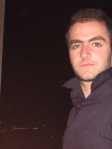
In early 2015, Yves Nawfal was brutally murdered at the hand of thugs who thought they were above the law. A few months later, a similar scenario took place and Georges el Rif fell victim to a horrifying stabbing in broad daylight at the hands of a thug who also thought wouldn’t face repercussions for his actions. This is Lebanon after all. But the thugs ended up in jail, and for the first time in years there was a nationwide outcry for the serious need of accountability that overshadowed wastas and politicians trying to circumvent the law to protect their henchmen. May Yves and Georges rest in peace.

3. Tol3et Ri7etkom:
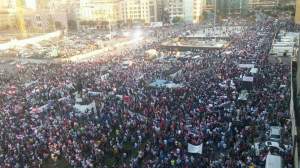
Protest YouStink Beirut August 29 2015 - 1

Speaking of accountability, the second half of 2015 was, at a certain point, the period during which a secular, non-partisan movement scared our government shitless because they put every person in power under the spot of their corruption and did so in such a glorious way (link) prompting our government to attack with tear bombs, anti-riot gear, build walls to barricade the protestors, etc…. Sure, the movement ended up fizzling out, as most things Lebanese end up doing, but in that moment, when over 100,000 people gathered in Downtown Beirut to shout for a new system, they were infinite.

4. Ely Dagher:
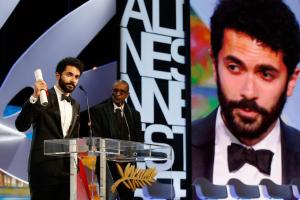
Ely Makhoul Cannes 2015 Waves '98

When it comes to Lebanese cinema this year, Waves ’98 by Ely Dagher takes the cake. This young Lebanese filmmaker not only did what many considered to this point to be near impossible for Lebanese cinema, but he did so with full acclaim, claiming the first win ever for a Lebanese at the Cannes Film Festival.

5. Rima Karaki:
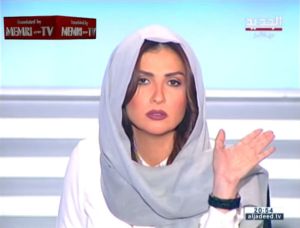
Rima Karaki

There’s a lot to say about Rima Karaki, good and bad, but her shutting up the Islamist Hani Al Siba’i was definitely one of my personal highlights of 2015, and judging by the international response she received, the world’s. When Al Siba’i told her to shut up and that it was “beneath him to be interviewed by a woman” like her, Karaki cut him off air. She was the leader there, and it was glorious to see (link).

6. Karim Zreik:
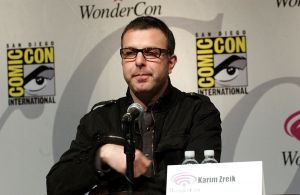
Karim Zreik

Zreik is the man behind the latest Netflix Marvel sensation “Jessica Jones.” If you haven’t started watching that show, get on it. Zreik is a leading producer on “Jessica Jones,” a series that has been critically acclaimed and has gained a fandom in lightning speed. Season 2 is already on the way, and I bet his name will still be the one you see first as the credits roll by at the end of every episode.

7. Ziad Sankari:
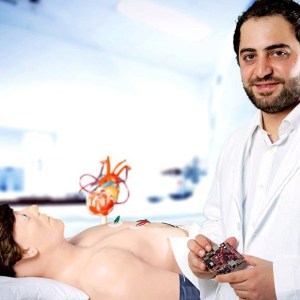
Ziad Sankari

Founder of a pioneering medical technology called CardioDiagnostics to diagnose cardiac emergencies as they occur, Ziad Sankari not only paved the way of medical advances in 2015 but was also honored by Barack Obama as one of the year’s top entrepreneurs. As a medical doctor, I can’t wait to see what his invention can do in real practice and how it will affect our job.

8. Mia Khalifa:

Mia Khalifa

I debated whether to include Mia or not quite extensively. At the end of the day, how could I not? She single-handedly got an entire country either proud or massively riled up. She got so many death threats from a lot of people around the region who were offended by what she did, as if that pertained to them in any way whatsoever, and, at the end of the day, being the world’s top pornstar – even if the ranking is labile – is still quite the achievement. Mia Khalife made it big. Double D big, or something along those lines.

9. Gabriel Abi Saad:

Gabriel ABI sAAD

At an age of only 8, Gabriel Abi Saad managed to win the world championship in a math competition involving fast counting. It may not be a first for a Lebanese – Mohammad el Mir did the same thing last year in his category too – but an accomplishment of the sort cannot go unnoticed.

10. The NGO Kafa:

Kafa

After years of campaigning, Kafa successfully got Lebanon’s parliament to pass a law protecting Lebanese women from domestic abuse. Recognizing that the law our dear parliament passed had massive shortcomings, Kafa did not simply stop. They kept their momentum going throughout the year, highlighting as many domestic abuse crimes as possible, culminating in a video about child marriage in the country that resonated all across the world. Here’s hoping the state of Lebanese women is better in 2016.


11. Mashrou3 Leila:
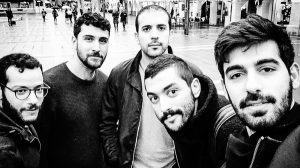
mashrou3 leila

Among Lebanon’s bands, Mashrou3 Leila were the frontrunners this year. After holding concerts across the world, from the US to Europe to the Arab world, they released their latest album “Ebn el Leil” not only to critical acclaim, but also to raves from The Guardian who called them one of the world’s next big bands.

12. Amira Kassis

Amira Kassis

A nutrition graduate from the American University Beirut, Amira Kassis reached for the stars in 2015. Literally. With her team at Nestle, she innovated a menu that will be used by two pilots who will fly a solar airplane around the globe over a period of more than 5 months. The food had to be preservatives free and still be fresh even after 3 months. The menu also included quinoa tabbouleh. What she did was never done before.

13. Our Vacant Presidential Seat:
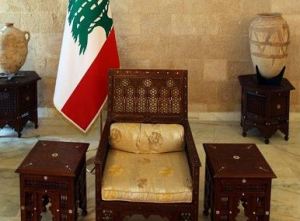
Empty Baabda Seat

Because a list about a country who hasn’t had a president for over a year and a half cannot be complete without a spot reserved especially for that has remained spotless so far. We thought 2015 would be the year our political establishment finally found a president. The joke’s on us. Throughout the year, that empty Baabda seat has been an ever-present reminder of how dysfunctional this country is. Eventually, the vacancy became comical, so here it is, at #13, for the joke that this has become.

Lebanon’s Cheesecake Factory Was Very Bad

chesecake-logo

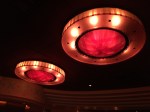
My attempts at trying the Cheesecake Factory go back to when I was in the U.S. a few months ago and couldn’t manage to find a table back then. I stood around, watching as servers shuffled around seemingly endless tables, carrying plates with enormous food portions. The cheesecake fridge looked great, but that was the extent of my experience at the time in early April.

Fast forward around 8 months, and the renowned American chain has recently opened up in Lebanon, in its continuing development in the Middle East, after opening up several branches in GCC countries.

Lebanon’s Cheesecake Factory is super busy. Wait times so far, even a week later, are still in the one hour range. They could rise even more. The hostesses were boasting yesterday, as they informed us we were lucky enough to only have to face a 20 minutes delay, that earlier that day some people had to wait three hours.

I have no idea why anyone would want to wait anyone for anything food related, and I’m really thankful I only had to wait 20 minutes to get my “Cheesecake Factory Experience, Lebanon style” because that was the maximum extent of my time – or anyone’s time – that such an experience deserves.

Me No Speak Arabic:


When your wait time is done and your buzzer vibrates for salvation, you get a very cheerful hostess – American style – take you to your seat. She gives you the menus, informs you in English that servers will be with you shortly and disappears.

So far so good. At that point, her English doesn’t feel out of place even though you’ve used only Arabic to communicate with all the employees, but no matter.

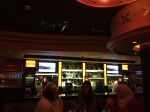
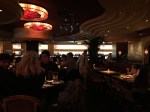
The server shows up. You ask them in Arabic about their recommendation, because the menu is barely readable with the super dim lighting in the place. They reply in English, sometimes borderline incomprehensible, but you try to maintain the conversation anyway. After taking your order, all forms of interactions with the server occur in English. That is you talk to them in Arabic and they reply in English.

When asked why they kept talking to me in English, their reply was that: this was the store’s policy. As I asked the manager about this, because it gets super annoying, and he said that the American head company has such a stipulation as a requirement to give customers the “American” experience.

Except we’re not American – sadly (unless the experience comes with a free passport) – and while many of us are bi or trilingual, there is absolutely no need to use any other language than my native tongue at a restaurant in my home country unless I wish to do so, and in most cases I do not, and I sure as hell did not want to feel like I was being rendered stupid by talking Lebanese to a server and being replied to in English, à la “get your language up to standards, sir.”

Perhaps this rule works best in GCC countries where most of the Factor’s customers are not native Arabic-speakers, but they desperately need to re-check this policy over here.

Overwhelmed Staff & Subpar Service:

Lebanon’s Cheesecake Factory boasts, according to the manager, more than 96 servers at an average of around 2 tables per server. You’d think with such a low ratio of tables to servers, you’d get excellent service.

It’s far from the case.

The huge number of servers leads to total chaos across the entire restaurant. You get to a point where you don’t know who you’re supposed to talk to in order to communicate a request or a complaint.

The level of the staff being overwhelmed is so high that there were serious shortcomings across the board. I’m not the only one who suffered from this, as several of my colleagues and friends also noted on their visits earlier in the week.

Perhaps it’s opening-week-jitters, but with the presence of staff from already-established Cheesecake Factory outlets to help in the launching phase, I don’t know how much of the service’s shortcomings can be attributed to nervousness.

Maybe it’s the language requirement?

Besides, the service is definitely not as “American” as you’d think it is. We got an aluminum foil piece in the item we ordered and no one reacted until, before paying the bill, we requested to see the manager to inform him about how horrible the experience was and about how we would most likely not visit again, not that they need our business anyway.

The Food Is Overpriced, But The Cakes Are Great:

I don’t know about the bloggers who were invited there for the opening, but if you go there as a normal civilian, you are looking at a bill that is above and beyond anything you’d pay at any other similar Lebanese restaurant, even if it’s American in origin.

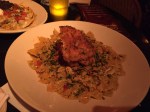
In deciding what I wanted to order, I googled the best items of the Factory and found a bunch of results that agreed on a couple of chicken-based dishes, which I ended up ordering. While they food was good enough, it was definitely not worth the $24 price per dish that we paid.

The food is also extremely fatty. Even the “skinnilicious” menu is not that “light.” I’m still stuffed more than 15 hours later, and we were sharing.

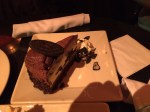
The saving grace, however, is that the cheesecakes are great. Seriously. I really hope they offer a way for people just to buy pieces of the cakes without queuing. We ordered a couple different kinds and the “Godiva Chocolate Cheesecake” is God-send. Absolutely great.

Stay Away For Now:

My advice to you, dear reader, is to resist the urge and steer clear of that place until either the mania dies down, or the staff becomes better trained, or they become more accustomed to the Lebanese market and adapt accordingly.

Until then, I have to say I was severely disappointed and would not recommend this place to anyone who’d listen.

It’s nice for the country to bring business in, but I refuse to be taken for granted as a Lebanese customer who can’t wait to set foot in any given franchise, which is sad really because I honestly had high hopes.


Stop Blaming & Shaming Lebanese Army Freed Hostages For Thanking Their Captives “Al Nusra”

Lebanon Nusra Army

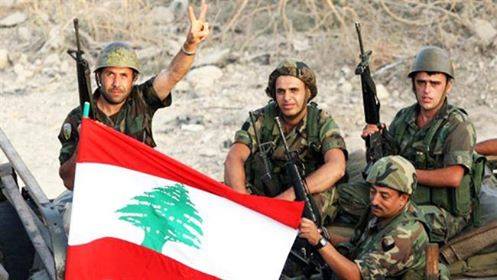
A few days ago, after more than a year and a half of stagnation, a major breakthrough in the case of Lebanon’s hostages with “Al Nusra” came through, culminating in their release in what can only be described as a shameful and despicable swap that paints this proud nation of ours as powerless, useless and utterly, irrevocably castrated.

It took our government more than a year and a half to get our captives home.
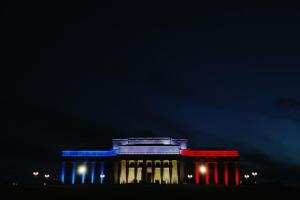
It took our government more than a dozen mediations to even reach a breakthrough.
It took our government to beg for the help of foreign nations – as usual – to make sure its sons returned home.
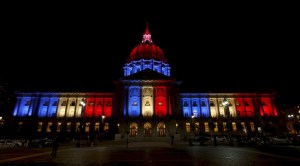
It took our government giving back terrorists, making sure those terrorists are provided for, for our hostages to come back home.

And we still have nine left with ISIS.

The aforementioned is horrific. In fact, the only good thing about the recent hostage swap is that our heroes have returned, that their families are whole again and that this dark, shameful chapter of the history of this nation can now begin to heal.

Most of us don’t even know their names, but here they are for everyone to know:

  • Nahi Abou Kalfouni,
  • Rayan Salameh,
  • Georges Khoury,
  • Ahmad Abbas,
  • Mohammad Taleb,
  • Georges Khazaka,
  • Pierre Geagea,
  • Ehab El Atrash,
  • Abbas Mshik,
  • Sleiman El Dirani,
  • Lameh Mzahem,
  • Rawad Abou Darhamin,
  • Wael Homs,
  • Maher Fayyad,
  • Maymoun Jaber,
  • Ziad Omar.

We also received back the body of Mohammad Hamieh, who was executed in front of his fellow captives on September 14th, 2014.

The release of Al Nusra’s Lebanese prisoners meant the potential for a bombastic field day for Lebanon’s media outlets, and they made sure to benefit as much as they could: Sixteen men freed from a terrorist group meant a whole lot of interviews and “scoops.’

Part of the media frenzy was a New TV interview with freed captive Georges Khazaka which you can watch in the video below:

The video translates loosely to the following:

Georges: I want to also thank “Al Nusra” for the good treatment they gave us.

Reporter: They treated you well? Someone who kidnaps you treats you well? *in semi-outraged tone.*

Georges: Yes, thank God.

Reporter: We used to say you were under pressure to say such things. Today, there are no more outside pressures on you to thank Al Nusra which is a terrorist organization that kidnapped you.

Georges: A terrorist organization, but they were okay with us. No one beat us, no one verbally assaulted us.

Reporter: But you were kidnaped for 16 months! You broke the heart of your families for 16 months. You thank Al Nusra for that?

Georges: Thank God.

The comments on Facebook are of the same outraged tone that reporter sported while interviewing this man who has been, as she said, held hostage for over 16 months in conditions that – so say the least – are much worse than anything that reporter or any of us has lived through in the past year and a half. Behold an exhibit:


You’d think that with the prospect of their release, after more than 16 months of captivity, that there would be some research into what to expect from ANY human being who has been in such conditions for such extended periods of time. You’d think they would know what to ask, how to ask it, how to handle such fragile creatures whose only fault really was to be citizens of a spineless country that couldn’t bring them back until 16 months later.

Yet again, expecting Lebanese media to actually do its job before crucifying people in the public eye is similar to expecting an owl dropping your Hogwarts acceptance letter at your windowsill.

In the mayhem of the freeing of these Lebanese prisoners, no one bothered to look up why these hostages had a sense of gratitude to their captives, and it all boils down to one concept in psychology called the “Stockholm Effect.”


The Stockholm Effect was discovered in Sweden in 1973 after captives at bank were held hostage for five days and then found to have developed attachment to their captors, rejecting governmental assistance at a certain point.

It’s a phenomenon in which people taken into captivity express empathy and even sympathy and could have positive feelings towards their captives. The feelings are considered to be irrational, emanating from the victims believing a lack of abuse at the hand of their captors is an act of kindness.

Research has suggested that hostages may exhibit the condition in situations featuring captors that do not abuse the victim, a long duration before resolution, continued contact between the perpetrator and hostage, and a high level of emotion. It affects around 8% of victims of kidnapping.

A prominent example is that of the 1985 hijacking of TWA Flight 847. Shortly after takeoff from Athens, two terrorists stormed the cockpit and demanded the diversion of the flight to Beirut. After capturing the plane, the perpetrators released the women and children. Two sailors and a group of wealthy American businessmen remained on the aircraft, and the captors held them for 10 days.

During the incident, the terrorists threatened the hostages with guns to their heads and in their mouths. They also beat one of the victims to death and dumped his body out of the tail section of the plane.

After the eventual rescue, reporters interviewed the captives as they disembarked. When asked to describe the captors, one hostage stated, “They weren’t bad people; they let me eat, they let me sleep, they gave me my life.”


There are certain Lebanese media using Georges Khazaka’s interview to showcase ‘Al Nusra’ in a positive light, in the sense of “oh look, they’re not that bad,” and those media are as bad, if not worse, then those who are outraged at what Mr. Khazaka said.

Al Nusra is a terrorist organization. They took soldiers and policemen hostage for over a year. They beheaded some of them for political and theatrical purposes. They are not human. They are animalistic barbaric entities that, like ISIS, should be annihilated. Period.

As some of you mighty keyboard clicking Goliaths click away at your Facebook, YouTube and Twitter profiles to shame our freed soldiers and policemen because of their statements, none of you had to go through what they went through for the past year and a half.

None of us had to be separated from our loved ones.

None of us had to take each day one step at a time hoping we wouldn’t die the next.

None of us were forced to watch as our colleagues were decapitated in front of us.

None of us had to go through what they’ve been through, and yet here are many of us belittling them.

This can be a political ploy. In the political chess game overtaking the region, these soldiers are mere pawns being manipulated by those who are far higher up. And isn’t the following picture the clearest indication of that?

Lebanon AL Nusra - 13

Our soldiers kneel while higher powers rise above. Isn’t that the truth everywhere?

Before being soldiers, our hostages are people. And they are people who lost everything they knew for more than a year. They’ve been broken, humiliated and decimated.

Before being soldiers, our hostages are people. Understanding that they might be prepared to fight terrorism in Arsal, where they were placed probably because they don’t know someone who knows someone who can assign them to less risky areas, but were not ready to be taken into captivity for more than a year is key.

Before being soldiers, our hostages are people. Wearing a police suit does not mean they are exempt from being human beings who can be hurt, changed and maimed too.

I’m not saying Stockholm Syndrome is a certainty. I’m saying it’s a possibility. Asking our soldiers to move on from their ordeal just because they’re freed is akin to asking a depressed person to snap out of it. We will never get it. We will never know. Whether psychology or politics, everything that we do will remain nothing more or less but speculation.

But when it comes to me, I look at Georges Khazaka and see a man whose humanity comes first and who breaks my heart at him being nothing more than a scarred pawn in a game of nations that is much bigger than him, than me or any of us will ever be.


Mashrou’ Leila’s Ibn El Leil; Ab: Beit Byout; Film Ktir Kbeer: When Lebanese Art Is Great

Amidst the very dismal situation in the country, of which I’ve written and nagged your head about plenty, there are currently three emblems of Lebanese art shining bright of which I think we should all take notice. The three acts/events I’m about to highlight have not paid me to support them and probably don’t need my support anyway, but I’ve found their offering to be so impressive that I think it should be highlighted.

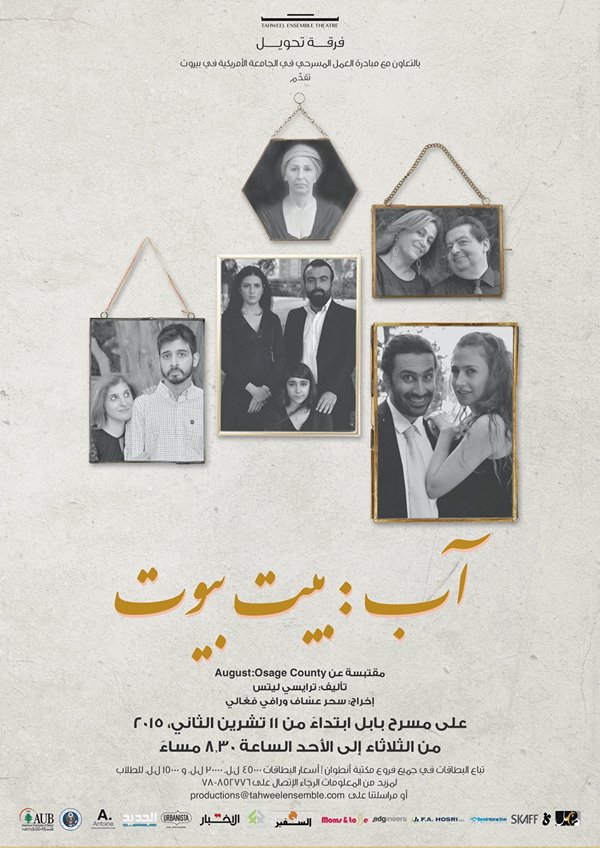
Ab: Beit Byout:

Ab Beit Byout

Ab: Beit Byout is the Lebanese take on August: Osage County, the award-winning turned-movie play, which you probably know because of both Julia Roberts and Meryl Streep who received Oscar nominations for their roles.

It’s the story of a very dysfunctional family meeting around their matriarch at the event of the disappearance and eventual death of their father. What ensues is sheer acting brilliance, a mouthful of dialogue that is as biting as it is seething with anger, regret, sadness and joy.

The adaptation to a Lebanese audience is great. It manages to carry enough of the punches of its American counterpart without feeling like a word for word copy or a subpar rip off. There are enough Lebanese aspects to it to make the play feel very relatable, very “I’ve seen such a thing take place in my hometown.”

Catch it at Babel Theatre in Hamra.

Film Ktir Kbeer (Very Big Shot):

Film Ktir Kbeer Poster

Nothing about this movie encouraged me to watch it. The title didn’t make sense. The poster felt like yet another Lebanese action-movie-wannabe. Confession time: I was extremely wrong.

Film Ktir Kbir is the kind of movies you’ve been wanting Lebanese filmmakers to make but as they were too busy making “Bebe” and movies about the civil war or about Christians hating Muslims and vice versa.

“Very Big Shot” is the story of 3 siblings who, after growing up in lower socio-economic standards, find themselves in deep trouble after getting involved with a drug lord, causing them to devise an ingenious way to save themselves.

There’s plenty of curse words, plenty of “every day” banter, and few cliches that are mostly spun as jokes. The acting is great. The script is extremely tightly written albeit the ending felt a bit rushed. It’s a movie that is equally fiction and equally a criticism of Lebanese society and politics.

Keep an open mind to it and give it a shot. I bet you won’t be disappointed.

Mashrou’ Leila’s “Ibn El Leil”:

Ibn El Leil

The opening song of Mashrou’ Leila’s newest album “Ibn El Leil” is an ethereal, mostly instrumental track called Aoede and it sets the tone for an album that is both more mature, more cohesive and more sonically impressive than anything they’ve offered before.

If you’re a fan of what they’ve done before – their song “Lil Watan” is excellent – then this album will be right up your alley. If you’ve been iffy about this Lebanese band, give this album a shot: there are some tracks there that are so nicely done they might change your mind.

After launching this album at London’s “Barbican,” The Guardian wrote about how this Lebanese band might be on the brink of finally exploding and filling stadiums instead of smaller venues. Perhaps that will happen one day, but what is sure for now is that “Ibn el Leil” is one hell of an album filled with songs that not only defy Arab and Lebanese stereotypes, but are eons above and beyond anything that is offered musically in the region.

In their latest offering, Mashrou’ Leila are breaking the confines of what Arab music was allowed to say. It’s a joy to listen to.


Listen to: 3 Minutes; Kalam; Tayf; Ashabi; Marrikh.

From Beirut, This Is Paris: In A World That Doesn’t Care About Arab Lives 


When a friend told me past midnight to check the news about Paris, I had no idea that I would be looking at a map of a city I love, delineating locations undergoing terrorist attacks simultaneously. I zoomed in on that map closer; one of the locations was right to where I had stayed when I was there in 2013, down that same boulevard.

The more I read, the higher the number of fatalities went. It was horrible; it was dehumanizing; it was utterly and irrevocably hopeless: 2015 was ending the way it started – with terrorists attacks occuring in Lebanon and France almost at the same time, in the same context of demented creatures spreading hate and fear and death wherever they went.

I woke up this morning to two broken cities. My friends in Paris who only yesterday were asking what was happening in Beirut were now on the opposite side of the line. Both our capitals were broken and scarred, old news to us perhaps but foreign territory to them.

Today, 128 innocent civilians in Paris are no longer with us. Yesterday, 45 innocent civilians in Beirut were no longer with us. The death tolls keep rising, but we never seem to learn.

Amid the chaos and tragedy of it all, one nagging thought wouldn’t leave my head. It’s the same thought that echoes inside my skull at every single one of these events, which are becoming sadly very recurrent: we don’t really matter.

When my people were blown to pieces on the streets of Beirut on November 12th, the headlines read: explosion in Hezbollah stronghold, as if delineating the political background of a heavily urban area somehow placed the terrorism in context.

When my people died on the streets of Beirut on November 12th, world leaders did not rise in condemnation. There were no statements expressing sympathy with the Lebanese people. There was no global outrage that innocent people whose only fault was being somewhere at the wrong place and time should never have to go that way or that their families should never be broken that way or that someone’s sect or political background should never be a hyphen before feeling horrified at how their corpses burned on cement. Obama did not issue a statement about how their death was a crime against humanity; after all what is humanity but a subjective term delineating the worth of the human being meant by it?

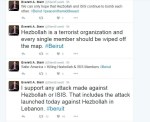
What happened instead was an American senator wannabe proclaiming how happy he was that my people died, that my country’s capital was being shattered, that innocents were losing their lives and that the casualties included people of all kinds of kinds.


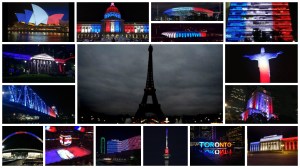
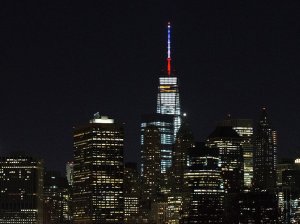
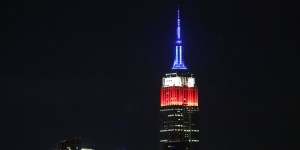
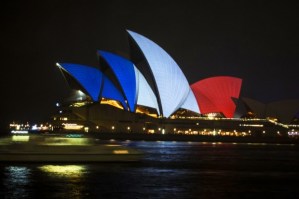
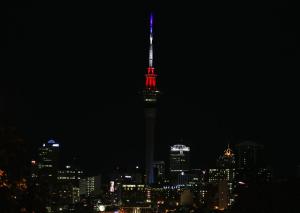
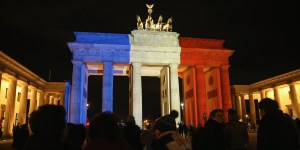
When my people died, no country bothered to lit up its landmarks in the colors of their flag. Even Facebook didn’t bother with making sure my people were marked safe, trivial as it may be. So here’s your Facebook safety check: we’ve, as of now, survived all of Beirut’s terrorist attacks.


When my people died, they did not send the world in mourning. Their death was but an irrelevant fleck along the international news cycle, something that happens in those parts of the world.

And you know what, I’m fine with all of it. Over the past year or so, I’ve come to terms with being one of those whose lives don’t matter. I’ve come to accept it and live with it.

Expect the next few days to exhibit yet another rise of Islamophobia around the world. Expect pieces about how extremism has no religion and about how the members of ISIS are not true Muslims, and they sure are not, because no person with any inkling of morality would do such things. ISIS plans for Islamophobic backlashes so it can use the backlash to point its hellish finger and tell any susceptible mind that listens: look, they hate you.

And few are those who are able to rise above.

Expect the next few days to have Europe try and cope with a growing popular backlash against the refugees flowing into its lands, pointing its fingers at them and accusing them of causing the night of November 13th in Paris. If only Europe knew, though, that the night of November 13 in Paris has been every single night of the life of those refugees for the past two years. But sleepless nights only matter when your country can get the whole world to light up in its flag color.

The more horrifying part of the reaction to the Paris terrorist attacks, however, is that some Arabs and Lebanese were more saddened by what was taking place there than what took place yesterday or the day before in their own backyards. Even among my people, there is a sense that we are not as important, that our lives are not as worthy and that, even as little as it may be, we do not deserve to have our dead collectively mourned and prayed for.

It makes sense, perhaps, in the grand sense of a Lebanese population that’s more likely to visit Paris than Dahyeh to care more about the former than about the latter, but many of the people I know who are utterly devastated by the Parisian mayhem couldn’t give a rat’s ass about what took place at a location 15 minutes away from where they lived, to people they probably encountered one day as they walked down familiar streets.

We can ask for the world to think Beirut is as important as Paris, or for Facebook to add a “safety check” button for us to use daily, or for people to care about us. But the truth of the matter is, we are a people that doesn’t care about itself to begin. We call it habituation, but it’s really not. We call it the new normal, but if this normality then let it go to hell.

In the world that doesn’t care about Arab lives, Arabs lead the front lines.