Django Unchained [2012] – Movie Review

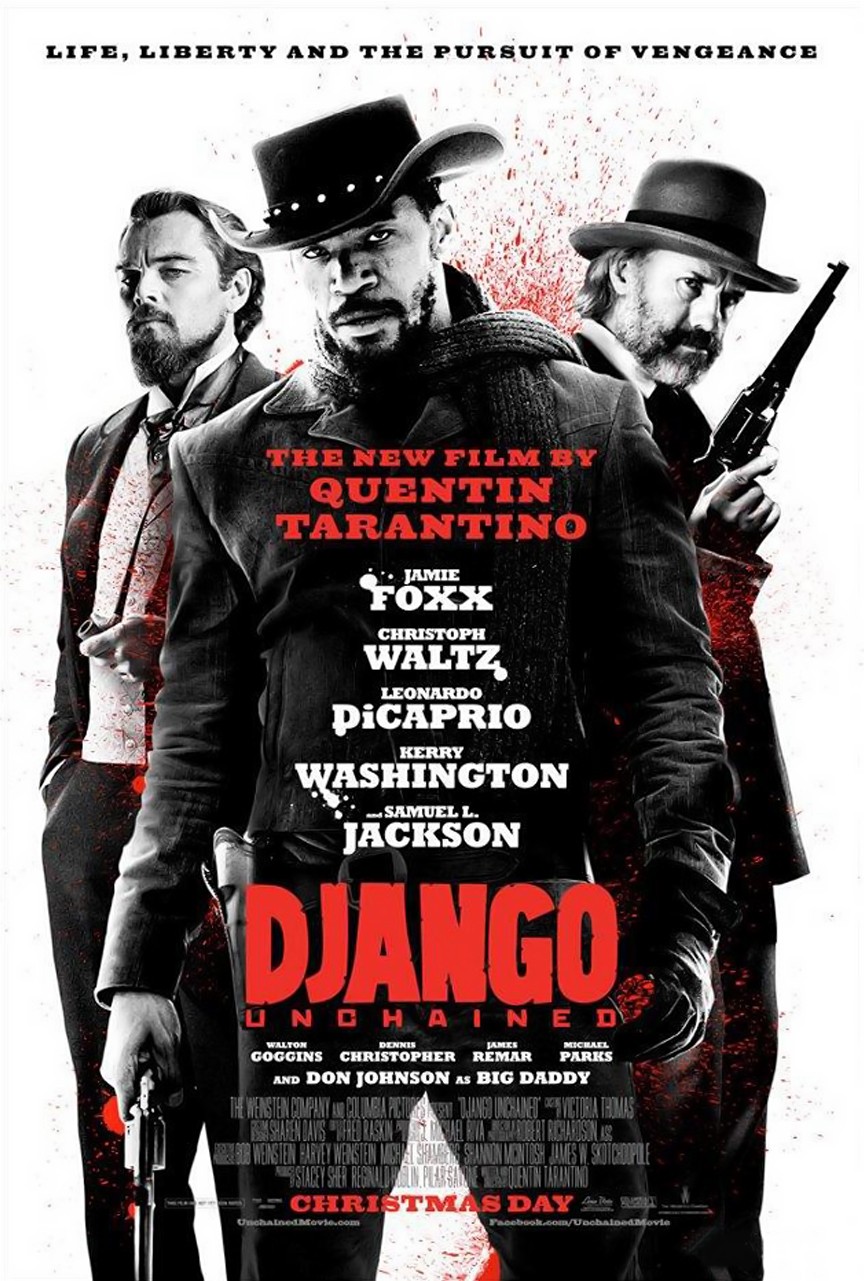
Django Unchained Poster

It seems 2012 is the year for Hollywood slavery movies. Quentin Tarantino’s foray into the Western movie genre with Django Unchained is the polar opposite of Steven Spielberg’s Lincoln, both movies about the American slavery era. While Lincoln is about the political scene that led to the abolishing of slavery, Django goes loose in a totally different manner.

Django (Jamie Foxx) is a black slave who gets rescued and freed by German-born bounty hunter Dr. King Schultz (Christoph Waltz) who is on the hunt for the murderous Brittle brothers and only Django can help him find them. Django’s goal, however, isn’t to kill as many wanted white men as possible. It is to find and rescue his wife Broomhilda (played excellently by Scandal’s Kerry Washington) who is enslaved in a plantation called “Candieland” owned by a francophile who speaks no French called Calvin Candie (Leonardo Dicaprio) with his self-hating black butler named Stephen (Samuel L. Jackson).

Stylistically, Django Unchained is daring. The movie’s frames, shots, camera movements are unusual. The amount of gore and blood are also quite proficient. All of this is to be expected from a Tarantino movie who, as usual, delivers a riveting piece of cinema that will keep you hooked for over 160 minutes.

Tarantino, who appears in the movie in a cameo scene towards the end, wrote this movie as well. While the story isn’t very new and the overall ambiance is fairly typical for the Western genre, it’s the execution that makes up for it here. You can’t help but marvel at the technical execution of many of the movie’s scenes. Django Unchained is very bold in more than one way, notably as it showcases in subtle shades of drama mixed with comedy the horrors of slavery and racism.

The movie’s acting highlight is Leonardo DiCaprio who gives a tour de force performance of his character. In a way, while the movie goes off to a good start, it doesn’t find its footing until DiCaprio’s character comes into the picture to help make things much more interesting. Both Christoph Waltz and Jamie Foxx are great in their respective characters, excelling in scenes that find the two working together towards their goal, the latter with his comedic tendencies and the former with his sharp ability to navigate between cruelty and compassion in a heartbeat. Samuel L. Jackson makes his best at making his character downright unlikeable. You will hate that butler-slave. In a way, the Django-Shchultz duo is the polar opposite of Candie-Stephen.

Despite being un-needingly violent at times and despite being overly drawn-out towards the end as the movie tries to reach its conclusion, Django Unchained is at the end of the day Tarantino’s take on an era of American history that few Americans want to remember. Django’s charm isn’t that it’s fast-paced, keeping you hooked all the time. It’s all in its characters. Dr. Schultz isn’t mystified by Django’s humanity. He sees it clearly and is taken by it. He clearly knows that slavery is bad, not for political reasons but for humanitarian purposes, which is where Django and Lincoln veer off thematically. Django isn’t resigned to his fate – he is resilient, always fighting, always aspiring for more, always opposing the likes of Candie and Stephen who want to bring people like him down.

And it is here that Django Unchained excels: in seeing all those different personalities interact on screen. Towards the end, you forget that the movie has had about five thousand bullets fired and a growing casualty north of three hundred deaths (I did not count). The only thing that remains fixed is that these people whose lives you’re seeing unfold (or end) in front of you are highly interesting, to a backdrop of a very eclectic musical soundtrack and the vision of a director who makes the aforementioned historical era entirely his own.

4/5

Zero Dark Thirty [2012] – Movie Review

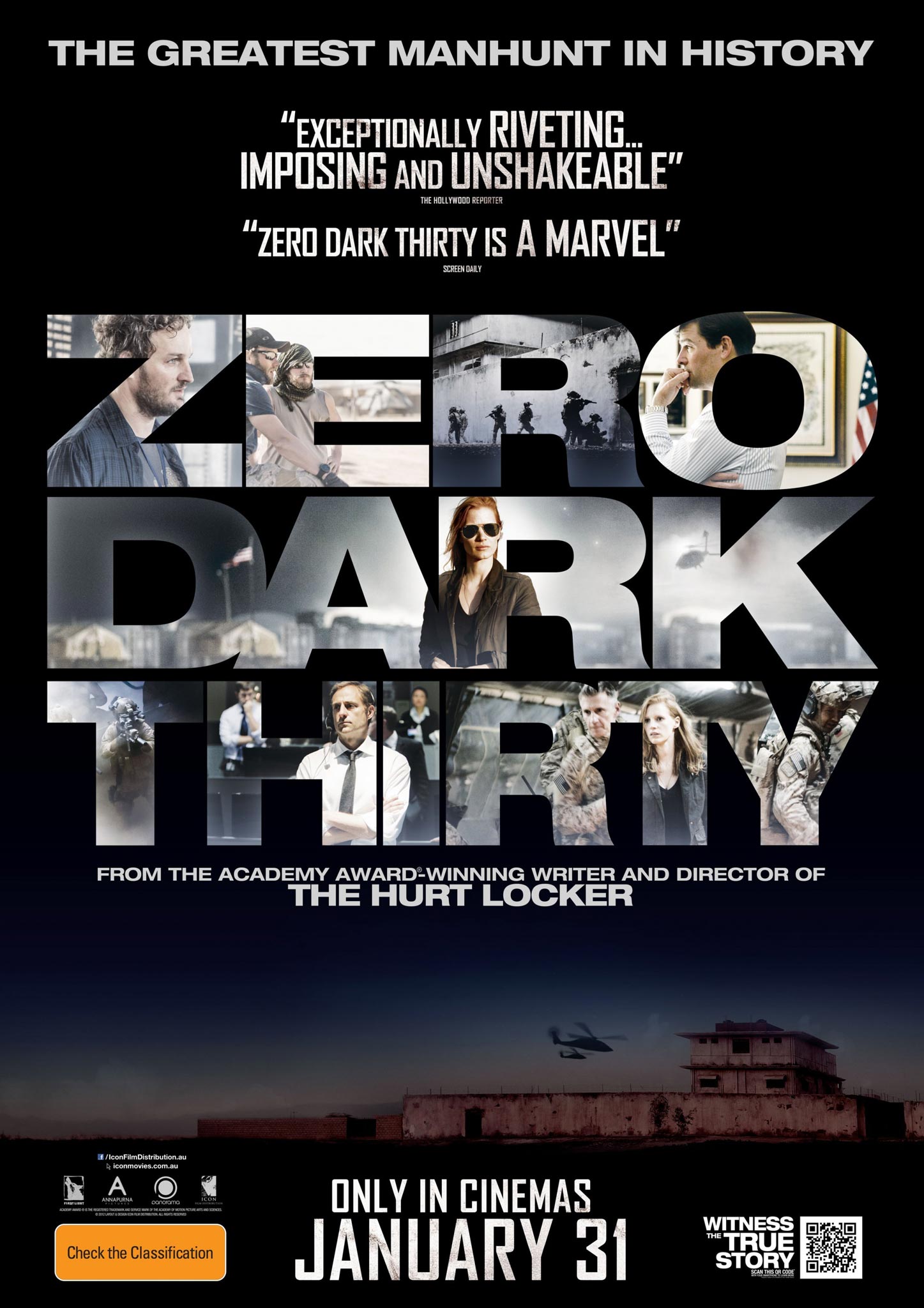
zero-dark-thirty-poster

Here it is. Arguably the most challenged American movie of the year (a recipe for those little golden statuettes): Kathryn Bigelow’s Zero Dark Thirty. U.S. Senators of both parties came out against the movie because it portrayed the use of torture in many of its scenes in order to extract information about the whereabouts of Bin Laden. You know, because the CIA surely did not use torture. Ever.

Zero Dark Thirty is the story of CIA agent Maya (Jessica Chastain) on her pursuit of Al-Qaeda leader Osama Bin Laden over the course of a decade. The torture methods her agency employs, which include but are not exclusive to food and sleep deprivation and waterboarding, lead her to a man called Abou Ahmad Al-Kuwaiti who, for every single non-idiot person out there, obviously comes from Kuwait. Except it’s not as obvious for the movie’s CIA agents who spend more than an hour of the movie’s 157 minutes running time on a manhunt before realizing that – GASP – Al Kuwaiti means he is from Kuwait. As they search for Osama Bin Laden’s main means of communication with the outside world, these CIA agents are faced with people who don’t want them to succeed leading to terrorist bombings in CIA headquarters, of fancy hotels, of different capitals around the world and a lot of exasperated agents who can’t fathom how they would be targeted as such.

It seems the dreadful The Hurt Locker did not satisfy Kathryn Bigelow’s appetite for American neo-political-military-award-magnet-dramas. I mean, why wouldn’t she tackle the same theme in one way or another all over again to become the first female director to win best director at the Oscars twice? Therefore, Bigelow is at it again. And Zero Dark Thirty includes not only every single thing I hated about The Hurt Locker but much, much more as well.

Jessica Chastain’s character Maya is definitely unlikeable. I hated her character to the extent that I couldn’t even appreciate her acting performance. She came off as grating, whining, overly melodramatic at times especially in a shouting scene with a CIA chief in Pakistan when she asks for extra man power in a man hunt that had been proving futile at that point. However, this type of performance is definitely the type to draw in award-voters: a charismatic female character at the heart of a male-dominated institute in the midst of the hunt for the world’s most wanted man? I can hear those voters orgasming already, which is a damn shame because if she ends up winning, she most certainly does not deserve it. Her strongest scene is right at the movie’s end as she silently reflects on the end of this decade-long era of her life. But even that scene’s potency isn’t enough.

One thing to say about Zero Dark Thirty, however, before I start grilling it is that Bigelow does well directing the movie from an “artistic” point of view. Some sequences are very well filmed, especially the raid on Bin Laden’s compound, and the movie is very technically proficient. However, a political movie like Zero Dark Thirty necessitates a politically oriented review. So here it goes.

Zero Dark Thirty is an insult on your intelligence. If there’s any movie which will get you outraged at its inaccuracy, it’s this. As a movie which wants to give itself authenticity by going the whole mile and asking you to “witness the whole truth,” it only comes off as mass propaganda about how the CIA is making the world a better place just by them being there and it portrays all those filthy Arabs living in these parts of the world as the scum of society: Muslim terrorists who can’t wait to blow up some Americans.

As they hunt for Abou Ahmad Al-Kuwaiti in some Pakistani city, the CIA van is stopped by Pakistani men. One of the Pakistanis driving gets out of the van in order to reason with the armed youth. “Shou ya chabeb?” he asks them in arabic – levantine Arabic no less – for: what’s up guys? A simple wikipedia search would have told Mrs. Bigelow that Arabic is, in fact, not spoken in Pakistan or any -stan ending country. But why would she care? Arabic-language, terrorist, Pakistan… it’s all the same for her intended audience. In fact, the movie’s scenes in Pakistan feature less Pakistani than Arabic, which is odd and definitely not “witnessing the truth” or as American critics are saying: “a movie reveling in keen detail.” Since when do Pakistanis speak Levantine Arabic?

The use of Arabic in the movie doesn’t only stop at Pakistan, it extends to various interrogation scenes where someone has to translate to Chastain’s character what the man is saying. Fair enough.

As one of the CIA agents sets up a meeting with a supposed worm within Al-Qaeda around Christmas time, she is found talking to Chastain’s character about baking a cake for the man to which Chastain replies: “Muslims don’t eat Cake.” Really? In fact, the entirety of Zero Dark Thirty doesn’t even bother to draw the line  between a religious extremist and a Muslim: it gets the boundary between the two to be so blurred that it’s so easy to confuse one with the other, making the entire movie not only highly stereotypical but highly nauseating and shallow as well.

For an American viewer, Zero Dark Thirty is definitely fascinating and I was even taken by its earlier scenes before the rhetoric started. American movie critics who don’t understand the other languages spoken in the movie and don’t have the ability to tear the movie apart from a non-cinematic perspective won’t care about the aforementioned points. Arabic, French, Pakistani – who cares? American movie critics believe that the way the hunt for Bin Laden was dramatized is chilling. They believe that the movie is politically non-biased. For those of us who can actually read into Bigelow’s Zero Dark Thirty, it only comes off as severely culturally-inaccurate and offensive.

Bin Laden was a bad man. He killed a lot of innocent people and I’m glad he’s dead. The CIA and whichever other intelligence agencies that helped the Americans to catch that filth of a man need to be commanded for their job. But this movie is not the way. Zero Dark Thirty wants to be the definite movie about the Bin Laden manhunt. Bigelow wants the honor of being the first and last director to tackle this issue. But that is far from the case. Again, while technically proficient, the movie is not perfect. It is too slow at times and at other times, when it moves, it is only like an arthritic ninety year old man. The first twenty minutes of torturing a Saudi are chilling to watch. They are followed by almost 90 minutes of scenes that might as well be considered as an antidote to insomnia before delivering again with the Bin Laden killing scene.

By aiming to be technically proficient, Zero Dark Thirty undercuts itself by becoming emotionally detached from the material it’s trying to portray. By showing torture scenes that more often than not lead to no-tactical results, the movie is amoral. By turning the entire struggle of all of 9/11’s victims, as it starts with real-life audio from the twin towers on that horrible day, into a vehicle for Chastain and Bigelow to cash in on some rewards, the movie is also despicable. By portraying every single non-American aspect of the movie in such gross inaccurate ways, Zero Dark Thirty is horrendous. Zero Dark Thirty is, eventually, over two and a half hours of pure propaganda that is not only offensive to the memory of the Americans who died on 9/11 but to a lot of viewer’s mental capacities.

You know what’s common between Bin Laden and Zero Dark Thirty? They are both horrifyingly bad and an abomination to existence.

1/5


Les Misérables [2012] – Movie Review

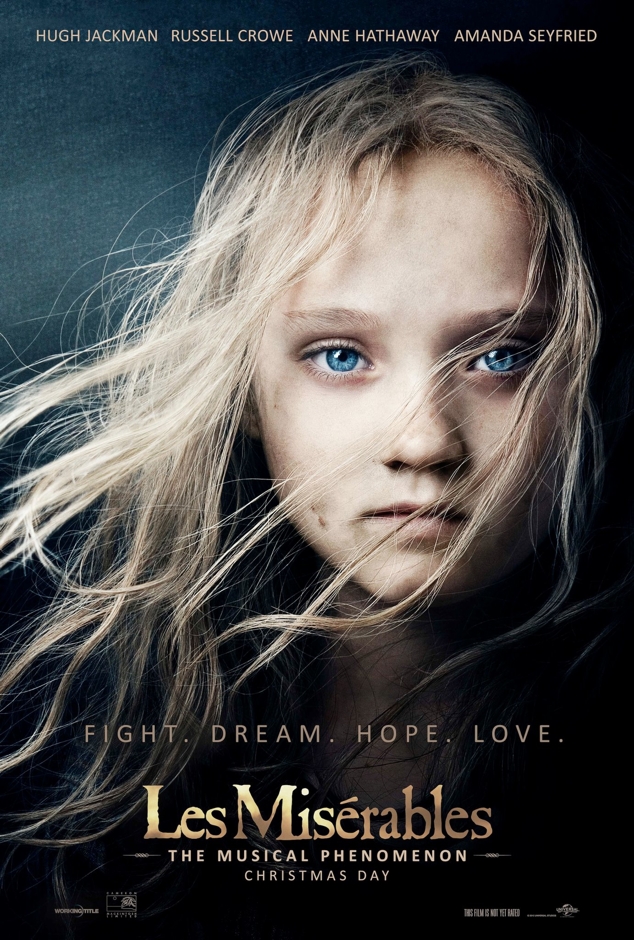
les-miserables-movie-poster

As a person who grew up and went through a French curriculum with Victor Hugo’s novel as its centerpiece at many points, I’ve grown attached to the essence of the novel. I’ve also grown to understand it, know what it contains, understand the message that Hugo wanted to pass on. I’d even joke and say the novel’s impressive spine is a byproduct of Hugo being French – a lot of blabbing for nothing. I’ve taken some of that, as is evident by my wordy blogposts at times. This review will surely turn into one so just skip to the last paragraph if you don’t feel like reading.

My knowledge of Victor Hugo’s most famous 1500-pages novel has led me to conclude that it’s very difficult to turn it into a motion picture. If the previous attempts at this novel weren’t enough proof, Tom Hooper’s take on Les Misérables adds to the growing list of not-nearly-there trials.

The story is known for everyone by now. Jean Valjean (Hugh Jackman) is a French man living around the time of the French revolution and is forced to steal a loaf of bread to save a relative’s life. He is subsequently thrown in jail for 19 years at the end of which he’s released on parole. Valjean, however, breaks his parole and ends up making a decent life for himself as the mayor of a small French town in Northern France called Montreuil-sur-Mer. But Javert (Russell Crowe), the prison warden who was in charge of Valjean, appears back in his life during a visit to the factory run by Valjean, now working under a new name. In that factory works a single mother called Fantine (Anne Hathaway) who gets sacked from her job when her secret of having had a child out of wedlock, Cosette (eventually played by Amanda Seyfried), is discovered. Fantine eventually succumbs to becoming a prostitute and is saved by Valjean who promises to take care of her daughter as he runs away from Javert who’d do anything to catch him, to the backdrop of a growing revolution in the streets of the French youth.

Tom Hooper’s Les Misérables is a full-blown musical. No, it’s not a musical in the sense of a talking movie with a few songs interspersed here and there. It’s a musical in the sense of three hours non-stop singing where even “thank you”s are sung, where reading letters becomes melodic and where, if you’re not a fan of musicals to begin with or not entirely sure what you’re getting yourself into, you’d end up wanting to pull your own hair out. Yes, this version of Les Misérables is definitely not for everyone. Even if you love – scratch that – adore music, Les Misérables might prove a very tough pill to swallow. And at times it really, really is.

Hugh Jackman, who can sing, ends up grating around the 120th minute mark. Russell Crowe on the other hand entirely sheds his Gladiator image for a singing Javert and with his not-so-pleasant singing voice ends up entirely intolerable a few minutes in. Russell Crowe even looks entirely uncomfortable to be there and it reflects on his character, making Javert – a central figure to the story – comical at times. Hugh Jackman has to be commanded for a job well done as Valjean. Few actors can say they can deliver performances as he did with the close-ups he got throughout the movie.

In fact, the actors and actresses in Tom Hooper’s Les Misérables all performed their songs in the movie live. While a piano played in the background to guide them, they acted their songs instead of recording them months in advance and eventually lip-synching them to film.

The single acting performance in the movie that will absolutely blow your socks off is Anne Hathaway, who’s probably aided by the fact that her character isn’t there for long. Hathaway, as Fantine, is brilliant. She deserves all the praise she’s been getting. Her performance of the Susan-Boyle-made-famous song “I Dreamed A Dream” is gut-wrenchingly stunning. She brings the life into her character and gives Fantine a richness which other actors in this movie with more running time couldn’t bestow upon theirs. Hathaway steals every scene she’s in and ends up being the only reason you might walk out of this movie feeling like you hadn’t wasted three hours of your live. Just to watch her do what she does so beautifully. No one is raining on Hathaway’s parade come Award-season time.

Interesting casting choice include Samantha Barks as Eponine, the daughter of the Thénardiers, played by Helena Bonham Carter and Sasha Baron Cohen whose only purpose was to add some comic relief to some tense moments. Barks sings her songs really well and gets you to relate to her character, despite the background. She delivers a nice rendition of “On My Own.”

Les Misérables does have its strong moments, notably the opening scene, Hathaway’s minutes and the ending, but the movie accumulates a lot of off-moments as well that make the result very lopsided. The movie is also extremely long. Thirty minutes (of wailing – singing) could have easily been cut with the story not be affected because few of those songs tell us more about the character and its story, an example being I Dreamed A Dream in which Fantine tells the story of how she reached the misery she was in. The overall result is a movie that feels very in limbo: okay, not great, this is awesome, this is horrible, goosebumps, kill me now. These are all things you will feel while watching Les Misérables.

3.5/5 – – new rating system.

The Top 13 Movies of 2012

Since I haven’t watched all the “it” movies that 2012 has to offer yet, this list is once again tentative and will be subject to updates. Movies that I have yet to see include but are not restricted to Django Unchained, The Master, Les Miserables and Zero Dark Thirty.

I can’t say 2012 has been a brilliant year for movies but there were some releases that stood above others for me. So without further ado, this is the preliminary list of the movies that I enjoyed the most over the past 12 months.

When a review is available, it will be linked through the title.

13 – Beasts of the Southern Wild

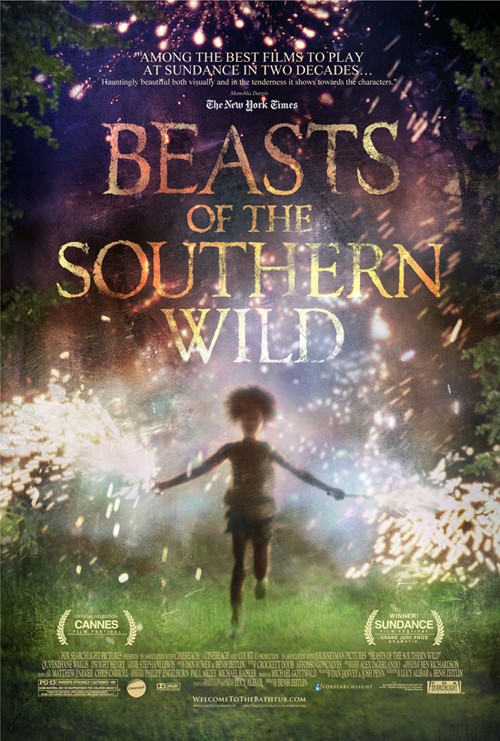
Beasts of the Southern Wild Movie Poster

This odd, peculiar and strange movie is bolstered by an absolutely stunning performance by six year old newcomer Quvenzhane Wallis as a little girl who’s fighting for her father and her forgotten community.

12 – Anna Karenina

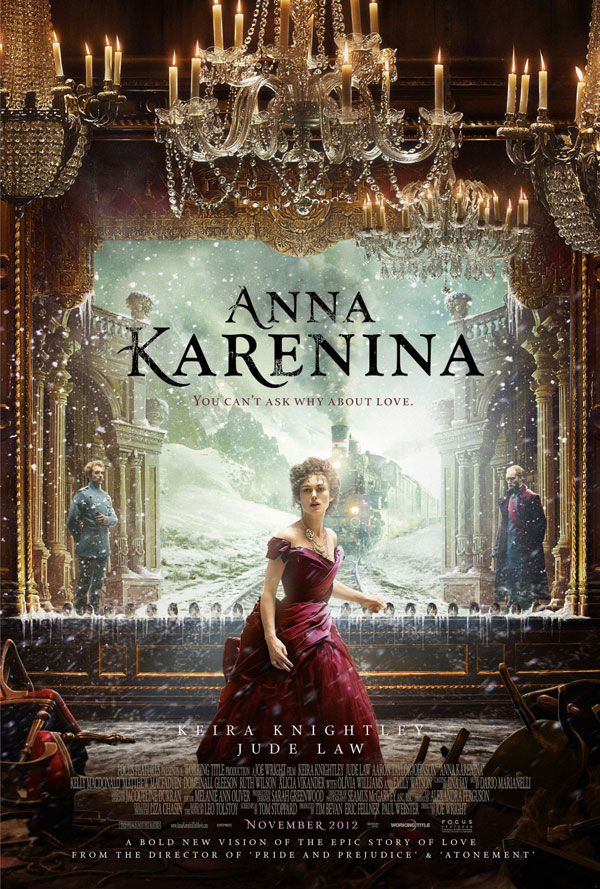
Anna Karenina Joe Wright 2012 movie poster

This take on Tolstoy’s most famous novel turned out to be very polarizing. But I was one to enjoy it. Despite a few hiccups in the storytelling, this adaptation turned out to be quite interesting.

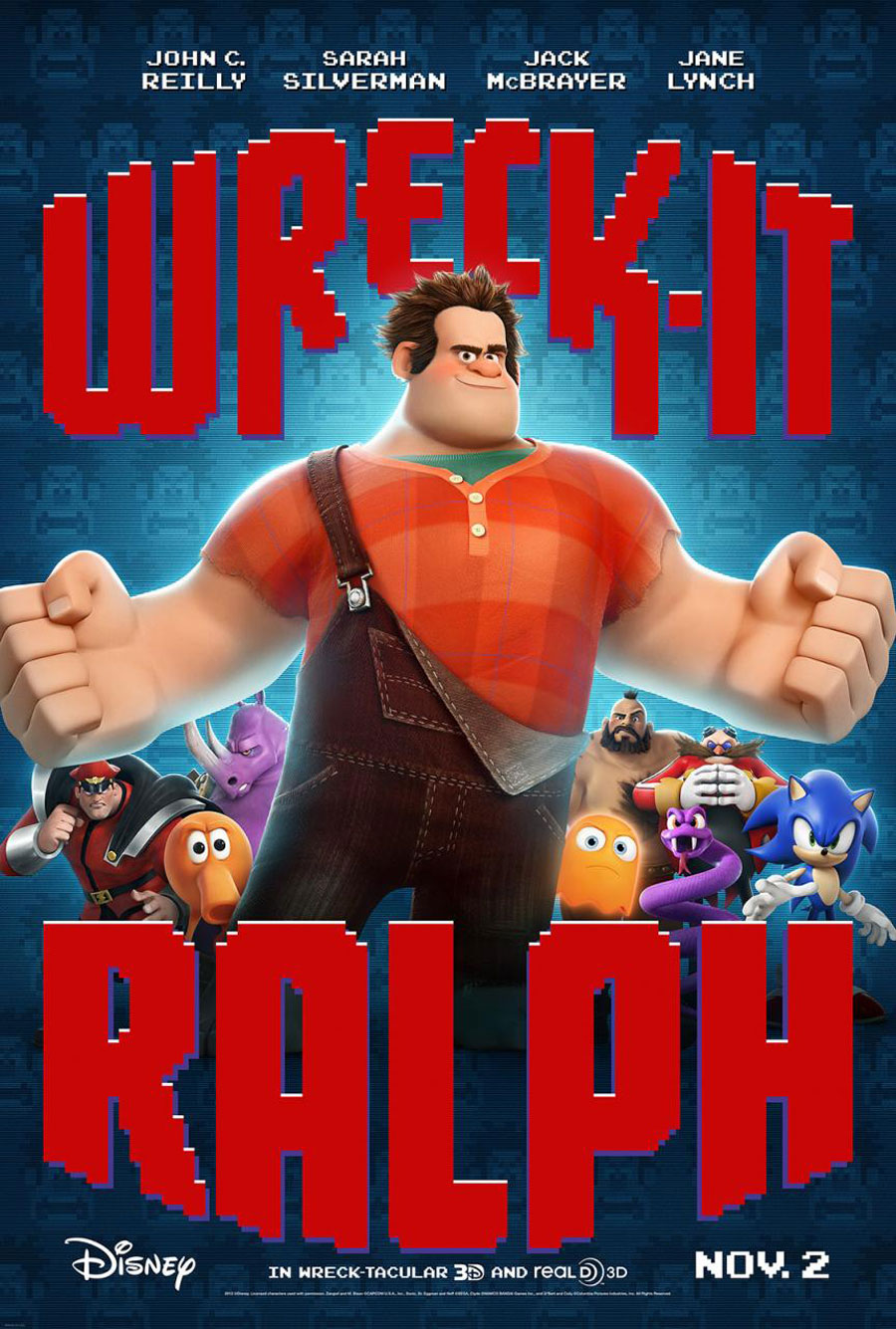
11 – Wreck-It-Ralph

Wreck It Ralph Movie Poster

The best animated feature oscar is not going for this movie. But make no mistake, Wreck-It-Ralph is where animation magic and heart lie.

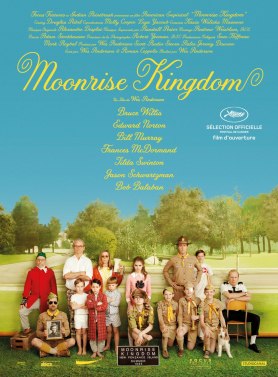
10 – Moonrise Kingdom


Moonrise Kingdom Movie Poster

Wes Anderson’s new offering is a refreshing take on a boy’s first love. It is a charming movie with a great musical score to accompany it. You can’t but feel happy as you finish watching Moonrise Kingdom.

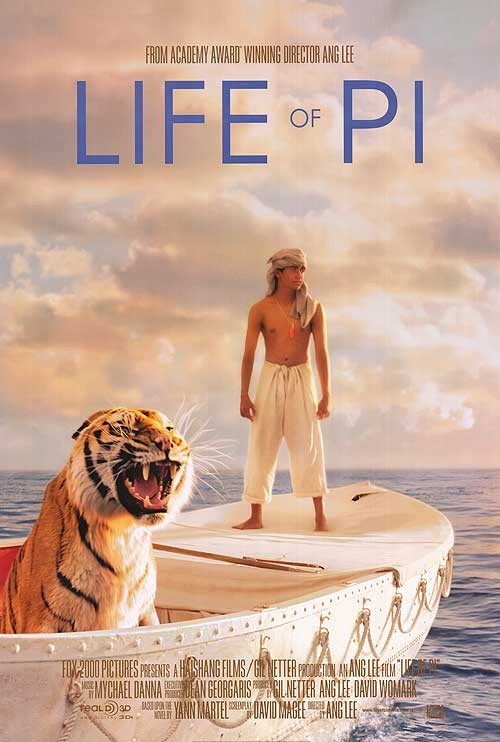
9 – Life of Pi

Life of Pi movie poster

Ang Lee’s tale of an Indian boy lost in the Pacific Ocean with a Bengali Tiger is a marvel to look at. But that’s not what the movie is all about. This story about survival despite all odds cannot but take you in.

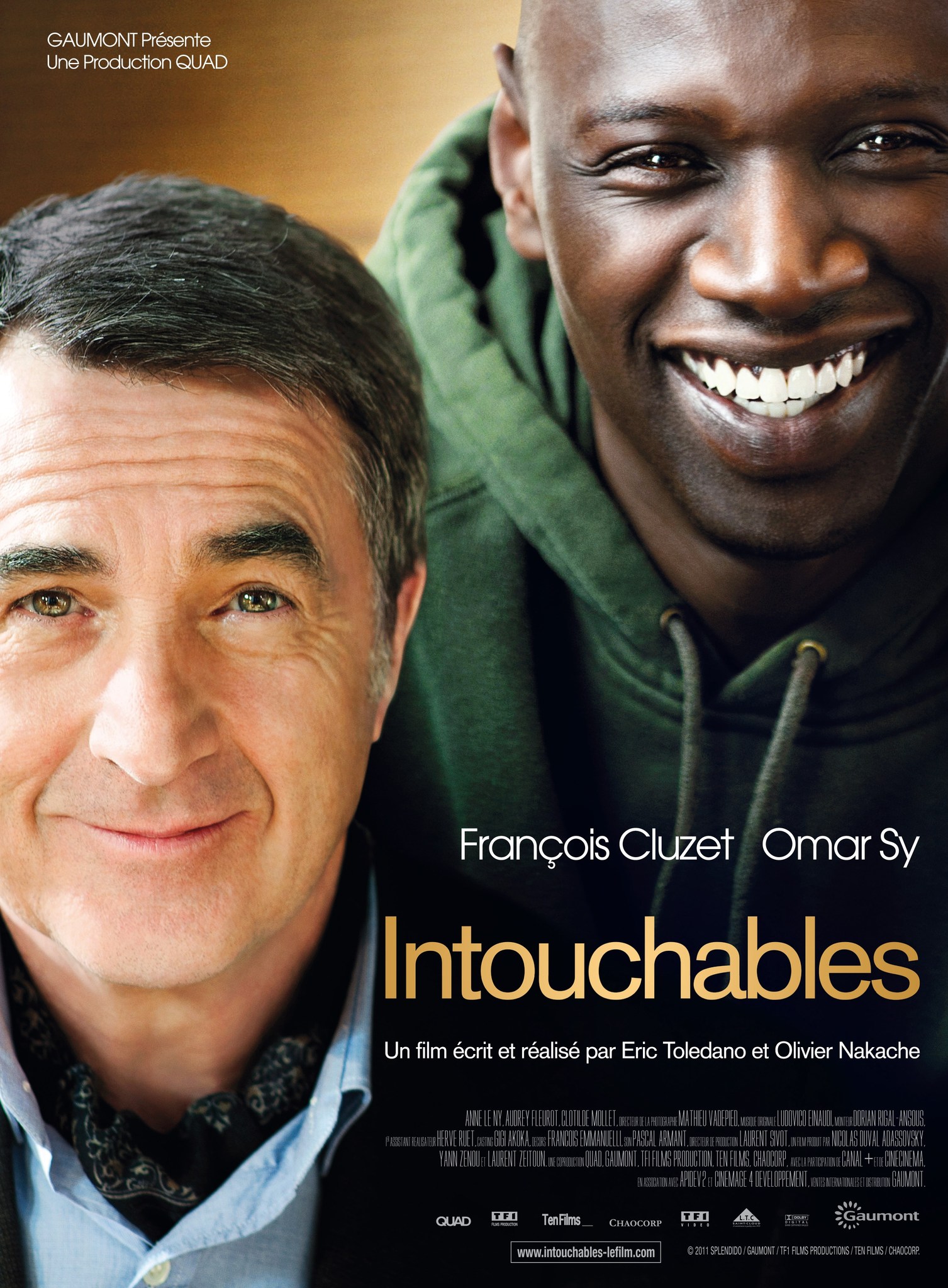
8 – Intouchables

120X160 INTOUCHABLES ok.indd

It’s no wonder this French movie quickly became one of the biggest movies in the history of French cinema. The real story of two men who become friends despite their drastically different backgrounds and their entirely different cultural and social classes is a joy to see.

7 – The Hunger Games

The Hunger Games - Movie Poster

This post-apocalyptic movie captured the book’s essence: the portrayal of the characters’ anguish, their fight for their own lives and their ordeal under a ruthless tyranny.

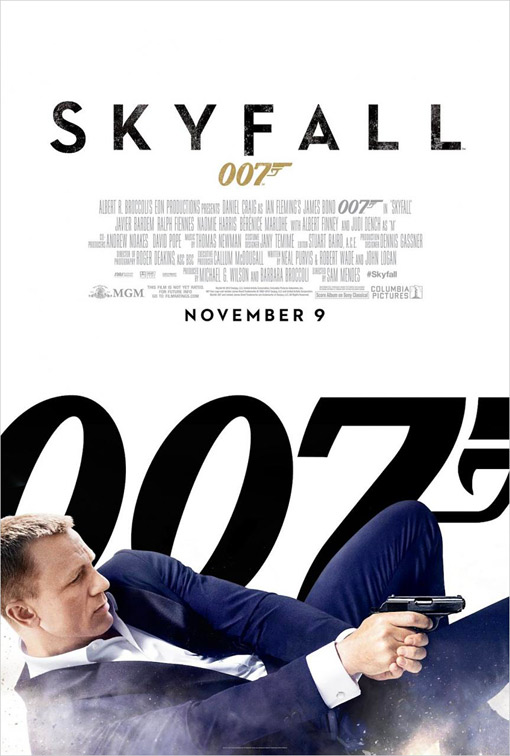
6 – Skyfall

Skyfall Movie Poster

The best James Bond movie in years. Skyfall gives 007 a much needed aspect of humanity and helps make our favorite spy much more relatable.

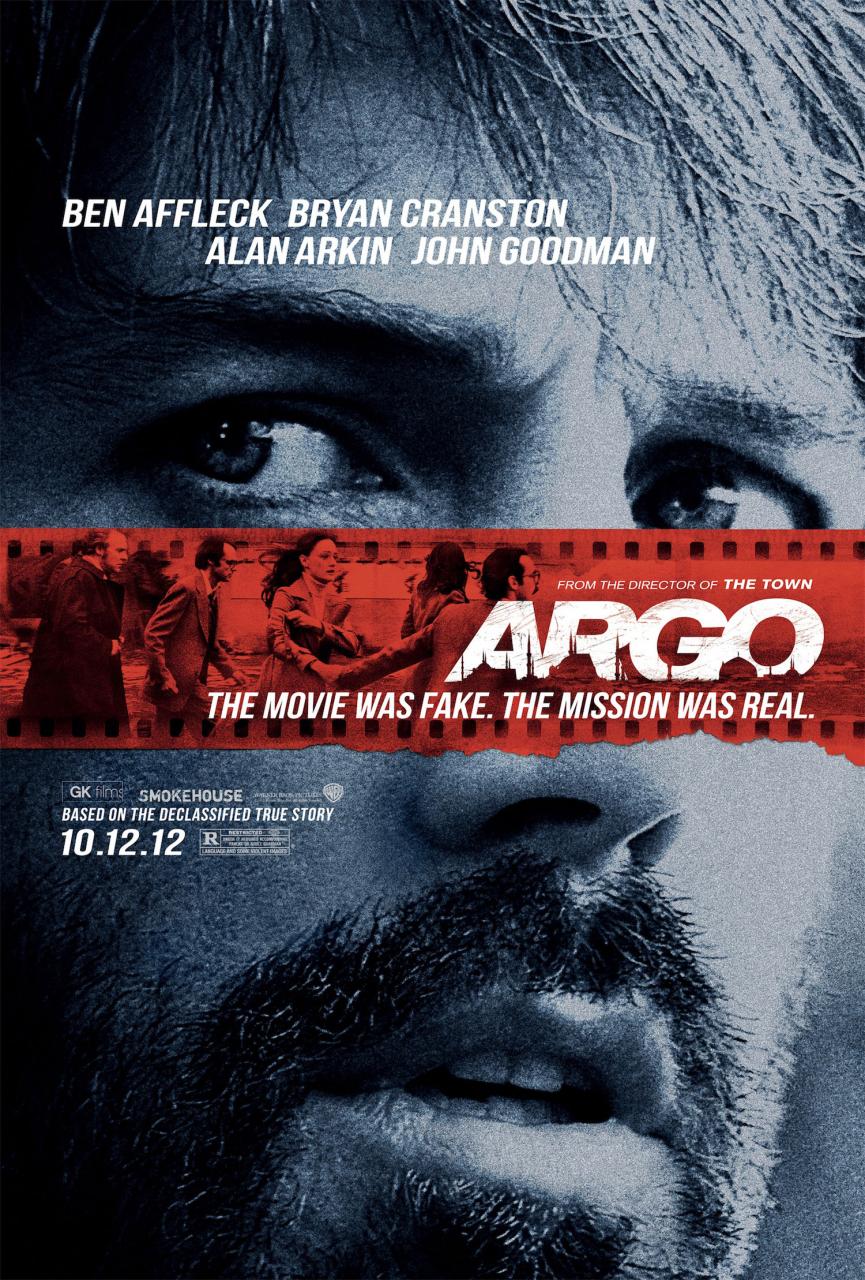
5 – Argo

Argo-Movie-Poster

Ben Affleck’s new movie of a stranger-than-fiction real story is absolutely mesmerizing. It did a great job at showcasing the morbid atmosphere that the American hostages were in and managed to turn their ordeal into top-rate drama that will keep you at the edge of your seat.

4 – The Perks of Being a Wallflower

The Perks of Being a Wallflower - Movie Poster

This coming of age movie is enchanting and absolutely heartfelt. It is about the joy of acceptance and the fear of rejection – all in the mind of a fifteen year old struggling with his freshman year of high school.

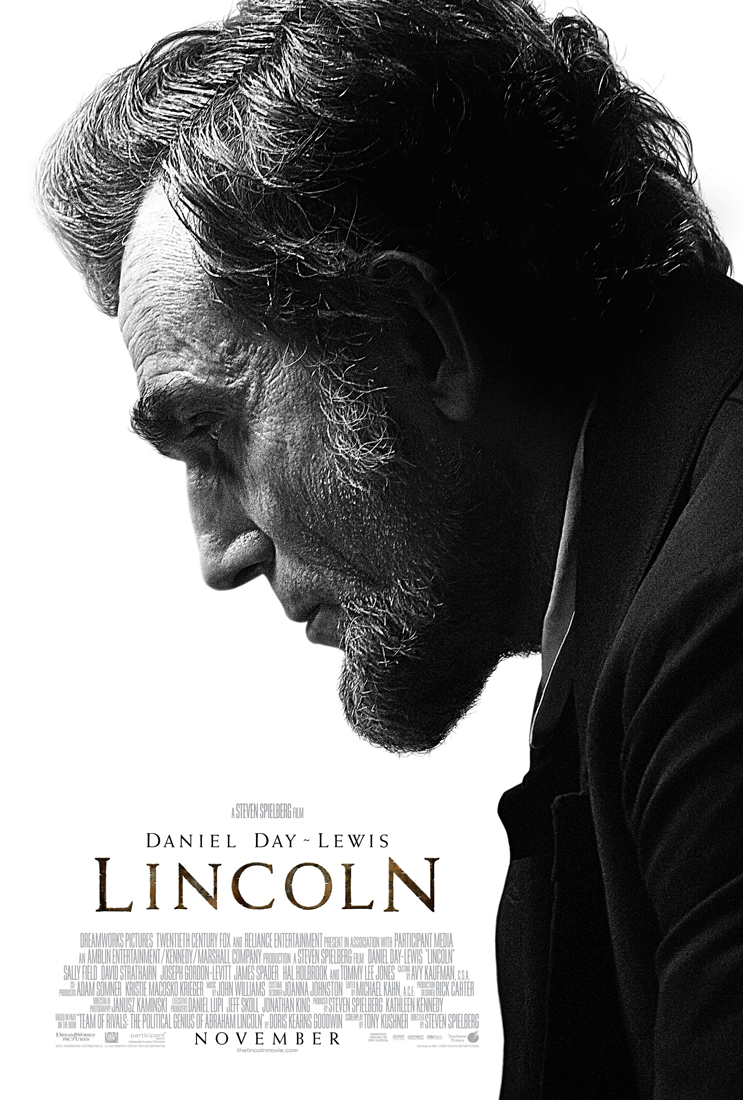
3 – Lincoln

Lincoln Movie Poster

This take on the last few months of the United States’ 16th president is absolutely brilliant. Be it from the top-rate acting performances to the highly engaging story, Lincoln is an absolute must-see.

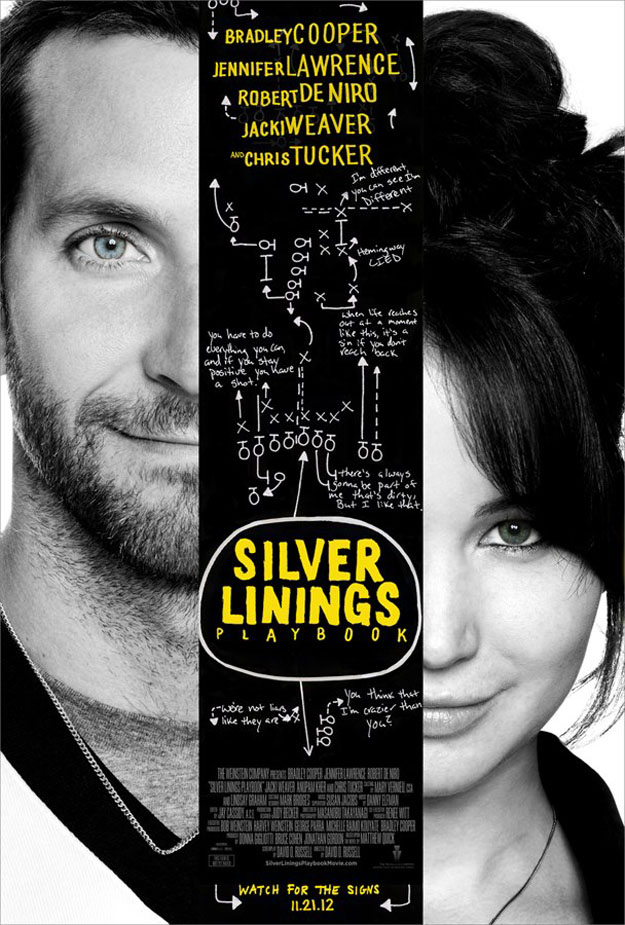
2 – Silver Linings Playbook

Silver Linings PLaybook movie poster

Jennifer Lawrence gives the year’s best acting performance opposite a highly surprising Bradley Cooper in a movie about mental illness that goes beyond that and eventually becomes a movie about our inherent human need for others who can understand us.

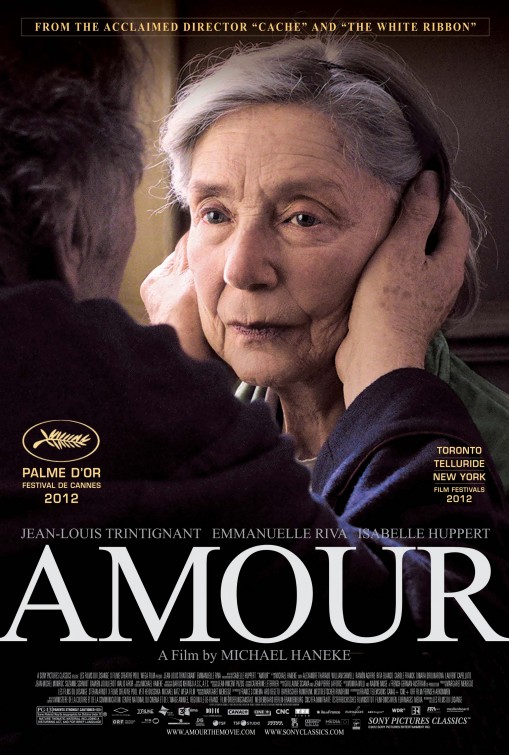
1 – Amour

Amour 2012 Movie Poster

Michael Haneke’s movie of old age is riveting. It is breath-taking, captivating and absolutely chilling.

Lincoln [2012] – Movie Review

Lincoln Movie Poster

Steven Spielberg’s new movie, Lincoln, is the American Civil War-era story of the United States’ 16th president on his quest to get Congress to pass the 13th amendment to the constitution, effectively ending slavery, something he wants done before his inauguration ceremony for the second term which he had just won. In order to do this, he must gather a 2/3 majority in the House of Representatives – one that goes beyond the 56% majority that his Republican party held and into Democrat territory, a party that is staunchly against such a thing.

Lincoln is Spielberg’s best movie in a long time, something that is definitely helped by the fact that the director has been fascinated by Abraham Lincoln since he was a little boy. In this highly dignified portrait of the late American president, you are invited to delve into a world of charged polarizing politics on a story with an undertone of liberty and humanity. The movie can be divided into two halves: A strong first half sets the tone – the era, the characters, the entire situation and its framework.  The even stronger second half shows how the wheels set forth in the first half play out.

The true gem of Lincoln and what helps elevate this movie into a masterpiece is Daniel Day Lewis who incarnates the character he’s portraying to the letter – from the mannerism, to the tone. Lewis’ subtle, engaging, deep and highly emotional performance is one for the ages. His portrayal of the late American president is spot on in every sense. It never wavers, never falters, never drops from the standard that is set with the movie’s opening scene down to the last frame. He adds a sense of humanity to the commander in chief: a man who tells stories, laughs at his own jokes, cares deeply for his family. This sense of humanity gives the character an entirely new dimension.

Daniel Day Lewis is helped as well by chilling performances by Sally Fields and Tommy Lee Jones. Fields plays Mary Todd Lincoln. As a mother, she’s afraid for the life of the sons she still has and as wife, she’s growing more distant by her husband’s coldness towards her after the death of a child that she blames on him.

Tommy Lee Jones plays Thaddeus Stevens, a “Radical Republican” congressman whose goal in life is to establish equality between America’s black and white populations.  Jones is the only character in this movie that knows, deep down, that blacks are equal to whites in every way. The hurt that his character has to go through as he’s forced to tone down his convictions is passed on convincingly in a multi-layered and highly engaging performance.

However, not all acting performances in Lincoln are as great. Joseph Gordon Levitt, for instance, as Lincoln’s oldest son who wants to enroll in the army but is forbidden by his protective parents never quite finds his footing, causing the father/president-son story arc to falter and be less compelling than it could actually be. The father-son story that is interesting, however, is Lincoln’s relationship with his younger son Tad, played by Gulliver McGrath, as a young boy who wants his father to curl up next to him besides the fireplace and look at portraits of slaves who should be freed.

Tony Kushner, who wrote the screenplay for Lincoln, did a great job at turning a mostly dialogue-driven movie into something that doesn’t drag on and, despite the extensive running time, doesn’t feel overstuffed. His take on the story is very focused and specific which in itself is a very good thing if you’re familiar with the history behind the movie, which I believe every American viewer is and should be. In a way, it is the screenplay that sets Spielberg in a certain framework that helps him not turn the movie into an overly melodramatic mess but to give it a documentary grit. However, many non-American cinema enthusiasts, who will end up watching Lincoln because of the attention it’s garnering, might end up being overwhelmed by the details causing them to care less about the story which should be front and center and seek entertainment in the acting performances that I’ve previously mentioned or other attributes that I will mention subsequently.

What helps Daniel Day Lewis in his Lincoln incarnation is a stunning make-up work that transforms the actor’s face into that of the late president’s identical twin. In fact, Lincoln is bolstered by a technical team that spans from the aforementioned makeup to the cinematography to the sound mixing to the art direction. Almost every aspect of this movie is taken care of in a way to ensure authenticity.

Lincoln is a highly engaging and entertaining film, one that stops being a historical portrayal and becomes a character study of what many Americans believe is one of their best presidents. By becoming a character study, Lincoln also becomes a movie about politics which are the wheels that get the movie rolling: how these characters interact to make legislation, how these characters use each other’s flaws in order to advance their agendas, how this presidential character so deeply believes in the sanctity of freedom, how this presidential character wants peace for his nation and for himself.

If I were an American, I’d be proud to have a movie such as Lincoln portray one of my presidents.

9/10