A Lebanese Parody on the State of the Music Industry: 7assesne Enne Rkheesa

The lyrics for this “song” have been circulating around for a while now. And now there’s a video to boot. For those who thought the lyrics were actually serious, fear not. They are but a parody on the over-sexualizing in the music industry today, be it American pop or Lebanese music.

Trust me, I wanted to dismiss this as a gimmick but they do have a point, somehow, somewhere.

For non-Lebanese readers, the title “7assesne enne rkhisa” translates to “Make Me Feel Cheap,” which is how the people who did this believe music nowadays represents women.

Check the video:

I’m sure it won’t put a dent in the trend of music today. But at least people are noticing that there are less and less songs you can listen to with another person on radio without feeling awkward about their content. Case in point: Rihanna’s latest album has more than numerous proclamations of “F*** me.” Even the reviewers of that album said they felt self-conscious listening to it. I did not bother reviewing it.

Guess I’ll return to my safe country music bubble now. Good Girl, anyone?

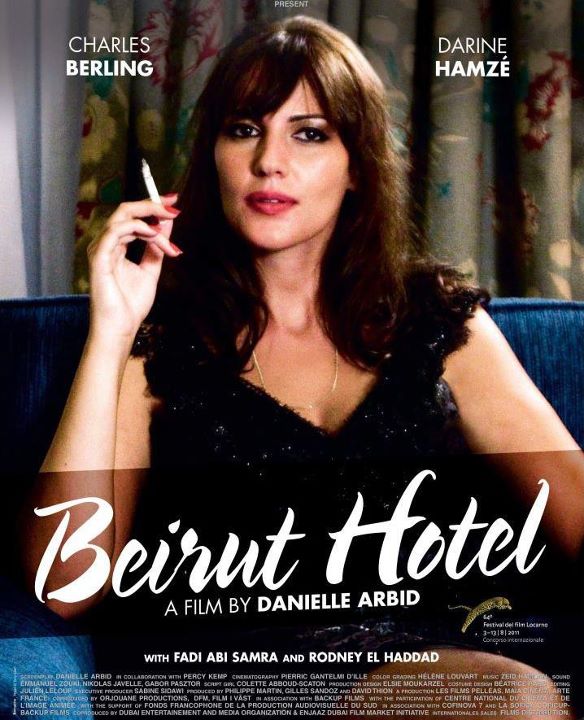
Beirut Hotel – A New Lebanese Movie Is Banned For Sexual Content

For my review of the movie, click here.

Seems like our story with censorship in Lebanon is far from being over or at least moderated somehow. Beirut Hotel, a new Lebanese feature film by director Danielle Arbid, which was scheduled for release in January 2012, has now been banned from being shown in Lebanon. Why?

Well, according the Censorship Committee in Lebanon’s General Security, the movie would “endanger Lebanon’s security.” And you know why? Because the movie apparently has sexual themes to it.

After all what can you expect from a committee that removed a scene featuring the burning of a Syrian flag from the movie Rue Huvelin or even modified a scene in Nadine Labaki’s Where Do We Go Now, although she wasn’t that displeased by that according to her interview with Kalem El Nes. They also banned the Iranian movie Green Days from being screened mostly because it was also banned in Iran for its anti-Islamic revolution sentiment. And lastly, Steven Spielberg’s name was hidden off TinTin’s movie poster because he’s a known Israel sympathiser.

Moreover, Darine Hamze, the leading actress in the movie, has a role as a devout religious person in a current TV series airing on a Lebanese TV station. Interviewers had asked her how she could possibly play both roles. It looks like the concept of acting has eluded them.

Watch the movie’s trailer here:

And in case our folks at the General Security don’t budge, we’ll have to hunt down the DVD for this.

I don’t know about you but I’m seriously sick of a committee deciding what I’m supposed to watch or in this case not watch. This is the 21st century. Such committees should not exist.

And just as a heads up for this committee, I personally hadn’t heard of this movie before today. So thank you for exposing it. Moreover, we, as Lebanese, didn’t invent sex. And if sex is now a danger to our security, then just ban it for everyone.

Lebanese Brew: Courage Is Contagious

If you were like me and hadn’t heard of the new Lebanese beer in town, well, now it’s time to pay attention. In case you thought, like me, that almost no one can top off leading Lebanese beer Almaza’s ad, here comes a “Courage” campaign by Lebanese Brew.

With a YouTube video featuring Lebanese youth partying, drawing graffiti, living their life all to the backdrop of our gorgeous capital, the brand new beer’s image is glowing.

The video even starts with a guy and a girl the morning after having sex, being courageous enough to tackle something that happens very often in Lebanese society while almost everyone hides behind their shadow regarding it.

The liveliness of Beirut and its youth is the center piece of this ad to show the courage of both the city and the people. The video serves a double purpose: to show the courage of this brand in trying to enter an already almost-full market and the courage of the Lebanese people who have defied all odds and are still here.

The theme “courage is contagious” is to show that if you are courageous enough to stand for what you believe in, those who are less so will soon follow. It’s not very hard to relate this to the recent revolutions in the Middle East and how, according to Robert Fisk, the Lebanese revolution in 2005 gave the spark that started them all. After all, our courage as Lebanese is contagious.

Kudos for a very well-done video. It’s sad it only has 3000 views since it was uploaded in July 2011.

Game Of Thrones

I recently finished watching the first season of HBO’s newest series: Game of Thrones, based on the book series “A Song of Fire and Ice” by George R. R. Martin.

The series is a fictional medieval drama, set in the seven kingdoms of Westeros. Each section of those kingdoms is ruled by a different lord, all of whom have to obey the king who sits on the Ivory Throne.

The show’s main protagonists are the Stark family, one of the noble families of the Kingdom, and the rulers of the North. Lord Ned Stark, the father, is soon appointed hand of the king, Robert, when the former hand dies in mysterious circumstances and is, therefore, forced to leave his family and relocate with his two daughters to the kingdom’s capital, leaving his wife and oldest son to care for his people in the North. But in a world where treason is a way of life, where insincerity and lies keep you alive, Ned Stark doesn’t fit – especially when he learns the truth about the king’s son.

Another storyline taking place in the show happens at the far North of Westeros where Lord Stark’s bastard son (yes, he is referred to as such in the series) joins the Night’s Watch, a brotherhood that protects the built barrier in that location against “The Others” that exist beyond it.

Moreover, in the neighboring realm of Essos, the two remaining members of House Targaryen strike a deal with vicious barbarians in order to reclaim the Iron Throne, which was taken away from them when king Robert took charge and exiled them. Princess Daenerys soon finds herself leaving the fragility of her former life and assuming the firm role of Khalissi, head queen of the barbarians and my favorite character. But her family heritage remains in her blood, making her a hybrid between both cultures, and another claimant to the Iron Throne.

This is Khalissi:

Game of Thrones is, in the bigger sense, the game between the different Lords to claim the Iron Throne. It is a show about power struggles and about the basic human nature quality of striving for more power. It showcases how badly some people handle the power given to them and the cruelty that may arise when such people reach powerful positions.

The show is highly engaging. And at ten episodes for the first season, proceeds rather quickly with its plot. One of its strong points is its ability to focus on the many storylines taking place without it getting stuck on one of them. Moreover, there’s an impeccable element of professionalism in the series: the cinematography, art direction, locations… everything is chosen with the utmost consideration of details, making the series beautiful to look at as well.

Game of Thrones is, as every HBO production I’ve watched, a raunchy series. The episodes are filled with many sex scenes where more than basic human anatomy is revealed. However, unlike other TV shows where such scenes are only used for shock-effect, in Game of Thrones, they serve the plot and are, at some points, pivotal moment for the plot’s advancement and serve as a way to reveal hidden motives with many characters.

All in all, Game of Thrones is a highly recommended series. You will enjoy it even if you’re not even remotely interested in medieval shows or blood and gore (yes, there are way too many bloody scenes of decapitations and the like). However, it remains a show with an impeccable storyline that feels more cinematic than TV-like. The makers’ decision to translate the books into a TV series, not a movie, is a great decision and will allow them to remain true to the books and include more and more details that we, as viewers, would have missed otherwise.

Arab Porn?

I was linked to this YouTube video by a friend:

After watching it, I was like: Ok, this is funny and the girl is hot but that’s pretty much it. Then I looked at the view and it had 160K.

Then I glanced at the comments and saw ones that went like this:

–  i just got a boner :O – by alyehab

– omg this video causes two things:

1- hard work to the right hand.

2- I have to wash my p>. – by abufaisal1980

– the more appropriate title would be ” how to make a lebanese girl give you a BJ extremely fast” – by lifesnojoke333

There are far more comments of this nature on the video. The thing in common between the users? they’re from the Arab Gulf and they are so sexually deprived, it’s getting ridiculous.

According to my friend Paul Gadallah, Arabs would “find a bar in Beirut to be porn” – and I never thought I would agree to that until I saw the comments on this video. Fine, the girl has shown cleavage – big deal. Why don’t they ask for change in their countries so seeing cleavage doesn’t become this “OMG, I JUST SAW A PART OF A BREAST” moment.

Until then, it’s our sad fate, dear Lebanese, that whenever one of our women wear something even slightly revealing, it would automatically become the jerk off material for some (yes, I’m aware this doesn’t apply to everyone so spare me the comments of you not being like this) Arabs across the Middle East.

Arabs often stereotype Lebanese women as “easy” merely because they show some skin.  Is it their fault for such a stereotype? Absolutely not.  Although Lebanon still has a long way to go in terms of gender equality, regionally speaking it is much more open and is one of the few countries in the region where women can dress up, go party, and in have a regular boyfriend.  Lebanon even hosts the region’s first sexuality magazine, Jassad, owned by the famous Joumana Haddad.  In many Arab countries, especially the Gulf, women are seen as docile creatures and in Saudi Arabia, they still cannot even drive.  To them women going out showing some skin, could only mean that they are sinners; wanting sex bad and are akin to whores, but men going out and partying is perfectly fine, cementing the prevailing hypocrisy and justifying the ever prevalent sexual harassment in the region.

We, Lebanese, are proud of our women – as corny as it may be – just the way they are. Whether they choose to show skin or not, it’s not anyone’s business. And it certainly shouldn’t turn into a repressed Arab’s material for some good time.